
Im Überblick
- Armenia’s digital commerce market estimated at ~US$2.03 billion (2025), projected to reach ~US$5.41 billion by 2030.
- B2C cash cap: payments of AMD 300,000 (~US$811) or more must be non-cash. B2B transactions are fully cashless since July 2022.
- IdramNet, the national unified QR payment system, is operational under CBA oversight. Five financial companies have joined; ArCa (the national card scheme) is joining.
- Crypto-asset service providers (CASPs) must hold a CBA license since January 31, 2026. Existing operators have until January 2027 to comply.
- WeChat Pay and Alipay+ accepted at 26,000+ merchant locations via Idram’s QR network.
- Merchant discount rate caps effective March 2026: ArCa max 0.5%, Visa/Mastercard max 0.9% for qualifying small merchants.
Zuletzt aktualisiert am 12. Juni 2026
Armenia’s payment landscape has evolved rapidly. Mandatory non-cash rules, a unified national QR infrastructure, and new crypto-asset licensing requirements create a structured environment for merchants, fintechs, and payment providers entering the market. This guide covers the current market size, the regulatory framework for 2026, local gateways and e-commerce integration, merchant fees, and practical steps for businesses processing payments in Armenia.
Inhaltsverzeichnis
- Armenia’s digital payments market in 2026
- Regulierungs- und Rechtsrahmen
- QR payments and mobile wallets
- Local gateways and e-commerce integration
- Merchant fees and settlement
- Internationale Zahlungsmöglichkeiten
- Häufig gestellte Fragen
Armenia’s digital payments market in 2026
Armenia’s digital payments sector continues to grow. The digital commerce (e-commerce) segment alone is estimated at approximately US$2.03 billion in transaction value for 2025, with forecasts pointing toward US$5.41 billion by 2030. Card transactions reached roughly $9.3 billion equivalent in 2024, and total cashless volume across cards, wallets, and e-commerce is expanding into the low double-digit billions.
The Central Bank of Armenia (CBA) supervises 17 commercial banks and eight licensed e-payment and wallet companies. Over 9,100 payment and self-service terminals operate across the country. Adoption is driven by three forces: legal cash-transaction limits that push payments into the banking system, a national QR standard that reduces fragmentation at the point of sale, and a mobile-first consumer base that increasingly prefers wallet and app-based payments.
For investors or operators planning market entry, this combination of growth and predictable regulation supports go-to-market confidence. Align merchant onboarding, invoicing, and settlements with Armenian rules and tax obligations early. Our team can assist with Geschäftsanmeldung und Steuerplanung in Armenien.
Regulierungs- und Rechtsrahmen
Several regulatory developments shape the 2026 payments environment for providers and merchants operating in Armenia.
Cash transaction rules
Payments between a legal entity and an individual at or above AMD 300,000 (~US$811) must be made non-cash. Between legal entities, all cash transactions have been prohibited since July 2022, regardless of amount. Certain sectors have even stricter rules: healthcare, education, and legal services must be fully non-cash at any amount, while state-registered transactions such as real estate have an AMD 500,000 (~US$1,351) threshold. These rules accelerate electronic payments adoption across retail, services, and B2B.
Payment services licensing
Any entity providing payment services in Armenia must obtain a license from the CBA under Armenian payment services legislation and CBA regulations. Applicants must be Armenian-registered legal entities with charter activities limited to financial and payment services, and must demonstrate client fund segregation, dedicated payment accounts, and ongoing CBA reporting capabilities.
Crypto-asset service provider (CASP) licensing
Armenia introduced mandatory licensing for crypto-asset service providers under the Law on Crypto-Assets (entered into force July 4, 2025). CBA implementing bylaws took effect on January 31, 2026, covering licensing conditions, minimum capital requirements (tiered from approximately $30,000 for narrow services to approximately $530,000 for full exchange platforms), whitepaper requirements, and registration rules for foreign CASP branches. Existing crypto-asset businesses must obtain a CASP license within one year of January 31, 2026 (deadline approximately January 2027) or cease operations. Cash-for-crypto transactions have been prohibited since January 1, 2026, and the FATF travel rule applies to all CASPs. The framework parallels the EU’s MiCA regulation, reflecting Armenia’s broader regulatory convergence strategy.
AML/CFT and compliance
Armenia’s AML/CFT framework requires all payment service providers and CASPs to conduct KYC, transaction monitoring, recordkeeping, and suspicious transaction reporting. The CBA conducts thematic AML inspections and has authority to fine, restrict, or revoke licenses. Armenia participates in the Common Reporting Standard (CRS) and Automatic Exchange of Information (AEOI) with over 120 partner jurisdictions, and is FATCA compliant. PSPs and fintechs should update their monitoring and escalation workflows to reflect the most current CBA guidance on high-risk indicators.
EU accession and regulatory outlook
Armenia launched its EU accession process in April 2025, signaling gradual alignment with European norms for payment regulation, open banking, and consumer protection. While Armenia has not yet adopted a PSD2-equivalent open banking framework, the CBA’s approach increasingly draws from EU and EBA guidance. The CASP regime’s alignment with MiCA is the first concrete example. Specific harmonization timelines depend on the negotiation process, but businesses should plan for progressively more structured API requirements and data-sharing obligations.
If you are setting up a corporate entity, opening a bank account, or onboarding merchants under a license in Armenia, align your compliance architecture with current CBA requirements. For corporate setup and banking, start with FirmenregistrierungPlanen Sie anschließend Ihre Steuersituation mit unserem Steuerberatung. For relocation, see our Visum für Armenien und Residenz Führer.
| Regelung / Veranstaltung | Datum des Inkrafttretens | Was es bedeutet |
|---|---|---|
| B2C non-cash rule (AMD 300,000+) | Angenommen im Januar 2022 | Payments of AMD 300,000 (~US$811) and above must be electronic. |
| B2B fully cashless | Juli 2022 | All cash transactions between legal entities prohibited. |
| CASP licensing mandatory | 31. Januar 2026 | All crypto-asset service providers must hold a CBA license. |
| MDR caps for small merchants | 1. März 2026 | Capped acquiring fees for qualifying merchants (see Merchant fees section). |
| Existing CASPs compliance deadline | ~January 2027 | Pre-existing crypto businesses must obtain a CASP license or cease operations. |
| EU-Beitrittsprozess | Starttermin: April 2025 | Gradual alignment with EU payment, open-banking, and AML standards. |
QR payments and mobile wallets
Armenia now has a national unified QR payment infrastructure. The CBA granted Idram a permit to operate IdramNet, the national payment and settlement QR system. Five financial companies have joined, and Armenian Card (ArCa) has confirmed its intention to participate. Cross-border QR discussions between Armenia and Georgia were ongoing as of April 2026.
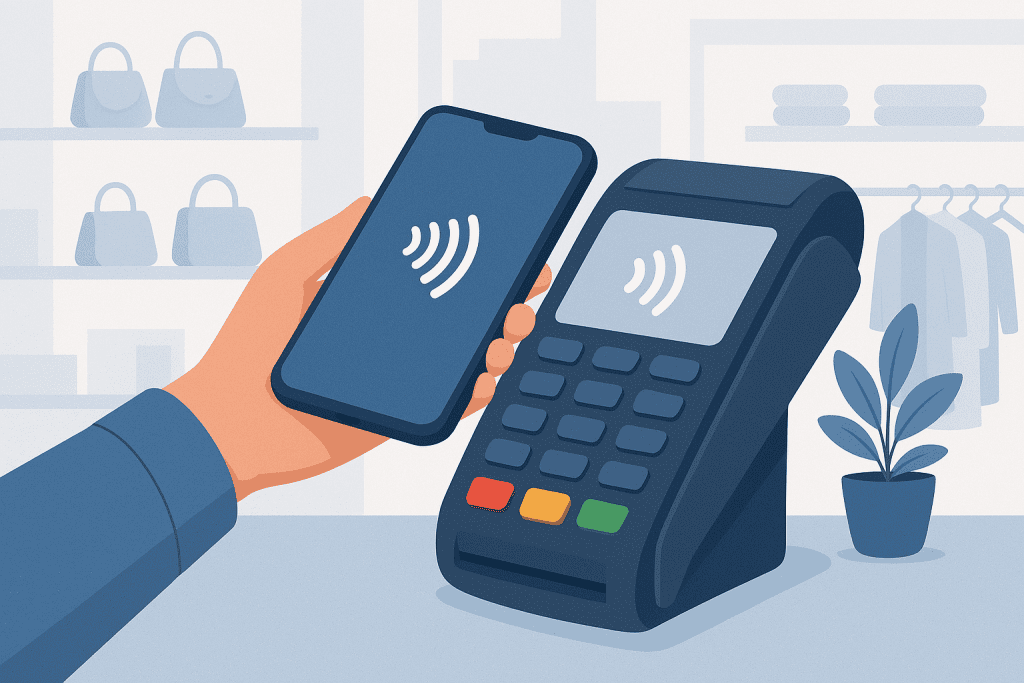
Idram is the dominant wallet and QR acceptance solution, with over 26,000 QR-enabled points of sale across Armenia. In July 2025, Idram joined the Alipay+ network, enabling tourists using Alipay+-supported wallets to pay at Armenian merchants via QR codes. Since January 2026, Idram also supports Weixin Pay (WeChat Pay) at 26,000+ merchant locations, significantly expanding cross-border tourist payment acceptance.
For merchants, the practical implications are clear: QR interoperability reduces the “which app works here?” problem, lowers training and signage costs, and improves checkout conversion. Merchants serving international tourists should confirm that their payment provider supports Alipay+ and WeChat Pay routing through the Idram QR network.
Local gateways and e-commerce integration
Armenia’s domestic payments are anchored by local gateways and wallets that settle in Armenian drams (AMD) and are tailored to local merchant needs.
Payment apps and wallets
Three main platforms dominate consumer payments: Idram (the leading wallet and QR acceptance solution, now with cross-border QR via Alipay+ and WeChat Pay), Telcell (a widely used payment app and terminal network), and EasyPay (another popular wallet for bill payments and transfers). Most Armenian banks also offer their own mobile payment apps with QR and NFC capabilities.
Card acquiring and bank gateways
ArCa (Armenian Card) is the national card scheme that underpins most bank e-commerce payment solutions in the country. Several banks offer their own acquiring gateways, including AmeriaPay, IDPay (Inecobank), EvoPay (Evocabank), ACBA Digital, Ardshinbank, and Armeconombank. Assist, in partnership with Evocabank, provides acquiring for Visa, Mastercard, Mir, and ArCa. Fastex Pay enables crypto merchant payments for businesses that accept digital assets.
Integrationen von E-Commerce-Plattformen
For businesses selling online, Armenia’s payment gateways integrate with major e-commerce platforms. Shopify merchants can use ArCa Paycenter and Idram apps. Ecwid supports ArCa, Telcell Wallet, and several international processors. Shopware has ACBA and ArCa plugins for local card acceptance. Zegashop, an Armenia-native e-commerce platform, integrates with all major banks, Idram, and Telcell out of the box. Settlement for local gateways is in AMD, while international processors settle in USD or EUR.
Many merchants adopt a hybrid stack: a local gateway and wallet for AMD transactions and in-store QR, plus an international payment path for foreign customer traffic. For entity setup, Bankwesen, and compliance, our team supports end-to-end execution from Unternehmensgründung zu Steuerplanung.
Merchant fees and settlement
Armenia regulates merchant discount rates (MDR) for physical POS transactions. Since March 1, 2026, capped acquiring fees apply to qualifying small merchants.
| Händlerkategorie | ArCa rate | Visa / Mastercard rate |
|---|---|---|
| Small merchants (annual turnover up to AMD 150 million, ~US$405,000) | Max 0.5% per POS transaction | Max 0.9% per POS transaction |
| Very low POS turnover (up to AMD 50,000/month, ~US$135) | Monthly caps: AMD 4,600 (~US$12) in Yerevan, AMD 3,000 (~US$8) in regional towns, AMD 1,000 (~US$3) in rural areas | |
| Larger merchants (above AMD 150 million) | MDR negotiated directly with acquirers | |
The interbank fee (interchange) is capped at 0.2% for qualifying transactions. These regulated caps apply to domestic physical POS transactions; online and cross-border rates are typically negotiated separately.
Abwicklungszeitpläne
Domestic transactions on ArCa rails settle on the next business day (T+1). International card transactions (Visa, Mastercard, UnionPay) typically settle in T+2 to T+3 business days. ArCa contactless transactions follow the same settlement cycle as standard ArCa debit.
Internationale Zahlungsmöglichkeiten
Not all global payment platforms operate in Armenia. Understanding what is and is not available helps businesses choose the right payment stack.
Stripe is not available in Armenia as a merchant acquirer. Businesses needing Stripe-like functionality should consider local bank gateways or Payoneer as alternatives.
PayPal supports outbound payments from Armenia but is not available for merchant acquiring. Armenian businesses cannot accept payments from customers via PayPal.
Payoneer is a viable alternative for international payment collection and is used by many foreign-owned businesses operating in Armenia.
For businesses needing to accept international payments, the practical approach is to pair a local ArCa-based gateway for domestic AMD transactions with an international acquirer (such as 2Checkout or Payoneer) for foreign-currency transactions. Non-resident e-service providers can register for Armenian VAT remotely via the e-portal without needing a local bank account. For guidance on opening bank accounts in Armenia or structuring your payment operations, contact our team.
Häufig gestellte Fragen
Wie hoch ist das Limit für Barzahlungen in Armenien?
Is crypto-asset licensing required in Armenia?
What are the merchant processing fees in Armenia?
Is Stripe available in Armenia?
How does Armenia’s national QR payment system work?
How will EU accession affect payment regulation in Armenia?
Fazit. Armenia’s payment processing environment in 2026 is defined by growth, regulated fees, a national QR system, and clear licensing requirements for both traditional payment services and crypto-assets. For merchants, fintechs, and payment providers, the path forward combines local gateway integration with compliance planning that anticipates EU-style standards. If you need help structuring a compliant payment operation, setting up a corporate entity, or navigating CBA licensing requirements in Armenia, unser Team zu kontaktieren..
