
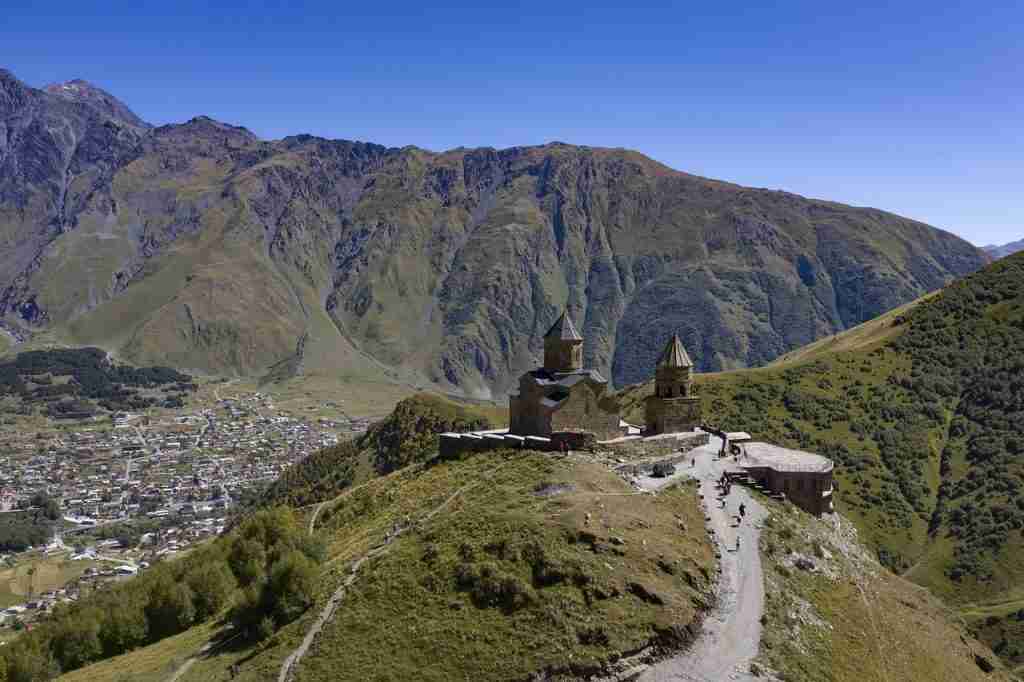
La República de Armenia, un país sin salida al mar rico en historia y tradición, tiene la distinción de ser el primer país en adoptar el cristianismo como religión oficial en el año 301 d. C. Este acontecimiento monumental, bajo la dirección de Gregorio el Iluminador y el rey Tiridates III, estableció a Armenia como el primer país en adoptar el cristianismo como religión oficial. Nación cristiana, un legado que continúa dando forma a la La identidad armenia en la actualidad. La Iglesia Apostólica Armenia, pilar de la fe, sigue siendo fundamental para la vida espiritual y cultural del pueblo armenio. A pesar de sus raíces cristianas, Armenia defiende el pluralismo religioso y su Constitución garantiza la libertad de religión, creando un entorno armonioso para las personas de todas las confesiones.
La Iglesia Apostólica Armenia: un pilar de fe
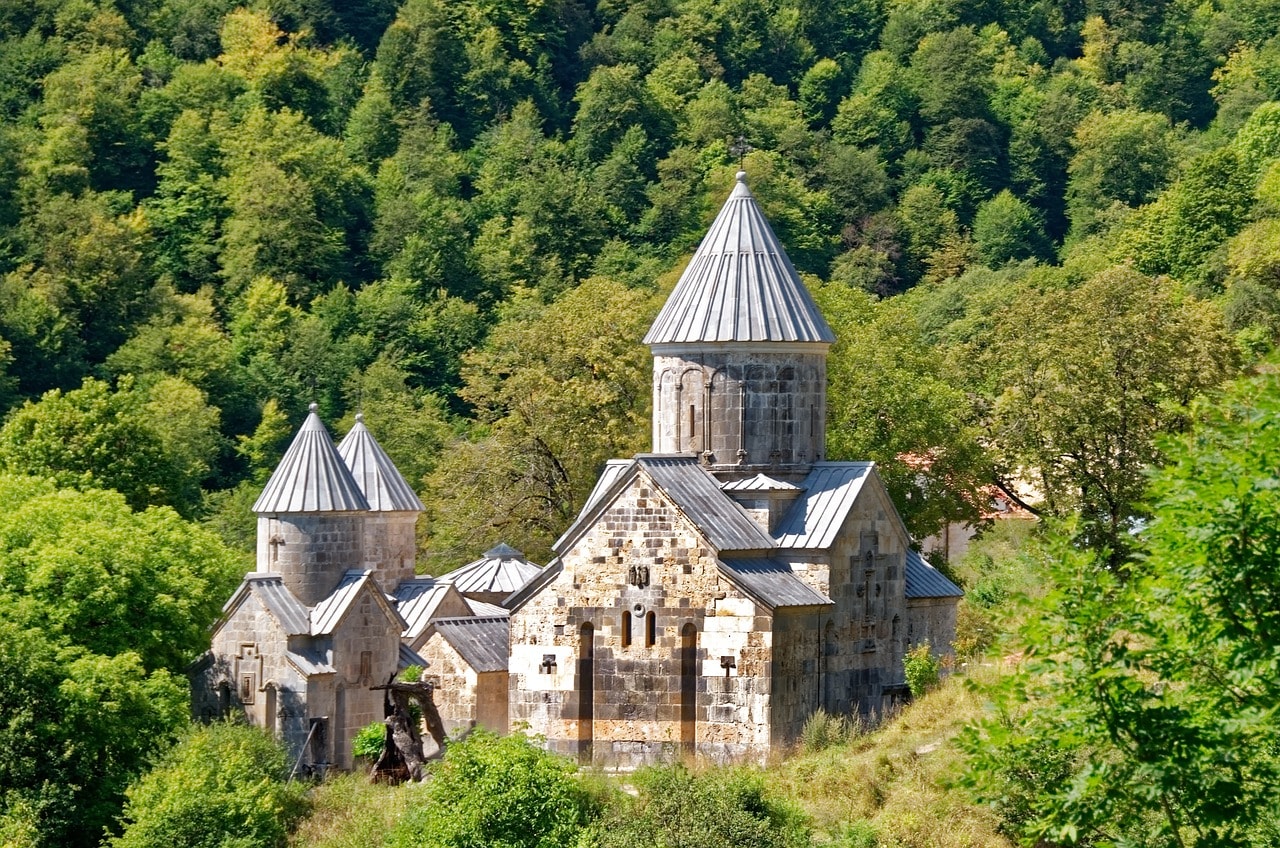
La Iglesia Apostólica Armenia es la iglesia nacional de Armenia y está profundamente arraigada en la identidad nacional armenia. Como miembro de las Iglesias Ortodoxas Orientales, se adhiere al miafisismo, una doctrina que afirma la naturaleza única y encarnada de Jesucristo.
La Iglesia armenia, fundada en los primeros tiempos del cristianismo, también goza de un estatus constitucional único. La Constitución de Armenia la reconoce explícitamente como guardiana del legado cultural y espiritual armenio, destacando su influencia en la literatura, la educación y las artes armenias.
La liturgia divina de la Iglesia armenia es un testimonio de su rica tradición, con rituales elaborados e himnos sagrados. Las principales celebraciones religiosas, como la Pascua, la Navidad y las fiestas en conmemoración de los apóstoles Bartolomé y Tadeo, que trajeron el cristianismo a Armenia, reflejan la fe perdurable del pueblo armenio.
Más allá de la fe apostólica: el pluralismo religioso en Armenia
Si bien la Iglesia Apostólica Armenia sigue siendo la predominante, Armenia alberga una diversidad espiritual. Entre las otras denominaciones se encuentran la Iglesia Católica Armenia, varias denominaciones protestantes y la antigua comunidad yazidí, el grupo no cristiano más grande del país.
La Mezquita Azul de Ereván es un símbolo de la tolerancia religiosa de Armenia y de su reconocimiento del patrimonio islámico. A pesar de la influencia de la Unión Soviética, que intentó reprimir las prácticas religiosas, la Armenia independiente ha vuelto a abrazar su fe cristiana y ha promovido la inclusión.
Peregrinaciones y espacios sagrados para los cristianos armenios
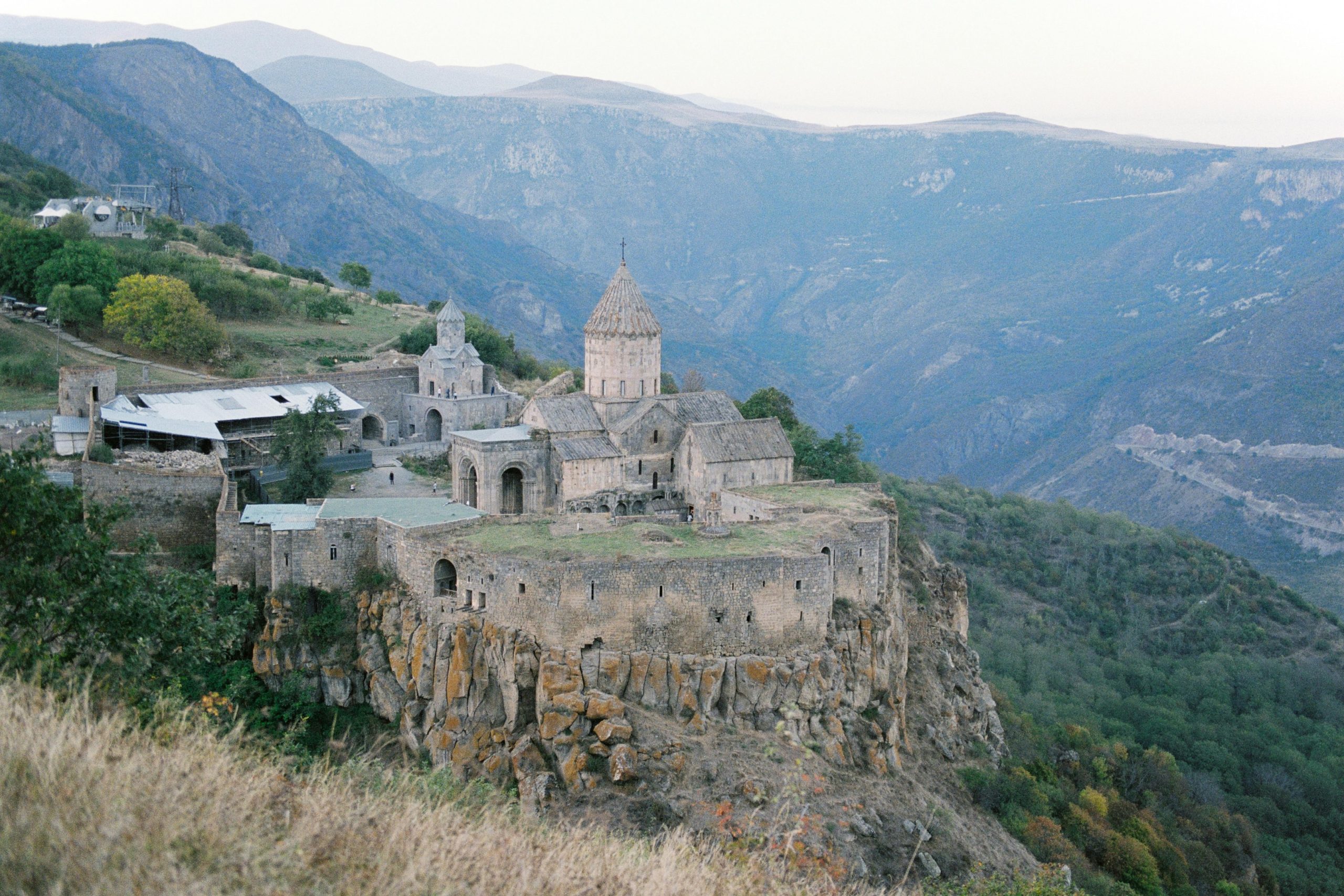
Armenia cuenta con una gran cantidad de lugares sagrados que atraen a peregrinos y turistas por igual. La Santa Catedral de Echmiadzin, el centro espiritual de la Iglesia Apostólica Armenia, es venerada como la primera catedral construida en la antigua Armenia. Del mismo modo, el Monasterio de Geghard, un UNESCO Patrimonio de la Humanidad, tallada parcialmente en una montaña, ejemplifica el legado arquitectónico y espiritual de la Iglesia armenia.
Otros lugares destacados son el monasterio de Khor Virap, donde estuvo preso Gregorio el Iluminador, y el monasterio de Tatev, una joya de la arquitectura armenia medieval. La peregrinación a estos lugares permite a los fieles conectarse profundamente con sus raíces espirituales y la historia del cristianismo armenio.
Fiestas religiosas: una sinfonía de fe y cultura
Las festividades religiosas en Armenia combinan a la perfección las tradiciones cristianas, el patrimonio cultural y las celebraciones comunitarias. Vardavar, una festividad con raíces en tradiciones precristianas pero que ahora se celebra como parte del calendario de la Iglesia Apostólica Armenia, consiste en rociar a los demás con agua, lo que simboliza la purificación y la renovación.

La Fiesta de los Santos Traductores (Targmanchats) rinde homenaje a los eruditos que tradujeron la Biblia al armenio, preservando así la lengua y la cultura armenias. Otro evento muy apreciado, el Día de la Bendición de la Uva (Khaghoghorhnek), es una vibrante ceremonia en la que se bendicen los primeros frutos de la cosecha, lo que muestra el entrelazamiento de la fe y las tradiciones agrarias. Estos festivales reflejan la identidad única de los cristianos armenios y aseguran la continuidad de su rico legado cultural.
Disposiciones especiales para la ciudadanía armenia
Reconociendo el papel integral de la religión en la herencia armenia, el país ofrece vías para que las personas de origen armenio adquieran ciudadaníaEntre quienes pueden solicitar la ciudadanía se encuentran los católicos armenios y los evangélicos armenios, ambos con un patrimonio histórico y cultural distintivo dentro de la comunidad cristiana armenia en general. Quienes puedan presentar un certificado de bautismo que indique sus raíces armenias pueden solicitar la ciudadanía armenia, lo que reforzará los vínculos entre la diáspora armenia y su patria ancestral.
Esta disposición refleja el compromiso de Armenia de preservar su identidad como nación cristiana y al mismo tiempo acoger a su comunidad global. Muchos descendientes de armenios del Imperio Otomano y del Imperio Ruso consideran que este proceso es un medio accesible para reconectarse con sus raíces culturales y espirituales.
Registro de organizaciones religiosas en Armenia
Para establecer una organización religiosa en Armenia, se requiere la certificación del Consejo de Asuntos Religiosos. Las organizaciones deben demostrar su carácter tradicional, respaldado por las escrituras canónicas y la continuidad histórica. También es necesario un mínimo de 200 miembros, excluidos los menores de edad.
Este marco, basado en precedentes históricos y legales, garantiza que los grupos religiosos registrados contribuyan de manera significativa al tejido espiritual y social de Armenia. Para obtener más orientación sobre el registro de una comunidad religiosa, visite nuestro sitio web.
Conclusión: La fe como piedra angular de la identidad nacional armenia
La religión en Armenia no es simplemente un sistema de creencias, sino el corazón de su identidad nacional. La relación de la Iglesia armenia con la Iglesia católica romana también ha desempeñado un papel en la formación de su identidad única. Desde la adopción del cristianismo como religión estatal hasta la preservación de las tradiciones ortodoxas orientales, la interacción entre la fe y la cultura sigue dando forma a la comunidad cristiana armenia.
En el camino que Armenia debe recorrer hacia su futuro, la Iglesia Apostólica Armenia y sus aportes históricos, como el alfabeto armenio y las ricas tradiciones litúrgicas, seguirán siendo fundamentales. Las vibrantes festividades religiosas, los espacios sagrados y el patrimonio cristiano de Armenia garantizan la perdurabilidad de su identidad única, que resuena tanto dentro del país como entre su diáspora global.
Si está interesado en obtener más información sobre la inmigración armenia y los servicios corporativos, no dude en visitar nuestro sitio web .

Anzhelika Akobian
Attorney
De un vistazo
- Armenia is overwhelmingly Christian: about 97.5% of declared believers identify with the Armenian Apostolic Church, with Yazidi, Armenian Catholic, Jewish, Protestant, and Muslim communities making up the remainder.
- The Constitution guarantees freedom of religion (Article 41) while recognizing the Armenian Apostolic Church’s “exceptional mission” in national identity (Article 18).
- Population is approximately 3.097 million (January 2026), with a far larger diaspora of 5–9 million globally.
- The Yazidi community is Armenia’s largest non-Christian minority, numbering over 32,000 people concentrated in Armavir and Aragatsotn provinces.
- Religious organizations seeking official registration must meet a minimum membership threshold, though ethnic minority groups are exempt.
- UNESCO recognizes several Armenian faith-linked traditions, including the pilgrimage to the Saint Thaddeus Monastery and the Kochari dance.
Última actualización: junio de 2026
Armenian religion is central to the country’s history and nationhood. Understanding the belief systems of Armenia helps explain how faith shapes identity at home and across a vast diaspora, and how today’s legal framework protects pluralism while honoring the Armenian Apostolic Church’s cultural role.
Contenido
- Religious landscape and demographics
- Armenian Apostolic Church: faith, history, and national role
- Sacred sites and pilgrimage
- Fiestas y celebraciones religiosas
- Church–state relations and education
- Religious minorities in Armenia
- Legal framework for religious organizations
- Citizenship and the diaspora
- Preguntas frecuentes
Religious landscape and demographics
Armenia’s population stands at approximately 3.097 million as of January 2026 (Armstat), while the Armenian diaspora is estimated at 5–9 million worldwide, underscoring the global reach of Armenian identity and traditions.
Religiously, Armenia is highly homogeneous: an estimated 97.5% of declared believers identify as Armenian Apostolic Christians according to the 2022 national census, as cited in the U.S. State Department’s 2023 International Religious Freedom report. Several minority communities contribute to the country’s pluralism, including over 32,000 Yazidis, approximately 17,884 Armenian Catholics, a Jewish community of 500–1,000 people, and various Protestant and Muslim congregations.
| Comunidad | Tamaño aproximado | Notas |
|---|---|---|
| Iglesia apostólica armenia | 97.5% of declared believers | 2022 census, cited in 2023 IRF report |
| Comunidad yazidí | Más de 32,000 | 2022 census; primarily in Armavir and Aragatsotn provinces |
| Iglesia católica armenia | N/A | 2022 census figure; corrects older 14,000 estimate |
| comunidad judía | 500-1,000 | Primarily in Yerevan; one synagogue |
| denominaciones protestantes | Small congregations | Evangelical, Pentecostal, and other groups |
| Comunidad musulmana | ~800–1,000 in Yerevan | Blue Mosque is the only active mosque in Armenia |
Fundamento jurídico
Freedom of religion is guaranteed by the Constitution (Article 41). The Armenian Apostolic Church’s cultural “exceptional mission” is explicitly recognized in Article 18. Both provisions remain in force under the 2015 Constitution as of June 2026.
If you are exploring long-term stays in Armenia for study, community work, or ministry, see our guides on visados y residencia.
Armenian Apostolic Church: faith, history, and national role
The Armenian Apostolic Church is the national church and a central component of Armenian identity. Armenia adopted Christianity as its state religion in 301 AD, making it the first nation to do so. The Constitution explicitly acknowledges the Church’s “exceptional mission” in preserving national culture and values (Article 18), while affirming freedom of religion (Article 41) for all communities.
The Church is headed by the Catholicos of All Armenians, whose seat is at the Mother See of Holy Etchmiadzin near Yerevan. The Church belongs to the Oriental Orthodox family of churches and maintains its own distinct liturgical traditions, calendar, and theological heritage. Its influence extends well beyond Armenia’s borders through dioceses serving the global diaspora.
Sacred sites and pilgrimage
Armenia’s faith life is expressed through centuries-old sacred sites and traditions, several of which hold international recognition.
Sitios del Patrimonio Mundial de la UNESCO
Catedral de Etchmiadzin is the spiritual headquarters of the Armenian Apostolic Church and part of the UNESCO World Heritage inscription “Cathedral and Churches of Echmiatsin and the Archaeological Site of Zvartnots.” It is the primary pilgrimage center for Armenians worldwide and the seat of the Catholicos.
Monasterio Geghard, inscribed as “Monastery of Geghard and the Upper Azat Valley,” features remarkable rock-cut churches dating to the medieval period. It remains a major pilgrimage and tourist destination.
Principales destinos de peregrinación
Khor Virap is among the most visited pilgrimage shrines in Armenia, associated with Saint Gregory the Illuminator’s imprisonment and the subsequent Christianization of the country. Its location near the Turkish border with views of Mount Ararat adds to its spiritual significance.
Monasterio Tatev is a large medieval monastery complex in southern Armenia, accessible via the Wings of Tatev aerial tramway. It is a flagship site in Armenia’s religious tourism strategy.
UNESCO also inscribed the annual pilgrimage to the Saint Thaddeus Apostle Monastery on the Representative List of the Intangible Cultural Heritage of Humanity. Note that this is a three-day pilgrimage held annually in northwestern Iran, carried out mainly by Armenian communities in Iran. The Kochari dance, performed at religious and community celebrations, is also recognized by UNESCO for its role in social cohesion and identity.
La Mezquita Azul
The Blue Mosque (Goy Masjid) in central Yerevan is the only active mosque in Armenia. Restored and reopened in 1999, it serves as both a functioning religious mosque for the city’s small Muslim community and a cultural visitor site. The mosque is open daily and stands as a reminder of the historical Muslim presence in the region.
Fiestas y celebraciones religiosas
Armenian religious festivals follow the Armenian Apostolic Church calendar and differ in some dates from Western Christian traditions. Key celebrations for 2026 include:
| Festival | 2026 Fecha | Importancia |
|---|---|---|
| Christmas and Theophany | Enero de 6 | The AAC celebrates Nativity and Baptism of Christ together; a public holiday |
| Easter (Zatik) | Abril 5 | Feast of the Glorious Resurrection |
| Vardavar (Transfiguration) | 12 de julio | Official Transfiguration feast with traditional water-splashing; one of the most popular celebrations |
| Assumption and Grape Blessing | Agosto del 16 | Grapes and fruits are blessed after Divine Liturgy; widely observed |
| Feast of Holy Translators | Octubre 10 | Honors Saints Sahak and Mesrop, creators of the Armenian alphabet |
Vardavar is particularly distinctive. Rooted in pre-Christian tradition, it is celebrated 14 weeks after Easter with people of all ages splashing water on each other in public spaces. It has become one of Armenia’s most joyful and widely participated celebrations, blending ancient custom with Christian meaning.
Church–state relations and education
The relationship between the Armenian Apostolic Church and the state is constitutionally defined. The 2015 Constitution guarantees freedom of religion and equal legal protections for all denominations (Article 41), while acknowledging the Armenian Apostolic Church’s special cultural role (Article 18). Both provisions remain in force as of mid-2026.
Developments in 2025–2026
The institutional relationship between the government and the Armenian Apostolic Church has come under significant strain in 2025–2026. Reports indicate that the Head of the Penitentiary Service banned AAC clergy from prisons and hired state-approved clergy directly, and that the National Security Service issued directives relating to Church restructuring. These developments have drawn international attention, including concern expressed by the UK All-Party Parliamentary Group on Freedom of Religion or Belief.
While the constitutional text protecting religious freedom remains unchanged, these events highlight the evolving dynamics between church and state in Armenia. A new constitutional referendum is planned for 2026 and is expected to retain recognition of the Armenian Apostolic Church.
Educación religiosa
During the 2023 school year, Armenia removed the standalone mandatory “History of the Armenian Church” course from the national curriculum, integrating its content into broader Armenian studies. This change was made partly in response to concerns raised by minority religious groups about the mandatory nature of church-specific instruction.
Religious minorities in Armenia
While the Armenian Apostolic Church constitutes the vast majority, several minority communities contribute to Armenia’s evolving religious life.
Comunidad yazidí
The Yazidi community is Armenia’s largest non-Christian minority, with over 32,000 members recorded in the 2022 census. Yazidis are concentrated primarily in Armavir province (approximately 17,665 people, or 43.5% of all Yazidis in Armenia), Aragatsotn province (6,405), and Ararat province (5,940). Their villages cluster around Mount Aragats and the Ararat plain. The Yazidi faith is a distinct monotheistic religion with ancient roots, and the community maintains its own traditions, language (Kurmanji), and social structures.
Católicos armenios
The Armenian Catholic Church has deep historical roots and maintains communion with the Holy See. The 2022 national census recorded 17,884 Catholics in Armenia, representing 0.61% of the population. This figure updates older estimates of approximately 14,000 that were based on the 2011 census. The community maintains cultural and liturgical traditions in the Armenian rite.
comunidad judía
Armenia’s Jewish community numbers between 500 and 1,000 people, primarily in Yerevan, with a small presence in Vanadzor. The community operates one synagogue in the capital and provides opportunities for community education. The World Jewish Congress (late 2024) estimates approximately 500 members, while U.S. State Department reporting suggests the figure may be as high as 1,000.
denominaciones protestantes
Protestant communities, including Evangelical and Pentecostal congregations, are present in Armenia as part of the country’s religious mosaic. They benefit from the same constitutional protections enjoyed by all faiths, though they have historically faced social pressure in some communities.
Comunidad musulmana
Armenia’s Muslim community is small, with an estimated 800–1,000 people in Yerevan. The Blue Mosque (Goy Masjid), located in central Yerevan, is the only active mosque in the country. Restored and reopened in 1999, it serves as both a place of worship and a cultural site open to visitors.
Legal framework for religious organizations
Armenia’s legal framework for religion rests on two constitutional pillars: Article 41 guarantees freedom of religion for all individuals and communities, and Article 18 acknowledges the Armenian Apostolic Church’s “exceptional mission” in preserving national culture. These provisions coexist with specific legislation governing the registration and operation of religious organizations.
Requisitos de registro
Under Armenian law, religious organizations seeking official registration must meet a minimum membership threshold of 200 members. Registration is required for organizations that wish to own property, employ staff, or operate officially. Ethnic minority religious organizations — including Yazidi, Jewish, and Assyrian communities — are exempt from this threshold. The Venice Commission has noted concerns about the impact of this requirement on smaller, non-traditional religious groups.
Citizenship and the diaspora
For members of the Armenian diaspora considering a legal connection to the Republic, citizenship by descent hinges on proving Armenian ancestry — not religious denomination. Government-recognized church baptismal certificates and other family records can serve as evidence in a descent-based application.
- Confirm eligibility for citizenship by descent and gather proof of Armenian ancestry (government-recognized baptismal or parish records, civil registry certificates). See our guide to proving Armenian ancestry.
- Obtain certified copies and, where required, apostille/legalize and translate documents.
- Submit your application via Armenian diplomatic missions or in Armenia, following the latest procedural instructions. See our Descripción general de la ciudadanía.
If you plan to relocate after citizenship or before it is granted, review pathways for residencia temporal o permanente y el derecho . para tu estancia.
Conclusión
Armenian religion remains a cornerstone of national identity. The Armenian Apostolic Church encompasses the great majority of believers, while the constitutional framework protects pluralism and supports minority communities — from the Yazidi villages of Armavir to the Jewish congregation in Yerevan and the Blue Mosque’s small Muslim community. UNESCO-recognized traditions and a vast diaspora keep the belief systems of Armenia vibrant and global. If you are exploring ties to Armenia through study, service, residence, or citizenship by descent, our team can guide your next steps. Contáctanos para comenzar.
Preguntas frecuentes
What is the dominant religion in Armenia?
Approximately 97.5% of declared believers in Armenia identify with the Armenian Apostolic Church, according to the 2022 national census as cited in the U.S. State Department’s 2023 International Religious Freedom report.
Does the Constitution protect freedom of religion?
Yes. Article 41 of the Constitution guarantees freedom of religion for all individuals and communities, and Article 18 recognizes the Armenian Apostolic Church’s cultural mission. Both provisions remain in force under the 2015 Constitution.
Who are the Yazidis in Armenia?
The Yazidi community is Armenia’s largest non-Christian minority, with over 32,000 members recorded in the 2022 census. They follow a distinct monotheistic faith and are concentrated primarily in Armavir and Aragatsotn provinces, with villages around Mount Aragats and the Ararat plain.
How large are the Armenian Catholic and Jewish communities?
The 2022 census recorded 17,884 Armenian Catholics (0.61% of the population). The Jewish community numbers between 500 and 1,000 people, primarily in Yerevan, with one active synagogue.
What are the main religious festivals in Armenia?
Key Armenian religious festivals include Christmas and Theophany (January 6), Easter (Zatik), Vardavar or Transfiguration (a summer celebration with traditional water-splashing), the Assumption and Grape Blessing, and the Feast of Holy Translators honoring the creators of the Armenian alphabet.
Can baptismal certificates help with Armenian citizenship by descent?
Yes. Government-recognized church baptismal certificates can be used to prove Armenian ancestry in descent-based citizenship applications. Other family records such as civil registry certificates are also accepted.
