
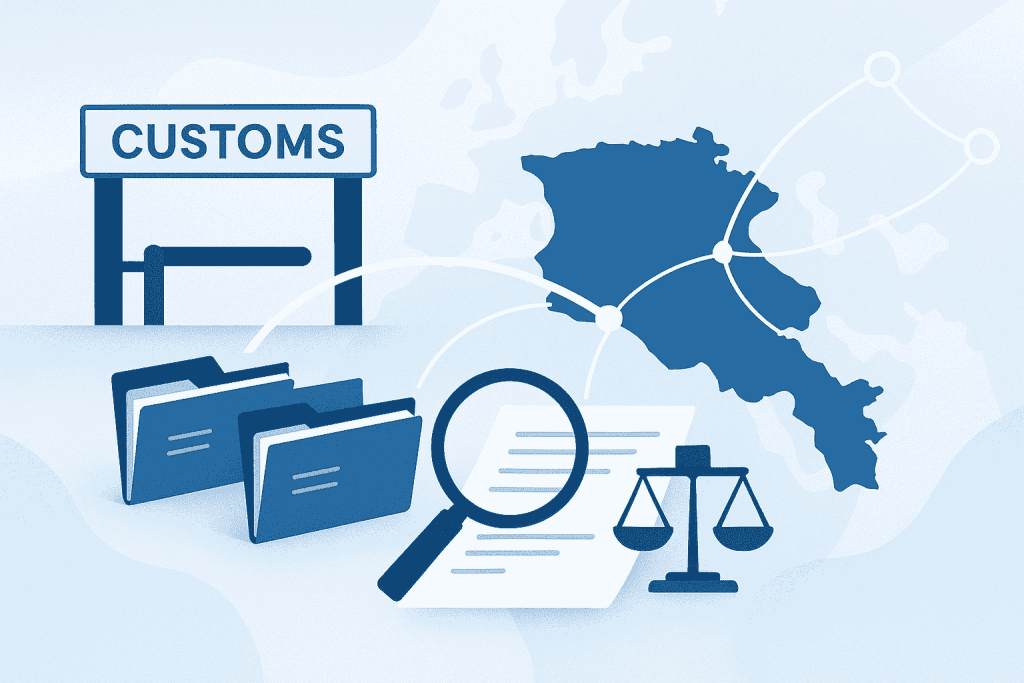
Armenia stands at a crucial geographic and economic crossroads, serving as a gateway between the Eurasian Economic Union (EAEU) and international markets. For businesses engaged in cross-border trade, understanding the customs clearance landscape is not just beneficial—it's essential for operational success.
This comprehensive guide explores the documentation requirements, procedural frameworks, and optimization strategies for efficient customs clearance in Armenia, helping businesses navigate this complex yet vital aspect of international trade.
The Armenian Customs Framework: An Overview
Armenia's customs landscape underwent a significant transformation with its accession to the Eurasian Economic Union (EAEU) in 2015. This membership fundamentally altered the country's customs procedures, tariff structures, and documentation requirements, creating both challenges and opportunities for businesses.
The EAEU Customs Code now substantially controls Armenia's foreign trade regime and customs regulations. This integration has led to the harmonization of customs procedures with other member states—Russia, Belarus, Kazakhstan, and Kyrgyzstan—while simultaneously establishing distinct requirements for trade with non-EAEU countries.
Documentation Requirements for Armenian Customs Clearance
Successful customs clearance in Armenia begins with proper documentation. Missing or incorrect paperwork remains one of the primary causes of customs delays and complications. Here's a comprehensive breakdown of the essential documents required:
Primary Documentation
- Customs Declaration Form: The official document declaring imported or exported goods to customs authorities
- Commercial Invoice: Detailing specifications, quantity, and value of goods
- Packing List: Itemized packaging details including dimensions, weight, and content description
- Bill of Lading/Airway Bill: Transport document serving as a receipt of goods shipment
- Contract: Agreement between buyer and seller outlining terms and conditions
- Certificate of Origin: Document certifying where goods were manufactured
Supplementary Documentation
- Import Licenses: Required for restricted goods
- TR TS Certificates: Technical Regulation of Technical Safety certificates
- Sanitary/Phytosanitary Certificates: For agricultural, food, plant, and animal products
- Conformity Certificates: Verifying compliance with EAEU technical regulations
- Special Permissions: For regulated goods such as pharmaceuticals, alcohol, tobacco, precious metals
- Payment Confirmation: Proof of payment for goods, aiding valuation verification
Since 2018, Armenia has implemented an electronic declaration system (DTI—Direct Trader Input) that has significantly streamlined the documentation submission process. This digital transformation allows for faster processing and reduced paperwork, though physical copies of certain documents may still be required during inspections.
EAEU Impact on Armenian Customs Procedures
Armenia's membership in the EAEU represents a fundamental shift in its customs landscape. The impact includes:
Tariff Adjustments
Average tariff rates increased from approximately 3% to over 10% to align with EAEU standards, affecting import costs from non-EAEU countries.
Simplified Intra-Union Trade
Elimination of customs procedures for trade with Russia, Belarus, Kazakhstan, and Kyrgyzstan, facilitating smoother business operations.
Transitional Exemptions
Negotiated temporary exemptions for certain goods, though these are gradually phasing out as Armenia fully integrates into the union.
Standardized Procedures
Implementation of the unified customs code, standardizing procedures while introducing new compliance requirements.
Customs Clearance Process in Armenia
Understanding the step-by-step process of customs clearance helps businesses prepare effectively and anticipate potential challenges. The typical customs clearance procedure in Armenia follows these stages:
- Pre-Arrival Preparation: Compilation of all necessary documentation and preparation of customs declaration
- Electronic Declaration Submission: Filing of customs declaration through the DTI system before or upon arrival of goods
- Document Verification: Review of submitted documents by customs authorities
- Value Assessment: Determination of customs value for duty calculation
- Physical Inspection: Potential examination of goods based on risk assessment systems
- Duty and Tax Calculation: Computing applicable customs duties, VAT, and excise taxes
- Payment Processing: Remittance of calculated duties and taxes
- Release of Goods: Final approval and release of goods from customs control
Non-diplomatic shipments typically take up to 10 working days for clearance, though this timeline can vary significantly based on factors such as documentation completeness, type of goods, and whether physical inspection is required. Goods requiring special permits or licenses may experience longer processing times.
Common Customs Challenges and Solutions
Valuation Disputes
Challenge: Armenian customs authorities sometimes challenge declared values and apply reference pricing instead.
Solution: Maintain comprehensive documentation including original invoices, contracts, proof of payment, and any supporting evidence that confirms transaction value. Consider obtaining advance valuation rulings for high-value or complex items.
Classification Issues
Challenge: Incorrect Harmonized System (HS) code classification can lead to incorrect duty rates or import restrictions.
Solution: Conduct thorough product analysis, consult with classification experts, and consider obtaining advance classification rulings from customs authorities for ambiguous items.
Documentation Complexity
Challenge: Incomplete or incorrect documentation causing clearance delays.
Solution: Implement robust documentation procedures, use checklists for each shipment type, and consider working with experienced customs brokers who understand Armenian requirements.
Regulatory Changes
Challenge: Keeping pace with evolving customs regulations, particularly as Armenia continues to align with EAEU standards.
Solution: Establish relationships with local customs authorities, subscribe to regulatory updates, and leverage professional advisors with specialized knowledge of Armenian customs law.
Strategies for Optimizing Customs Clearance in Armenia
Efficient customs clearance isn't merely about compliance—it's about strategic optimization that can provide competitive advantages. Here are key strategies businesses can implement:
Leverage Professional Expertise
While not legally mandated, partnering with qualified Armenian customs brokers provides invaluable expertise in navigating procedural complexities, accurate classification, and effective communication with authorities.
Implement Electronic Systems
Fully embrace Armenia's electronic Direct Trader Input (DTI) system for faster processing. Digitizing internal documentation management further streamlines the process and reduces errors.
Obtain Advance Rulings
Request advance rulings on tariff classification, valuation methods, or origin determination for regular shipments to prevent disputes and provide certainty in planning.
Establish Customs Compliance Teams
Designate specialized personnel responsible for customs compliance, documentation management, and maintaining relationships with authorities.
Strategic Routing Considerations
Armenia's landlocked status necessitates careful planning of transportation routes, typically through Georgia or Iran. Each route has distinct regulatory and logistical implications that should factor into customs strategy.
Leverage Trade Agreements
Utilize Armenia's unique position with access to both EAEU markets and preferential agreements with the EU under GSP+, optimizing supply chains accordingly.
Recent Regulatory Developments
Staying current with regulatory changes is crucial for maintaining compliance. Several recent developments have significant implications for businesses engaged in Armenian customs procedures:
Tightened Export Controls
Since May 2023, Armenia has significantly strengthened its export control legislation, particularly affecting technology and electronics exporters. Companies now require specific government permissions to export items such as:
- Microchips and electronic components
- Transformers and electrical equipment
- Video cameras and surveillance technology
- Antennas and communication equipment
- Aviation equipment and components
These changes align Armenian controls with international export control regimes and were further reinforced in 2024, creating additional compliance requirements for exporters.
Digital Services VAT
Since January 2022, Armenia has extended the 20% VAT requirement to digital services supplied by non-resident businesses, aligning with global trends in digital taxation. This has implications for software, online platforms, and digital content providers.
Customs Process Optimization Initiatives
The Armenian government has recently launched initiatives to reduce business costs related to export goods expertise and optimize customs clearance procedures. These developments aim to streamline processes and reduce compliance burdens, particularly for regular exporters.
Strategic Trade Position: Maximizing Armenia's Unique Advantages
Armenia occupies a strategic position that offers unique advantages for international trade. Businesses can leverage this position through several strategic approaches:
EAEU Market Access
Establish operations in Armenia to access the entire EAEU market (Russia, Belarus, Kazakhstan, Kyrgyzstan) duty-free, leveraging simplified customs procedures for intra-union trade.
EU GSP+ Benefits
Utilize the EU's GSP+ preferential tariff treatment for exports to European markets, providing significant duty advantages for Armenian-origin products.
Regional Trade Agreements
Leverage bilateral agreements with neighboring countries like Georgia and Iran, creating opportunities for regional distribution networks and manufacturing hubs.
To maximize these benefits, businesses must ensure proper certificates of origin and compliance with specific agreement requirements. Strategic supply chain planning that accounts for these advantages can create significant competitive differentiation.
Duty and Tax Structure
Understanding Armenia's duty and tax framework is essential for accurate financial planning and compliance. The current structure includes:
Customs Duty
Armenia applies a standard 10% customs duty on most imports from non-EAEU countries, though rates vary by product category and can be significantly higher for certain goods like agricultural products. Imports from EAEU member states are not subject to customs duties.
Value Added Tax (VAT)
VAT is applied at a standard rate of 20% on the combined value of goods plus customs duty. Exported goods are typically zero-rated for VAT purposes, creating a significant advantage for export-oriented businesses.
Excise Tax
Specific excise taxes apply to alcohol, tobacco, petroleum products, and certain luxury goods. These rates are periodically adjusted and can significantly impact the total import cost for these categories.
Case Study: Optimizing Customs Procedures
Technology Manufacturer's Success Story
The Challenge:
A European electronics manufacturer faced repeated customs delays when importing components to Armenia, dealing with valuation disputes and classification challenges that led to unexpected duties and storage fees.
The Solution:
- Implementation of advance customs rulings for critical components
- Development of a detailed valuation documentation system
- Strategic HS classification review with expert guidance
- Staff training on Armenian documentation requirements
The Results:
- Customs clearance time reduced by 60%
- Duty expenses decreased by 22% through proper classification
- Zero valuation disputes in the following 18 months
- Supply chain reliability improved, enabling just-in-time manufacturing
Frequently Asked Questions
What are the restricted or prohibited items for import into Armenia?
Armenia prohibits the import of certain pharmaceuticals (except in authorized cases), specific chemicals, weapons, explosives, nuclear materials, poisons, drugs, psychotropic substances and GMO food products. Restricted items requiring special permits include medicines, medical equipment, alcohol, tobacco products, precious metals and stones, endangered species, cultural artifacts, and increasingly, electronic equipment such as microchips, transformers, video cameras, and aviation equipment. These restrictions have been enhanced since May 2023 with tightened export control legislation.
How long does the customs clearance process typically take in Armenia?
Non-diplomatic shipments typically take up to 10 working days for clearance, though this can vary significantly based on factors such as the type of goods, completeness of documentation, and whether physical inspection is required. Items requiring special permits or licenses may take longer. The implementation of the electronic Direct Trader Input (DTI) system has helped streamline the process in recent years. Imports from other EAEU member countries do not require formal customs clearance, significantly reducing processing time.
Is a customs broker required for importing goods into Armenia?
While not legally mandated, using a customs broker is highly recommended, especially for businesses new to the Armenian market or dealing with complex/restricted goods. Customs brokers provide valuable services including declaration preparation, HS code determination, duties calculation, communication with authorities, and obtaining necessary permits. They must be Armenian citizens with proper qualifications and registration in the official registry of customs brokers. Their expertise can significantly reduce clearance times, prevent costly mistakes, and navigate the complexities of the EAEU customs regulations.
How has Armenia's membership in the EAEU affected customs procedures?
Armenia's 2015 accession to the Eurasian Economic Union (EAEU) has significantly impacted trade procedures. The average tariff rates increased from around 3% to over 10%, harmonizing with EAEU standards. While this increased costs for imports from non-EAEU countries, it eliminated customs procedures for trade with Russia, Belarus, Kazakhstan, and Kyrgyzstan. Armenia negotiated temporary exemptions for certain goods, but these are gradually phasing out. The unified customs code has standardized procedures but also introduced new compliance requirements for businesses.
What are the most common challenges in Armenian customs clearance?
The most common challenges include valuation disputes with customs authorities, correctly classifying goods under the Harmonized System (HS), navigating the complex documentation requirements, managing the transition to EAEU standards, and staying compliant with frequently changing regulations. Additionally, Armenia's landlocked status creates logistical challenges requiring careful transportation planning through Georgia or Iran.
Need Expert Guidance on Armenian Customs Clearance?
Our team of specialized attorneys provides comprehensive customs compliance solutions tailored to your business needs.
Get Your Free Armenian Customs GuideTransform your Armenian trade operations with expert legal support and streamlined compliance strategies.
