
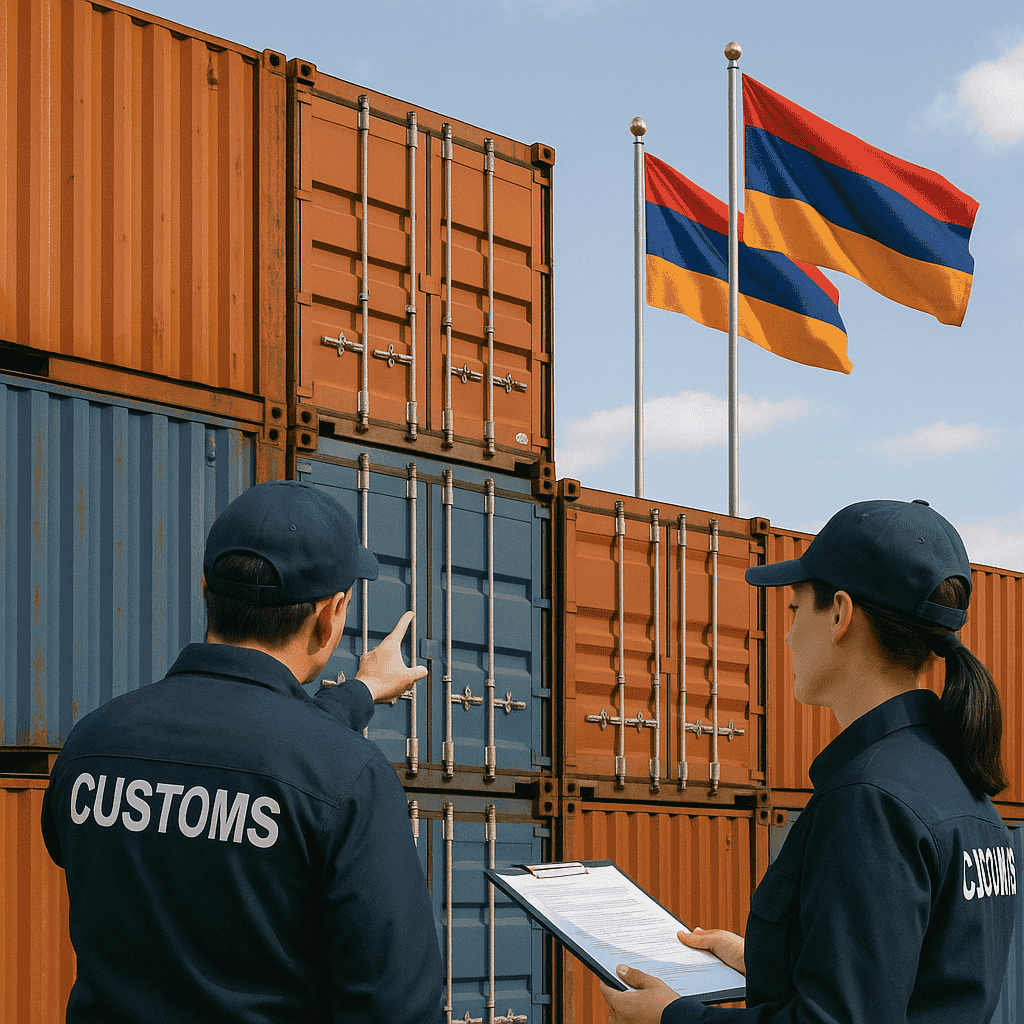
Armenia, a landlocked country in the South Caucasus region, serves as a strategic gateway between Europe and Asia. Since joining the Eurasian Economic Union (EAEU) in 2015, Armenia's import regulations have undergone significant changes to harmonize with EAEU standards. For businesses looking to tap into this emerging market, understanding the customs procedures and compliance requirements is essential for successful trade operations.
This comprehensive guide covers everything you need to know about importing goods into Armenia, from documentation requirements and customs clearance processes to tariffs, prohibited items, and practical compliance strategies.
Key Information
Armenia has been a member of the Eurasian Economic Union (EAEU) since 2015, which includes Russia, Belarus, Kazakhstan, and Kyrgyzstan. This membership significantly influences its customs regulations and tariff structure.
Armenian Customs Procedures Overview
The Armenian customs system has modernized significantly in recent years, implementing online declaration processes that reduce personal interaction between officials and importers. Understanding the basic procedures will help ensure smooth import operations.
Customs Declaration Process
Armenia has implemented an online declaration system called Direct Trader Input (DTI) that allows importers to submit declarations electronically. This system has significantly streamlined the import process by reducing face-to-face interactions with customs officials and decreasing processing times.
Step-by-Step Customs Clearance Process
- Preparation of documentation (commercial invoice, packing lists, etc.)
- Classification of goods according to the Harmonized System (HS codes)
- Submission of electronic customs declaration through the DTI system
- Customs valuation and assessment of duties and taxes
- Physical inspection of goods (if required)
- Payment of duties and taxes
- Release of goods
Non-diplomatic shipments typically take up to 10 working days for clearance. If import permissions are required for specific goods, additional time should be factored into your planning. For goods arriving from other EAEU member countries (Russia, Belarus, Kazakhstan, and Kyrgyzstan), no customs clearance is required.
Required Documentation
Proper documentation is crucial for successful customs clearance in Armenia. Customs officials require importers to present several documents to process imports efficiently:
Essential Documents
- Customs declaration form
- Commercial invoice with detailed specifications
- Packing lists
- Bill of lading or airway bill
- Contract between buyer and seller
- Certificate of origin
- Documents confirming legitimacy of declarants, brokers, and importers
Additional Documents (when applicable)
- Import licenses for restricted goods
- TR TS certificates (Technical Regulation of Technical Safety)
- Sanitary and phytosanitary certificates
- Conformity certificates
- Special permissions for regulated goods
- Pro forma invoice (for certain shipments)
Practical Tip
To ensure reliance on the transaction value method with greater confidence and predictability, importers should submit a valid invoice for goods procured in the exporting country together with a customs declaration. This helps avoid reference pricing, which can lead to unpredictable valuation outcomes.
Special Case: Personal Imports
For individuals bringing goods into Armenia for personal use, different rules apply:
Items that can be imported duty-free:
- 200-400 cigarettes (varies by regulation source)
- 2 liters of alcohol
- Perfume products (up to 5 liters or 6 items)
- Personal goods valued up to USD 500-10,000 (depending on entry method)
Weight restrictions:
- Individuals can import goods for personal use weighing no more than 25 kg and valued at no more than 500 Euros without duties
Tariffs, Duties and Taxes
Since joining the EAEU in 2015, Armenia's tariff structure has undergone significant changes to align with EAEU standards. Understanding the current tariff regime is essential for accurate cost calculations when importing goods.
Current Tariff Structure
Prior to joining the EAEU, Armenia applied tariffs at rates of zero or 10 percent, with an average applied tariff of nearly three percent in 2009. Since EAEU accession, the average tariff has climbed to over 10 percent, with agricultural products seeing particularly dramatic increases.
Standard Rates
- A uniform rate of 10% applies to the majority of imports
- All exports from Armenia are duty-free
- Some essential goods like foodstuffs, raw materials, and fuel are exempt from customs duties
Additional Taxes
- Value Added Tax (VAT): 20% standard rate
- Excise taxes on specific goods like alcohol, tobacco, and certain petroleum products
- Since January 2022, Armenia has extended 20% VAT to digital services supplied by non-resident businesses
Armenia applies tariffs based on the Harmonized System (HS) for classifying goods. The Eurasian Economic Commission (EEC) manages the harmonization of tariffs, tariff rate quotas, and licensing and certification among EAEU member states, though implementation can be uneven.
Temporary Exemptions
Armenia negotiated temporary customs tariff exemptions for certain goods when joining the EAEU. These exemptions phase out over different periods of time. The full list of goods with temporary exemptions is available in Annex 4 of the treaty on Armenia's joining the EAEU.
Practical Example: Calculating Import Costs
Case Study: Importing Electronics
Let's consider a scenario where a company is importing tablets worth $10,000 from the United States to Armenia:
- Customs Duty: $10,000 × 20% = $2,000
- VAT: ($10,000 + $2,000) × 20% = $2,400
- Total import costs: $2,000 + $2,400 = $4,400
- Total landed cost: $10,000 + $4,400 = $14,400
Note: This example is simplified and actual calculations may vary depending on specific HS codes, exemptions, and other factors. It's always advisable to consult with a customs broker for accurate calculations.
Prohibited and Restricted Goods
Armenia enforces strict regulations on certain categories of goods, either prohibiting their import entirely or requiring special permissions and licenses. The EAEU maintains a unified list of goods for which import and export limitations and prohibitions apply to monitor and control movement of sensitive items.
Prohibited Items
Armenia prohibits the import of:
- Pharmaceutical products (except in authorized cases)
- Certain chemicals
- Weapons and components thereof
- Explosives
- Nuclear materials
- Poisons
- Drugs and psychotropic substances
- Pornography
- Genetically modified (GMO) food products
Restricted Items (Requiring Special Permits)
The following goods can be imported but require special permissions or licenses:
- Medicines and medical equipment
- Alcohol and alcoholic beverages
- Tobacco products
- Precious metals and stones
- Endangered species and products
- Cultural artifacts and antiques
- Certain electronic equipment (since May 2023)
- Microchips, transformers, video cameras, antennas
- Aviation equipment
Since May 2023, the Armenian government has tightened its export control legislation, requiring government permission to sell microchips, transformers, video cameras, antennas, and other electronic and aviation equipment abroad. This change aims to strengthen compliance with U.S. export controls.
Important Note
Import licenses in Armenia are issued by government agencies in accordance with the unified licensing rules of the EAEU. Information about legislation, licenses, and bans and restrictions can be found on the electronic system at www.e-gov.am/licenses.
Working with Customs Brokers in Armenia
While there is no legal requirement to hire a customs broker in Armenia, many importers choose to do so to navigate the complexities of customs regulations and ensure compliance. Customs brokers can significantly streamline the import process, especially for businesses new to the Armenian market.
Role of Customs Brokers
Services Provided by Customs Brokers
- Preparation and submission of customs declarations
- Determination of correct HS codes for goods
- Calculation of duties, taxes, and fees
- Communication with customs authorities
- Advice on import regulations and restrictions
- Assistance with obtaining necessary permits and certificates
- Representation during customs inspections
Requirements for Customs Brokers in Armenia
- Must be a citizen of the Republic of Armenia
- Must have obtained qualification as a customs specialist
- Customs clearances can only be performed by qualified individuals
- Brokers must be registered in the official registry of customs brokers
- Must adhere to EAEU and Armenian customs regulations
Selecting a Customs Broker
Factors to Consider When Choosing a Customs Broker
- Experience: Look for brokers with experience in your specific industry or type of goods
- Licensing: Ensure they are properly licensed and registered with Armenian authorities
- Services offered: Some brokers offer comprehensive services including transportation and warehousing
- Technology: Brokers using electronic systems may process clearances more efficiently
- Languages: Ability to communicate in English can be important for foreign importers
- References: Ask for references from other international clients
Available Customs Brokerage Services in Armenia
Several companies provide customs brokerage services in Armenia, including Apaven, Garant Logistics, Urartu Trans, and various specialized customs broker services. These companies offer comprehensive customs clearance solutions for both imports and exports.
Compliance Strategies and Best Practices
Ensuring compliance with Armenian customs regulations requires strategic planning and attention to detail. The following best practices can help importers navigate customs procedures successfully and avoid common pitfalls.
Pre-Import Planning
- Verify HS classification codes before shipping
- Research applicable tariffs and taxes
- Check if goods are subject to import restrictions
- Prepare all required documentation in advance
- Consider applying for advance rulings for complex items
- Establish relationships with reliable customs brokers
During Import Process
- Ensure complete and accurate documentation
- Maintain clear communication with customs authorities
- Be prepared for physical inspections if required
- Have funds ready for immediate payment of duties
- Monitor shipment status through the clearance process
- Address any queries from customs promptly
Common Challenges and Solutions
Challenge: Valuation Disputes
Problem: Customs officials sometimes question declared values and apply reference pricing instead of transaction value.
Solution: Maintain comprehensive documentation including original invoices, contracts, proof of payment, and any other documents that confirm the transaction value. Be prepared to justify your declared values.
Challenge: Classification Issues
Problem: Incorrect HS classification can lead to delays and potential penalties.
Solution: Consider obtaining advance rulings for complex items. Work with experienced customs brokers familiar with EAEU classification practices.
Challenge: Documentation Errors
Problem: Incomplete or inaccurate documentation is a common cause of clearance delays.
Solution: Implement a thorough document review process. Create checklists for required documents for each type of import. Double-check information before submission.
Challenge: Regulatory Changes
Problem: EAEU and Armenian regulations can change, affecting import requirements.
Solution: Regularly monitor regulatory updates through official channels. Subscribe to updates from customs authorities or work with a broker who stays current with changes.
Case Study: Successful Import Compliance
Case Study: Technology Equipment Importer
A European company exporting computer equipment to Armenia implemented the following strategies to ensure smooth customs clearance:
- Pre-clearance preparation: They conducted a thorough review of all documentation before shipping, ensuring accuracy and completeness.
- Broker partnership: They established a relationship with a reputable Armenian customs broker with experience in technology imports.
- Clear valuation documentation: They maintained comprehensive records of all transactions, including contracts, invoices, and payment confirmations.
- Advance classification: They obtained advance rulings on HS classification for new product lines before shipping.
- Regular compliance audits: They conducted quarterly reviews of their import processes to identify and address potential issues.
As a result, the company reduced clearance times by 60% and avoided any valuation disputes or penalties, despite importing complex technical equipment subject to various regulations.
Recent Developments and Future Trends
Armenia's customs landscape continues to evolve, with several recent developments and emerging trends that importers should be aware of:
Recent Developments
- Tightened export control legislation (May 2023) requiring government permission for electronics and aviation equipment exports
- Extension of 20% VAT to digital services supplied by non-resident businesses (January 2022)
- Implementation of electronic customs declaration system (DTI)
- Prolonged VAT exemption for electric vehicle imports through 2024
- Exemption from customs duties for electric vehicles until the end of 2025
Emerging Trends
- Increasing digitalization of customs processes
- Greater harmonization with EAEU standards as temporary exemptions expire
- Focus on strengthening control over electronics imports in line with global export control regimes
- Growing emphasis on eCommerce regulations
- Simplification of procedures for small value shipments
eCommerce Imports
For eCommerce imports, Armenia has established a duty-free import limit of €200 and/or 31 kg per person per month. Exceeding this limit incurs the standard VAT rate of 20%. The implementation of EAEU regulations may impact eCommerce development by affecting the value of goods customers can import from internet retailers duty-free.
Frequently Asked Questions
Conclusion
Importing goods into Armenia requires navigating a complex system of customs procedures, documentation requirements, and regulatory compliance. The country's membership in the Eurasian Economic Union has significantly influenced its import regulations, introducing higher tariffs and stricter compliance requirements but also creating opportunities for seamless trade with other EAEU member states.
By understanding the customs landscape, preparing proper documentation, working with experienced customs brokers when needed, and staying informed about regulatory changes, importers can successfully navigate Armenia's import procedures and tap into this growing market. The ongoing digitalization of customs processes, including the implementation of online declaration systems, is gradually making the import process more efficient and transparent.
As Armenia continues to develop its economy and integrate into regional and global trade networks, its customs procedures are likely to evolve. Staying informed about these changes will be essential for maintaining compliance and optimizing import operations.
