
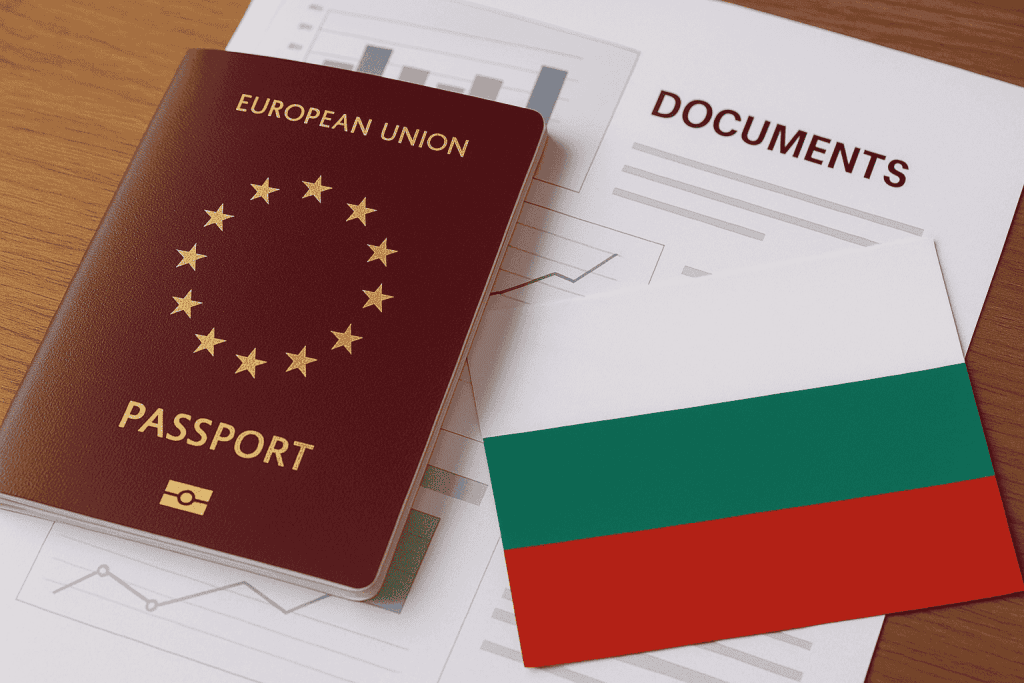
Bulgaria has emerged as a premier destination for entrepreneurs and investors seeking business opportunities with the added benefit of European Union residency. With its strategic location at the crossroads of Europe and Asia, favorable tax regime, and relatively low cost of living, Bulgaria offers an attractive package for business-minded individuals looking to expand into EU markets.
While there are several pathways to obtaining residency in Bulgaria, establishing a business presence is one of the most accessible and practical routes, especially for entrepreneurs. This comprehensive guide will walk you through the various business-related options for gaining Bulgarian residency, focusing on the most efficient and cost-effective methods.
Ready to take the first step toward your European future? Learn more about your Bulgarian EU residency options here.
Business Pathways to Bulgarian Residency: An Overview
For entrepreneurs, Bulgaria provides two main business residency options: setting up a Trade Representative Office (TRO) or establishing a Limited Liability Company (LLC). Each pathway has distinct advantages and requirements tailored to different business profiles and goals.
The Two Primary Business Pathways:
- Trade Representative Office (TRO) - A non-commercial entity representing a foreign company's interests in Bulgaria.
- Limited Liability Company (LLC/OOD/EOOD) - A fully operational Bulgarian business entity with local employment requirements.
Your choice between these options should align with your long-term business strategy, available resources, and residency goals. Let's examine each pathway in detail to help you make an informed decision.
The Trade Representative Office (TRO) Pathway
The Bulgarian Trade Representative Office (TRO) residency program stands out as one of the most accessible business immigration pathways in the European Union. It allows non-EU entrepreneurs and business owners to secure residency without large investments or job creation requirements.
What is a Trade Representative Office?
A TRO is an extension of a foreign company registered in Bulgaria for non-commercial purposes. Unlike a Bulgarian company, a TRO cannot engage in direct profit-making activities. Instead, it serves as a liaison office conducting market research, business development, networking, and promotional activities on behalf of the foreign parent company.
Key Benefits of the TRO Program:
- Lower Financial Threshold - No minimum investment requirement
- No Local Employment Obligation - Unlike other business residency options
- Multiple Representatives - Ability to sponsor up to three foreign representatives per company
- Family Inclusion - Options for family reunification for spouses and dependent children
- Simplified Renewal - Straightforward annual renewal process
- EU Travel - Access to visa-free Schengen travel (90 days within any 180-day period)
- Path to Permanence - Possibility of obtaining permanent residency after five years
Eligibility Requirements:
For the Foreign Parent Company:
- Must be operational for at least two years before applying
- Must be legally registered and in good standing in its home country
- Must demonstrate financial stability and active business engagement
- Must have a legitimate reason for establishing presence in Bulgaria
For the Applicant (Trade Representative):
- Must be formally appointed as a representative of the foreign company
- Must provide a clean criminal record from their country of residence
- Must show proof of financial means to support themselves in Bulgaria
- Must maintain valid health insurance covering their stay in Bulgaria
- Must secure residential accommodation in Bulgaria
Step-by-Step Process: Obtaining Bulgarian Residency via TRO
Step 1: Register a Representative Office with BCCI
The first critical step involves registering your foreign company's representative office with the Bulgarian Chamber of Commerce and Industry (BCCI).
Required Documents:
- Certificate of Good Standing for the foreign company
- Company's Articles of Incorporation
- Board resolution approving the establishment of a Bulgarian representative office
- Power of Attorney (if using a representative for registration)
- Proof of a Bulgarian business address
- Completed BCCI application form
Note: All documents must be translated into Bulgarian and apostilled.
Step 2: Apply for a Type D Long-Stay Visa
Once your representative office is registered, you must apply for a Type D visa at a Bulgarian embassy or consulate in your home country.
Required Documents for Type D Visa:
- Completed visa application form
- BCCI registration certificate
- Appointment letter confirming your trade representative status
- Proof of financial means (bank statements)
- Health insurance policy valid for at least 6-12 months
- Clean criminal record certificate
- Proof of accommodation in Bulgaria
The visa processing typically takes up to 90 days.
Step 3: Apply for a Temporary Residence Permit
After entering Bulgaria with your Type D visa, you must apply for a temporary residence permit at the local Migration Office.
Required Documents for Residency Permit:
- BCCI registration certificate for the representative office
- Passport with valid Type D visa
- Proof of accommodation (lease agreement or property deed)
- Updated proof of financial means
- National health insurance
- Biometrics submission (fingerprints and photographs)
Processing takes approximately 2-4 weeks. Once approved, you receive a Bulgarian residence card valid for one year, renewable annually.
For expert guidance through the TRO application process, consult with our specialists in Bulgarian business immigration.
The Limited Liability Company (LLC) Pathway to Residency
For entrepreneurs who plan to conduct active business operations in Bulgaria, establishing a Limited Liability Company (LLC) - known as OOD (multiple shareholders) or EOOD (single shareholder) in Bulgaria - provides another pathway to residency.
Understanding the LLC Residency Pathway
The LLC pathway differs significantly from the TRO option as it involves creating an operational business entity that can engage in commercial activities and generate profit directly within Bulgaria.
Key Requirements for Residency Through LLC Formation:
- Employment Creation - The business must employ at least ten Bulgarian citizens to qualify the owner for residency
- Legal Structure - The LLC must be properly established as a legal entity in Bulgaria
- Minimum Capital - While the minimum required share capital is just 2 BGN (approximately €1), practical operations typically require more substantial capitalization
- Business Activity - The company must engage in genuine business activities in Bulgaria
- Tax Compliance - Full compliance with Bulgaria's tax regulations and reporting requirements
LLC Formation Process:
- Choose and Reserve Company Name - Verify availability and reserve your business name
- Prepare Company Documents - Draft Articles of Association and other founding documents
- Deposit Initial Capital - Open a bank account and deposit the share capital
- Register with Commercial Register - Complete formal registration process
- Obtain Tax Registration - Register for tax purposes (VAT registration if applicable)
- Hire Required Employees - Employ at least ten Bulgarian citizens
- Apply for Residency - Submit residency application with proof of business ownership and employment creation
The entire LLC establishment process typically takes around 2-3 weeks, with the residency application process taking an additional 1-2 months.
TRO vs. LLC: Choosing the Right Business Pathway for Your Residency Goals
Deciding between establishing a Trade Representative Office or a Limited Liability Company depends on your business objectives, available resources, and long-term residency goals. Here's a side-by-side comparison to help you make an informed choice:
| Factor | Trade Representative Office (TRO) | Limited Liability Company (LLC) |
|---|---|---|
| Commercial Activities | Cannot engage in direct commercial activities or generate revenue in Bulgaria | Can conduct full commercial operations and generate revenue |
| Employment Requirements | No requirement to hire local employees | Must employ at least 10 Bulgarian citizens |
| Initial Investment | Minimal - primarily administrative costs | Higher - includes capital, operational setup, and employment costs |
| Taxation | Not subject to corporate taxation in Bulgaria | Subject to Bulgaria's 10% corporate tax on profits |
| Complexity of Setup | Relatively straightforward | More complex |
| Ideal For | Market research, networking, business development without direct operations | Full business operations in Bulgaria with local presence |
| Path to Permanent Residency | Yes, after 5 years | Yes, after 5 years |
Which Option Is Right For You?
The TRO pathway may be better if:
- You want to maintain your primary business operations outside Bulgaria
- You're looking for a cost-effective entry point to EU residency
- You don't plan to conduct direct commercial activities in Bulgaria
- You want to avoid the complexity of employing local staff
The LLC pathway may be better if:
- You intend to conduct active business operations in Bulgaria
- You have the resources to employ at least 10 Bulgarian citizens
- You want to take advantage of Bulgaria's favorable corporate tax rate
- You plan to generate revenue directly within the Bulgarian market
Investment Pathway: An Alternative to Business Formation
For those with significant capital but less interest in active business management, Bulgaria offers investment-based residency pathways that provide an alternative to business formation.
Key Investment Options for Bulgarian Residency:
-
Real Estate Investment
Purchasing property worth at least €300,000 can qualify you for a residence permit. This option is particularly attractive for those looking to combine residency benefits with tangible asset ownership. -
Government Bonds/Investment Funds
Investing €512,000 (BGN 1 million) in Bulgarian government bonds or regulated investment funds can provide a direct path to permanent residency. This investment must be maintained for at least 5 years.
Benefits of the Investment Pathway:
- No requirement to establish or manage a business entity
- No employment creation obligations
- Potential for investment returns alongside residency benefits
- Direct path to permanent residency for certain investment levels
- Possibility of including immediate family members in the residency application
The investment pathway is particularly suitable for retirees, passive investors, and high-net-worth individuals seeking EU residency without the operational complexities of business management.
The Benefits of Bulgarian Residency for Entrepreneurs
Securing Bulgarian residency through business establishment or investment opens the door to numerous advantages that extend beyond mere permission to stay in the country.
Strategic EU Advantages
- EU Freedom of Movement - Travel freely throughout the Schengen Area for up to 90 days in any 180-day period
- Access to EU Markets - Leverage Bulgaria's EU membership for business expansion across the European single market
- Path to Permanent Residency and Citizenship - After 5 years of continuous residency, apply for permanent status and eventual EU citizenship
Financial & Business Benefits
- Favorable Tax Environment - Benefit from Bulgaria's 10% corporate and personal income tax rates, among the lowest in the EU
- Lower Operational Costs - Enjoy significantly lower business operational costs compared to Western European countries
- Strategic Location - Utilize Bulgaria's position at the crossroads of Europe and Asia for logistics and market access
Lifestyle & Personal Advantages
- High Quality of Life - Experience Bulgaria's rich cultural heritage, natural beauty, and Mediterranean climate
- Affordable Living Costs - Benefit from a cost of living 40-60% lower than in most Western European nations
- European Healthcare Access - Gain access to Bulgaria's healthcare system and the European Health Insurance Card
- Educational Opportunities - Access quality education options for yourself and your family at EU rates
Bulgarian residency provides a unique combination of business opportunity, financial advantages, and quality of life improvements that make it an attractive option for entrepreneurs and investors seeking an EU presence.
Learn more about how Bulgarian residency can benefit your business and lifestyle goals.
Success Stories: Entrepreneurs Who Successfully Navigated Bulgarian Residency
Case Study 1: Tech Startup Founder via TRO
Background: A UK-based software developer with an established online business sought EU presence after Brexit impacts.
Approach: Established a Trade Representative Office in Sofia to explore Eastern European markets while securing residency for himself and his family.
Implementation:
- Registered a TRO for market research and business development activities
- Minimal setup costs with straightforward documentation process
- Completed the entire residency application within 3 months
Outcome:
- Successfully secured residency permits for founder and family
- Used Bulgaria as a base to expand business into 3 Eastern European countries
- Maintained primary business operations in the UK while enjoying EU residency benefits
- Currently progressing toward permanent residency status
Case Study 2: E-commerce Entrepreneur via LLC
Background: A Middle Eastern e-commerce entrepreneur wanted to establish an EU distribution hub while securing residency.
Approach: Formed a Bulgarian LLC to serve as an operational business entity with local employees.
Implementation:
- Established a Bulgarian LLC with €10,000 initial capital
- Hired 12 local employees for logistics and customer service operations
- Utilized Bulgaria's strategic location and lower operational costs
- Leveraged the 10% corporate tax rate for improved profitability
Outcome:
- Secured residency for the entrepreneur and immediate family
- Reduced shipping times to EU customers by 50%
- Achieved EU sales growth of 130% in the first year of operations
- Created a sustainable business model with continued expansion
These examples demonstrate the versatility of Bulgaria's business residency pathways and how they can be tailored to different entrepreneurial needs and circumstances.
Frequently Asked Questions About Bulgarian Business Residency
How long does the Bulgarian residency application process take?
The timeline varies by pathway. For the TRO route, expect 2-3 months from initial documentation to approval. The LLC pathway typically takes 3-4 months due to the additional complexity of business formation and employment requirements. Investment pathways generally take 3-6 months, depending on the specific investment vehicle chosen.
Is there a minimum stay requirement to maintain Bulgarian residency?
Yes, to maintain your Bulgarian residency status, you should not be absent from Bulgaria for more than 6 consecutive months or 10 months total during each year of residency. For permanent residency eligibility after 5 years, you must have physically resided in Bulgaria for at least 30 months during that period.
Can I work in other EU countries with Bulgarian residency?
Bulgarian residency permits allow for visa-free travel within the Schengen Area for up to 90 days in any 180-day period but do not automatically grant work rights in other EU countries. For full EU work rights, you would need to obtain Bulgarian citizenship (possible after 5 years of permanent residency) or secure appropriate work permits for specific EU countries.
Can my family members also obtain residency if I qualify?
Yes, your spouse and dependent children under 18 are eligible for family reunification residency permits once your own residency is approved. They must apply separately, but the process is streamlined when tied to an approved primary applicant. Family members receive the same residency duration as the main applicant.
What are the tax implications of Bulgarian residency?
Bulgaria offers one of Europe's most attractive tax regimes with a flat 10% personal and corporate income tax rate. If you become a tax resident (staying 183+ days per year), you're taxed on worldwide income. Non-tax residents are only taxed on Bulgarian-sourced income. Bulgaria has double taxation treaties with over 70 countries to prevent dual taxation.
What's the difference between temporary and permanent residency?
Temporary residency permits are initially granted for one year and can be renewed annually. After holding temporary residency for five continuous years, you become eligible for permanent residency, which has no expiration date (though the physical card must be renewed every five years). Permanent residency provides more stability and is a stepping stone toward citizenship.
Are there language requirements for Bulgarian residency?
There are no language requirements for temporary or permanent residency. However, if you eventually apply for Bulgarian citizenship, you'll need to demonstrate basic Bulgarian language proficiency as part of the naturalization process.
Can I maintain residency through a TRO if I'm rarely physically present in Bulgaria?
While the TRO pathway offers more flexibility than some other residency options, you must still adhere to the minimum stay requirements (no more than 6 consecutive months or 10 months total absence per year). If you plan to be largely absent from Bulgaria, consult with a Bulgarian immigration specialist to ensure your residency status remains valid.
Ready to Start Your Bulgarian Business Residency Journey?
Our team of Bulgarian residency experts can guide you through every step of establishing your business presence and securing EU residency.
Join hundreds of successful entrepreneurs who have established their EU presence through Bulgarian business residency.
Conclusion: Making the Right Choice for Your Bulgarian Business Residency
Bulgaria offers entrepreneurs a unique combination of EU benefits, business opportunities, and residency pathways that few other European countries can match. Whether through the streamlined TRO option, the more operationally focused LLC pathway, or strategic investments, Bulgaria provides accessible routes to European residency tailored to various business profiles and goals.
When deciding on your optimal approach to Bulgarian business residency, consider these key factors:
- Business Objectives - Whether you need an operational presence or simply representation
- Available Resources - Financial capacity and willingness to employ local staff
- Timeline - How quickly you need to establish residency
- Long-Term Goals - Whether permanent residency or eventual citizenship is your aim
- Family Situation - Whether you need to include family members in your residency plans
By carefully evaluating these factors and working with experienced Bulgarian immigration specialists, you can navigate the process efficiently and select the business residency pathway that best aligns with your entrepreneurial vision and European aspirations.
Bulgaria's combination of EU membership, favorable taxation, strategic location, and diverse residency options creates an attractive proposition for forward-thinking entrepreneurs looking to establish a European foothold while enjoying the significant lifestyle benefits of this beautiful Balkan nation.
Bulgaria business residency at a glance
TRO, LLC, Investment, Digital Nomad Visa
10% flat (corporate and personal)
Full Schengen member (Jan 2025); Euro adopted Jan 2026
~10 years (5 yr temp + 5 yr permanent)
Euro (EUR) since January 1, 2026
EUR 100 (standard) / EUR 200 (360-day)
Bulgaria has become one of the most attractive EU destinations for entrepreneurs seeking business opportunities combined with European residency. With full Schengen membership since January 1, 2025, euro adoption on January 1, 2026, a flat 10% tax rate, and significantly lower costs of living compared to Western Europe, the country offers a compelling package for business-minded individuals looking to enter EU markets.
This guide covers the main business-related pathways to Bulgarian residency — including the Trade Representative Office (TRO), Limited Liability Company (LLC), investment routes, and Bulgaria’s newer Digital Nomad Visa — updated to reflect the July 2025 legislative amendments and 2026 regulatory environment.
Business pathways to Bulgarian residency
Bulgaria provides several routes for entrepreneurs to obtain residency through business activity. The four main options are:
- Trade Representative Office (TRO) — a non-commercial entity representing a foreign company’s interests in Bulgaria, ideal for entrepreneurs who want EU residency without operating a local business.
- Limited Liability Company (LLC/OOD/EOOD) — a fully operational Bulgarian business entity with local employment requirements, suited for those planning active commercial operations.
- Investment-based residency — real estate purchases or fund investments that qualify for temporary or permanent residence without running a business.
- Digital Nomad Visa — introduced in December 2025 for remote workers earning income from outside Bulgaria.
Your choice should align with your business strategy, available resources, and long-term residency goals. If you are considering forming a business as part of your residency plan, understanding the differences between these pathways is essential.
The Trade Representative Office (TRO) pathway
The TRO program remains one of the most accessible business immigration pathways in the EU. It allows non-EU entrepreneurs to secure residency without large investments or job creation requirements. A TRO is an extension of a foreign company registered with the Bulgarian Chamber of Commerce and Industry (BCCI) for non-commercial purposes — conducting market research, business development, networking, and promotional activities on behalf of the parent company.
Key benefits of the TRO program
- Lower financial threshold — no minimum investment requirement; costs are primarily administrative.
- No local employment obligation — unlike the LLC pathway, no Bulgarian employees are required.
- Up to two representatives — each foreign company can sponsor up to two trade representatives (reduced from the previous allowance by the July 2025 amendments to the Foreigners Act).
- Family inclusion — spouses and dependent children are eligible for family reunification permits.
- Full Schengen access — as a full Schengen member since January 2025, Bulgarian residence cards function as Schengen residence permits.
- Path to permanent residency — eligible after five continuous years of temporary residence.
Eligibility requirements (updated for 2026)
For the foreign parent company:
- Must be operational for at least two years before applying.
- Must demonstrate annual turnover of at least BGN 100,000 (~EUR 51,000) for each of the preceding two years — a requirement introduced by the July 2025 amendments.
- Must be legally registered and in good standing in its home country.
- Must have a legitimate reason for establishing presence in Bulgaria.
- The BCCI now verifies real business activity and a physical office address — virtual offices are no longer accepted.
For the applicant (trade representative):
- Must be formally appointed as a representative of the foreign company.
- Must provide a clean criminal record from their country of residence.
- Must show proof of financial means to support themselves in Bulgaria.
- Must maintain valid health insurance covering their stay.
- Must secure physical residential accommodation in Bulgaria.
Step-by-step: obtaining residency via TRO
Step 1: Register with the BCCI
Register your foreign company’s representative office with the Bulgarian Chamber of Commerce and Industry. The BCCI registration fee is approximately EUR 210. Required documents include a Certificate of Good Standing, Articles of Incorporation, board resolution approving the Bulgarian office, Power of Attorney (if applicable), proof of a physical Bulgarian business address, and a completed BCCI application form. All documents must be translated into Bulgarian and apostilled.
Step 2: Apply for a Type D long-stay visa
Once the representative office is registered, apply for a Type D visa at a Bulgarian embassy or consulate in your home country. The standard visa fee is EUR 100 (or EUR 200 for the 360-day variant). Required documents include the BCCI registration certificate, appointment letter confirming trade representative status, proof of financial means, health insurance valid for at least 6–12 months, clean criminal record, and proof of accommodation. Processing typically takes up to 90 days.
Step 3: Apply for a temporary residence permit
After entering Bulgaria with your Type D visa, apply for a temporary residence permit at the local Migration Office. The residence permit fee is BGN 500 (~EUR 256). You will need your BCCI registration certificate, passport with valid Type D visa, proof of accommodation, financial means, national health insurance, and biometrics. Processing takes approximately 2–4 weeks. Once approved, you receive a Bulgarian residence card valid for one year, renewable annually.
The Limited Liability Company (LLC) pathway
For entrepreneurs planning active commercial operations in Bulgaria, establishing a Limited Liability Company — known as OOD (multiple shareholders) or EOOD (single shareholder) — provides a direct pathway to residency. Unlike the TRO, an LLC can engage in profit-making activities and generate revenue within Bulgaria.
Key requirements
- Employment creation — the business must employ at least 10 Bulgarian citizens per foreign owner/partner to qualify for residency (two partners = 20 employees; three partners = 30).
- Minimum share capital — the statutory minimum is just BGN 2 (~EUR 1), though practical operations require more substantial capitalization.
- Genuine business activity — the company must engage in real commercial operations in Bulgaria.
- Tax compliance — full compliance with Bulgaria’s 10% corporate tax and reporting requirements.
- Employer costs — social security and healthcare contributions add approximately 18–20% on top of gross wages.
LLC formation process
Company registration typically takes around 3 business days and involves choosing and reserving a company name, preparing Articles of Association, depositing initial capital in a Bulgarian bank account, registering with the Commercial Register, obtaining tax registration (including VAT if applicable), hiring the required Bulgarian employees, and then submitting your residency application.
Note that opening a Bulgarian bank account now takes 4–6 weeks due to stricter KYC requirements introduced in 2025. Plan your timeline accordingly. First-year costs for a fully compliant LLC with employees can range from EUR 2,900 to EUR 12,800 or more, depending on the scale of operations.
TRO vs. LLC: choosing the right pathway
| Factor | TRO | LLC (OOD/EOOD) |
|---|---|---|
| Commercial activity | Non-commercial only (market research, networking) | Full commercial operations permitted |
| Employment | None required | 10 Bulgarian employees per owner |
| Parent company | 2+ years, BGN 100k/yr turnover | Not required |
| Setup cost | Low (BCCI ~EUR 210 + visa fees) | Higher (EUR 2,900–12,800+ first year) |
| Corporate tax | Not subject to Bulgarian corporate tax | 10% flat corporate tax |
| Best for | EU residency with minimal overhead | Active operations in Bulgarian/EU markets |
| Path to PR | 5 years continuous temporary residence | 5 years continuous temporary residence |
The TRO pathway suits entrepreneurs who want to maintain primary operations outside Bulgaria while securing EU residency at low cost. The LLC pathway is better for those planning to actively do business in Bulgaria and leverage the country’s low tax rates and growing domestic market. If you are unsure which route fits your situation, a consultation with an immigration specialist can help clarify your options.
Investment pathway: an alternative to business formation
For those with significant capital but less interest in active business management, Bulgaria offers several investment-based residency pathways. Bulgaria remains one of the few EU member states with an active golden visa program, and full Schengen membership has made it even more attractive.
Investment options (2026 thresholds)
- Real estate — purchasing property worth at least BGN 600,000 (~EUR 307,000) qualifies for a temporary residence permit, renewed annually.
- Qualifying investment funds or concessions — investing EUR 512,000 (BGN 1,000,000) in FSC-licensed funds grants a direct path to permanent residency with no five-year waiting period and no physical presence requirement.
- Traded company shares or bonds — a higher threshold of BGN 2,000,000 (~EUR 1,023,000) in traded shares or bonds of Bulgarian commercial companies also provides a path to permanent residency.
- Direct company investment with employment — investing approximately EUR 256,000 in a Bulgarian company and creating at least 10 jobs can grant permanent residency.
The investment pathway is suitable for retirees, passive investors, and high-net-worth individuals seeking EU residency without the operational complexities of running a business. Family members can typically be included in the residency application.
Digital Nomad Visa and Startup Visa
Bulgaria introduced two new visa categories in late 2025 that expand the options for foreign professionals and entrepreneurs.
Digital Nomad Visa
Effective December 20, 2025, Bulgaria’s Digital Nomad Visa allows remote workers earning income from employers or clients outside Bulgaria to live in the country legally. Key features include: no requirement to register a Bulgarian company, a minimum income threshold of approximately EUR 27,550 per year (50 Bulgarian minimum monthly wages), a one-year permit that is renewable, and eligibility for those working remotely in fields such as technology, consulting, and creative services. This option suits freelancers and remote employees who want to enjoy Bulgaria’s low cost of living and EU location without establishing a local business entity. For details on visa options, our team can advise on which pathway fits your profile.
Startup Visa
Also introduced in late 2025, the Startup Visa is a merit-based program administered through the Ministry of Innovation. Applicants need to demonstrate innovation potential through a points-based system, provide capital of BGN 100,000, and obtain a SASRI (State Agency for Research and Innovation) certificate. The initial permit is valid for one year with a two-year extension available. This pathway is designed for founders of innovative companies who want to build their startup within the EU.
Benefits of Bulgarian residency for entrepreneurs
EU and Schengen advantages
Since January 1, 2025, Bulgaria is a full Schengen member — including land borders. Bulgarian residence cards now function as full Schengen residence permits, giving holders freedom of movement throughout the Schengen Area. Bulgaria’s EU membership provides access to the European single market for business expansion. After five years of permanent residency, residents can apply for Bulgarian citizenship, which grants full EU citizenship rights.
Financial and business benefits
Bulgaria’s 10% flat tax rate on both corporate and personal income remains among the lowest in the EU. Since January 1, 2026, Bulgaria uses the euro (at the fixed rate of 1 EUR = 1.95583 BGN), which eliminates currency exchange risk for businesses operating in European markets. The country also offers significantly lower operational costs compared to Western Europe and has double taxation treaties with over 60 countries.
Lifestyle advantages
A cost of living 40–60% lower than most Western European nations, access to Bulgaria’s healthcare system and the European Health Insurance Card, quality education options at EU rates, and a strategic geographic position bridging Europe and Asia make Bulgaria an appealing base for entrepreneurs and their families.
Residency maintenance, permanent residency, and citizenship
To maintain temporary residence, you must not be absent from Bulgaria for more than six consecutive months. For permanent residency eligibility after five years, you must have been physically present in Bulgaria for at least 30 months during that period. For EU long-term residence status, the absence cap is 10 months total over the five-year qualifying period.
After five years of permanent residency (approximately 10 years from your initial temporary permit), you can apply for Bulgarian citizenship. The citizenship process requires a language proficiency examination — 20 questions in 60 minutes, with a passing score of 12 correct answers. Bulgaria allows dual citizenship conditionally, with exemptions for those of Bulgarian origin, EU/EEA/Swiss nationals, and certain spouses.
Success stories
Tech startup founder via TRO
A UK-based software developer with an established online business sought an EU presence after Brexit. He established a TRO in Sofia to explore Eastern European markets, completing the entire residency application within three months at minimal cost. He secured permits for himself and his family, expanded into three Eastern European countries, and maintained primary operations in the UK while progressing toward permanent residency.
E-commerce entrepreneur via LLC
A Middle Eastern e-commerce entrepreneur formed a Bulgarian LLC with EUR 10,000 initial capital and hired 12 local employees for logistics and customer service. Using Bulgaria’s strategic location and 10% corporate tax rate, he reduced shipping times to EU customers by 50% and achieved 130% EU sales growth in the first year of operations.
Frequently asked questions
How long does the Bulgarian residency application process take?
What are the physical presence requirements to maintain residency?
Can my family members also obtain residency?
What are the tax implications of Bulgarian residency?
Can I work in other EU countries with Bulgarian residency?
What changed with the July 2025 amendments to the Foreigners Act?
Does Bulgaria have a Digital Nomad Visa?
Are there language requirements for residency or citizenship?
Conclusion
Bulgaria offers entrepreneurs a combination of EU benefits, business opportunities, and residency pathways that few other European countries match. Whether through the streamlined TRO option, the operationally focused LLC pathway, investment-based routes, or the newer Digital Nomad and Startup Visa programs, Bulgaria provides accessible routes to European residency tailored to different profiles and goals.
With full Schengen membership, euro adoption, a flat 10% tax rate, and a growing ecosystem for international entrepreneurs, Bulgaria’s appeal continues to strengthen. Choosing the right pathway depends on your business objectives, available resources, timeline, and whether permanent residency or eventual EU citizenship is your aim.
