
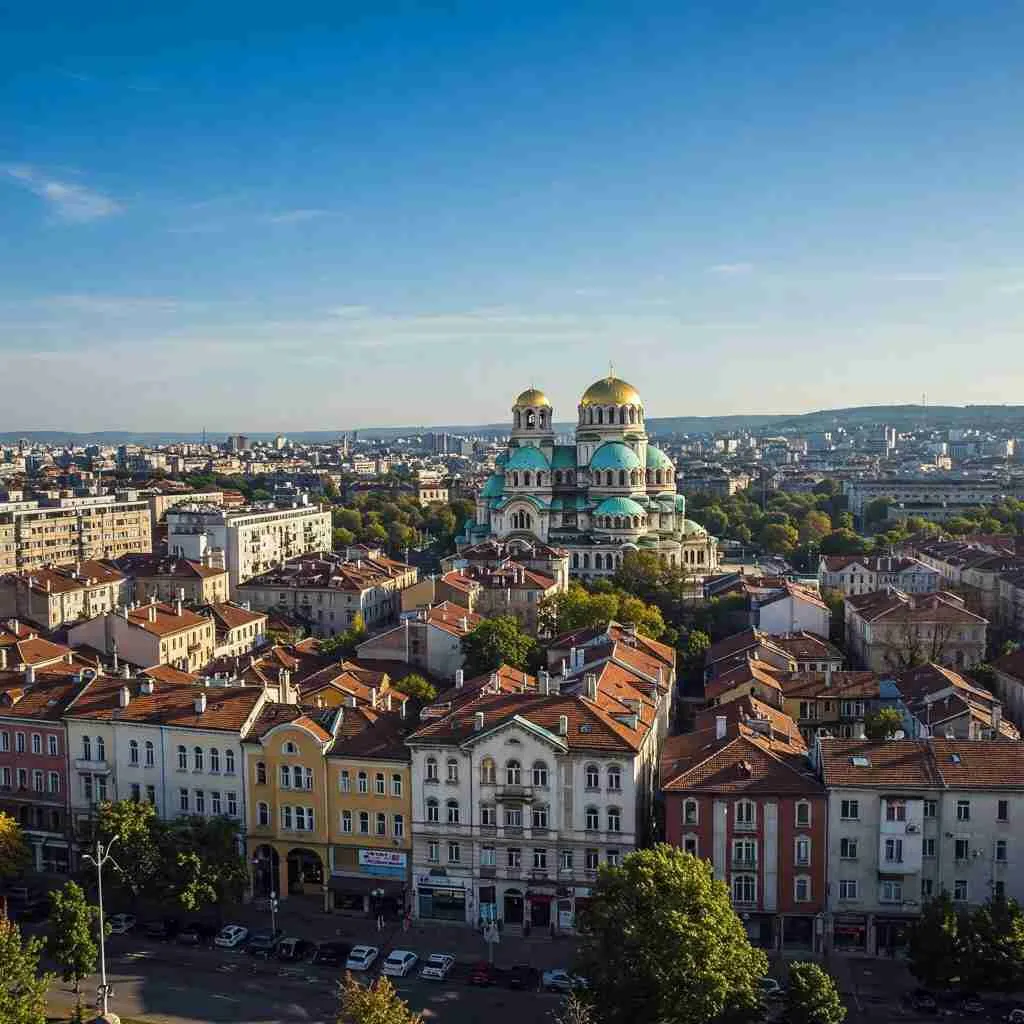
Updated: April 2025
Seeking European Union citizenship is a goal for many individuals worldwide, and Bulgaria offers one of the most accessible pathways. This comprehensive guide explores how to obtain Bulgarian permanent residency as your stepping stone to EU citizenship, with complete details on requirements, timelines, and benefits in 2025.
Table of Contents
- Overview of Bulgarian Permanent Residency
- Key Benefits of Bulgarian Permanent Residency
- Types of Residence Permits in Bulgaria
- Different Pathways to Permanent Residency
- Residency by Investment Options
- Application Process and Requirements
- Timeline from Residency to Citizenship
- Living in Bulgaria: Practical Information
- Family Reunification Options
- Practical Scenarios and Examples
- Frequently Asked Questions
Overview of Bulgarian Permanent Residency
Bulgaria, as a member of the European Union since 2007, offers a strategic pathway to EU citizenship through its permanent residency program. With its favorable location, growing economy, and relatively affordable cost of living, Bulgaria has become an attractive option for those seeking to establish European residency.
Bulgarian permanent residency is a legal status that allows non-EU citizens to live in Bulgaria indefinitely, with significantly more rights than temporary residence permits. After maintaining permanent resident status for 5 years, individuals become eligible to apply for Bulgarian citizenship, which grants full EU citizenship rights.
Key Benefits of Bulgarian Permanent Residency
EU Freedom of Movement
Permanent residents can travel freely throughout the Schengen area for up to 90 days in any 180-day period.
Work and Business Rights
Permanent residents can work, run businesses, or pursue self-employment in Bulgaria without additional permits, creating opportunities for entrepreneurship and career development.
Education Benefits
Access to free public education, including university education, on the same terms as Bulgarian citizens. Permanent residents can also qualify for various scholarships and educational grants.
Healthcare Access
Permanent residents can access Bulgaria's public healthcare system by paying into the National Health Insurance Fund, providing comprehensive medical coverage at reasonable rates.
Path to EU Citizenship
After 5 years of permanent residency, you become eligible to apply for Bulgarian citizenship, which grants full EU citizenship rights, including the ability to live and work in any EU country.
Favorable Tax Regime
Bulgaria offers one of Europe's most attractive tax systems, with a flat 10% personal income tax rate and 10% corporate tax rate, providing significant tax advantages for residents.
Types of Residence Permits in Bulgaria
Bulgaria has several types of residence permits, each serving different purposes and offering varying rights. Understanding these distinctions is crucial for planning your path to permanent residency:
Short-Term Residence
This allows foreigners to stay in Bulgaria for up to 90 days within any 180-day period. This is typically granted through tourist visas or short-stay visas and does not count toward permanent residency.
Extended/Prolonged Residence Permit
This permit allows for stays of up to 1 year and is renewable. It's typically the first step for most non-EU citizens planning to establish residency in Bulgaria. Extended residency can be obtained for various purposes such as employment, education, business activities, or family reunification.
Long-Term EU Residence Permit
After legally residing in Bulgaria for 5 years on an extended permit, you can apply for a long-term EU residence permit, which is valid for 5 years and can be renewed. This permit offers additional rights, including easier travel throughout the EU.
Permanent Residence Permit
This is the most comprehensive residence status, allowing indefinite stay in Bulgaria. Permanent residency can be obtained through various routes, including investment, extended legal residence in Bulgaria (minimum 30 months within a 5-year period), marriage to a Bulgarian citizen (after 5 years of marriage), or Bulgarian origin.
Important: The permanent residence permit card itself has a validity period (typically 5 years), but the status is permanent. The card simply needs to be renewed when it expires, while the status remains intact.
Different Pathways to Permanent Residency
Bulgaria offers multiple pathways to permanent residency, catering to different circumstances and needs:
1. Continuous Legal Residence
After legally residing in Bulgaria for at least 30 months within a 5-year period on an extended residence permit, you can apply for permanent residency. This pathway requires maintaining a valid reason for your extended residence (employment, education, etc.) throughout this period.
2. Investment Route
Bulgaria's investment program offers a direct route to permanent residency with minimal physical presence requirements. While the fast-track citizenship by investment program was terminated in 2022, the residency by investment program continues to be available.
3. Bulgarian Origin
Individuals of Bulgarian origin (with at least one Bulgarian parent or grandparent) can apply directly for permanent residency without the need for prior extended residence. This pathway has been streamlined in 2025, no longer requiring a D visa before applying for permanent residency.
4. Marriage to a Bulgarian Citizen
Foreign citizens married to Bulgarian nationals for at least 5 years can apply for permanent residency. You must have legally resided in Bulgaria during this period.
5. Trade Representative Office (TRO)
Establishing a Trade Representative Office of a foreign company in Bulgaria offers another pathway to permanent residency. After 5 consecutive years under this scheme, individuals can apply for permanent residency.
6. Retirement/Pensioner Pathway
Retirees with stable pension income can obtain extended residence permits, which can lead to permanent residency after the required period of legal residence in Bulgaria.
Residency by Investment Options
For those seeking an expedited and more straightforward path to permanent residency, Bulgaria's investment program remains an attractive option in 2025:
Investment Requirements
To obtain permanent residency through investment, you must invest a minimum of BGN 1 million (approximately €512,000) in one of the following options:
- Bulgarian Alternative Investment Funds (AIFs) - These include private equity funds, venture capital funds, and other collective investment schemes regulated under Bulgarian law.
- Exchange-Traded Funds (ETFs) - Investment in publicly traded ETFs on the Bulgarian stock exchange.
- Project St. Sofia - A designated government-approved investment project.
Process Timeline for Investment Route
Complete the due diligence process with the Bulgarian Investment Agency before making any investment. This includes background checks and verification of fund sources.
Apply for a Type D visa at the Bulgarian embassy or consulate in your country of residence, which allows you to enter Bulgaria for the purpose of obtaining residency.
Complete your investment in the chosen option after receiving pre-approval.
Submit your application for permanent residency to the Migration Directorate in Bulgaria.
Receive your permanent residence card, which must be renewed every 5 years, though the status remains permanent.
Important Note: The investment must be maintained for a minimum of 5 years from the date your permanent residency is granted. Withdrawing the investment before this period may result in the revocation of your residence status.
Costs of the Investment Program
In addition to the investment amount, applicants should budget for:
- Legal fees: €5,000 - €20,000 (depending on the complexity of the case and number of family members)
- Government fees: Approximately €1,000 per applicant
- Due diligence fees: €2,000 - €5,000
- Document translation and notarization: €500 - €1,500
Application Process and Requirements
General Requirements for Permanent Residency
Regardless of the pathway chosen, all applicants for permanent residency must typically provide:
- A valid passport with at least 6 months validity beyond the intended period of stay
- Completed permanent residence application form (available at the local Migration office)
- Proof of accommodation in Bulgaria (property deed, rental agreement, etc.)
- Evidence of sufficient financial means to support yourself without relying on the Bulgarian social assistance system
- Comprehensive health insurance valid in Bulgaria
- Clean criminal record certificate from your country of origin and any country where you've lived for more than 6 months
- Document(s) proving you qualify for one of the permanent residency pathways (investment proof, marriage certificate, etc.)
- Passport-sized photographs
Application Process Steps
Gather and prepare all required documents. Most foreign documents must be apostilled or legalized and translated into Bulgarian by certified translators.
Submit your application to the Migration Directorate of the Ministry of Interior in Bulgaria. You must apply in person at the relevant office based on your place of residence in Bulgaria.
The authorities will review your application and may request additional documents or clarification. This review typically takes 1-3 months.
Upon approval, you'll be notified to return to the Migration Directorate to receive your permanent residence permit card.
After receiving your permanent residence permit, you must register with the local municipality where you reside and obtain a Bulgarian identity number (EGN).
Language Requirements: Unlike citizenship applications, permanent residency applications do not require Bulgarian language proficiency. However, basic knowledge of Bulgarian will significantly help with integration and daily life.
Timeline from Residency to Citizenship
Understanding the complete timeline from initial residency to obtaining EU citizenship through Bulgaria is crucial for effective planning:
Standard Timeline
| Stage | Time Period | Requirements |
|---|---|---|
| Extended Residence Permit | 5 years (minimum) | Legal grounds for stay (work, business, education, etc.), minimum 30 months physical presence in Bulgaria |
| Permanent Residence Permit | 5 years | Maintaining permanent resident status, complying with tax and social security obligations |
| Citizenship Application | 1-2 years (processing time) | Bulgarian language proficiency, clean criminal record, renunciation of previous citizenship (if required) |
| Total Time to EU Citizenship | 11-12 years |
Investment Route Timeline
| Stage | Time Period | Requirements |
|---|---|---|
| Pre-Approval and Investment | 2-4 months | Due diligence process, investment of €512,000 |
| Permanent Residence Permit | 4-6 months (application processing) | Investment maintenance, application submission |
| Residency Period | 5 years | Maintaining investment, minimal physical presence requirement |
| Citizenship Application | 1-2 years (processing time) | Bulgarian language proficiency, clean criminal record |
| Total Time to EU Citizenship | 7-8 years |
Marriage to Bulgarian Citizen Timeline
| Stage | Time Period | Requirements |
|---|---|---|
| Marriage Period (with Extended Residence) | 5 years | Legal marriage to Bulgarian citizen, extended residence permit |
| Permanent Residence Application | 2-4 months | Proof of 5-year marriage, application submission |
| Citizenship Application | 1-2 years (processing time) | 3 years of marriage + permanent residence, Bulgarian language proficiency |
| Total Time to EU Citizenship | 8-9 years |
Citizenship Requirements: To apply for Bulgarian citizenship after 5 years of permanent residency, you must demonstrate Bulgarian language proficiency (minimum A2 level), have a clean criminal record, be financially self-sufficient, and have complied with tax and social security obligations in Bulgaria.
Living in Bulgaria: Practical Information
Cost of Living (2025 Figures)
Bulgaria offers one of the most affordable costs of living in the European Union:
| Expense Category | Average Monthly Cost (BGN) | Average Monthly Cost (EUR) |
|---|---|---|
| Rent (1-bedroom apartment, city center) | 800 - 1,200 BGN | €400 - €600 |
| Rent (1-bedroom apartment, outside center) | 500 - 800 BGN | €250 - €400 |
| Utilities (electricity, heating, water) | 200 - 500 BGN | €100 - €250 |
| Internet and Mobile Phone | 60 - 100 BGN | €30 - €50 |
| Groceries (for one person) | 400 - 600 BGN | €200 - €300 |
| Dining Out (meal for two, mid-range) | 60 - 100 BGN | €30 - €50 |
| Public Transportation (monthly pass) | 50 - 70 BGN | €25 - €35 |
| Healthcare Insurance (private) | 100 - 300 BGN | €50 - €150 |
| Total Monthly Expenses (Single Person) | 2,000 - 3,500 BGN | €1,000 - €1,750 |
| Total Monthly Expenses (Family of Four) | 4,000 - 6,000 BGN | €2,000 - €3,000 |
Healthcare System
Bulgaria has a two-tier healthcare system:
- Public Healthcare: Permanent residents can join the National Health Insurance Fund (NHIF) by paying monthly contributions (currently around 8% of declared income with minimum and maximum thresholds). This provides access to basic healthcare services.
- Private Healthcare: Many expats opt for private health insurance, which costs approximately €300-600 annually depending on age and coverage level, providing access to private clinics and hospitals with shorter wait times and often English-speaking staff.
For permanent residence applications, you must show proof of comprehensive health insurance that covers your stay in Bulgaria.
Education System
Permanent residents enjoy access to Bulgaria's education system on the same terms as citizens:
- Public Schools: Free education for children from grades 1-12, with some schools offering programs in English or other languages.
- Private International Schools: Available in major cities like Sofia, Plovdiv, and Varna, with annual fees ranging from €3,000 to €10,000.
- Universities: Bulgaria has over 50 universities and higher education institutions, many offering programs in English. Tuition fees for EU residents and permanent residents are significantly lower than for foreign students.
Tax System
Bulgaria offers one of Europe's most favorable tax regimes:
- Personal Income Tax: Flat 10% rate on all types of income.
- Corporate Tax: Flat 10% rate, one of the lowest in the EU.
- Value Added Tax (VAT): Standard rate of 20%.
- Dividend Tax: 5% for individuals.
- Social Security Contributions: Approximately 13.8% for employers and 10.6% for employees, with caps on the maximum contribution base.
Tax residency is established if you stay in Bulgaria for more than 183 days in any 12-month period or if your center of vital interests is in Bulgaria.
Family Reunification Options
Bulgaria offers favorable conditions for family reunification, allowing permanent residents to bring their family members to join them:
Eligible Family Members
- Spouse or registered partner
- Children under 18 years (including adopted children)
- Adult children who are dependent due to health reasons
- Parents or grandparents who are financially dependent on the permanent resident
Requirements for Family Reunification
To bring family members to Bulgaria, you'll need to provide:
- Proof of relationship (marriage certificate, birth certificate, etc.)
- Proof of sufficient financial means to support family members
- Suitable accommodation for all family members
- Health insurance for all family members
Residence Status for Family Members
Family members initially receive extended residence permits valid for one year, which can be renewed annually. After five years of legal residence, they become eligible for permanent residency in their own right.
Note: Once a family member obtains permanent residency, they maintain this status even if the family relationship with the original permanent resident ends (e.g., through divorce), provided they continue to meet other requirements.
Practical Scenarios and Examples
Scenario 1: The Investor Path
Profile: Ahmed, a 45-year-old business owner from Dubai
Goal: Obtain EU citizenship for better global mobility and business opportunities
Strategy: Investment route to permanent residency
Timeline:
- Month 1-2: Ahmed contacts a Bulgarian immigration law firm to handle his case. They begin due diligence with the Bulgarian Investment Agency.
- Month 3: After passing due diligence, Ahmed invests €512,000 in a Bulgarian Alternative Investment Fund focused on technology startups.
- Month 4: Ahmed obtains a D visa and visits Bulgaria to submit his permanent residency application.
- Month 8: Ahmed receives his permanent residence permit.
- Years 1-5: Ahmed maintains his investment and visits Bulgaria 2-3 times annually, establishing a minimal presence while continuing his business in Dubai.
- Year 5: Ahmed begins studying Bulgarian to reach A2 level for citizenship application.
- Year 6: After 5 years of permanent residency, Ahmed applies for Bulgarian citizenship.
- Year 7-8: Ahmed receives Bulgarian citizenship and an EU passport.
Result: Ahmed obtains EU citizenship within 8 years with minimal disruption to his life and business in Dubai, while also diversifying his investment portfolio through Bulgarian investments.
Scenario 2: The Digital Nomad Path
Profile: Maria, a 32-year-old software developer from Brazil
Goal: Establish EU residency while working remotely
Strategy: Extended residence through freelance work, leading to permanent residency
Timeline:
- Year 1: Maria obtains a D visa and establishes a trade representative office (TRO) for a Brazilian tech company in Bulgaria.
- Years 1-5: Maria lives in Bulgaria while working remotely for clients worldwide. She renews her extended residence permit annually.
- Year 5: Having legally resided in Bulgaria for over 30 months within the 5-year period, Maria applies for permanent residency.
- Years 6-10: Maria continues living in Bulgaria, integrating into the local community and improving her Bulgarian language skills.
- Year 10: Maria applies for Bulgarian citizenship after maintaining permanent resident status for 5 years.
- Year 11: Maria receives Bulgarian citizenship and EU passport.
Result: Maria successfully leverages Bulgaria's digital infrastructure and reasonable cost of living to establish her EU residency while maintaining her international client base, ultimately obtaining EU citizenship.
Scenario 3: The Family Relocation Path
Profile: The Johnson family from the UK (post-Brexit): John (48), Sarah (45), and their children Emma (16) and Thomas (12)
Goal: Regain EU residency rights after Brexit
Strategy: Business establishment in Bulgaria leading to permanent residency
Timeline:
- Year 1: John establishes a consulting company in Bulgaria, obtaining extended residence permits for the entire family.
- Years 1-5: The family relocates to Sofia. The children enroll in an international school while learning Bulgarian. The parents run their business and integrate into the community.
- Year 5: Having maintained legal residence for the required period, the family applies for permanent residency.
- Years 6-10: The family maintains their permanent resident status. The children may attend university in Bulgaria or other EU countries with domestic student rates.
- Year 10: The family applies for Bulgarian citizenship.
- Year 11-12: The family receives Bulgarian citizenship, regaining their EU rights.
Result: The Johnson family successfully transitions to life in Bulgaria, with the children benefiting from international education and EU opportunities, and the parents establishing a business foothold in Eastern Europe.
Scenario 4: The Retirement Path
Profile: Robert and Linda, a retired couple from Canada, both in their 60s
Goal: Establish residency in a country with lower cost of living and access to EU healthcare
Strategy: Pensioner visa leading to permanent residency
Timeline:
- Year 1: The couple applies for Bulgaria's D visa for pensioners, demonstrating their stable retirement income.
- Years 1-5: They purchase an apartment in Varna and establish their life in Bulgaria, renewing their extended residence permit annually.
- Year 5: Having maintained legal residence for the required period, they apply for permanent residency.
- Years 6+: They enjoy retirement in Bulgaria with the security of permanent residency, access to the national healthcare system, and the ability to travel freely within the EU.
Result: Robert and Linda enjoy a higher quality of retirement living due to Bulgaria's lower cost of living compared to Canada, while gaining access to EU healthcare systems and travel opportunities.
Frequently Asked Questions
Can I obtain Bulgarian permanent residency without physically living in Bulgaria?
Yes, through the investment route. While you need to visit Bulgaria for the initial application and to collect your residence card, there is no significant physical presence requirement for maintaining investment-based permanent residency. However, if you plan to apply for citizenship later, some physical presence will be necessary during the citizenship application process.
Is it necessary to learn Bulgarian to obtain permanent residency?
No, there is no Bulgarian language requirement for obtaining permanent residency. However, if you plan to apply for citizenship later, you will need to demonstrate Bulgarian language proficiency at least at an A2 level (basic communication skills).
Can I bring my family with me when I obtain permanent residency?
Yes, Bulgaria allows family reunification for permanent residents. Your spouse, minor children, and dependent parents can join you. They initially receive extended residence permits, which can be converted to permanent residency after five years of legal residence.
Do I have to renounce my current citizenship to become a Bulgarian citizen?
Bulgaria generally permits dual citizenship, so you typically won't need to renounce your current citizenship. However, this depends on your home country's regulations regarding dual citizenship. Some countries do not allow their citizens to hold multiple citizenships.
What is the difference between long-term EU residence and permanent residence in Bulgaria?
Long-term EU residence is valid for 5 years and provides certain EU-wide rights but must be renewed. Permanent residence is indefinite, though the physical card needs renewal every 5 years. Both can lead to citizenship after 5 years, but permanent residence offers more comprehensive rights within Bulgaria.
Can I work in other EU countries with Bulgarian permanent residency?
No, Bulgarian permanent residency only allows you to work in Bulgaria. To work in other EU countries, you would need to obtain either a work permit for that specific country or Bulgarian citizenship, which grants full EU work rights.
What happens if I want to sell my investment before the 5-year period is complete?
If you sell or withdraw your investment before the mandatory 5-year holding period, you risk losing your permanent resident status. It's essential to maintain the investment for the full period to preserve your residency rights.
Is it possible to get tax residency in Bulgaria without spending significant time there?
Bulgaria determines tax residency based on physical presence (more than 183 days in a calendar year) or having your center of vital interests in Bulgaria. If you spend less time in Bulgaria, you may not be considered a tax resident, but you should consult with a tax professional about your specific situation.
Can time spent in Bulgaria on a student visa count toward the permanent residency requirement?
Yes, time spent in Bulgaria on a student visa counts toward the residency requirement for permanent residence. Students can apply for permanent residency after legally residing in Bulgaria for the required period (minimum 30 months within a 5-year period).
Begin Your EU Citizenship Journey Today
Bulgarian permanent residency offers a strategic, accessible pathway to EU citizenship with numerous benefits along the way. Whether you're seeking enhanced global mobility, business opportunities, education benefits, or a high quality of life at affordable costs, the Bulgarian residency program provides a viable solution.
The process requires careful planning and attention to detail, but with the right approach, you can successfully navigate your journey from initial residency to full EU citizenship.
