

Transforming Agriculture Through Smart Technology and Innovation
Armenia's Agricultural Renaissance
Armenia stands at the forefront of agricultural transformation in the South Caucasus region, leveraging cutting-edge greenhouse technologies and agritech innovations to revolutionize its farming landscape. With abundant sunlight, strategic geographic location, and a growing tech ecosystem, the country is rapidly modernizing its agricultural sector through smart farming solutions, automated systems, and sustainable practices.
From traditional farming methods to high-tech greenhouse operations, Armenia's agricultural sector is experiencing unprecedented growth and innovation, positioning the country as a regional leader in sustainable and efficient food production.
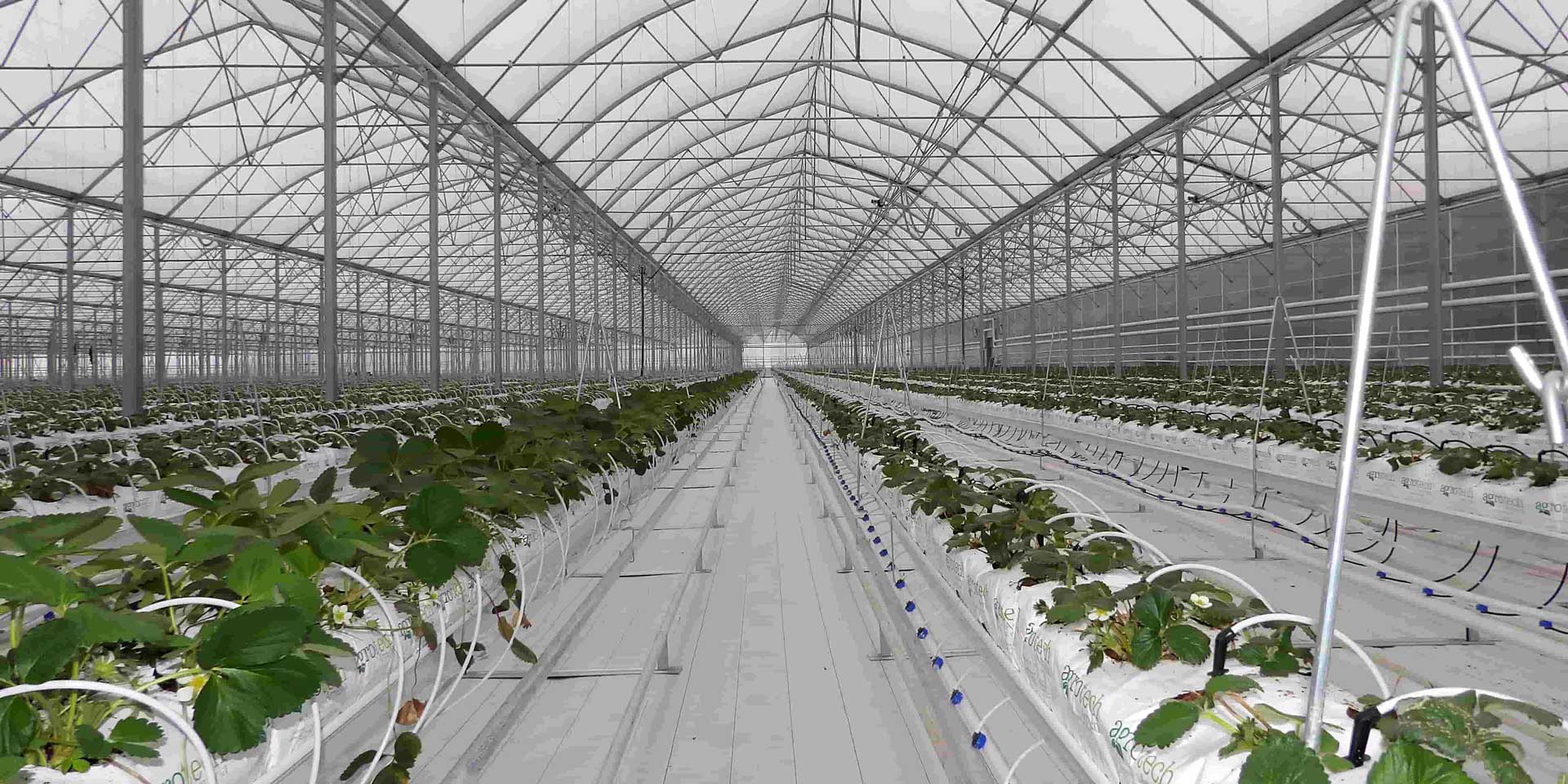
Current State of Armenian Agriculture
Traditional Challenges
Armenian agriculture has historically faced challenges including water scarcity, climate variability, limited arable land, and seasonal production constraints that affect crop yields and farmer incomes.
- Water resource management
- Climate unpredictability
- Terrain limitations
Technology Integration
The sector is rapidly adopting IoT sensors, automated irrigation systems, climate control technologies, and data-driven farming approaches to optimize production and resource utilization.
- IoT sensor networks
- Data analytics platforms
- Automated systems
Market Opportunities
Growing domestic and regional demand for fresh produce, export opportunities to neighboring countries, and increasing consumer preference for locally grown, sustainable agricultural products.
- Export expansion
- Health-conscious consumers
- Sustainability focus
The Greenhouse Technology Revolution
Modern Greenhouse Infrastructure
Armenia's greenhouse sector has witnessed significant transformation with the introduction of climate-controlled facilities, hydroponic systems, and automated growing environments. These modern facilities enable year-round production, optimal resource utilization, and consistent crop quality regardless of external weather conditions.
Climate Control Systems
Advanced HVAC systems maintain optimal temperature, humidity, and air circulation for maximum crop productivity.
Hydroponic Systems
Soil-free cultivation methods that optimize nutrient delivery and water usage while maximizing space efficiency.
Automated Systems
Robotic systems handle planting, monitoring, harvesting, and maintenance tasks with precision and efficiency.
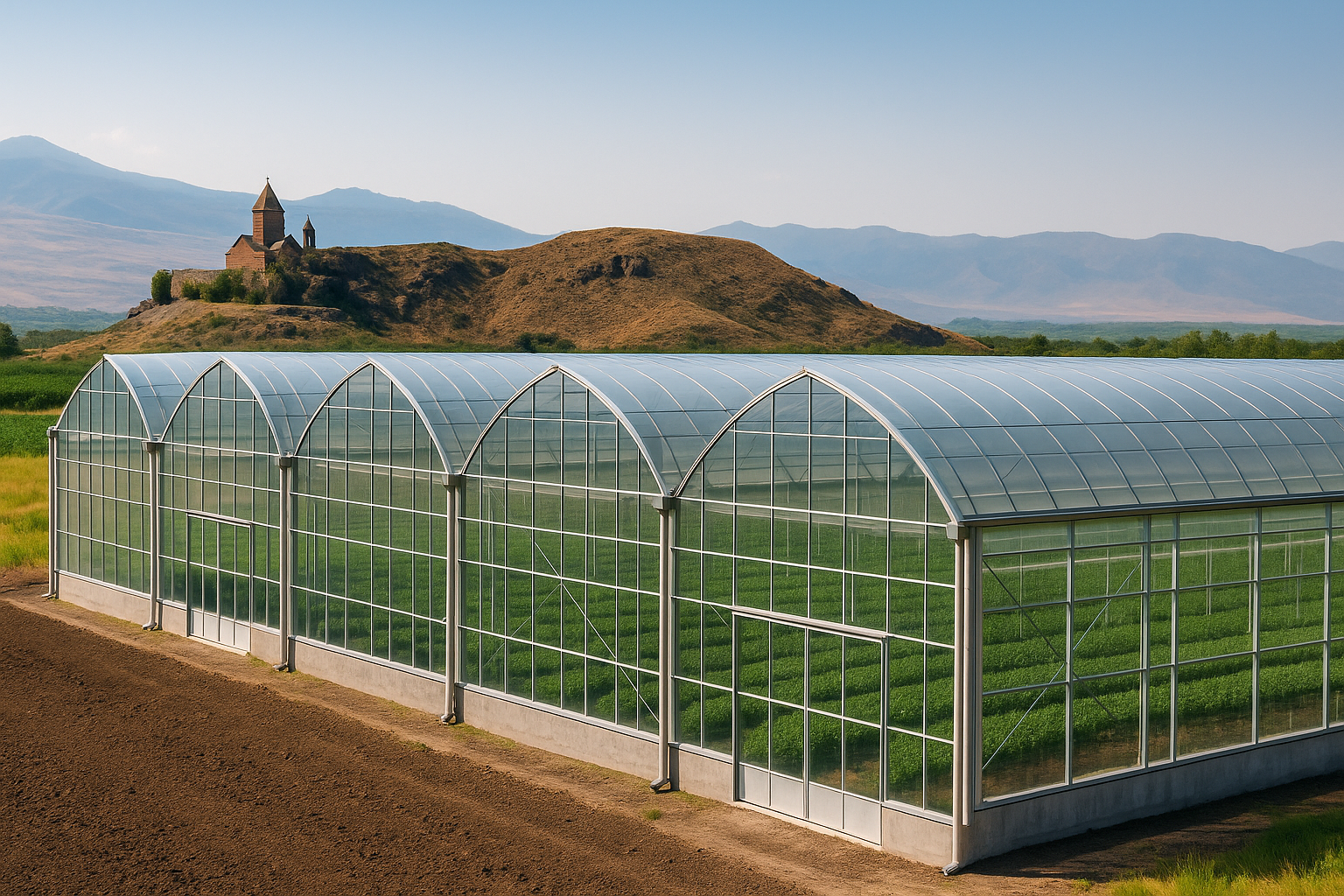
Key Benefits of Modern Greenhouses
- Year-round production capabilities
- Protection from weather extremes
- Efficient water and nutrient usage
- Higher yields per square meter
Smart Farming Innovations in Armenia
Drone Technology
Advanced UAV systems for crop monitoring, precision spraying, field mapping, and real-time agricultural surveillance.
- • Crop health assessment
- • Precision pesticide application
- • Aerial field mapping
- • Disease detection
IoT Sensors
Network of intelligent sensors monitoring soil conditions, weather patterns, and crop development in real-time.
- • Soil moisture tracking
- • Temperature monitoring
- • Nutrient level detection
- • Growth stage analysis
AI Analytics
Artificial intelligence platforms providing predictive insights, yield forecasting, and optimization recommendations.
- • Yield prediction models
- • Disease pattern recognition
- • Resource optimization
- • Market timing analysis
Mobile Platforms
Smartphone applications enabling remote monitoring, control, and management of farming operations from anywhere.
- • Remote system control
- • Real-time alerts
- • Data visualization
- • Expert consultation
Leading Companies and Innovators
VardAgro
Leading provider of modern greenhouse systems and hydroponic solutions, specializing in turnkey climate-controlled facilities adapted to Armenia's unique conditions.
ARATech
Armenian startup developing advanced drone technologies for precision agriculture, crop monitoring, and automated field management solutions.
SmartAgro
Digital platform provider offering comprehensive farm management solutions, data analytics, and precision agriculture tools for modern farmers.
AeroLink Technologies
Agri-tech startup revolutionizing farming through integration of drones, artificial intelligence, and advanced data science for agricultural optimization.
BeeGraphy
Innovative startup developing advanced farm visualization tools and mapping technologies to enhance agricultural decision-making and crop management.
Cordillerra
Specialized technology company focusing on food traceability solutions, supply chain transparency, and quality assurance systems for agricultural products.
Government Support and Initiatives
Policy Framework and Support
The Armenian government has implemented comprehensive support programs to accelerate agricultural modernization through subsidies, grants, and technical assistance programs targeting technology adoption and farmer education.
Financial Incentives
Subsidies and grants for purchasing modern agricultural machinery, greenhouse equipment, and advanced technologies to reduce adoption barriers for farmers.
Training Programs
Comprehensive digital skills training and technical education programs to equip farmers with knowledge needed for modern agricultural practices.
Public-Private Partnerships
Collaborative initiatives between government agencies, technology companies, and educational institutions to drive innovation and knowledge transfer.
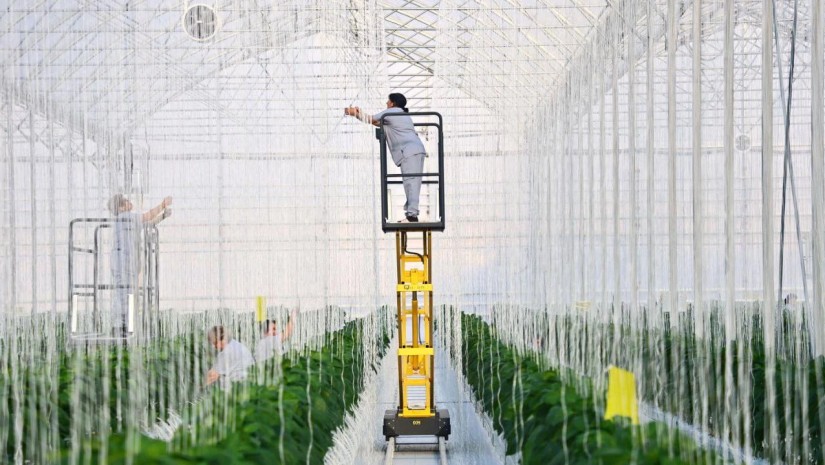
Key Government Priorities
- Promoting sustainable agricultural practices and environmental stewardship
- Enhancing food security through increased domestic production capacity
- Supporting rural economic development and youth employment opportunities
- Facilitating technology transfer and innovation adoption in agriculture
Educational and Research Excellence
Academic Innovation Centers
American University of Armenia (AUA)
Leading research institution developing innovative agricultural robotics, automated systems, and precision farming technologies through student-led projects and faculty research initiatives.
National Agrarian University
Premier agricultural education institution fostering agritech research collaborations with European partners and developing next-generation farming professionals.
Research and Development Focus
Current Research Areas
Artificial Intelligence
Machine learning applications for crop prediction and optimization
Precision Agriculture
Sensor networks and data analytics for resource optimization
Sustainable Systems
Environmentally friendly farming technologies and practices
Agricultural Robotics
Automated systems for planting, maintenance, and harvesting
Innovation Accelerators
Specialized programs supporting agritech startups and fostering entrepreneurship in agricultural technology development.
- • IMPACT AIM ANAU AgriTech Accelerator
- • Sevan Startup Summit agricultural track
- • University-industry collaboration programs
- • Technology commercialization support
Practical Implementation Examples
Note: The following examples are theoretical scenarios designed to illustrate potential applications of agritech innovations in Armenia. They are not representations of actual existing operations.
Smart Greenhouse Operation Case Study
"Ararat Valley Precision Farms" (Theoretical Example)
A hypothetical 5-hectare greenhouse complex implementing integrated smart farming technologies to optimize tomato and cucumber production in Armenia's challenging climate conditions.
Climate Control Implementation
Automated HVAC systems maintain optimal temperatures (22-26°C) and humidity levels (60-70%) using IoT sensors and machine learning algorithms that predict and adjust for weather changes.
Precision Irrigation System
Drip irrigation combined with nutrient delivery systems monitor soil moisture and plant needs, reducing water usage by approximately 30% compared to traditional methods.
Expected Performance Metrics
Theoretical yield increases of 40-50% compared to traditional farming, with year-round production capability and consistent quality standards for export markets.
Drone-Assisted Farm Management
"Highland Orchard Monitoring" (Theoretical Example)
A conceptual 50-hectare apple and apricot orchard utilizing drone technology for comprehensive crop monitoring and precision agriculture applications in Armenia's mountainous regions.
Aerial Surveillance Operations
Weekly drone flights equipped with multispectral cameras monitor tree health, identify pest infestations, and assess irrigation needs across difficult terrain.
Precision Treatment Application
Targeted pesticide and fertilizer application using GPS-guided drones, reducing chemical usage by up to 25% while improving treatment effectiveness.
Data-Driven Decision Making
Integration of drone-collected data with weather forecasts and market information to optimize harvest timing and resource allocation decisions.
Integrated IoT Farm Network (Theoretical Model)
Sensor Network Deployment
Temperature Sensors
Continuous monitoring across micro-zones
Moisture Detectors
Soil and air humidity tracking
Light Sensors
Photosynthetic radiation measurement
Automated Response Systems
Ventilation Control
Automatic air circulation adjustment
Irrigation Activation
Precise water delivery based on needs
LED Lighting
Supplemental lighting optimization
Performance Outcomes
Impact and Benefits of Agricultural Innovation
Increased Productivity
Modern greenhouse and precision farming technologies significantly boost crop yields while reducing resource consumption and operational costs.
Environmental Sustainability
Smart farming practices minimize water usage, reduce chemical inputs, and promote environmentally responsible agricultural methods.
Rural Development
Technology adoption creates employment opportunities, attracts young professionals to agriculture, and revitalizes rural communities.
Food Security
Enhanced domestic production capacity ensures reliable food supply and reduces dependence on imports while improving nutritional quality.
Economic Impact Analysis
Investment in modern greenhouse infrastructure projects
Potential yield increases with smart farming technologies
Reduction in water consumption through precision irrigation
Challenges and Innovative Solutions
Current Challenges
High Initial Investment Costs
Advanced greenhouse systems and smart farming technologies require significant upfront capital investment that may be challenging for small-scale farmers.
Skills and Knowledge Gap
Limited technical expertise among traditional farmers requires comprehensive training programs and ongoing support for technology adoption.
Infrastructure Limitations
Rural areas may lack reliable internet connectivity and power supply necessary for IoT systems and automated farming equipment.
Technology Integration Complexity
Coordinating multiple technologies and ensuring seamless integration across different farming systems presents technical challenges.
Innovative Solutions
Cooperative Financing Models
Farmer cooperatives and government-backed financing programs reduce individual investment burden through shared resources and subsidized equipment purchases.
Comprehensive Training Programs
Universities and government agencies offer specialized agritech education, hands-on workshops, and mentorship programs for technology adoption.
Infrastructure Development Initiatives
Strategic investments in rural broadband, renewable energy systems, and communication networks support agritech implementation across remote areas.
Integrated Technology Platforms
Unified software solutions and standardized protocols simplify technology integration and provide farmers with comprehensive management tools.
Future of Armenian Agriculture
Emerging Technologies and Trends
Artificial Intelligence Integration
Advanced AI systems will provide predictive analytics, automated decision-making, and intelligent crop management recommendations based on vast datasets.
Biotechnology Applications
Gene editing, bioengineered crops, and molecular breeding techniques will enhance crop resilience, nutritional content, and adaptation to climate conditions.
Vertical Farming Expansion
Multi-level growing systems will maximize land utilization in urban areas and create opportunities for year-round production in controlled environments.
Strategic Roadmap
Infrastructure Development
Expand broadband connectivity, power supply, and transport networks to support advanced agricultural technologies.
Skills Development
Implement comprehensive training programs and educational initiatives to build digital agriculture capabilities.
Technology Integration
Deploy IoT networks, automation systems, and data analytics platforms across agricultural regions.
Market Expansion
Develop export capabilities, brand recognition, and international partnerships for Armenian agricultural products.
Frequently Asked Questions
What are the main benefits of greenhouse farming in Armenia?
Greenhouse farming in Armenia offers year-round production capabilities, protection from harsh weather conditions, water conservation through controlled irrigation, higher yields per square meter, and the ability to grow crops that may not thrive in the local outdoor climate. Modern greenhouse systems also enable precise control over growing conditions, leading to consistent crop quality and reduced pest and disease pressure.
How is the Armenian government supporting agritech adoption?
The Armenian government provides various forms of support including subsidies and grants for purchasing modern agricultural equipment, funding for greenhouse construction and modernization projects, technical training programs for farmers, partnerships with educational institutions for research and development, and initiatives to improve rural infrastructure including broadband connectivity and power supply.
What technologies are most commonly used in Armenian smart farming?
Common technologies include IoT sensors for monitoring soil moisture, temperature, and nutrient levels; automated irrigation and fertigation systems; climate control systems for greenhouses; drone technology for crop monitoring and precision spraying; mobile applications for farm management; and data analytics platforms for decision-making support. Many farms are also implementing hydroponic and soilless growing systems.
What challenges do farmers face when adopting new agricultural technologies?
Main challenges include high initial investment costs for advanced equipment, limited technical knowledge and digital literacy among traditional farmers, inadequate rural infrastructure in some areas, complexity of integrating multiple technologies, and the need for ongoing maintenance and technical support. However, these challenges are being addressed through government programs, cooperative financing models, and comprehensive training initiatives.
How does precision agriculture help with water conservation?
Precision agriculture uses soil moisture sensors, weather data, and plant monitoring systems to deliver water exactly when and where it's needed. This targeted approach can reduce water consumption by 20-30% compared to traditional irrigation methods. Drip irrigation systems, combined with automated controls and real-time monitoring, ensure optimal water usage while maintaining crop health and productivity.
What role do educational institutions play in Armenia's agritech development?
Educational institutions like the American University of Armenia (AUA) and National Agrarian University conduct research in agricultural robotics, precision farming, and sustainable agriculture. They develop innovative solutions, train the next generation of agricultural professionals, facilitate technology transfer through international partnerships, and provide continuing education for practicing farmers. Many universities also operate demonstration farms and incubators for agritech startups.
The Future of Armenian Agriculture is Here
Armenia's agricultural transformation through greenhouse farming and agritech innovations represents a remarkable evolution from traditional farming methods to cutting-edge, sustainable agricultural practices. With continued investment in technology, education, and infrastructure, Armenia is positioning itself as a regional leader in modern agriculture, ensuring food security, environmental sustainability, and economic prosperity for future generations.
