
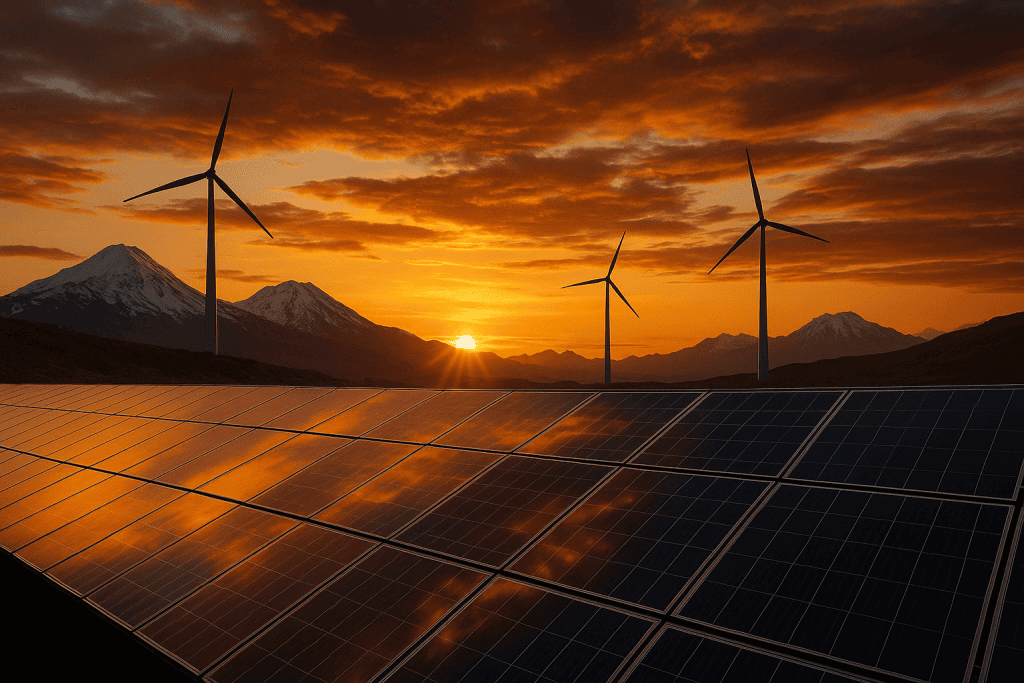
Unlock the potential of solar, wind, and hydropower investments in the South Caucasus
Armenia's Renewable Energy Landscape
Armenia is rapidly transforming its energy sector, creating unprecedented opportunities for international investors in renewable energy projects.
Strategic Energy Transition
Armenia has committed to increasing renewable energy to 66% of its electricity generation mix by 2036, supported by comprehensive government policies and international funding.
Investment-Friendly Environment
Attractive feed-in tariffs, tax exemptions, customs duty waivers, and streamlined regulatory processes create favorable conditions for renewable energy investments.
Strategic Location
Positioned at the crossroads of Europe, Asia, and the Middle East, Armenia offers access to regional energy markets and trans-regional energy trading opportunities.
Solar Energy Investment Opportunities
Armenia's exceptional solar resources offer compelling investment returns with government backing
Market Highlights
- 1,720 kWh/m² annual solar irradiation - among the highest in the region, ensuring optimal energy generation
- Masrik-1 Solar Plant - largest operational facility powering 21,400 homes, demonstrating market viability
- Government targets 1,000 MW solar capacity by 2030 through competitive tenders
- Feed-in tariffs up to 5 MW with 20-year guaranteed purchase agreements
Investment Incentives
- • Customs duty exemptions on solar equipment imports
- • Tax-free income on net metering surplus up to 150 kW
- • No licensing requirements for feed-in tariff projects
- • Annual tariff adjustments for inflation protection
Solar Investment Parameters
Theoretical Example: A 1 MW solar installation could potentially save $100,000-200,000 in customs duties and VAT exemptions, significantly improving project economics. (This is a theoretical calculation for illustration purposes only.)
Wind Energy Investment Potential
Untapped wind resources in Armenia's mountainous regions present significant growth opportunities
Wind Energy Landscape
Current Status
Only 7.6 MW of wind capacity installed, representing less than 1% of electricity generation
Massive Potential
Technical potential estimated at 450 MW with 1.26 billion kWh annual generation capacity
Government Target
Planned expansion to 500 MW capacity by 2040 through strategic development
Prime Wind Development Locations
Zod Pass Region
High-altitude location with consistent wind patterns, identified as priority development area for utility-scale projects
Bazum Mountains
Mountainous terrain with excellent wind resources, suitable for medium to large-scale wind installations
Karakhach Pass
Strategic location with MOUs already signed for up to 150 MW development potential
Wind Investment Framework
- • Feed-in tariffs available up to 30 MW capacity
- • 20-year guaranteed power purchase agreements
- • AMD 42.645 ($0.09)/kWh competitive tariff rate
- • Currency and inflation risk protection
Hydropower Investment Opportunities
Leveraging Armenia's abundant water resources for sustainable energy generation
Small Hydropower
Already built through private investments, representing 12% of total electricity generation
Planned Capacity
Total capacity target for 207 small hydropower plants across Armenia
Investment Target
Government goal to attract additional investments in untapped hydro potential
Major Hydropower Projects
Lori-Berd Project
Medium-scale hydropower development opportunity identified by government for international investment
Shnogh Project
Strategic hydropower facility with significant generation potential and government support
Sevan-Hrazdan Cascade
Modernization opportunities for existing infrastructure to improve efficiency and capacity
Small Hydro Success Stories
Veolia Djur "Nor Hachn" Plant
- • Investment value: 376.6 million AMD
- • Successfully launched and operational
- • Demonstrates private sector confidence
- • Model for future small hydro projects
Ardshinbank Financing
- • $2.5 million 10-year financing secured
- • 3.9 MW capacity project in Syunik region
- • Demonstrates available financing options
- • Long-term loan structure for sustainability
Hydro Investment Framework
- • Feed-in tariffs for plants up to 30 MW
- • 15-year guaranteed purchase agreements
- • No licensing requirements below threshold
- • Established regulatory framework
Government Incentives and Support
Comprehensive support mechanisms designed to accelerate renewable energy investments
Tax Benefits and Exemptions
Corporate Income Tax
- • Feed-in tariff producers exempt from licensing costs
- • Special economic zones offer additional exemptions
- • Net metering participants up to 150 kW tax-free on surplus
Customs Duties
- • Complete exemption on renewable energy equipment
- • Covers solar panels, wind turbines, hydro components
- • Processing through Ministry of Economic Development
Value Added Tax
- • Feed-in tariff rates set without VAT inclusion
- • Reduced VAT rates on specific equipment categories
- • Comprehensive VAT exemptions in support packages
Financial Support Mechanisms
R2E2 Fund
Renewable Resources and Energy Efficiency Fund provides grants and technical assistance
- • Direct grants for qualifying projects
- • Technical assistance and project development support
- • Facilitation of international funding access
International Funding
Access to multilateral development bank financing and climate funds
- • World Bank and Asian Development Bank support
- • Climate Investment Funds participation
- • Soft loans with below-market interest rates
Risk Mitigation
Government-backed mechanisms to reduce investment risks
- • Currency fluctuation protection in long-term contracts
- • Annual inflation adjustments for tariffs
- • Government guarantees on power purchase agreements
Practical Investment Scenarios
Theoretical examples illustrating potential returns and investment structures
Theoretical Example - For Illustration Purposes Only
Commercial Solar Installation (500 kW)
Potential Benefits
- • Total upfront savings: $50,000-100,000
- • Guaranteed revenue stream for 20 years
- • Annual tariff adjustments for inflation
- • No licensing requirements
Theoretical Example - For Illustration Purposes Only
Small Hydropower Project (3 MW)
Investment Advantages
- • Proven technology with long operational life
- • Consistent water flow for reliable generation
- • Government support for small hydro development
- • Available financing through local banks
Important Disclaimers
- • All financial projections are theoretical and for illustration purposes only
- • Actual returns depend on numerous factors including regulatory changes, market conditions, and project-specific variables
- • Investors should conduct thorough due diligence and consult with local legal and financial advisors
- • Tax benefits and exemptions may vary based on project size, location, and timing
- • Feed-in tariff rates and terms are subject to government regulation and may change
Investment Climate Analysis
Understanding the factors that make Armenia an attractive renewable energy investment destination
Strengths
- • Strong government commitment to renewable energy
- • Comprehensive legal framework and incentives
- • Strategic location for regional energy trade
- • Excellent natural resources (solar, wind, hydro)
- • International donor support and funding
Challenges
- • Limited grid infrastructure in remote areas
- • Small domestic market size
- • Currency volatility risks
- • Need for skilled workforce development
- • Regulatory framework still evolving
Opportunities
- • Massive untapped renewable potential
- • Growing regional energy interconnection
- • Technology transfer and local manufacturing
- • Green finance and carbon credit opportunities
- • Energy storage and smart grid development
Key Investment Considerations
Market Entry Strategy
- • Start with feed-in tariff eligible projects (under capacity thresholds)
- • Partner with local developers familiar with regulatory environment
- • Leverage government incentives and international funding
- • Consider joint ventures for risk sharing and local expertise
Risk Mitigation
- • Utilize government guarantees and currency protection mechanisms
- • Secure long-term power purchase agreements
- • Diversify across multiple renewable technologies
- • Engage with international financial institutions for support
Frequently Asked Questions
Common queries about renewable energy investments in Armenia
What are the capacity limits for feed-in tariffs in Armenia?
Feed-in tariffs are available for solar PV projects up to 5 MW, wind projects up to 30 MW, and small hydropower plants up to 30 MW. Projects above these thresholds must participate in competitive tenders for long-term power purchase agreements.
How does Armenia's net metering program benefit investors?
Net metering allows autonomous power producers up to 500 kW to inject surplus electricity into the grid and offset it against future consumption. Installations up to 150 kW benefit from tax-free income on surpluses, with annual net billing settling differences at regulated rates.
What customs duty exemptions are available for renewable energy equipment?
Armenia provides customs duty exemptions for renewable energy equipment imports on a project-by-project basis. These exemptions cover solar panels, wind turbines, hydroelectric equipment, and related components, processed through the Ministry of Economic Development with typical approval timeframes of 2-4 weeks.
What financing options are available for renewable energy projects?
Multiple financing options include grants through the R2E2 Fund, soft loans with below-market interest rates, international donor funding from World Bank and Asian Development Bank, and private investment facilitation. The government also provides currency and inflation risk mitigation in long-term contracts.
Are there special licensing requirements for renewable energy projects?
Power producers eligible for feed-in tariffs (below capacity thresholds) are exempt from standard licensing requirements, reducing administrative costs and barriers. Larger utility-scale projects above feed-in tariff thresholds require licensing and must follow the same tariff-setting procedures as conventional power plants.
What is Armenia's renewable energy target and timeline?
Armenia aims to expand clean power sources to 66% of its electricity generation mix by 2036. Specific targets include solar PV capacity reaching 1,000 MW by 2030, with government planning competitive tenders for 520 MW across multiple facilities. The 20-Year Energy Sector Development Program guides this transition through 2040.
How does currency fluctuation risk affect renewable energy investments?
Armenia provides currency and inflation protection mechanisms in long-term renewable energy contracts. Feed-in tariffs include annual adjustments for inflation and currency fluctuations, with government-backed power purchase agreements reducing investment risk for international investors.
What are the most promising locations for wind energy development?
Prime wind development locations include Zod Pass, Bazum Mountains, and Karakhach Pass, with the latter having MOUs already signed for up to 150 MW development potential. These mountainous regions offer excellent wind resources with government support for utility-scale project development.
Seize Armenia's Renewable Energy Investment Opportunity
Armenia's renewable energy sector presents a compelling investment landscape with strong government support, attractive incentives, and significant untapped potential across solar, wind, and hydropower technologies.
Government Backing
Strong policy support and guaranteed purchase agreements
Financial Incentives
Tax exemptions, customs duty waivers, and competitive tariffs
Resource Abundance
Excellent solar, wind, and hydro resources across the country
Strategic Location
Gateway to European, Asian, and Middle Eastern energy markets
Next Steps for Investors
Immediate Actions
- • Conduct detailed feasibility studies for target regions
- • Engage with R2E2 Fund and government agencies
- • Partner with local developers and legal advisors
- • Explore international financing opportunities
Strategic Considerations
- • Start with feed-in tariff eligible project sizes
- • Focus on regions with best resource availability
- • Consider technology diversification across renewables
- • Plan for long-term market development opportunities
Armenia's renewable energy transformation is accelerating, creating time-sensitive investment opportunities for forward-thinking investors ready to participate in the country's clean energy future.
