
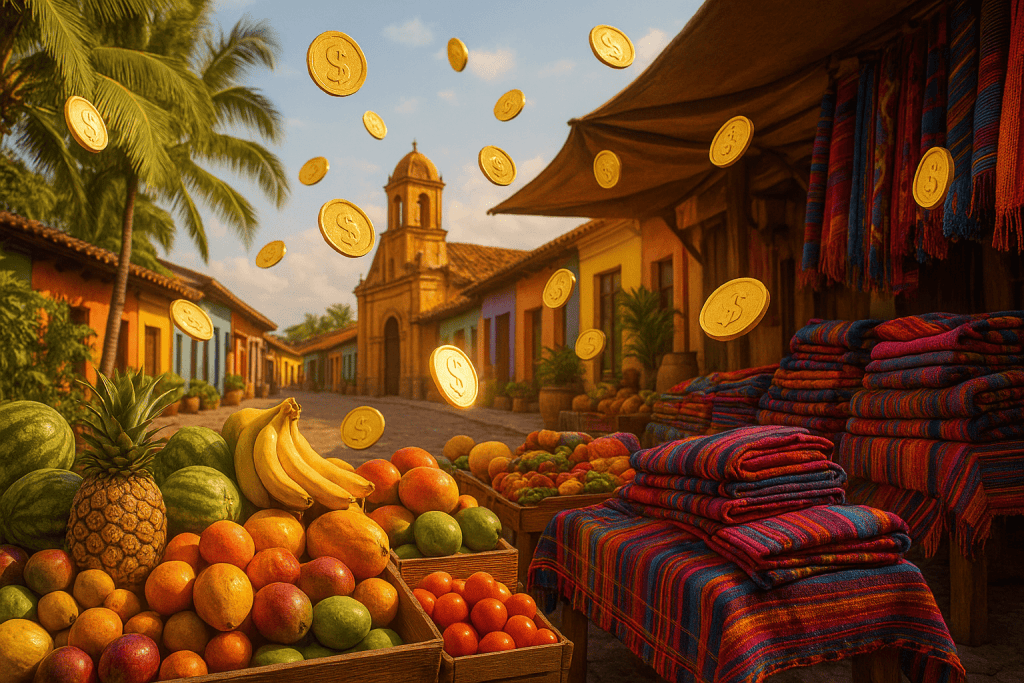
Discover how El Salvador's unique dollarized economy offers the stability of USD with the affordability of Central American living costs
Explore El Salvador Residency ProgramsEl Salvador presents a fascinating economic paradox: a fully dollarized economy that maintains Central American price levels. Since adopting the US dollar as its official currency, the country has created a unique environment where international investors and expats can enjoy price stability without the premium costs typically associated with dollar-based economies.
Key Advantage: El Salvador's dollarization eliminates currency risk while maintaining affordable living costs, making it an attractive destination for international residents and investors.
The Dollarized Economy Advantage
Currency Stability
No exchange rate fluctuations or currency devaluation risks. Your purchasing power remains consistent over time.
Investment Security
Real estate and business investments are naturally hedged against local currency depreciation.
Bitcoin Integration: El Salvador has also adopted Bitcoin as legal tender alongside the US dollar, though practical daily transactions primarily use USD. This dual-currency system offers additional flexibility for tech-savvy residents and digital nomads seeking residency.
Housing Costs: Urban vs Suburban Living
City Center
$580-690
1-bedroom apartment
Suburbs
$350-450
1-bedroom apartment
Luxury
$1,200+
Premium locations
Theoretical Housing Scenario:
Consider "Maria," a hypothetical remote worker seeking residency. She chooses a modern 2-bedroom apartment in San Salvador's Escalón neighborhood for $850/month. This provides her with a secure, well-connected location while maintaining 60% savings compared to similar accommodation in major US cities. Learn more about residency options for remote workers.
Housing Cost Breakdown
| Property Type | City Center | Suburbs | Coastal Areas |
|---|---|---|---|
| 1-Bedroom Apt | $580-690 | $350-450 | $400-600 |
| 2-Bedroom Apt | $750-950 | $500-700 | $600-850 |
| House (3-BR) | $1,200-1,800 | $800-1,200 | $900-1,400 |
Food and Dining: Local Flavors at Local Prices
Monthly Groceries
- Single person: $347/month
- Family of 4: $520-650/month
- Local markets: 30-40% cheaper
Dining Out
- Local restaurant: $7-8
- Mid-range dinner (2 people): $30-32
- Fast food combo: $7
Theoretical Monthly Food Budget:
"Roberto," a hypothetical expat entrepreneur, allocates $450/month for combined groceries and dining. He shops at local markets twice weekly ($280 groceries) and enjoys restaurant meals 3-4 times weekly ($170 dining). This balanced approach provides variety while maintaining cost efficiency. Entrepreneurs can learn about business-friendly residency programs that support this lifestyle.
Sample Food Prices
Proteins
- Chicken breast (1kg): $5.40
- Beef (1kg): $9.40
- Fresh fish (1kg): $8.50
Staples
- Rice (1kg): $1.20
- Beans (1kg): $1.80
- Bread (loaf): $1.50
Produce
- Tomatoes (1kg): $2.20
- Bananas (1kg): $1.10
- Avocados (each): $0.75
Transportation: Affordable Mobility Options
Public Transportation
- Regular buses: $0.20 per ride
- Microbuses: $0.25 per ride
- AC buses: $0.35 per ride
Private Transport
- Taxi start: $3.80
- Taxi per km: $1.70
- Uber/app-based: Similar rates
Car Ownership Costs
Vehicle Expenses
- Car rental: $40-50/day
- Long-term rental: $800-1,200/month
- Gasoline: $4.20/gallon
- Insurance: $30-60/month
Maintenance
- Oil change: $25-35
- Tire rotation: $15-20
- Basic service: $80-120
- Parking (city): $2-5/hour
Transportation Strategy: Many expats combine public transport for daily commuting with occasional taxi/rideshare use, keeping monthly transport costs under $150. Car ownership is popular among retirees and business investors who prefer convenience and mobility.
Healthcare: Accessible Medical Care
Public Healthcare
- Emergency care: Available
- Expat access: Fee-based
- Quality: Basic to adequate
Private Healthcare
- Insurance: $100-500/month
- Doctor visit: $40-80
- Quality: International standard
Medical Cost Examples
Consultation
$40-80
X-Ray
$25-40
Prescription
$10-30
Healthcare Strategy for Expats:
Most international residents choose private insurance ($200-300/month) for routine care while maintaining coverage for emergency services. This provides comprehensive healthcare at significantly lower costs than many developed countries. Those considering permanent residency in El Salvador should evaluate healthcare needs as part of their planning process.
Total Monthly Living Costs
Single Person
Family of 4
Cost Comparison: These budgets represent 50-70% savings compared to similar living standards in major North American cities, while maintaining the stability of USD-based pricing.
Ready to Make El Salvador Your Home?
Take advantage of El Salvador's unique dollarized economy and affordable living costs. Our comprehensive residency programs are designed for investors, entrepreneurs, and retirees.
Start Your Residency JourneyFrequently Asked Questions
How does dollarization affect daily expenses?
Dollarization eliminates exchange rate uncertainty, making budgeting predictable. Prices remain stable over time, and you don't need to worry about currency fluctuations affecting your purchasing power. This stability is particularly beneficial for long-term residents and investors.
Can foreigners buy property in El Salvador?
Yes, foreigners can buy property in El Salvador with minimal restrictions. The dollarized economy makes real estate transactions straightforward, and property values are stable. Many expats choose to purchase rather than rent for long-term savings.
Is El Salvador safe for expats?
El Salvador has significantly improved its security situation in recent years. Most expat-friendly areas have good safety records, and the government has implemented comprehensive security measures. Many international residents live comfortably in well-established communities.
Do I need to use Bitcoin for daily transactions?
No, Bitcoin is optional for daily use. The US dollar remains the primary currency for most transactions. Bitcoin acceptance exists but is not required, making it convenient for those who prefer traditional payment methods.
What about education costs for families?
International schools in El Salvador cost $300-800/month per child, significantly less than comparable education in North America or Europe. Many schools offer bilingual programs and follow international curricula, making them suitable for expat families.
The El Salvador Advantage
El Salvador's dollarized economy represents a unique opportunity for international residents seeking stability, affordability, and growth potential. The combination of USD stability with Central American pricing creates an attractive environment for various lifestyles and budgets.
Economic Stability
Dollar-based economy eliminates currency risk
Cost Efficiency
50-70% savings compared to North America
Global Connectivity
Strategic location with modern infrastructure
Whether you're a retiree seeking affordable luxury, an entrepreneur exploring new markets, or an investor looking for stable opportunities, El Salvador's unique economic environment offers compelling advantages.
Explore Residency Options TodayLast updated May 2026
At a glance
- El Salvador uses the US dollar exclusively — Bitcoin’s legal-tender status was revoked in January 2025, giving expats and investors full dollar-based price stability.
- Annual inflation reached 2.2% by April 2026 (accumulated 1.7% year-to-date), still low by regional standards.
- Fitch affirmed El Salvador at B- (stable) in December 2025; GDP growth forecast at roughly 3.5% for 2026.
- Monthly rents in San Salvador range from about $450 in suburban areas to $800+ in central neighborhoods like Escalón and Zona Rosa, with premium listings exceeding $1,200.
- A single expat can budget roughly $1,200–$1,800 per month for a comfortable lifestyle including rent, food, transport, and health insurance.
If you are weighing living costs in El Salvador, two factors stand out: dollarization and macro stability. The country prices everyday goods in US dollars and has kept inflation well below regional averages, which helps expats, investors, and families plan with fewer surprises. If you are comparing relocation or second-residency options globally, explore our guides to visas, residence permits, and taxes as part of a broader planning strategy.
Dollarization and price stability
El Salvador’s prices are set entirely in US dollars, removing exchange-rate risk from daily life and long-term budgeting. In January 2025, the government revoked Bitcoin’s status as legal tender, confirming the dollar as the sole legal currency for payments and taxes. This policy reinforces predictable living costs, especially for USD earners, retirees, and remote workers considering a move.
For newcomers arriving from countries with volatile currencies, the practical benefit is straightforward: what you budget in dollars is what you spend. There are no conversion fees, no parallel exchange rates, and no surprise devaluations to plan around.
Macro outlook: inflation in 2026
Inflation has ticked upward from 2025’s sub-1% levels but remains manageable. As of April 2026, annual CPI stood at 2.2%, with accumulated inflation for the year at 1.7%. Transport costs led the increase at around 2.5% year-on-year, while communications costs actually declined. For context, inflation hovered near 0.9% through most of 2024–2025, so the uptick reflects a modest normalization rather than a cost-of-living shock.
For households and newcomers, low single-digit inflation means monthly budgets are unlikely to be disrupted by sudden price spikes. Individual categories can still move with global markets — coffee being a notable example — but the overall environment remains favorable for cost planning.
Credit ratings, IMF program, and GDP growth
Macroeconomic risk has eased since 2025. Fitch affirmed El Salvador’s sovereign rating at B- with a stable outlook in December 2025, following the initial upgrade in January 2025 after an IMF agreement reduced near-term financing pressures. S&P maintains B- (stable), while Moody’s holds at B3 (stable). No downgrades have occurred since the January 2025 Fitch upgrade.
The IMF’s Extended Fund Facility — a $1.4 billion program approved in February 2025 — has already disbursed over $230 million. Real GDP growth is forecast at roughly 3.5% for 2026 according to the Central Reserve Bank and World Bank projections, supporting continued economic activity and employment.
For prospective residents and investors, these signals suggest a gradually improving fiscal environment. If you are evaluating El Salvador alongside other jurisdictions, our El Salvador investment and tax guide covers the financial planning side in detail.
Wages and purchasing power
Minimum wages rose by roughly 12% in June 2025, boosting incomes and reshaping household budgets across sectors. The industry and commerce minimum stands at $408.80 per month. The agriculture minimum is lower — approximately $272.72 per month according to multiple HR compliance sources, though some earlier reports cited a slightly higher figure. The next scheduled wage review is in 2028.
| Sector | Monthly minimum (USD) |
|---|---|
| Industry & commerce | $408.80 |
| Agriculture | ~$272.72 |
With low headline inflation, the wage increase translates more directly into real purchasing power. For expats earning in USD or receiving pension income, local wages provide helpful context for negotiating domestic services, hiring staff, or understanding what local employees earn. Those considering longer-term residency options can review the rentista and pensionado program requirements alongside these figures.
Housing costs: rents by neighborhood
Housing is typically the largest monthly expense for newcomers. Rents in San Salvador vary significantly by neighborhood and quality tier. Premium neighborhoods like Escalón and Zona Rosa command higher prices, while suburban areas such as Santa Tecla, Soyapango, and Apopa offer more affordable options with trade-offs in commute time.
| Apartment type | Central San Salvador | Suburban areas |
|---|---|---|
| 1-bedroom | $700–$800/mo | $450–$700/mo |
| 3-bedroom | $1,200–$1,300/mo | $800–$900/mo |
| Premium (Escalón/Zona Rosa) 1-bed | $1,200–$2,000+/mo | |
Tips for housing searches: compare multiple neighborhoods and ask for USD-denominated all-in pricing that includes utilities, parking, and HOA fees. Confirm lease terms and any escalation clauses, especially given the June 2025 wage adjustment that may influence rental markets over time. Budget for transportation when weighing suburban versus central locations.
Utilities and connectivity
Monthly utility costs for a standard apartment (roughly 85 square meters) run about $100–$105 total, including electricity, water, and garbage collection. Electricity is the largest component at roughly $25–$50 per month depending on air conditioning usage. Water and garbage typically cost $5–$15, while fixed-line internet averages about $23 per month. Prepaid mobile plans run $5–$15 per month for basic data and calls.
| Utility | Monthly cost (USD) |
|---|---|
| Electricity | $25–$50 |
| Water & garbage | $5–$15 |
| Internet (fixed-line) | ~$23 |
| Mobile (prepaid) | $5–$15 |
| Total (typical) | $100–$105 |
Digital nomads and remote workers will find internet speeds adequate for video conferencing in most urban areas. If reliable connectivity is a priority for your relocation, our comparison of expat living conditions in El Salvador covers infrastructure alongside safety considerations.
Groceries and market prices
Grocery costs in El Salvador benefit from low overall inflation and the absence of currency-conversion markups. Local markets and supermarkets both price in dollars, and staple items remain affordable by North American standards. Below are representative prices for common items as of early 2026.
| Item | Price (USD) |
|---|---|
| Milk (1 liter) | $1.80–$2.00 |
| Bread (1 loaf) | $1.80–$2.00 |
| Rice (1 kg) | $1.40–$1.60 |
| Chicken breast (1 kg) | $3.00–$4.00 |
| Eggs (12) | $2.50–$2.70 |
| Apples (1 kg) | $2.00–$3.00 |
Tropical fruits are generally cheaper than imported items, and local markets (mercados) typically offer lower prices than chain supermarkets. Some internationally traded items — particularly coffee — can fluctuate with global commodity prices even when broader inflation remains low.
Restaurants and dining out
Dining out in El Salvador is affordable relative to most US cities. A basic meal at an inexpensive restaurant runs about $6–$7, while a three-course meal for two at a mid-range restaurant typically costs $40–$50. Street food and pupuserías offer even lower price points, often under $5 per person.
One factor worth noting: global arabica coffee prices surged roughly 30% in 2025 amid US tariffs on Brazilian coffee. As a major coffee-producing country, El Salvador may see this feed into local café and grocery pricing over time, even as overall food inflation remains contained.
Healthcare and insurance for expats
El Salvador has both a public healthcare system (ISSS) and a growing private sector. The public system is funded through payroll contributions and is not automatically available to foreign residents — access requires formal employment or voluntary self-employed registration with ISSS. Most expats use private healthcare, which is considerably more affordable than in the United States.
| Healthcare item | Cost range (USD) |
|---|---|
| Local health insurance (monthly) | $30–$100 |
| International expat insurance (monthly) | $100–$500 |
| GP consultation | $30–$50 |
| Specialist consultation | $50–$100 |
| MRI scan | $300–$600 |
Top private hospitals in San Salvador include Hospital de Diagnóstico and Hospital Centro Médico, both of which serve the expat community regularly. Local insurance providers such as SISA, Mapfre, and American Life offer plans tailored to residents. For a deeper look at medical infrastructure and insurance options, see our guide to healthcare in El Salvador for foreign residents.
Transportation
Public buses remain the most widely used and affordable transit option. Taxi and ride-hailing services (Uber operates in San Salvador) cost approximately $1 per kilometer with a base fare of $2–$3, making a typical 5–7 kilometer ride about $5–$8. In May 2025, the government briefly mandated a week of free public transport to address service issues.
Transport cost increases have been the most visible component of recent inflation, with the category rising about 2.5% year-on-year as of early 2026. If you plan to live outside San Salvador’s core, factor in commuting costs when comparing suburban rent savings against central-city pricing.
Frequently asked questions
Is Bitcoin still legal tender in El Salvador?
No. In January 2025, El Salvador revoked Bitcoin’s legal-tender status. The US dollar is now the sole legal currency for all payments and taxes.
What is a realistic monthly budget for a single expat in El Salvador?
A comfortable budget for a single person in San Salvador runs roughly $1,200–$1,800 per month, covering a central one-bedroom apartment ($700–$800), utilities ($100), groceries and dining ($300–$400), transport ($50–$100), and health insurance ($50–$200). Suburban living or a more modest lifestyle can bring costs below $1,000.
Can foreign residents access El Salvador’s public health system?
The public system (ISSS) is funded through payroll contributions. Access requires formal employment or voluntary self-employed registration — residency alone does not qualify you. Most expats use private healthcare, which is significantly more affordable than in the US.
How does El Salvador’s inflation compare to the rest of Central America?
El Salvador’s 2.2% annual inflation as of April 2026 is among the lowest in Central America. Dollarization eliminates currency-related price swings that affect neighbors with their own currencies, making costs more predictable for dollar earners.
What residency options exist for retirees and remote workers?
El Salvador offers rentista and pensionado residency programs for those with qualifying income. The rentista and pensionado guide covers eligibility, income thresholds, and the application process. For the full residency timeline from temporary to permanent status, see our step-by-step residency guide.
Has El Salvador’s credit rating improved recently?
Yes. Fitch upgraded the rating to B- (stable) in January 2025 after an IMF deal, and affirmed it at the same level in December 2025. S&P and Moody’s also maintain stable outlooks, reflecting gradually improving fiscal fundamentals.
With a dollarized economy, low inflation, and improving credit fundamentals, living costs in El Salvador remain relatively predictable compared with many peers in the region. If you are planning a move or evaluating cross-border strategies, our team can help align visas, residency, tax, and investment planning to your budget and timeline. Contact us to discuss your plan.
