
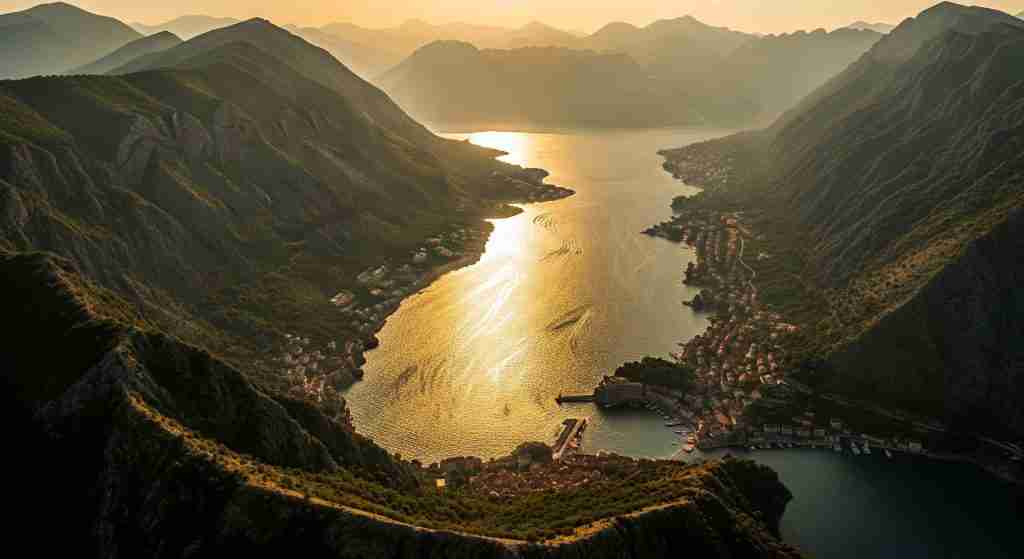
Investment Migration, Asset Protection & Tax Optimization
Montenegro, a small Balkan nation strategically positioned between the European Union and the Western Balkans, has emerged as an intriguing jurisdiction for international investors and individuals seeking alternative residency options. As a NATO member and EU candidate country, Montenegro offers a unique blend of European integration aspirations with competitive tax policies and relatively straightforward business procedures.
Official Currency
Uses Euro without EU membership
Corporate Tax
Progressive 9-15% rates
Property Rights
Full foreign ownership allowed
Investment Migration
Important Update
As of March 2025, Montenegro's citizenship by investment program is officially closed to new applicants. The government terminated new applications for this program.
Current Residency Options
-
Temporary Residence: Available through business registration, employment, or real estate investment
-
Permanent Residence: Obtainable after 3 years of continuous temporary residence
-
Naturalization: Possible after 10 years of legal residence in the country
Business-Based Residency
- Minimum capital: EUR 1 for LLC registration
- Processing time: 4-5 working days for business registration
- Local presence: Not required for company formation
- Tax residency: Achieved after 183+ days annually
Investment Thresholds for Residency
| Investment Type | Minimum Amount | Residency Benefit | Additional Requirements |
|---|---|---|---|
| Real Estate Purchase | No minimum specified | Temporary residence basis | Property ownership documentation |
| Business Investment | EUR 1 (LLC minimum) | Temporary residence | Active business operations |
| Employment | N/A | Work-based residence | Valid employment contract |
Asset Protection
Legal System & Property Rights
Strong Legal Framework
Continental legal system based on Roman law with EU-aligned legislation
- Three-tier court system with specialized commercial courts
- Constitutional Court for rights protection
- ICSID Convention member since 2012
- New York Convention signatory for arbitral awards
Foreign Ownership Rights
Property Ownership
- Full ownership rights for residential and commercial property
- No restrictions on property location or type
- Agricultural land limited to 5,000 m² for foreign nationals
- Inheritance rights protected for foreign owners
Expropriation Protection
Legal Safeguards
- • Expropriation only for "compelling public purpose"
- • Fair market value compensation required
- • LIBOR + 1 basis point interest on delayed payments
- • No known cases of direct foreign investment expropriation
Investment Protection
- • 24 bilateral investment treaties in force
- • International arbitration available
- • MIGA coverage available
- • EU investment standards alignment
Available Asset Protection Structures
Corporate Structures
- • Limited Liability Company (LLC)
- • Joint Stock Company
- • General Partnership
- • Limited Partnership
Banking Privacy
- • FATCA compliant since 2018
- • Limited banking secrecy
- • CRS participant
- • EU data standards
Investment Vehicles
- • Real estate holdings
- • Securities portfolios
- • Business investments
- • Free zone enterprises
Tax Optimization
Taxation System
Montenegro operates a worldwide taxation system for residents and territorial taxation for non-residents. Tax residency is triggered after 183+ days annually in the country.
Personal Income Tax Rates
| Income Type | Tax Rate | Exemption/Threshold |
|---|---|---|
| Salary (up to €700/month) | 0% | Tax-exempt |
| Salary (€701-€1,000) | 9% | Progressive rate |
| Salary (over €1,000) | 15% | Progressive rate |
| Self-employment (up to €8,400) | 0% | Annual exemption |
| Self-employment (€8,401-€12,000) | 9% | Progressive rate |
| Self-employment (over €12,000) | 15% | Progressive rate |
Corporate Tax Rates
| Profit Range | Tax Rate |
|---|---|
| Up to €100,000 | 9% |
| €100,001 - €1,500,000 | 12% |
| Over €1,500,000 | 15% |
Special Incentives
- • Up to 8 years tax exemption for underdeveloped regions
- • Maximum €200,000 total exemption per company
- • Excludes primary agriculture, transport, steel, trade
Capital Gains Tax
For individuals and businesses
Exemptions for primary residence and family transfers
Inheritance/Gift Tax
Exempt for spouses, children, parents
3% for other beneficiaries
VAT Rate
Standard rate
7% reduced rate, 0% for exports
Local Surtax
Additional local tax levied on personal income tax:
- • 13% in most municipalities
- • 15% in Podgorica and Cetinje
- • Applied to the calculated income tax amount
Tax Treaties & International Compliance
Double Taxation Treaties
43 active treaties including:
 Germany
 Austria
 Italy
Italy
 UK
UK
 Switzerland
 Netherlands
 China
China
 UAE
UAE
No treaty with the United States
International Compliance
Banking & Business Setup
Banking for Foreigners
Account Opening Requirements
- • Valid passport or ID
- • Proof of address
- • Bank reference letter (recommended)
- • Proof of income or business details
Major International Banks
- • OTP Bank (Hungary) - operates as CKB
- • Erste Bank (Austria)
- • NLB Bank (Slovenia)
- • Several local and regional banks
Business Registration
Quick Setup Process
4-5 working days
EUR 1 (LLC)
3 documents only
Fully electronic
Available Business Structures
- • Entrepreneur (sole proprietorship)
- • Limited Liability Company (LLC)
- • Joint Stock Company
- • General Partnership
- • Limited Partnership
- • Branch of foreign company
International Compliance & Reporting
CRS Reporting
Automatic exchange of financial account information
Deposit Protection
Up to €50,000 guaranteed per depositor
SEPA Integration
Joined SEPA zone in January 2025
Real Estate & Investment Environment
Full Foreign Ownership Rights
Montenegro allows foreigners to own real estate without restrictions on property type or location, with full freehold ownership rights.
Property Ownership Rules
✓ Allowed
- • Residential apartments and houses
- • Commercial properties
- • Urban land
- • Investment properties
- • Coastal properties
✗ Restricted
- • Agricultural land over 5,000 m²
- • Forest land over 5,000 m²
- • Natural resources
- • Cultural monuments
Property Taxes & Costs
| Tax/Fee Type | Rate | When Applied |
|---|---|---|
| VAT (new properties) | 21% | First sale by developer |
| Transfer tax | 3% | Resale properties |
| Annual property tax | 0.1-1% | Based on market value |
| Rental income tax | 15% | On rental profits |
Investment Climate & Market Outlook
Economic Indicators
- • GDP growth: 6% (2023)
- • Debt-to-GDP: ~60% (down from 105%)
- • Tourism: 25%+ of GDP
- • FDI: €856.9M (2023)
Key Sectors
- • Tourism & hospitality
- • Renewable energy
- • Real estate development
- • Agriculture & food processing
Investment Sources
- • Serbia, Russia, Germany
- • Switzerland, UAE, Turkey
- • Italy, United States
- • Cyprus, Austria
Payment Systems & Financial Infrastructure
PayPal Limitations
PayPal is not fully available in Montenegro. Residents can use PayPal for payments but cannot receive funds or withdraw money to local bank accounts.
Available Payment Solutions
Available Services
- • Traditional bank transfers
- • SEPA payments (since January 2025)
- • International wire transfers
- • Local card processing
- • Cash-based transactions
Limited Services
- • PayPal (receiving funds)
- • Wise (limited availability)
- • Some international fintech services
- • Advanced digital payment solutions
Financial Infrastructure
SEPA Integration (2025)
Montenegro became the first Western Balkan country to join the Single Euro Payments Area
- • Faster EU payments
- • Lower transaction costs
- • Standardized payment procedures
Banking System
- • 11 private banks operating
- • Fully privatized banking sector
- • International banking chains present
- • Modern electronic banking systems
Cross-Border Payment Considerations
Advantages
- Uses Euro currency - no exchange rate risk within Eurozone
- SEPA membership enables efficient EU transfers
- No capital controls or foreign exchange restrictions
Challenges
- Limited fintech ecosystem compared to EU countries
- Restricted access to some international payment services
- Dependence on traditional banking for most transactions
Cryptocurrency Treatment
Legal Status & Regulation
Legal Status
Cryptocurrency is legal in Montenegro and increasingly accepted for various transactions, including luxury real estate purchases.
Recent Developments (2025)
- • New AML amendments adopted (February 2025)
- • Alignment with FATF recommendations
- • Enhanced regulatory framework development
- • Real estate transactions in crypto not specifically regulated
Taxation of Cryptocurrencies
| Entity Type | Tax Rate | Treatment |
|---|---|---|
| Individuals | 15% | Capital gains on disposal |
| Corporations (up to €100k) | 9% | Included in corporate profits |
| Corporations (€100k-€1.5M) | 12% | Progressive corporate rate |
| Corporations (over €1.5M) | 15% | Highest corporate rate |
Compliance & Reporting Requirements
For Individuals
- • Report crypto gains in annual tax returns
- • Maintain records of all transactions
- • Calculate gains/losses in Euro equivalent
- • Apply 15% tax rate on realized gains
For Businesses
- • Include crypto activities in corporate accounts
- • Apply progressive corporate tax rates
- • Consider licensing requirements for crypto businesses
- • Comply with AML regulations
Important Considerations
While cryptocurrency is legal and increasingly used (especially in luxury real estate), the regulatory framework is still evolving.
- • Central Bank warns of regulatory gaps in crypto real estate transactions
- • Banking system may have limitations for crypto-related businesses
- • Professional advice recommended for large crypto transactions
General Considerations
Political & Economic Stability
Positive Factors
- • NATO member since 2017
- • EU candidate country (negotiations ongoing)
- • Strong GDP growth (6% in 2023)
- • Improving debt-to-GDP ratio
- • Uses Euro currency
Risk Factors
- • Political instability and coalition governments
- • Regional geopolitical tensions
- • Dependence on tourism (vulnerable to external shocks)
- • Corruption and rule of law concerns
International Standing
| Index/Rating | Rank/Score | Status |
|---|---|---|
| Transparency International CPI | 63 of 180 | Moderate corruption levels |
| Global Innovation Index | 75 of 132 | Below EU average |
| FATF Status | Compliant | Not grey/blacklisted |
| World Bank GNI per capita | $10,480 | Upper-middle income |
Language & Professional Services
Language Accessibility
- • Official language: Montenegrin
- • English widely spoken in business circles
- • German and Italian common in tourism areas
- • Russian and Serbian also prevalent
Professional Services
- • International law firms present
- • Big 4 accounting firms available
- • Real estate agencies with foreign expertise
- • Tax advisors familiar with international clients
Key Advantages & Disadvantages
✓ Advantages
- • Competitive tax rates (9-15%)
- • Full foreign property ownership
- • EU candidate status
- • Uses Euro currency
- • No capital controls
- • Beautiful Mediterranean location
- • Growing tourism and real estate markets
- • Simple business registration
- • SEPA payment integration
 Disadvantages
- • Citizenship by investment program closed
- • Worldwide taxation for residents
- • Political instability concerns
- • Limited fintech ecosystem
- • PayPal restrictions
- • Corruption and rule of law issues
- • Small domestic market
- • Economic dependence on tourism
- • No US tax treaty
Frequently Asked Questions
Key advantages include competitive tax rates (9-15% progressive), full foreign property ownership rights, EU candidate status, use of the Euro currency, and a beautiful Mediterranean location. The jurisdiction offers straightforward business registration, no capital controls, and growing investment opportunities in tourism and real estate sectors. Additionally, it provides a pathway to European integration while maintaining attractive tax policies.
Yes, but with important considerations. Entrepreneurs benefit from low corporate tax rates (9% on first €100,000 profit), simple business registration (EUR 1 minimum capital), and no restrictions on foreign business ownership. However, tax residents face worldwide taxation, and the fintech ecosystem is limited. Digital nomads should consider that PayPal receiving is restricted, and internet infrastructure may be less developed than in major EU cities. The jurisdiction works better for traditional businesses than pure digital operations.
It's not a traditional tax haven but offers practical tax advantages. The jurisdiction implements worldwide taxation for residents but provides competitive progressive rates (9-15%), significant exemptions (first €700 monthly salary tax-free), and no capital gains tax on primary residence sales. Corporate rates are attractive (9-15% progressive), and there are investment incentives for underdeveloped regions. However, it participates in international tax transparency initiatives (CRS, FATCA) and maintains 43 double taxation treaties.
Company registration is efficient, taking 4-5 working days through the fully electronic system. Bank account opening varies by institution but typically requires standard documentation (passport, proof of address, bank reference) and can take 1-2 weeks for approval. Foreign individuals and companies can open accounts, though banks may require additional due diligence. The process has improved significantly with SEPA integration in 2025, making banking more accessible for EU-related transactions.
Cryptocurrency is legal and increasingly welcomed, particularly in luxury real estate transactions. The jurisdiction applies standard tax rates to crypto gains (15% for individuals, 9-15% progressive for corporations) and has updated AML regulations in 2025 to align with FATF standards. However, the regulatory framework is still evolving, and the Central Bank notes regulatory gaps in crypto real estate transactions. Banking relationships for crypto businesses may be challenging, and professional advice is recommended for significant crypto operations.
