
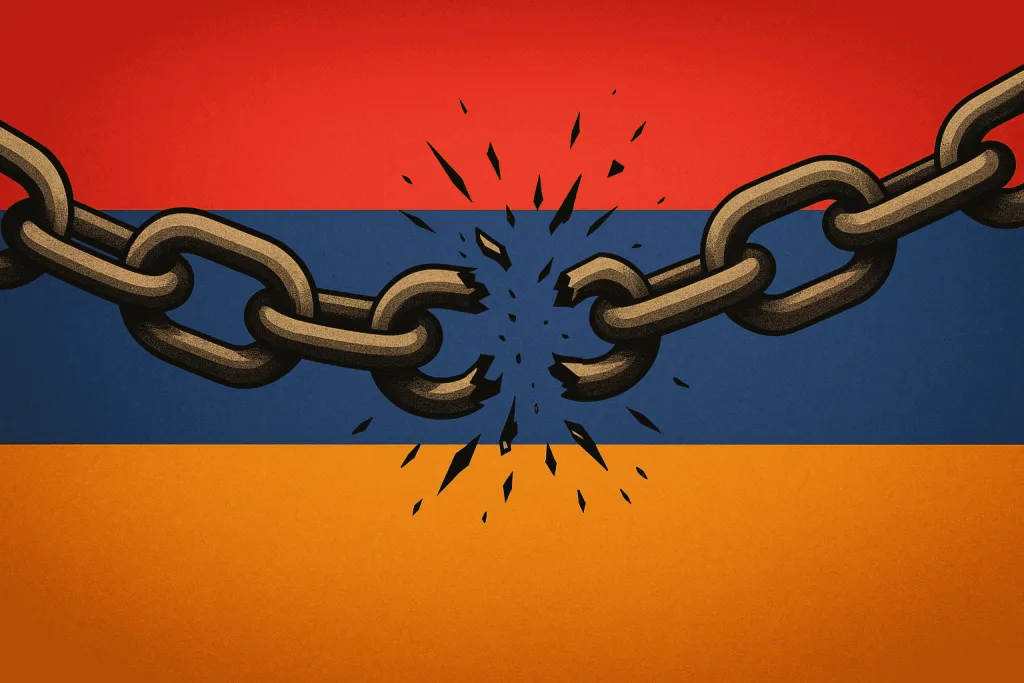
Navigating Armenia's Anti-Cartel Landscape
Armenia's competition protection framework has evolved into a sophisticated regulatory environment that demands careful attention from international businesses. The Competition Protection Commission (CPC) has demonstrated unprecedented enforcement vigor, with recent cases resulting in penalties exceeding 1 billion Armenian Drams for anti-competitive agreements.
Understanding prohibited agreements and implementing robust cartel risk mitigation strategies is no longer optional—it's essential for sustainable business operations in Armenia's dynamic market environment.
Critical Compliance Alert
The Armenian Competition Authority recently imposed over 1 billion AMD in fines on major gasoline companies for anti-competitive agreements, demonstrating the serious consequences of non-compliance.
Understanding Prohibited Agreements Under Armenian Law
Legal Foundation
- Law on Protection of Economic Competition
- Constitutional prohibition of cartel agreements
- CPC enforcement guidelines and precedents
Core Prohibitions
- Price-fixing agreements between competitors
- Market division and customer allocation schemes
- Production limitation and output restriction cartels
Types of Prohibited Anti-Competitive Agreements
Price Cartels
Agreements to fix, maintain, or coordinate pricing strategies across competitors
Market Division
Territorial allocation and customer segmentation arrangements
Output Restriction
Coordinated production limitations and supply constraints
Recent Enforcement: Learning from High-Profile Cases
Major Gasoline Cartel Case
In December, the Armenian Competition Protection Commission imposed unprecedented fines totaling over 1 billion AMD on four major gasoline companies for anti-competitive agreements affecting fuel pricing across the market.
Companies Involved
- • CPS Energy Group: AMD 392.4 million fine
- • Flash: AMD 324.1 million fine
- • Mega Trade: AMD 206.2 million fine
- • Max Oil & Kamoyl: AMD 155.5 million fine
Key Enforcement Signals
- • Active market monitoring and detection
- • Substantial financial penalties
- • Cross-industry enforcement scope
- • Coordinated investigation capabilities
Strategic Implication: This case demonstrates the CPC's sophisticated detection capabilities and willingness to impose significant penalties, making proactive compliance essential for all market participants.
Additional Enforcement Patterns
Egg Production Cartel
Seven large companies fined for anti-competitive collusion in egg pricing
Courier Services
Globbing courier service fined 53 million AMD for unfair competition practices
Nursing Home Contracts
Three companies sanctioned for government contract bid rigging conspiracy
Cartel Risk Identification Framework
High-Risk Scenarios
- Regular meetings with direct competitors without clear business justification
- Identical pricing patterns across competing companies
- Coordinated customer allocation discussions
- Joint production or capacity planning arrangements
- Information exchange on sensitive commercial data
Detection Warning Signs
- Unusual market stability despite economic volatility
- Synchronized price movements without cost justification
- Reduced competitive bidding intensity
- Market share stability despite competitive dynamics
- Communication patterns indicating coordination
Industry-Specific Risk Assessment
| Industry Sector | Risk Level | Common Risk Factors | Mitigation Priority |
|---|---|---|---|
| Energy & Fuel | Very High | Price transparency, limited players, essential commodity | Immediate implementation required |
| Construction & Materials | High | Project-based bidding, regional concentration | Enhanced monitoring systems |
| Food & Agriculture | Medium | Seasonal pricing, supply chain coordination | Regular policy review |
| Technology Services | Moderate | Intellectual property sharing, standard setting | Preventive compliance training |
Practical Compliance Scenarios and Solutions
Disclaimer: The following scenarios are theoretical examples created for illustrative purposes and do not represent actual cases or constitute legal advice.
Scenario 1: Successful Trade Association Participation
Situation
A hypothetical international telecommunications company joins an Armenian industry association that regularly discusses market conditions and technological standards.
Risks Identified
- • Price coordination discussions
- • Market division conversations
- • Sensitive information sharing
Compliance Strategy
- • Clear participation guidelines for employees
- • Legal counsel present at sensitive meetings
- • Written protocols for information sharing
- • Regular compliance training for participants
- • Documentation of meeting minutes and decisions
Outcome: Successful participation with zero compliance incidents over two-year period
Scenario 2: Joint Venture Compliance Challenge
Situation
A theoretical joint venture between two construction companies for infrastructure projects requires coordination on bidding strategies and resource allocation.
Compliance Challenges
- • Distinguishing legitimate cooperation from coordination
- • Information sharing boundaries
- • Independent bidding requirements
Resolution Framework
- • Formal JV agreement with competition law provisions
- • Clear separation of competitive activities
- • Information barriers for non-JV projects
- • Regular legal review of operational practices
- • CPC pre-clearance consultation
Outcome: Structured approach enables legitimate cooperation while maintaining compliance
Scenario 3: Compliance Failure and Recovery
Situation
A hypothetical retail chain inadvertently participates in supplier discussions that result in coordinated pricing across multiple distribution channels.
Warning Indicators
- • Unusual price alignment across competitors
- • Reduced competitive pressure
- • Internal concerns raised by staff
Recovery Strategy
- • Immediate cessation of problematic activities
- • Comprehensive internal investigation
- • Voluntary disclosure to CPC consideration
- • Implementation of enhanced compliance program
- • Third-party compliance audit and monitoring
Outcome: Proactive response minimizes penalties and demonstrates commitment to compliance
Comprehensive Cartel Risk Mitigation Strategies
Organizational Framework
- Dedicated compliance officer appointment
- Regular board-level compliance reporting
- Cross-functional compliance committees
- Clear escalation procedures
Training & Education
- Mandatory annual compliance training
- Role-specific risk awareness programs
- Scenario-based practical exercises
- Regular updates on regulatory changes
Monitoring & Detection
- Automated communication monitoring systems
- Regular market behavior analysis
- Anonymous reporting mechanisms
- Third-party compliance audits
Implementation Roadmap
Immediate (0-30 days)
- Risk assessment
- Policy development
- Leadership commitment
Short-term (1-3 months)
- Training rollout
- System implementation
- Process integration
Medium-term (3-6 months)
- Monitoring activation
- Performance measurement
- Continuous improvement
Long-term (6+ months)
- Culture transformation
- Advanced analytics
- Strategic integration
Penalties, Enforcement Actions, and Financial Consequences
Financial Penalties Framework
Corporate Entities
Up to 10% of annual revenue for prohibited concentration violations
AMD 5 million maximum for failure to notify concentrations
Individual Officials
AMD 3-5 million in personal liability for competition law violations
Non-Financial Consequences
- Transaction Prohibition: CPC authority to block or unwind completed transactions
- Structural Remedies: Forced divestiture or business separation requirements
- Enhanced Scrutiny: Increased regulatory monitoring and reporting obligations
- Reputational Impact: Public enforcement actions and negative market perception
Penalty Calculation Factors
Aggravating Factors
- Intentional violations with knowledge of legal requirements
- Repeat offenses or history of non-compliance
- Deliberate concealment or obstruction of investigations
- Leadership or instigation role in anti-competitive conduct
Mitigating Factors
- Voluntary disclosure beyond legal requirements
- Full cooperation with CPC investigation processes
- Prompt implementation of remedial measures
- First-time violations with immediate corrective action
Protect Your Business with Expert Armenian Competition Law Guidance
Armenia's competition protection landscape demands sophisticated compliance strategies and proactive risk management. Don't leave your business exposed to potentially devastating penalties and enforcement actions.
Comprehensive Risk Assessment
Identify and evaluate cartel risks specific to your industry and business model
Strategic Compliance Framework
Develop customized policies and procedures tailored to Armenian regulations
Ongoing Advisory Support
Continuous guidance for complex transactions and regulatory changes
Ready to Secure Your Compliance?
Get specialized strategic advisory services designed for international businesses operating in Armenia's regulated markets.
Get Comprehensive Competition Law AdvisorySpecialized strategic advisory for international businesses in regulated markets
Frequently Asked Questions About Armenian Competition Law
What types of agreements are automatically prohibited under Armenian competition law?
Armenian competition law prohibits several categories of agreements per se, including price-fixing arrangements between competitors, market division agreements that allocate territories or customers, production restriction cartels that limit output or capacity, and bid-rigging conspiracies in public procurement processes.
The Law on Protection of Economic Competition takes a strict approach to these "hardcore" cartels, with no requirement to prove actual harm to competition—the existence of the agreement itself violates the law.
How does the Armenian Competition Protection Commission detect cartel activity?
The CPC employs multiple detection methods including market monitoring and economic analysis to identify suspicious patterns such as synchronized pricing or unusual market stability. They conduct industry-specific investigations focusing on sectors with higher cartel risks, utilize whistleblower reports and anonymous tips from market participants, and perform dawn raids and document searches when sufficient evidence exists.
Recent cases demonstrate the CPC's sophisticated analytical capabilities, particularly in the gasoline sector where they successfully identified and prosecuted a multi-company price coordination scheme.
What are the potential financial consequences of cartel violations in Armenia?
Cartel violations can result in severe financial penalties. Corporate entities face fines up to 10% of their previous year's revenue for prohibited concentration violations, while failure to notify required transactions incurs penalties up to AMD 5 million. Individual officials can face personal fines ranging from AMD 3-5 million.
Recent enforcement actions have demonstrated the CPC's willingness to impose substantial penalties—the gasoline cartel case resulted in over 1 billion AMD in total fines across four companies, with individual company penalties ranging from AMD 155 million to AMD 392 million.
Can foreign companies be held liable for anti-competitive conduct that occurs outside Armenia?
Yes, Armenian competition law has extraterritorial reach. Foreign companies can be held liable when their conduct outside Armenia has effects within Armenian markets, prevents or restricts competition in Armenia, or harms consumer interests in the country.
This extraterritorial application means that international cartels, cross-border mergers, and foreign business arrangements can all fall under Armenian competition law jurisdiction if they impact Armenian markets, regardless of where the conduct occurs.
Are there any exemptions or safe harbors for certain types of business cooperation?
Armenian competition law provides limited exemptions for certain types of cooperation. Legitimate joint ventures that create efficiencies may qualify for approval, vertical agreements between suppliers and distributors are generally permitted unless they restrict competition, and some industry standardization and research cooperation may be allowed.
However, these exemptions are narrowly interpreted and require careful legal analysis. The key test is whether the cooperation produces offsetting efficiencies that benefit consumers and whether less restrictive alternatives exist to achieve the same legitimate business objectives.
What should companies do if they discover potential cartel activity within their organization?
Companies discovering potential cartel activity should immediately cease any problematic conduct, conduct a thorough internal investigation with legal counsel, consider voluntary disclosure to the CPC as part of a leniency strategy, and implement enhanced compliance measures to prevent future violations.
Early detection and proactive response can significantly reduce penalties and demonstrate good faith efforts at compliance. The CPC considers cooperation and voluntary disclosure as mitigating factors in penalty calculations, making prompt action crucial for minimizing enforcement consequences.
Navigate Armenian Competition Law with Confidence
Armenia's competition protection framework presents both opportunities and challenges for international businesses. Success requires strategic planning, comprehensive compliance programs, and expert legal guidance tailored to the local regulatory environment.
Partner with Competition Law ExpertsComprehensive strategic advisory services for Armenian market success
