
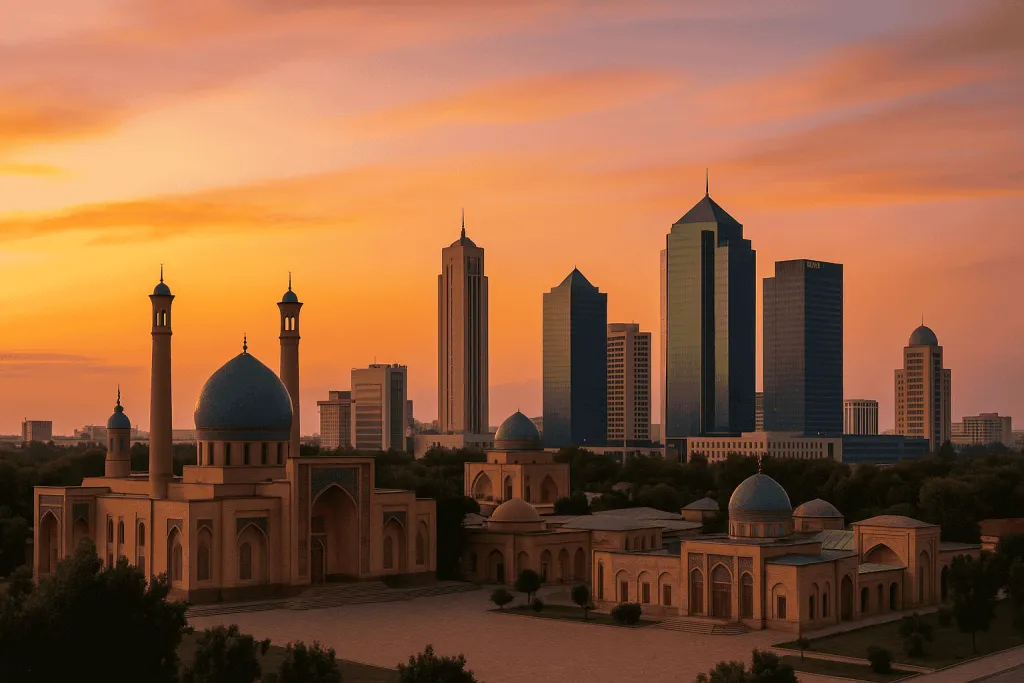
Uzbekistan, strategically positioned in the heart of Central Asia, has emerged as a potentially attractive jurisdiction for investors seeking new opportunities in a developing market. With the introduction of its first Golden Visa program in 2025 and a series of economic reforms, the country has started to position itself as a destination for investment migration, asset protection, and tax optimization. This comprehensive analysis examines the key aspects relevant to individuals and businesses considering Uzbekistan as a destination for their capital and operations.
Investment Migration
Uzbekistan Golden Visa Program
As of June 1, 2025, Uzbekistan has launched its first Golden Visa and Residency by Investment program, creating a new pathway for international investors to establish presence in Central Asia. This development marks a significant shift in the country's approach to attracting foreign capital.
Residency by Investment Options
Uzbekistan offers three main routes to obtain residence permits through investment:
Government Fund Donation
- $250,000 one-time donation (main applicant)
- $150,000 per additional family member
- Grants 5-year residency
- Fastest processing option
Business Investment
- $250,000 investment in local company
- 3-year renewable residence permit
- $3 million investment in production business
- 10-year renewable residence permit
Real Estate Acquisition
- $100,000 in Karakalpakstan or other regions
- $200,000 in Samarkand, Bukhara, etc.
- $300,000 in Tashkent (capital)
- Grants indefinite residency
Path to Naturalization
For those seeking Uzbekistani citizenship, the standard naturalization process requires:
- Legal residence in Uzbekistan for at least five consecutive years
- Proficiency in the Uzbek language
- Lawful source of income
- Renunciation of other citizenship (as Uzbekistan does not recognize dual citizenship)
The citizenship process can take 6-12 months after meeting the residency requirement.
Asset Protection
Legal System and Property Rights
Uzbekistan's legal system belongs to the civil law family. The country has been undertaking reforms to strengthen property rights and improve judicial independence, though challenges remain.
Legal Framework for Asset Protection
- The Law on Investments and Investment Activities (2019) guarantees protection against nationalization of assets
- The Law on Guarantees of the Freedoms of Entrepreneurial Activity provides additional protections
- Foreign investors can challenge court decisions at the Supreme Court level
Important consideration: While legislation exists to protect foreign assets, the practical implementation and enforcement of these protections can be inconsistent. According to the 2024 U.S. State Department Investment Climate Statement, Uzbekistan ranks 121st out of 180 countries in Transparency International's Corruption Perceptions Index.
Asset Protection Vehicles
Uzbekistan offers limited options for traditional asset protection structures:
| Vehicle Type | Availability | Notes |
|---|---|---|
| Trusts | Limited | Not well-developed in Uzbekistan's legal framework |
| Foundations | Limited | Primarily for non-profit purposes, not asset protection |
| Corporate Structures | Available | LLCs offer limited liability but less privacy than offshore jurisdictions |
| Nominee Structures | Restricted | Limited legal recognition and enforcement |
Foreign Ownership Rights
Foreign individuals and entities can own various types of assets in Uzbekistan with certain restrictions:
- Real Estate: Foreigners can own residential and commercial property but cannot own land
- Securities: Foreign investors can purchase shares in Uzbekistani companies, with some sector-specific restrictions
- Corporate Assets: Foreign entities can own business assets through locally established companies
- Land: Only lease rights are available to foreigners, typically for up to 49 years
Judicial System Reliability
According to the 2024 U.S. State Department Investment Climate Statement on Uzbekistan:
"Formally the judicial system in Uzbekistan is independent. Recent reforms have tightened the requirements for judicial candidates, improved the independence and authority of the Supreme Judicial Council of Uzbekistan, and simplified court proceedings. [...] In the recent past, cases of government interference and corruption were quite common. Judges could interpret legislation in favor of government officials or state-owned enterprises. There have been fewer such cases in recent years, largely due to attracting more public attention to the issue."
Tax Optimization
Uzbekistan's Tax System
Uzbekistan employs a relatively straightforward tax system with competitive rates, making it potentially attractive for tax planning purposes. Following recent reforms, the tax regime has become more predictable and the tax burden is generally considered moderate.
Taxation Approach
Uzbekistan uses a hybrid taxation system:
- For Residents: Worldwide income is subject to taxation
- For Non-residents: Only income from Uzbekistan sources is taxed
An individual is considered a tax resident if they stay in Uzbekistan for 183 days or more in any consecutive 12-month period.
Key Tax Rates
| Tax Type | Rate | Notes |
|---|---|---|
| Personal Income Tax | 12% | Flat rate for residents |
| Personal Income Tax (Non-residents) | 20% | On employment income from Uzbekistan sources |
| Corporate Income Tax | 15% | Standard flat rate |
| Dividend Income | 5% | For both residents and non-residents |
| Value Added Tax (VAT) | 12% | Standard rate |
| Property Tax | 1.5% | On assessed property value |
| Capital Gains | 12%/20% | Treated as ordinary income (12% for residents, 20% for non-residents) |
| Inheritance/Estate Tax | 0% | No inheritance or gift tax |
Special Tax Regimes
Uzbekistan offers several preferential tax regimes that may benefit foreign investors:
Free Economic Zones (FEZ)
- Exemption from corporate income tax, property tax, and land tax for 3-10 years depending on investment size
- Custom duty exemptions for imported equipment and raw materials
- Simplified export-import procedures
IT Park Residents
- Exemption from corporate income tax until 2028
- Reduced personal income tax rate of 7.5% for employees
- Exemption from custom duties for imported equipment
- Simplified visa and work permit procedures
Foreign Investment Incentives
Businesses with foreign investment exceeding $150,000 may benefit from additional tax privileges, including:
- Reduced property tax rates
- Tax holidays for specific industries (energy, manufacturing, agriculture)
- Simplified customs procedures
Treatment of Foreign Income
For tax residents of Uzbekistan:
- Foreign-sourced income is generally subject to taxation
- Double taxation relief is available through tax credits under applicable tax treaties
- Uzbekistan has double taxation agreements with 54 countries
- No formal CFC (Controlled Foreign Corporation) rules currently exist, but this may change as Uzbekistan aligns with international standards
Cryptocurrency Taxation
As of 2025, Uzbekistan offers favorable tax treatment for cryptocurrency operations:
- Income from cryptocurrency trading is exempt from taxation
- Mining operations require licenses but benefit from tax exemptions
- No capital gains tax on cryptocurrency price appreciation
- Cryptocurrency exchanges must be licensed by the National Agency for Prospective Projects
The regulatory framework continues to evolve, with the Law on Amendments to the Legislation on Licensing Cryptocurrency Operations (ZRU-866) enacted in September 2023 establishing clearer guidelines and introducing penalties for unauthorized operations.
Banking & Business Setup
Banking System
Account Opening for Foreigners
Opening bank accounts in Uzbekistan as a foreigner presents moderate challenges:
- Non-resident individuals need to obtain a Personal Identification Number (PINI) in Uzbekistan
- Foreign companies must register for a Taxpayer Identification Number (TIN)
- Documentary requirements include passport, proof of address, and business registration documents (for companies)
- The account opening process typically takes 1-2 weeks
- Banks may require in-person visits, though some are beginning to offer remote onboarding options
Important: While regulations allow foreigners to open accounts, banks may exercise heightened due diligence, particularly for clients from high-risk jurisdictions. The practical experience can vary significantly between banks.
International Reporting Standards
Uzbekistan's position on international financial reporting frameworks:
- OECD Common Reporting Standard (CRS): Uzbekistan is not currently a participant in the CRS and is not listed among countries committed to implementation by 2026
- FATCA: In 2015, Uzbekistan signed the Intergovernmental Agreement with the US regarding FATCA, which entered into force in July 2017
- FATF: Uzbekistan is no longer on the FATF grey list after implementing significant anti-money laundering reforms
Business Formation
Company Registration Process
Establishing a company in Uzbekistan involves several steps:
- Preparation of incorporation documents
- Registration with the Single Window service or online platform
- Company name registration
- Opening a corporate bank account
- Creating a company seal
- Tax registration
The process typically takes 3-7 business days and can be done through the Centers for Government Services or online through the Electronic Government website.
Available Business Structures
| Structure Type | Requirements | Liability |
|---|---|---|
| Limited Liability Company (LLC) |
|
Limited to company assets |
| Joint Stock Company |
|
Limited to company assets |
| Foreign Enterprise (FE) |
|
Limited to company assets |
| Representative Office |
|
Parent company bears liability |
Tax Advantage: A foreign-owned LLC can benefit from tax privileges if its initial share capital exceeds $150,000.
Local Director Requirements
While shareholders can be of any nationality, Uzbekistan requires at least one director who is a resident of Uzbekistan. Foreign investors typically address this requirement by either:
- Appointing a trusted local partner
- Relocating a company representative to Uzbekistan
- Engaging a professional nominee director service (less common)
Real Estate & Investment Environment
Foreign Property Ownership
Ownership Rights for Foreigners
The regulations for foreign real estate ownership in Uzbekistan are as follows:
- Foreigners can own residential and commercial buildings
- Land ownership is restricted to Uzbek citizens and entities only
- Foreigners can obtain long-term land leases (typically up to 49 years)
- No restrictions on the number of properties foreigners can purchase
Real estate acquisition by foreigners is one of the pathways to obtain residency in Uzbekistan, with investment thresholds varying by region from $100,000 to $300,000.
Real Estate Market Stability
Uzbekistan's real estate market can be characterized as:
- Developing: Still maturing with improving transparency
- Growing: Steady price appreciation, especially in Tashkent and tourist centers
- Uneven: Significant quality and price variations between regions
- Potential: Development opportunities in commercial, residential, and tourism sectors
The market is becoming increasingly formalized with better documentation and legal processes, though due diligence remains essential.
Property Taxation
Real estate owners in Uzbekistan are subject to the following taxes:
- Property Tax: 1.5% of cadastral value annually
- Land Tax: Applies to land users, calculated based on land quality and location
- Income Tax on Rental Income: 12% for residents, 20% for non-residents
- Capital Gains Tax: Applied on property sales, with exemptions for properties held over 3 years
Foreign property owners are subject to the same property tax rates as local nationals.
Investment Climate
Uzbekistan's overall investment environment presents both opportunities and challenges:
Strengths
- Political stability under current leadership
- Strong economic growth (6% GDP growth in 2023)
- Strategic location with access to regional markets
- Ongoing market liberalization reforms
- Abundant natural resources
- Young and growing population (37 million)
Challenges
- Still developing legal framework
- Corruption concerns (121st of 180 in Transparency Index)
- Bureaucratic processes
- Currency stability issues
- Energy supply limitations
- Limited integration with global financial systems
According to Moody's, Uzbekistan maintains a stable Ba3 long-term issuer rating, reflecting moderate credit risk with some speculative characteristics.
Payment Systems & Financial Infrastructure
Available Payment Solutions
| Payment Service | Availability | Notes |
|---|---|---|
| PayPal | Limited | Not available for sending money from Uzbekistan; receiving functionality is limited |
| Wise (formerly TransferWise) | Limited | Does not support sending money directly to Uzbekistan; cards can be used for payments |
| Local Payment Systems | Available | UZCARD, HUMO, and Payme are widely used |
| International Card Networks | Available | Visa, Mastercard, UnionPay are accepted at major establishments |
| SWIFT Transfers | Available | International bank transfers are operational but may face delays |
| Mobile Payment Apps | Available | Local services like Click, Payme, and Apelsin are popular |
Financial Infrastructure for Non-Residents
Non-residents face several considerations when using Uzbekistan's financial system:
- Local fintech tools and digital wallets typically require local residency or work permits
- International cards can be used for payments but may face occasional issues with acceptance
- Cross-border payments face moderate restrictions, particularly for large sums
- Currency conversion is required as most transactions are conducted in local currency (Uzbekistani Som)
The financial infrastructure is developing rapidly but remains less integrated with global systems compared to more established financial hubs.
Cross-Border Payment Restrictions
Several limitations apply to international money movements:
- Large transfers may require additional documentation explaining the source and purpose of funds
- Certain high-risk jurisdictions face enhanced scrutiny or restrictions
- Currency conversion is subject to central bank regulations and may experience occasional limitations
- Business transactions typically require supporting documentation (contracts, invoices)
The Central Bank of Uzbekistan maintains oversight of cross-border transactions to ensure compliance with anti-money laundering regulations.
Cryptocurrency Treatment
Legal Status & Regulation
As of 2025, cryptocurrency is legal in Uzbekistan, with specific regulations governing its use, mining, and trading activities.
Regulatory Framework
- The National Agency for Prospective Projects (NAPP) is the primary regulator for crypto activities
- Law on Amendments to the Legislation on Licensing Cryptocurrency Operations (ZRU-866, September 2023) established the current framework
- Trading is permitted through licensed exchanges only
- Mining operations require licensing and registration
Note: In February 2023, Uzbekistan introduced provisions allowing foreign crypto companies to open bank accounts in the country for crypto-related operations.
Restrictions for Residents vs Non-Residents
There are important distinctions in how the regulations apply:
- Residents of Uzbekistan can only sell crypto assets and tokens, not buy them
- Non-residents face fewer restrictions and can both buy and sell cryptocurrencies
- Since January 2023, residents must use domestic virtual asset service providers only
- Foreign entities can apply for crypto licenses to operate exchanges and other services
Taxation of Cryptocurrency
Uzbekistan offers highly favorable tax treatment for cryptocurrency operations:
- Income from cryptocurrency trading is exempt from taxation
- No capital gains tax on cryptocurrency appreciation
- Licensed mining operations benefit from tax incentives
- Foreign crypto businesses enjoy tax preferences
This zero-tax policy for crypto has positioned Uzbekistan as an emerging destination for crypto operations, especially for mining due to relatively low electricity costs.
Cryptocurrency Infrastructure
The crypto ecosystem in Uzbekistan includes:
- Several NAPP-licensed exchanges operating legally
- Licensed mining facilities, particularly utilizing the country's energy resources
- Banking channels beginning to support crypto-related businesses
- Developing regulatory framework for stablecoins and other digital assets
However, major international exchanges like Binance have faced regulatory challenges. Binance was blocked in Uzbekistan but later arranged to operate through a local partner after settling regulatory issues.
Important consideration: While the regulatory framework is favorable, it continues to evolve. Significant penalties exist for unauthorized crypto operations, highlighting the importance of compliance with licensing requirements.
General Considerations
Political and Economic Stability
Uzbekistan has maintained relative political stability under President Shavkat Mirziyoyev, who came to power in 2016 and has implemented a series of economic reforms. The country has shown resilience to external pressures, with steady economic growth of around 6% in 2023 and continued attraction of foreign direct investment, which reached over $7.2 billion in 2023.
The government has ambitious development goals, aiming to achieve upper-middle-income status by 2030 through continued reforms and investment promotion. However, challenges remain in terms of governance, transparency, and economic diversification.
Accessibility of Professional Services
The availability of legal and financial services for foreigners is improving but remains somewhat limited:
- Legal Services: International law firms have established presence, particularly in Tashkent, though the number of English-speaking legal professionals outside the capital is limited
- Financial Advisory: Major accounting firms (Big Four) operate in the country, providing services in English
- Banking Services: Several banks offer English-language services for foreign clients
- Real Estate Services: International real estate agencies are primarily focused in Tashkent and major tourist centers
While professional services are increasingly available, cultural and language barriers may still present challenges for foreign investors operating outside major business centers.
Risk Factors
Economic Risks
- Currency volatility (the Uzbekistani Som has experienced fluctuations)
- Inflation pressures
- Dependence on commodity exports
- Energy infrastructure limitations
Regulatory Risks
- Evolving legal framework
- Inconsistent regulatory enforcement
- Corruption concerns
- Administrative barriers
Geopolitical Risks
- Regional tensions
- Balancing relationships with major powers
- Border security concerns
- Trade corridor vulnerabilities
Financial System Risks
- Limited banking sector development
- Restricted access to global financial markets
- Limited fintech infrastructure
- Cross-border payment challenges
Outlook: Uzbekistan's investment climate continues to improve through reforms and market liberalization, though investors should approach with appropriate due diligence and risk management strategies. The country's strategic location and natural resources present significant long-term opportunities despite current limitations.
Frequently Asked Questions
What are the top reasons someone might choose this jurisdiction for a second residency?
The primary attractions include the newly launched Golden Visa program with reasonable investment thresholds (starting at $100,000 for real estate in certain regions), relatively straightforward residency requirements, favorable tax rates with a flat 12% personal income tax, and strategic location providing access to Central Asian markets. Additionally, the jurisdiction offers tax-free treatment of cryptocurrency operations, making it particularly attractive for digital asset investors and entrepreneurs seeking exposure to emerging markets with growth potential.
Can entrepreneurs and digital nomads benefit from moving there?
Yes, particularly those focused on certain sectors. The IT Park initiative offers significant benefits for technology entrepreneurs, including tax exemptions until 2028, simplified visa processes with IT-Visas (three-year work permits with streamlined extension), and reduced personal income tax rates of 7.5% for employees. Digital nomads will find reasonable living costs and improving internet infrastructure, though they should be aware that certain payment platforms like PayPal have limited functionality. The jurisdiction is particularly attractive for entrepreneurs focused on Central Asian markets, agricultural technology, textile manufacturing, mining, and energy sectors.
Is it a tax haven or does it offer practical tax advantages?
While not considered a traditional tax haven, the jurisdiction offers practical tax advantages in several areas. The flat tax rates (12% personal income tax, 15% corporate income tax) are relatively competitive globally. There is no inheritance or gift tax, and certain investment categories enjoy significant incentives, particularly in Free Economic Zones and the IT sector. The most notable tax advantage is in cryptocurrency operations, which are exempt from taxation, positioning the jurisdiction as particularly favorable for digital asset activities. These advantages are balanced by a developing but still maturing legal framework and financial infrastructure.
How long does it take to open a bank account or company?
Company formation typically takes 3-7 business days through the Single Window service or online registration portal. The process involves preparation of incorporation documents, registration with authorities, obtaining a tax identification number, and creating a company seal. Bank account opening for foreign individuals or companies generally requires 1-2 weeks, with the process requiring a Personal Identification Number (for individuals) or Tax Identification Number (for companies). In-person visits are typically required for the initial account opening, though some banks are beginning to offer remote onboarding options. Documentation requirements include proof of identity, address verification, and business registration documents for corporate accounts.
Is cryptocurrency welcomed or discouraged?
Cryptocurrency is officially welcomed and legally recognized under a regulated framework. The jurisdiction has established progressive legislation that legalizes crypto trading and mining activities. These operations are exempt from taxation, making the jurisdiction particularly attractive for crypto businesses. However, operations must comply with licensing requirements administered by the National Agency for Prospective Projects, with significant penalties for unauthorized activities. An important distinction exists between residents and non-residents: locals are restricted to selling crypto assets only, while foreigners face fewer restrictions and can both buy and sell cryptocurrencies. Licensed exchanges are operational, and foreign crypto companies can open local bank accounts for their operations.
