

Investing in a foreign country through citizenship by investment programs – whether through real estate or government bonds – has become a popular pathway for expats to secure residency or even a second citizenship. From European “Golden Visas” to Caribbean citizenship-by-investment, these programs offer high-net-worth individuals (HNWIs), digital nomads, retirees, and global investors a chance to live abroad and enjoy unique benefits. In this comparative guide, we’ll explore top-ranked countries across the globe where expats can invest in real estate or government bonds to obtain residency or citizenship, highlighting key factors like minimum investment, timelines, taxes, property rights, and restrictions.
Global Overview
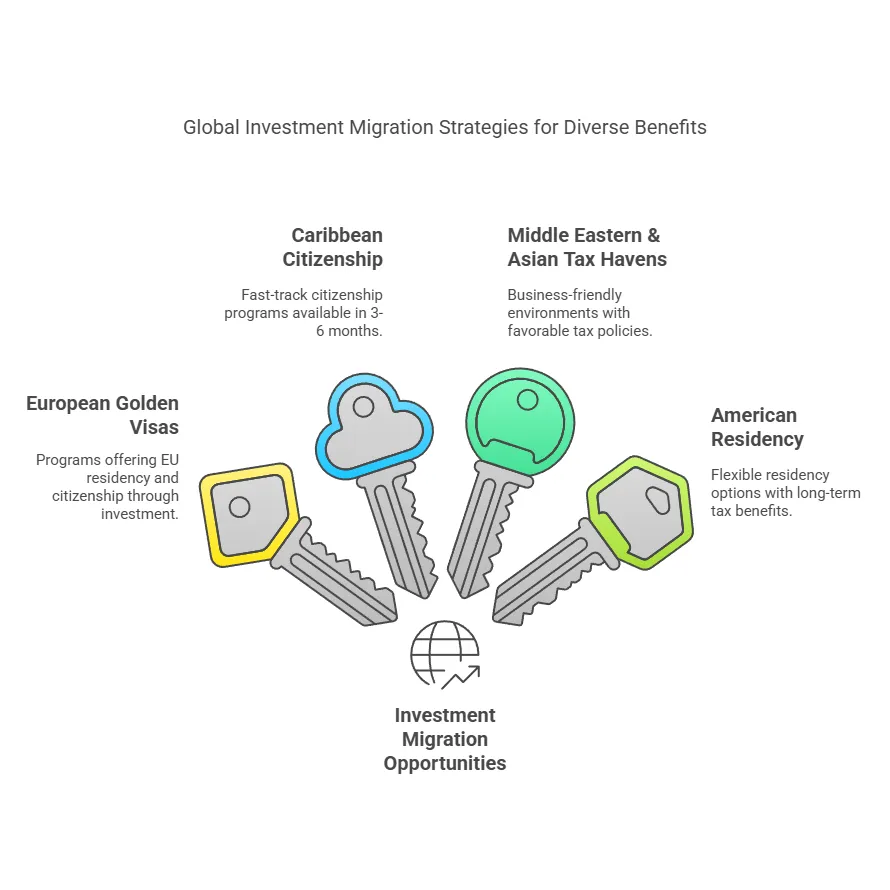
Investment migration programs span multiple regions. Europe’s Golden Visas provide residency (and eventually citizenship) in EU nations via substantial investments. The Caribbean and other small states offer some of the fastest citizenship pathways in exchange for investments. In the Middle East and Asia, emerging programs grant long-term residency in business hubs or tropical havens.
Real Estate vs. Government Bonds: Two Paths to Residency
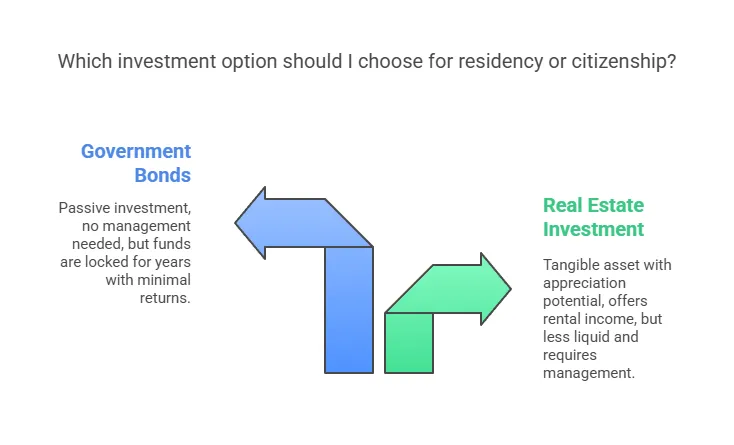
Many countries design their investment visas with multiple options for foreign investors. The two most common routes are purchasing foreign real estate or investing in government bonds (or other qualifying securities). Each route has its pros and cons:
Real Estate Investments: Buying property abroad can qualify you for residency in countries like Latvia, Hungary, Greece, or Portugal. The upside is you own a tangible asset that may appreciate or generate rental income. For example, Latvia’s “Golden Visa” requires a minimum real estate purchase of €250,000, granting a residence permit with no minimum stay and a path to permanent residency after 5 years. Real estate investors often enjoy property rights similar to locals (in most countries foreigners can own freehold property, though a few impose restrictions like area limits or extra fees). On the downside, property purchases come with transaction costs (taxes, fees) and you usually must hold the property for a number of years. Liquidity is lower compared to bonds – selling too early could void your residency status.
Government Bonds or Securities: Some programs let you invest in government debt or funds. This is generally a more passive investment – essentially a loan to the foreign government – often with a required holding period. For instance, Greece’s Golden Visa offers a bond option: a minimum of €500,000 in Greek government bonds or shares of Greek funds. Latvia similarly allows a €250,000 investment in government bonds (with an added state fee of €38,000) for a 5-year residency. The bond route can be attractive for those who don’t want to manage a property; in some cases, these bonds are zero-coupon or low-yield, meaning you might not earn interest but you get your principal back after several years. Bond investments are typically refundable, so risk-averse investors like the idea of recouping their money (e.g., St. Lucia is unique in the Caribbean for offering a fully refundable government bond option for citizenship). However, the buy-in amounts can be high (often higher than real estate), and your capital is locked in, earning little to no return in many programs.
Europe: Golden Visas and Residency-by-Investment Programs
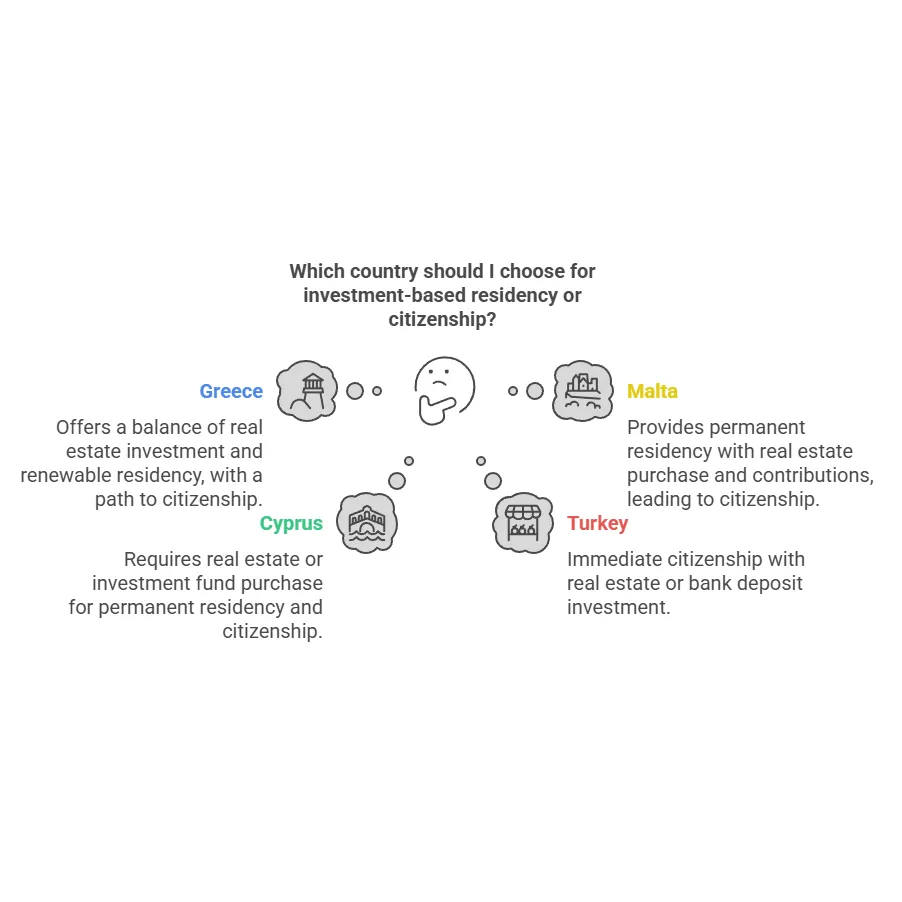
Europe hosts several of the world’s most sought-after golden visa programs, commonly dubbed “Golden Visas”. These programs typically grant a temporary residence permit (renewable) in exchange for a qualifying investment, with eligibility for permanent residency or citizenship after a certain number of years. Key advantages include access to the Schengen Area for travel, and eventually an EU passport in some cases, which is gold-standard for global mobility. Below we compare top European countries:
Greece (Golden Visa)
Greece has one of Europe’s most affordable entry points for residency by investment, particularly for real estate, with a relatively low investment requirement. It also offers multiple investment options, including government bonds. The Greek Golden Visa is known for zero residency requirement (you aren’t obliged to live in Greece) while still giving you and your family the right to do so.
Real Estate Investment
Minimum €250,000 in Greek real estate. This low threshold made Greece extremely popular. Update: From 2023, certain high-demand locations (central Athens, Mykonos, Santorini, Thessaloniki) now require €800,000 minimum, while other areas remain at €400K. Investors can buy residential or commercial property. You must hold it for the permit’s validity; you can rent it out for income (no restrictions on foreign owners renting).
Government Bonds / Securities
Greece allows a €500,000 investment in government bonds, or same amount in shares of Greek companies or investment funds, or even a €500K term deposit in a Greek bank. These financial investment options give flexibility if you prefer not to purchase property. The bond or deposit must be for at least 5 years in most cases.
Residency & Citizenship: The Golden Visa grants a 5-year residency permit immediately (no temporary shorter visa; you get a 5-year card up front). This is renewable every 5 years as long as you maintain the investment. There is no minimum stay — you can live abroad and still renew. If you do intend to seek citizenship, Greece requires 7 years of living in Greece and integration (language, etc.) before you can naturalize. So, the program is often used for permanent residency and EU mobility, rather than quick citizenship.
Taxation: Merely holding a Greek residence permit doesn’t make you a tax resident unless you actually relocate. If one moves to Greece, the tax system is progressive up to ~45%. To attract wealthy individuals, Greece introduced a non-dom flat tax regime: pay a flat €100,000 per year on foreign income (for up to 15 years) – appealing to HNWIs moving to Greece (similar to Italy’s and Portugal’s schemes) – and a special 7% tax rate on foreign pension income for retirees who transfer their tax residence. Greece also has no wealth tax or inheritance tax on overseas assets for non-doms.
Property Ownership: Foreigners can freely buy property in most of Greece. A few border regions and islands (near Turkey, for example) require special permission for non-EU buyers for security reasons. But all typical investment areas are open. You receive freehold title. The Greek real estate market has been booming, especially in Athens and tourist areas, offering potential appreciation.
Key Benefits: Greece’s quality of life (beautiful islands, cuisine, climate) attracts many retirees and nomads. The cost of living is lower than in Western Europe. Golden Visa holders enjoy visa-free travel in Schengen. Family inclusion is broad (spouse, children up to age 21, and both sets of parents can all get residency). There’s also no language requirement for the visa.
Overall, Greece offers one of the quickest and most flexible residency-by-investment routes in the EU for a relatively low investment, especially if you choose real estate in an eligible location. It’s ideal if you want a Mediterranean lifestyle or a strategic plan B without having to uproot your life immediately.
Malta (Permanent Residence & Citizenship Programs)
Malta, an English-speaking island nation in the EU, offers both a residency-by-investment program and a (separate) citizenship-by-investment route, each with specific investment requirements. The Malta Permanent Residence Program (MPRP) grants permanent residency in Malta in exchange for a combination of investment contributions, while the Maltese Citizenship for Exceptional Services (naturalization by investment) grants a Maltese passport under stringent conditions.
Residency (MPRP)
Malta’s program isn’t a single big investment but a mix:
Real Estate: Purchase a property worth at least €300,000 (in south/Malta island, €350,000 in central/north) or rent a property at €10,000–€12,000/year minimum.
Government Contribution: €28,000 (if purchasing property) or €58,000 (if renting) paid to the government.
Donation: €2,000 to a Maltese charity.
These together secure you and your family a Maltese permanent residence certificate. There is no bond purchase required in the current MPRP (unlike an older program that required €250K in government bonds – that was replaced in 2021 by the contribution model).
Processing & Status: Takes around 6–8 months. You immediately get permanent resident status (no renewals needed as long as you retain a property in Malta and health insurance). This allows indefinite residence in Malta and travel in Schengen.
Path to Citizenship: Permanent residents can apply for citizenship after 5 years of physical residence (and meeting language/culture tests). Malta’s standard naturalization route requires actually living in Malta most of those 5 years, so not all investors go this route. Many use the residency for an EU base and tax planning.
Taxation: Malta’s tax system is favorable for resident non-domiciled persons. If you are a resident but not domiciled in Malta (and most expats aren’t domiciled), you are taxed on a remittance basis – meaning foreign-sourced income is taxable in Malta only if remitted (brought in) to Malta. Non-remitted foreign income is exempt. Malta has no property tax, no inheritance tax, and attractive corporate tax schemes. However, note Malta does tax worldwide capital gains if the gains are realized in Malta (even if the asset is abroad).
Benefits: As a permanent resident, you can live in a safe, stable EU country with excellent healthcare and an English-speaking environment. There’s no minimum stay requirement to keep PR. You can also include parents and in-laws as dependents by extra contributions.
Citizenship by Investment (Exceptional Services by Direct Investment)
Malta is one of the few EU countries offering a direct citizenship route. It’s expensive and selective. The regulations (2020) require:
€600,000 non-refundable contribution for a 36-month route (or €750,000 for an expedited 12-month route),
plus a real estate purchase of at least €700,000 or rental of €16,000/year (for 5 years minimum),
plus a €10,000 charitable donation.
Rigid due diligence and a cap of ~400 approvals per year. This grants Maltese citizenship (EU passport) to investors and their families after the 1- or 3-year residency period. It’s essentially a fast-track naturalization. The total cost often exceeds €1 million, putting it in reach only of ultra-HNWIs.
Benefits: Malta’s passport is extremely powerful (visa-free ~185 countries). Successful applicants enjoy full EU rights. Tax-wise, new citizens can also use non-dom rules if they don’t become domiciled in Malta.
Why Malta? For HNW families who want an EU base and the option (but not obligation) to naturalize, Malta’s permanent residency is attractive. It combines a property investment with contributions, and yields a permanent EU residence immediately. There’s also an attractive tax regime on foreign income. Retirees like Malta for its mild winters and English usage, though cost of living is higher than in Greece or Portugal. The citizenship route is among the fastest pathways to EU citizenship (1–3 years), but it’s tightly controlled and costly. Digital nomads might be more interested in Malta’s separate Nomad Residence Permit if they have remote income, as the investment programs are more for those looking to settle assets or family in Malta.
Cyprus (Permanent Residency by Investment)
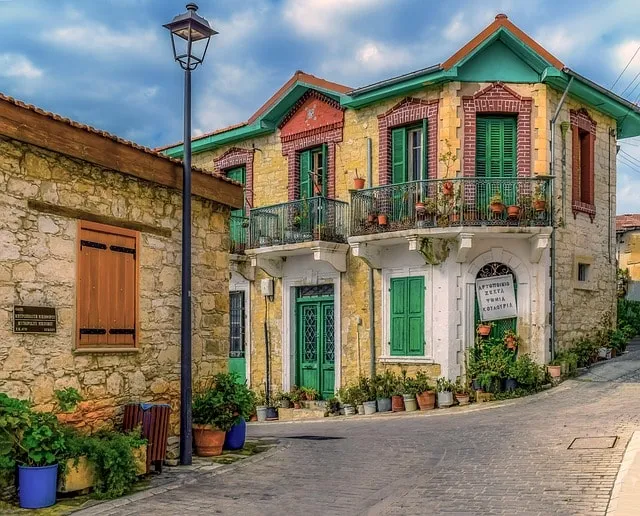
Cyprus offers a residency by investment program often called the Cyprus “Golden Visa”, granting permanent residency to investors and their families in a matter of months. While Cyprus’s famous citizenship-by-investment program (which required €2+ million real estate investment) was suspended in 2020, the residency program remains a strong option, especially for those interested in a base in the Eastern Mediterranean with favorable tax policies.
Real Estate Investment
€300,000 (plus VAT) in new real estate will qualify an investor for permanent residency. The purchase can be one or two properties (residential units from developers) totaling at least €300K. This is the most popular route. Alternatively, investment of €300K in a Cypriot company or investment fund is allowed, but most choose property.
Government Bonds
There isn’t a pure government bond option in Cyprus’s current residency scheme. However, bank deposits or investment in funds are accepted. For instance, €300K in units of a Cyprus collective investment fund (AIF) is an option.
Residency Status: Successful applicants get a permanent residence permit (PR) typically within 2–3 months of applying. This PR is indefinite (just need to visit Cyprus once every two years to maintain it). It allows living in Cyprus but does not automatically give the right to work (though one can be a business shareholder).
Path to Citizenship: Holding PR does not lead to citizenship unless you actually reside in Cyprus for at least 7 years (and meet other naturalization criteria). So, for those aiming for an EU passport, Cyprus would require a long-term commitment of living there. Many investors use the PR as a “plan B” residency — they don’t necessarily naturalize later.
Taxation: Cyprus is extremely attractive tax-wise for residents. It has a Non-Domicile (Non-Dom) tax status: expatriates who become tax residents but are non-domiciled in Cyprus enjoy zero tax on dividends, interest, and rental income from abroad for 17 years (exempt from “Special Defence Contribution”). Foreign pensions can be taxed at only 5%. There is no inheritance tax. Local tax on Cyprus-sourced income is a flat 12.5% corporate tax and progressive income tax (with first €19,500 tax-free). Also notable is Cyprus’s flexible 60-day tax residency rule (one can be a tax resident with just 60 days in Cyprus if certain conditions met, allowing split residency planning).
Property Ownership: Cyprus allows foreigners to buy property, though non-EU buyers must obtain approval from the Council of Ministers (usually a formality) and are limited to one property title (per spouse) for residential use. In practice, investors purchasing for PR often buy multiple units in a single development via a company, etc., to get around the one-title rule. Property rights are strong, and English is widely used in legal transactions. Cyprus real estate prices are moderate, with potential for growth especially as the country attracts more foreign businesses and residents.
Benefits: The Cypriot PR lets your whole family (spouse, children up to 25, and parents of main investor and spouse) live in Cyprus. Even if you don’t move immediately, it’s a lifelong residency in a safe country with good healthcare and education options (including English schools). Cyprus is not in Schengen yet, but it is slated to join in the future – at which point PR holders would enjoy Schengen travel. Even now, Cyprus PR can be a convenient status for those doing business in Europe or who want a tax residency in a European jurisdiction without heavy taxation.
Italy (Investor Visa “La Dolce Visa”)
Italy’s investor visa (often considered Italy’s version of a Golden Visa) allows foreigners to obtain a two-year residency visa in exchange for certain investments in Italy. Unlike other programs, Italy doesn’t have a real estate option – instead it focuses on capital investments in businesses or bonds, or a philanthropic donation. Italy is enticing for its culture and economy, and it sweetens the deal with a special tax regime for new residents.
Investment Options
Italy offers several choices for the Investor Visa:
Government Bonds: Invest €2 million in Italian government bonds and hold for at least 2 years.
Company Shares: Invest €500,000 into an Italian company (shares or equity).
Innovative Startup: Invest €250,000 into a certified innovative startup in Italy.
Philanthropic Donation: Donate €1 million to a public project (arts, education, etc.).
Residency Timeline: Upon approval, you get a 2-year residence permit (no need to spend a certain amount of time in Italy to keep it, but if you want to renew and eventually get PR, you’ll need to maintain the investment and visit Italy periodically). The permit is renewable for 3-year periods thereafter, given the investment stays in place. After 5 years, you can obtain permanent residency (which requires actually spending the majority of those 5 years in Italy). Citizenship is possible after 10 years of continuous residency, which does require living in Italy and integrating (including Italian language proficiency).
Tax Incentives: Italy introduced a favorable tax regime for new residents in 2017. Qualifying individuals who move to Italy can opt to pay a flat €100,000 annual tax on all foreign-sourced income (instead of normal rates). This flat tax can extend up to 15 years and even cover family members (for an additional €25k each). It’s basically Italy’s version of non-dom — attractive to high-net-worth investors with large global incomes, as it caps their foreign tax liability. Meanwhile, any income generated in Italy (like local business profits) is taxed at normal rates. This means an investor can relocate to Italy under the visa and not worry about Italian taxes on, say, their overseas investment portfolio, beyond the flat €100k. This regime, plus Italy’s lifestyle, has drawn wealthy expats (famous example: some football stars and celebrities).
No Real Estate Requirement: Unlike Spain or Portugal, buying a property in Italy does not directly qualify for the visa. Of course, investors can still purchase homes for their use, but it’s not counted as the “qualifying investment”. There is a separate “elective residence” visa for retirees or financially independent people who buy property and have sufficient income, but that route doesn’t allow work and has its own conditions. The Investor Visa is more straightforward for those with capital.
Lifestyle and Benefits: An Italian investor visa holder can live in Italy, access Italy’s excellent healthcare and education (after establishing residency locally), and travel visa-free in Schengen. They can also work or do business in Italy without restrictions. Family (spouse and children) are included. Italy’s requirement to maintain the investment for the entire duration of the permit (at least 5 years) means your funds are tied up for a while; if you withdraw early, the visa can be revoked. But after 5 years, once you have permanent residency, you could presumably divest (though for citizenship at 10 years one must also show continuous presence and likely maintain ties).
Restrictions: The Italian program currently excludes nationals of some countries (investors from EU states since they don’t need it, and it suspended applications from Russians/Belarusians due to sanctions). Background checks are strict but there’s generally a high approval rate if funds are legitimate. The process typically takes 2–3 months for the nulla osta (no objection) approval, then you must come to Italy to finalize and invest within 3 months.
Italy’s “Dolce Vita” appeal, combined with its investor-friendly tax option, makes it an interesting choice for HNWIs who don’t mind the larger capital outlay in bonds or equities. It may not grant a new passport quickly, but it gives you a prestigious EU residence with the potential for an Italian passport down the line (one of the world’s best, if you commit to naturalization). For digital nomads, Italy also has a new Digital Nomad Visa in the works (targeting remote workers), but details are emerging; the Investor Visa is geared more toward those who want to invest significant capital in Italy’s economy.
Other European Programs to Note
Beyond the above, a few other European countries have investment migration options:
Latvia
An EU member with a relatively low-cost residency program. For around €250,000 you can invest in Latvian real estate or interest-free government bonds (plus a ~€50K one-time fee) to get a 5-year temporary residence. There’s also a €280K bank deposit option. Latvia requires very minimal stay (none, essentially) and you can apply for permanent residence after 5 years. It was once popular with Russian investors. Citizenship requires 10 years residency and Latvian language. Latvia’s Golden Visa saw rule changes in 2022 (raising costs) and demand cooled, but it remains one of the cheaper EU residencies.
Hungary
Hungary recently reintroduced a residency-by-investment program in 2024. The new Hungarian Golden Visa requires about €250,000 into real estate funds and a smaller donation. Details are still emerging, but it offers 10-year residence permits. It could become an option for those seeking Schengen access through a lower investment, although Hungary’s EU politics and the fact it’s only residency (citizenship only by naturalization after 8 years) mean it’s a niche choice.
Below is a comparison table summarizing key factors for major European investment residency programs:
Country (Program) | Min. Investment – Real Estate | Min. Investment – Bonds/Financial | Residency Permit Validity | Years to Citizenship | Notable Conditions |
|---|---|---|---|---|---|
Greece Golden Visa | €400,000 (most areas) / €800,000 (prime areas) | €500,000 (bonds, stocks, or deposit) | 5 years (renewable) , PR option after 5 | 7 years residency (with living & language) | No stay requirement; family includes parents; must hold investment; Schengen access |
Malta Permanent Residency | €300,000+ purchase (or €10-12K/yr rent) + contributions | N/A (no pure bond, but €50K gov fee + €28-58K contribution) | Permanent (no renewal) | 5 years residency (with actual living) | Combination of contributions required; must retain property; allows work in Malta |
Cyprus PR by Investment | €300,000 (new property) | €300,000 (Cyprus company or fund) | Permanent (indefinite) – review after 1 year then every 2 years for compliance | 7 years residency (strict stay req. > 5 yrs) | Must visit once every 2 years; no work (business ownership allowed); not Schengen yet |
Italy Investor Visa | No real estate option | €2,000,000 (gov’t bonds) ; or €500,000 (company) / €250,000 (startup) ; or €1M donation | 2 years (renewable 3-year blocks) , PR after 5 | 10 years residency (must reside) | Must maintain investment at least until PR (5 years); no minimum stay for permit, but required for citizenship; can work in Italy |
Latvia Golden visa | €250,000 + a one-time state fee of 5% of the property’s purchase value (around €12,500) | €250,000 one time fee of €38k | 5 years (renewable), PR after 5 years | 10 years + Latvian language proficiency and renouncing any previous citizenship | No minimum stay, must continue to meet the original program requirements for chosen investment path |
Hungary Golden visa | € 250,000 (real estate fund) or €500,000 (residential property) | None | 10 years (renewable for another 10), PR after 3 years +cultural exam | 8 years, with language requirements | No minimum stay |
Europe’s programs tend to offer high quality of life, education, and healthcare, making them attractive to families. They do, however, require patience for those seeking citizenship, as none (except Malta’s separate citizenship route) will give you a passport in less than 5–10 years. For many, the long-term benefits – secure EU residency, potential eventual citizenship, and solid investments – are worth the wait. Meanwhile, if speed to a passport is the priority, one might consider the next section: quick citizenship programs in the Caribbean or elsewhere.
Caribbean Citizenship by Investment (Fast-Track Second Passports)
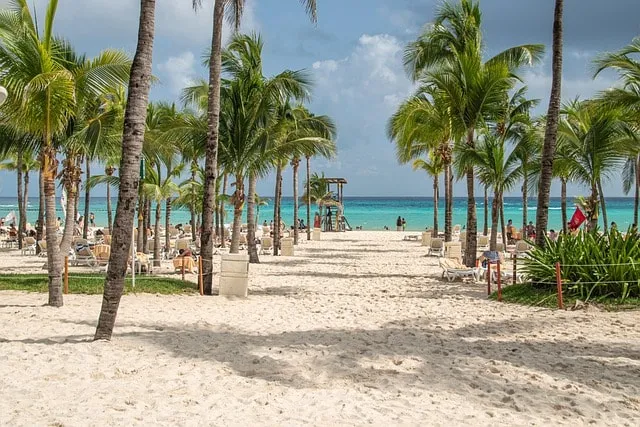
For those seeking the fastest pathways to citizenship, the Caribbean offers several Citizenship by Investment (CBI) programs. These programs grant citizenship (and a passport) typically within 3–6 months in exchange for an investment – often a donation to a government fund or a real estate purchase. While the question focuses on real estate or bonds, it’s worth noting that donations are also common in these schemes. However, every Caribbean CBI program (except one) includes a real estate investment option, and one includes a bond option:
The five Eastern Caribbean states with CBI programs are St. Kitts & Nevis, Antigua & Barbuda, Dominica, St. Lucia, and Grenada. Let’s compare key points:
Minimum Investment
Usually starts at ~$200,000 for a donation (single applicant) or around $200,000–$300,000 for real estate. Real estate options require purchasing government-approved properties (resort shares, condos, etc.) and holding for ~5 years. For example,
St. Kitts & Nevis: $200,000 minimum real estate (held 7 years) or $400,000 (held 5 years).
Dominica: $200,000 real estate (hold 3 years).
Antigua: $200,000 (if two co-investors) or $400,000 (single) real estate (hold 5 years) – effectively $200K share.
St. Lucia: $300,000 real estate (hold 5 years).
Grenada: $220,000 (if shared investment) or $350,000 (single) real estate (hold 5 years).
Government Bonds
Among these, St. Lucia stands out with a fully refundable government bond investment option. Under the newly introduced National Action Bond (NAB), an investor can put $300,000 in 5-year government bonds (0% interest) to obtain citizenship. After 5 years, the $300K is returned, making it essentially an interest-free loan for a passport. This option is attractive for families since $300k covers a family of any size. The catch is the capital is tied up with no returns for 5 years. Other countries like Antigua had bonds in the past (now phased out) and Dominica considered a similar option but currently rely on donation/real estate.
Processing Time: Very fast. Typically 3 to 6 months from application to passport, assuming due diligence passes. Some offer accelerated processing for extra fees (St. Kitts has advertised 60-day approvals for an extra cost).
Residency Requirements: None. That’s a big advantage. You are not required to reside in the country either before or after citizenship is granted. For instance, Antigua asks you to visit for 5 days within the first 5 years (largely symbolic). Others have zero stay requirement and even allow remote application (you often don’t even need to visit to get the passport).
Family Inclusion: All these programs allow adding spouse, children, and often parents, for additional fees or higher investments. They’re popular among wealthy families from Asia, Middle East, Africa who want a “backup” citizenship for all members.
Mobility Benefits: These passports provide visa-free travel to roughly 140-150 countries, including the UK (although the UK is reviewing visa-free access for some, it was intact for St. Kitts, St. Lucia, etc., as of early 2025) and the Schengen Area (EU). Grenada has the unique perk of eligibility for the US E-2 investor visa treaty – Grenadian citizens can apply for a renewable US residence via business investment, which is a draw for those ultimately eyeing the US market. Turkey (discussed later) shares this E-2 treaty advantage.
Taxation and Lifestyle: These Caribbean nations generally have very favorable tax regimes: most have no tax on foreign income, no capital gains tax, and territorial taxation (you’re only taxed on local income, which, if you don’t live or earn there, is nil). For example, St. Kitts and Antigua have zero personal income tax at all. This makes them attractive as a tax residency, though most CBI citizens actually continue living in their home country or elsewhere and just use the passport for travel or contingency. The islands themselves offer beautiful tropical lifestyles – think beaches, warm weather – and some investors do eventually retire or vacation there. But the majority view it as a mobility asset.
These programs are ideal for those who need a second passport quickly – for example, entrepreneurs from countries with weaker passports who want easier travel, or individuals seeking a backup if their home country is unstable. HNWIs also use these to diversify their citizenship for asset protection and tax optimization. A Caribbean passport, combined with tax residence in a no-tax country (which could even be the same country if one chooses to move there), can legally free one from income taxes entirely, albeit one must then actually reside somewhere like St. Kitts or Dubai to be tax resident nowhere else.
One thing to consider is reputation and due diligence. These programs have tightened their vetting in recent years – applicants undergo strict background checks. Also, as of 2023, all five Eastern Caribbean CBI countries signed an agreement to standardize and increase their minimum investment prices and impose interviews for applicants. For instance, St. Lucia’s donation just increased from $100k to $200k as part of this harmonization. This suggests costs may rise, so early 2025 could be a good time to lock in a program before it becomes more expensive or requirements tougher.
Beyond the Caribbean, Vanuatu (in the South Pacific) also offers a citizenship-by-investment for a ~$130,000 donation. It’s very fast (1–2 months) and no residency, but it’s had credibility issues and Vanuatu’s visa-free agreement with the EU was partially suspended in 2022 due to lax vetting concerns. So, it’s less “ranked” among the best nowadays compared to the Caribbean five.
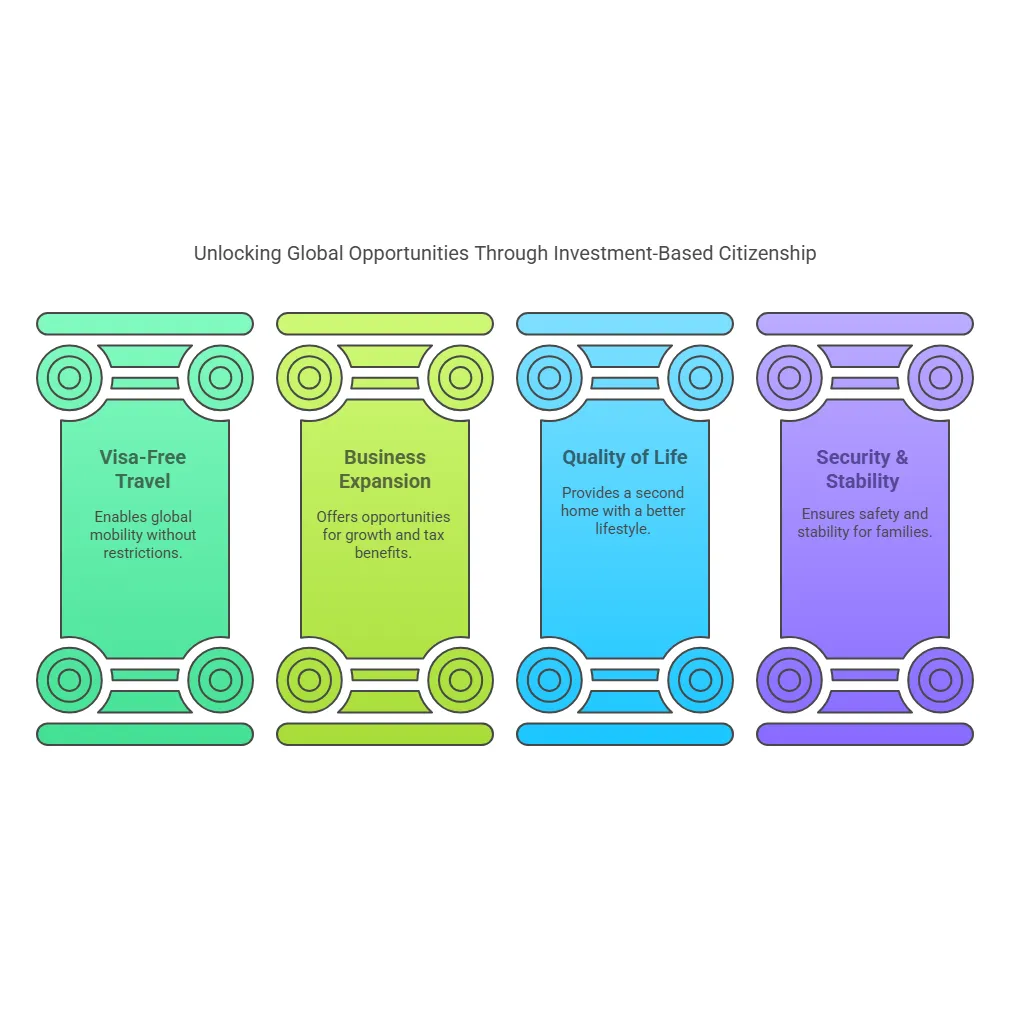
Middle East & Asia: Notable Investment Migration Programs
Shifting our focus to other regions, several countries in the Middle East and Asia provide attractive residency (and sometimes citizenship) options for investors, often with an eye towards business-friendly environments or unique lifestyle benefits:
United Arab Emirates (UAE) – Dubai’s Property Investor Visas
The UAE, particularly Dubai, has emerged as a hotspot for global investors and expatriates. In 2019, the UAE introduced a “Golden Visa” system offering 5-year and 10-year residence visas for investors, entrepreneurs, and talented individuals.
Real Estate Investment
To obtain a renewable 5-year residency as a property investor, you need to invest at least AED 2 million in real estate (approximately USD $545,000). This can be one or multiple properties, and recently the rules allow properties with mortgages as long as a certain equity is met. In Dubai, a popular route is buying one or more properties totaling AED 2M, which grants a 5-year Golden Visa. Some sources note that AED 2M can now even qualify for a 10-year visa in certain cases – effectively the UAE has made the thresholds equal for 5 or 10 years, but by default AED 2M is listed for 5-year in official docs.
Public Investments (Funds)
If an investor places AED 2 million in an investment fund or as a deposit in a UAE bank for at least 2 years, they can obtain a 10-year Golden Visa. The criteria include confirmation from a UAE bank or investment fund of the deposit. Alternatively, establishing a company with capital above AED 2M or paying AED 250k in annual taxes also qualifies.
Residency Features: The Golden Visa is essentially a long-term residence permit. It’s valid 5 or 10 years and is renewable indefinitely as long as conditions are maintained. Visa holders can sponsor their family (spouse, children) with the same term. A big plus: Golden Visa holders can stay outside the UAE for extended periods without losing their residency (normal residencies cancel if you stay out >6 months, but Golden Visas exempt this).
Path to Citizenship: The UAE has traditionally not offered citizenship to foreigners (except by rare exceptional decree). Even Golden Visa holders are not on a track to citizenship. In 2021, the UAE announced it may grant citizenship by nomination to certain highly skilled or wealthy individuals, but there is no formal application or investment citizenship program. So assume no passport, just residency.
Taxation: The UAE is famous as a tax-free jurisdiction. It has 0% personal income tax. No tax on salaries or investment income for individuals. It recently introduced a 9% corporate tax (from June 2023) on business profits exceeding a certain threshold, and a 5% VAT on goods/services, but for most expat individuals, it remains tax-free. This, along with high-end infrastructure, makes it extremely attractive to entrepreneurs and digital nomads who want to base in a no-tax environment. Many HNWIs relocated to Dubai during the pandemic for this reason.
Foreign Ownership: Foreigners can own property in designated areas (freehold zones). Dubai has a vibrant property market, with prices seeing an uptick recently. The AED 2M requirement means investors typically buy in mid- to high-end segments (for instance, a couple of apartments or a villa). There are no extra property holding restrictions for visa holders beyond the value, but if property is sold and not replaced, the visa wouldn’t renew.
Other UAE Options: Aside from property, the UAE Golden Visa is also given for entrepreneurs setting up companies of a certain size, and even to exceptionally talented individuals (scientists, doctors, creatives) without an investment. Recently, “Digital nomad” visas (1-year remote work visa) were also introduced by Dubai for those employed abroad but wanting to live in Dubai.
In essence, the UAE’s residency-by-investment is simple and fast – invest in property and get a multi-year residence permit within weeks. It’s particularly alluring to those prioritizing zero taxes and a luxury lifestyle in a stable, business-friendly hub. Many high-net-worth individuals from Asia, Africa, and Europe have made Dubai their second home via this route.
Turkey – Citizenship by Real Estate or Bank Deposit
Turkey’s program is actually a direct Citizenship by Investment (CBI), making it an outlier among large economy countries. Introduced in 2017 and hugely popular since, Turkey offers citizenship (passport) in a matter of months if you invest in real estate or other assets:
Real Estate Investment
$400,000 (USD) minimum in Turkish real estate, which must be held for at least 3 years. This amount was raised from $250k to $400k in mid-2022 due to high demand. You can buy any type of property (residential, commercial, land) anywhere in Turkey as long as the assessed value is at least $400k and you keep it for 3 years. After 3 years, you could sell without affecting your citizenship status.
Bank Deposit or Bonds
Alternatively, invest $500,000 for 3 years in either Turkish government bonds, or as a fixed deposit in a Turkish bank, or in venture capital/private equity funds or real estate investment trusts. Many choose the bank deposit route – you place $500k in a Turkish bank, get a certificate of holding, and after 3 years you can withdraw (in lira or original currency, with whatever interest accrued). This is somewhat analogous to a bond investment, offering a guaranteed refund after holding period (albeit currency risk with the lira is a consideration).
Citizenship Timeline: Very fast – typically 3 to 6 months from investment to receiving Turkish citizenship. There is no residency requirement at all (you don’t have to live in Turkey or even visit once you’ve done biometrics; many handle via power of attorney). Family (spouse, children under 18) are included.
Passport Strength: Turkish citizenship gives you a passport with visa-free or visa-on-arrival access to about 110 countries. It includes Japan, Singapore and South Korea (Turkey has decent Asian access), but not the EU/Schengen or the UK. So it’s not as travel-rich as an EU passport or even Caribbean ones for Europe travel. However, as mentioned, Turkey has a special treaty with the USA (E-2 Investor Visa). This means a Turkish citizen can apply for a U.S. E-2 visa to start a business in the US – a door closed to nationals of China, Russia, etc., unless they have a treaty-country passport like Turkey or Grenada. This “bridge to the US” feature made Turkey’s program very popular among certain nationalities.
Taxation: If you don’t reside in Turkey, being a citizen has no tax implications on its own. If one moves to Turkey, be aware Turkey taxes worldwide income for tax residents, but has a relatively moderate tax regime and many double tax treaties. Also, foreign income of non-residents isn’t taxed. There’s no wealth tax. Real estate rental income in Turkey is taxed around 15-20% after allowances. Importantly, Turkey’s currency (lira) has seen high inflation (as cited ~70% in 2024), which can erode returns on lira-denominated assets but also makes property quite cheap in foreign currency terms.
Property Market: $400k can fetch a high-end apartment in Istanbul or several properties in smaller cities. Foreigners (except some nationalities) can freely buy, though there are limits on owning too much land in one area. Turkish real estate has appreciated strongly in lira terms due to inflation, but when adjusted to hard currency, the gains are less impressive. Still, the cost of living and real estate is relatively low – a draw for those who may consider relocating to Turkey for its culture, cuisine, and strategic location straddling Europe and Asia.
Overall, Turkey’s CBI is unique for a major country: it delivers citizenship in a G20 economy that has a relatively accessible investment threshold and a quick process. It’s suited for those who value the idea of a big-country passport and possibly leveraging the U.S. E-2 visa opportunity. It’s also one of the few places where your investment (whether property or deposit) can be fully recovered after a few years, making the net cost potentially low (excluding currency fluctuations).
Panama – Residency in a Tax Haven with Real Estate or Deposit
Panama has long been a favorite for retirees and expats, known for its Friendly Nations Visa and Pensionado program. In recent years, Panama also launched a more direct Golden Visa-style program aimed at investors. While Panama’s offerings lead to residency (and later possible citizenship), not immediate passport, they stand out for low requirements and the long-term benefits of living in a territorial-tax country in the Americas.
Friendly Nations Visa (FNV)
This program, updated in 2021, grants immediate permanent residency to citizens of ~50 “friendly” countries (including USA, Canada, UK, EU nations, many others) who invest $200,000 in Panamanian real estate or a $200,000 certificate of deposit in a local bank. Alternatively, one can obtain residency by obtaining a job offer or setting up a business, but the investment route is most straightforward. The process is fast (~3–4 months) and you initially get a temporary visa then a permanent residence card after approval. There is no minimum stay requirement (you must visit Panama once every few years just so your cedula (ID) stays active).
After holding PR for 5 years, you are eligible to apply for Panamanian citizenship. However, in practice, Panama’s naturalization process also requires demonstrating ties (like some residence, Spanish language ability, and history test). Many PR holders don’t pursue citizenship because Panama restricts dual citizenship (it technically doesn’t recognize dual, though enforcement is light).
Panama Qualified Investor Program
Launched in late 2020 to spur investment, this allows a fast-track residency in as little as 30 days by investing $300,000 in real estate (within a limited time; in 2023 this minimum went up to $500,000) OR $500,000 in securities OR $750,000 in a bank deposit. This is akin to a Golden Visa; it grants immediate permanent residency as well. The $300k real estate threshold (which was reduced as a promo until Oct 2022) made it quite attractive. Essentially, if you have the funds ready to deploy, you could become a permanent resident of Panama in one month.
Pensionado (Retiree) Visa
Worth noting for retirees – if you have a lifetime pension of at least $1,000 per month, Panama will grant you permanent residency (and a suite of discounts on services). This doesn’t require investing in property, though many retirees do buy homes/condos in Panama for their residence.
Taxation: Panama is a territorial tax country – meaning it does not tax foreign-sourced income at all. Only income generated within Panama is taxed (and even that is relatively low, with many exemptions). For example, if you live in Panama and have investment or retirement income from abroad, Panama won’t tax it. This is a massive draw for individuals wanting to legally minimize taxes. There is also no tax on interest from Panama bank accounts or on capital gains from foreign assets. Property taxes in Panama are low and there are exemptions for new construction.
Lifestyle: Panama City is a modern capital with a big expat community and major transportation hub (the Panama Canal, and a large airport connecting the Americas). The country uses the US dollar (officially Panamanian balboa at parity) – convenient for Americans. It’s known for political stability, good healthcare, and a warm tropical climate (humid, rainy in wet season). Many retirees love Panama’s mountain towns like Boquete, or beach areas, while others enjoy the city life. Crime is relatively low in most areas (outside some parts of the capital).
Property Ownership: Foreigners can own property outright. Panama has a public registry and a relatively secure title system. Real estate prices are moderate (lower than in the U.S. for similar city properties, much lower in rural areas). The $200k investment could get you a nice condo or house in many parts of the country. Rental yields in Panama City can be around 5-7%.
Freedom of Movement: Panamanian residency doesn’t give travel rights like a Schengen visa or such. Panama’s passport (if one naturalizes) is fairly good (~140 visa-free countries, including EU but not the U.S.). But most use the residency as a convenient domicile while keeping their original citizenship.
Ease and Flexibility: A key reason Panama stands out is how easy and fast it is to obtain and maintain residency. As a Friendly Nations resident, you can literally not visit for years and still keep your status, which is unusual – Panama PR is very low-maintenance. This appeals to digital nomads and perpetual travelers who want a formal residency somewhere for banking or just as a safety net, but who don’t want to be tied down. For HNWIs, Panama is often part of a strategy: e.g., have citizenships from Country A and B, tax residency in Panama, assets globally.
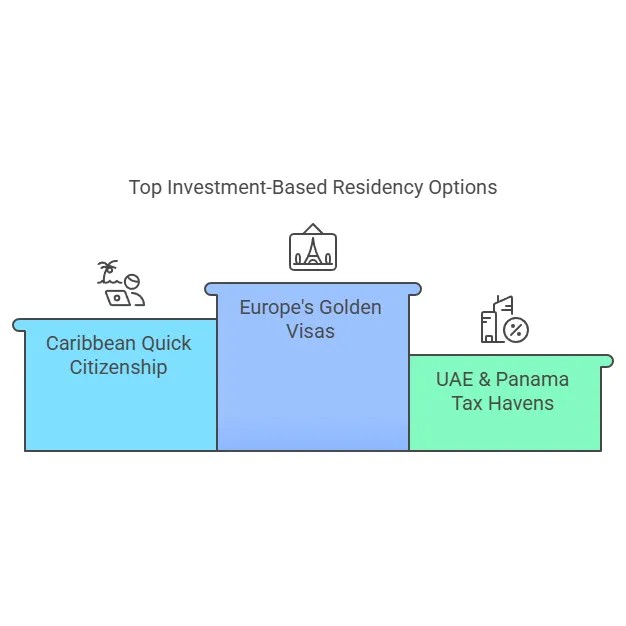
Tailoring the Choice to Your Profile
Given the breadth of programs, it’s important to align the option with your goals and profile:
High-Net-Worth Individuals (HNWIs): If you have substantial assets and value a strong passport and investment preservation, consider European programs or Turkey. An EU residency leading to citizenship (e.g. Portugal, Latvia, Hungary) is valuable, and you can afford to tie up €500k+ for a few years. Also, HNWIs often optimize taxes – programs like Italy’s flat tax or Cyprus non-dom or UAE no-tax can save significant money if you relocate. For a second passport quickly, a Caribbean CBI could be a quick win – at a relatively small cost (donation ~$100-150k), you add visa-free mobility to 140+ countries for life. Many HNWIs actually do both: obtain a quick passport (Caribbean or Turkey) for immediate use, and simultaneously pursue a longer-term Plan A (like moving to an EU country for 5+ years to get that coveted EU passport).
Global Investors Seeking Returns: If the primary goal is to not only get residency but also earn a return, focus on real estate markets with growth potential. Greece’s property market is on the rise post-crisis, and getting in at €400k could yield good returns plus rental income (tourism in Greece is strong). In the Caribbean real estate CBI options, you typically invest in shares of resort projects – your exit strategy is usually the developer buying back or selling to the next investor after the hold period. Some pay rental income (St. Kitts promises 2-5% rental yields). If you prefer guaranteed return of capital, Latvia’s bonds or St. Lucia’s bonds stand out as they are refundable after the term– essentially low-risk (aside from country solvency risk) ways to park money and get status.
Those Seeking Fast Citizenship: If you need a second passport yesterday (for example, a situation where your home country’s passport is limiting or political instability is a concern), the Caribbean CBIs or Turkey are the go-to, since you can have a new nationality in hand in mere months. St. Kitts has the longest-running program and is considered platinum standard in due diligence; Dominica is cost-effective; Turkey gives a major-country citizenship but you should weigh the travel access differences. Also consider Vanuatu (fast but EU access issues) as a backup.
Conclusion: Taking the Next Step
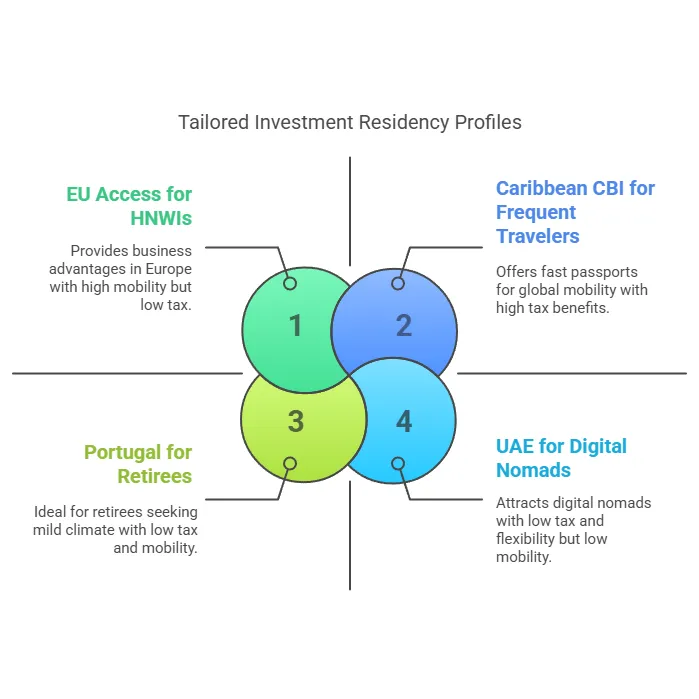
The landscape of investment migration is rich and continually evolving. From the global perspective, Europe offers stability and eventual EU citizenship, the Caribbean and Turkey offer speed, the Middle East offers tax havens and business hubs, and the Americas provide flexibility and low-cost residencies. Both real estate and government bonds can be your ticket to a new status – the decision hinges on whether you prefer a tangible asset or a passive financial holding.
When weighing options, consider:
Your Timeline: Do you need a second passport within a year? Or are you planning for 5-10 years ahead?
Financial Commitment: Determine your budget for investment. Factor in additional costs (processing fees, legal fees, taxes on property purchase, etc.). For bonds or deposits, opportunity cost of tying up money with little interest.
Lifestyle Fit: Getting a residency or passport is one thing; living there is another. If you plan to move, ensure the country suits your family (schools, language, culture). If not, ensure the maintenance requirements (like visit frequency) are feasible.
Tax and Legal Implications: Consult with a tax advisor on how a new residency or citizenship could affect your tax residency status. Some may use the opportunity to reset their tax domicile to a low-tax country.
Exit Strategy: Particularly for real estate investments – think about how easy it will be to sell after the required holding period. A property in a prime area might be easier to liquidate than a remote resort share.
Reputation and Risk: Stick to well-regulated programs. All the ones listed in this article are officially sanctioned by their governments. Be cautious of “too good to be true” offerings outside these. Also, be aware of potential changes – for example, the EU has pressured countries to tighten or close citizenship programs, and even residency programs face scrutiny (the EU is evaluating “citizenship-by-investment” and even “residence-by-investment” for security risks).
In an increasingly uncertain world, investment migration provides a unique form of insurance: a Plan B residency or passport for you and your family. It can open doors to new markets, schools, lifestyles, and freedoms. Thanks to the variety of programs, there’s likely a solution for every type of expat seeker – whether you’re an entrepreneur optimizing your business environment, a retiree looking for a safe haven, or a global citizen building a portfolio of residencies.
Actionable Insight
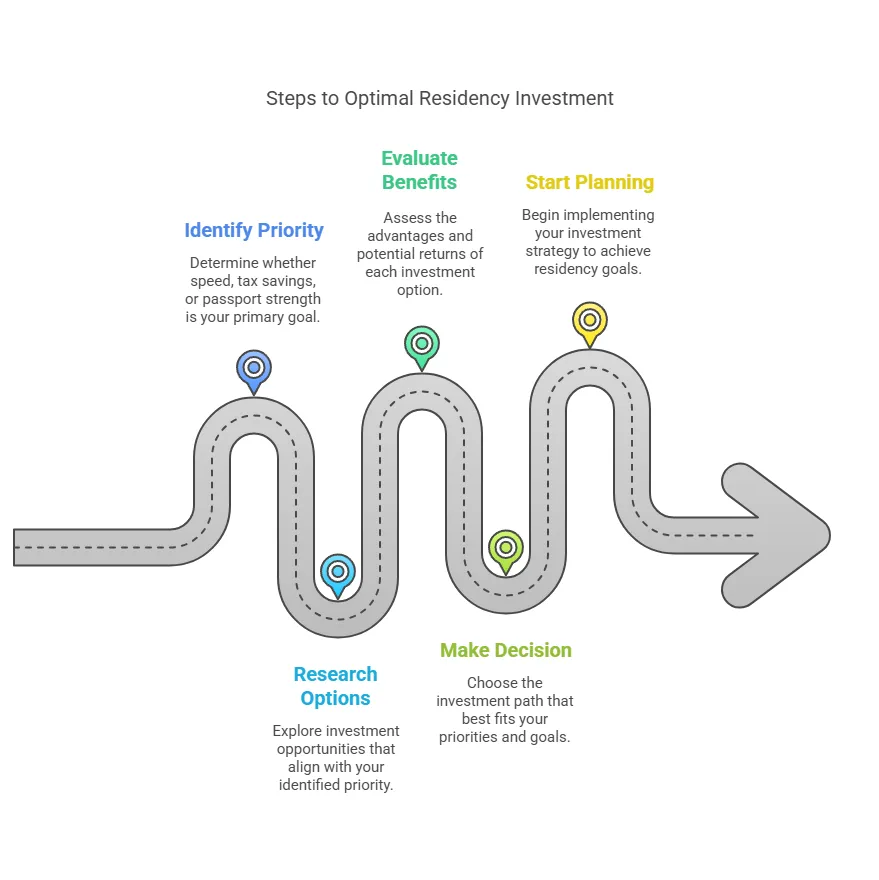
Make a checklist of your priorities (e.g., “Must have EU mobility, at least PR status, budget $300k, prefer rental income, no language exam”) and see which country ticks the most boxes. Often, the decision comes down to one’s tolerance for time vs. money – fast passports cost money (donation or sunk cost), whereas cheaper routes cost time (years of residency). By balancing these factors, you can achieve the ultimate goal: greater freedom and security through a second residency or citizenship.

Lusine Sargsyan
Attorney
