
How to Obtain Residency in Denmark
Denmark offers several pathways to residency for investors and entrepreneurs, each with its own set of requirements.
The Start-up Denmark Scheme
Designed specifically for foreign entrepreneurs with innovative business ideas, the Start-up Denmark scheme provides a unique opportunity to obtain a residence permit to establish and run a business in Denmark. The application process typically takes one month . To qualify, entrepreneurs must meet the following conditions:
- Business Idea Approval: The Danish Business Authority appoints a panel of experts to assess the innovative potential and economic viability of the proposed business. This panel must approve the business idea before an application can be submitted.
- Innovation and Development: The business must demonstrate its potential to contribute innovative ideas and development to the Danish business community.
- Active Participation: The entrepreneur must play an active role in running the business, and their presence must be necessary for the establishment and operation of the business.
- Financial Sufficiency: The entrepreneur must provide documentation of sufficient funds to support themselves and any accompanying family members during their stay in Denmark. The required amount varies depending on the family size.
The Start-up Denmark scheme offers several advantages. Firstly, the processing time for the initial application is relatively short, typically one month. Secondly, it provides a pathway to permanent residency and, eventually, citizenship. Lastly, it allows entrepreneurs to bring their families with them to Denmark, ensuring that their children can benefit from the Danish education system.
If approved, entrepreneurs and their families are granted a residence permit for up to two years, with the possibility of extension for up to three years at a time.
Other Residency Options
Pay Limit Scheme: This scheme offers a fast-track route to residency for individuals with high-earning job offers from Danish companies. To qualify, the offered annual salary must be at least 400,000 DKK (€53,688). This scheme allows expats to enter the country quickly and provides access to healthcare and education.
Danish Green Card Scheme: This scheme previously offered a pathway to temporary residence for skilled workers who could contribute to the Danish labor market. However, it has since been repealed.
Application Process for Residency and Citizenship
To apply for a temporary residence permit in Denmark, you must initiate the process through the website of either the Danish Immigration Service or the Danish Agency for International Recruitment and Integration (SIRI) . Depending on your location, you may also need to submit an in-person application at a Danish representative office abroad.
Here's a step-by-step guide on how to apply for a Denmark temporary residence permit:
- Create a Case Order ID: On the SIRI website, create a case order ID and choose the type of residence permit you are applying for (work, study, family reunification). Complete the sections with your personal information and receive the case order ID number.
- Pay the Fee: Pay the fee and print the receipt. You need to submit the receipt with your application.
- Compile the Required Documents: Ensure you have all the necessary documents and your biometrics (photo, fingerprints) to submit with the application. If any documents are missing, you must have a compelling reason, or your application may be rejected.
- Fill in the Application: Choose the application form required for the type of residence you want to apply for. Each permit type has a specific application form.
- Submit Your Biometrics: Have your facial photo and fingerprints recorded at the Danish Immigration Center. If you must submit biometrics abroad, you will be required to pay a fee to the Danish mission handling your application.
When applying for a Danish temporary residence permit, you must submit the following documents:
- Documentation of paid application fee (submit the printed receipt)
- Original passport (valid for three months longer than your intended stay)
- Passport-size photo (your photos must follow the Schengen visa guidelines)
- Completed application form (fill in the application form available on the SIRI website truthfully and completely)
- Proof you have a place to stay (prove that you have a place to live in Denmark or can afford one)
- Proof you can support yourself financially (for a work permit, you can present your employment contract and salary; as an international student, your proof of income can be a scholarship)
- Additional documents for different types of permits, such as:
- Employment contract (residence permit for work)
- Letter of acceptance to university (residence permit for studies)
- Proof of family relationship (residence permit for family reunification)
For citizenship applications, the process is similar, but you will need to apply through the Ministry of Immigration and Integration. You can find the digital application for Danish citizenship on their website (in Danish). You will need to pay an application fee of 4,000 DKK (EUR 536) and sign the application using your MitID, the Danish digital identification system.
How to Obtain Citizenship in Denmark
Acquiring Danish citizenship typically involves a longer process and stricter requirements compared to obtaining residency.
Naturalization
The primary route to Danish citizenship for foreign nationals is through naturalization. This process requires fulfilling several conditions, including:
- Permanent Residency: Applicants must have held a permanent residence permit for a minimum of two years.
- Residency Requirement: Applicants must have resided in Denmark for a continuous period, typically nine years.
- Self-Sufficiency: Applicants must demonstrate their ability to support themselves financially without relying on social benefits.
- Clean Criminal Record: Applicants must have a clean criminal record and not have been convicted of certain crimes.
- Language Proficiency: Applicants must pass a Danish language test to demonstrate their proficiency in the language.
- Citizenship Test: Applicants must pass a citizenship test to demonstrate their knowledge of Danish society, culture, and history.
- Declaration of Allegiance: Applicants must sign a declaration of allegiance and loyalty to Denmark and its constitution.
Denmark allows dual citizenship, meaning you can retain your current citizenship while acquiring Danish citizenship. However, it's essential to check the regulations of your home country, as some countries may have restrictions on dual citizenship.
Citizenship by Declaration
Nordic Citizens: Nordic citizens (from Sweden, Norway, Finland, or Iceland) can apply for Danish citizenship after two years of continuous residence in Denmark. However, they still need to fulfill other conditions like language proficiency and passing a citizenship test.
Former Danish Citizens: Former Danish citizens who lost their Danish nationality by acquiring a foreign nationality before September 1, 2015, may have the opportunity to reacquire their Danish nationality by making a declaration to the Ministry of Immigration and Integration.
The "Princess Rule": Individuals born abroad between January 1, 1961, and December 31, 1978, to a Danish mother and a foreign father who did not automatically acquire Danish citizenship at birth may be eligible to apply for citizenship under the "Princess Rule." This rule exempts them from certain requirements, such as continuous residency in Denmark, but they must still meet other conditions, including demonstrating basic Danish language skills.
Visa-Free Travel
A significant benefit of Danish citizenship is the strength of the Danish passport. It offers visa-free access to 199 countries worldwide, providing unparalleled global mobility and freedom to travel.
The Danish Education System

Denmark boasts a high-quality education system that is free for all residents, including children of foreign nationals with residency permits. The Danish education system is characterized by:
- Free Education: Public schools in Denmark are fully financed by the state and municipalities, making education free of charge for all residents.
- High Quality: Denmark consistently ranks high in international education rankings, with a strong emphasis on innovation, creativity, and critical thinking. In the OECD's Programme for International Student Assessment (PISA), the average Danish student scores higher than the OECD average in reading literacy, math, and science.
- Focus on Social Skills: The Danish education system prioritizes the development of social skills, encouraging children to work in groups and participate actively in their learning.
- Equal Opportunities: The system is designed to provide equal opportunities for all children, regardless of their background or academic abilities.
- Lifelong Learning: Denmark has a strong tradition of lifelong learning, with various opportunities for adults to pursue further education and personal development.
Structure of the Education System
The Danish education system is structured as follows:
- Preschool: Children typically enroll in kindergarten at the age of 3, where the focus is on social skills and play-based learning.
- Folkeskole (Primary and Lower Secondary School): This is the compulsory education level in Denmark, from ages 6 to 16. It covers primary and lower secondary education, equivalent to elementary school and part of secondary school in the US.
- Efterskole (Optional 10th Grade): This is an optional grade level that students can attend to improve their grades or explore different subjects before deciding on their further education path.
- Gymnasium (Upper Secondary School): This level typically corresponds to ages 16 to 19 and is not mandatory. However, it is required for students who wish to access university.
Higher Education in Denmark
Denmark offers a wide range of higher education options, including universities, university colleges, and academies of professional higher education. These institutions provide undergraduate and postgraduate programs in various fields, from humanities and social sciences to engineering and technology.
Costs for Non-EU Residents: While higher education is free for EU/EEA and Swiss citizens, non-EU residents generally have to pay tuition fees. These fees can range from €6,000 to €16,000 per year for most programs, with some specialized programs costing up to €35,000 per year. The exact cost varies depending on the institution, program, and level of study.
Free or Subsidized Education Opportunities:
- Danish Government Scholarships: These scholarships are available to highly qualified non-EU/EEA students pursuing full-degree programs at Danish universities. They can cover full or partial tuition fees and/or living expenses.
- University Scholarships: Some universities offer scholarships specifically for international students, which may cover tuition fees or provide financial assistance.
- Erasmus Mundus/Joint Master Degree: This program offers scholarships to both EU/EEA and non-EU/EEA students for specific Master's degree programs offered jointly by a Danish institution and another European university.
- SU (State Educational Support): While primarily for Danish and EU/EEA students, non-EU students may be eligible for SU under certain conditions, such as holding a permanent residence permit or having a parent from an EU/EEA country working in Denmark.
It's important to research specific institutions and programs to determine the exact costs and available scholarships for non-EU students.
International Schools
Denmark offers a variety of international schools, both public and private. These schools provide education in English and other languages, often following the International Baccalaureate program.
Enrolling Your Child in School
Enrolling a child in a public school in Denmark generally involves contacting the local area office or the district school. The specific requirements and procedures may vary slightly depending on the municipality. However, the process typically includes providing the child's information, such as name, date of birth, address, and parents' contact details.
Financial Implications
Investors and entrepreneurs should carefully consider the financial implications of relocating to Denmark. The cost of living can be substantial, and high taxes can impact investment returns. However, Denmark's stable economy, strong social welfare system, and excellent infrastructure can provide long-term financial security and opportunities for business growth.
Cost of Living in Major Cities
Expense Category | Copenhagen (DKK) | Aarhus (DKK) | Odense (DKK) |
|---|---|---|---|
Accommodation (1-bedroom apartment) | 7,500 - 11,000 | 2,461 - 8,795 | 2,000 - 8,500 |
Food (monthly) | 3,000 - 4,500 | 2,200 - 2,500 | 1,000 - 3,000 |
Transportation (monthly) | 400 - 800 | 223 - 500 | 200 - 1,500 |
Utilities (monthly) | 950 - 1,200 | 621 - 900 | 600 - 1,200 |
As shown in the table above, the cost of living can vary significantly between cities in Denmark. Copenhagen, the capital, is the most expensive, while cities like Aarhus and Odense offer more affordable options.
Tax Benefits for Expats
Expatriates employed in Denmark may be eligible for a special tax regime that allows a flat tax rate of 27% on their gross salary for up to 84 months. This can be a significant advantage for high-earning individuals.
Challenges and Drawbacks

While Denmark offers numerous advantages for investors and entrepreneurs, it is essential to be aware of potential challenges and drawbacks:
- High Cost of Living: Denmark has a high cost of living, particularly in major cities like Copenhagen. Accommodation, transportation, and everyday expenses can be significantly higher compared to other countries.
- High Taxes: Denmark has a high tax rate, with the top marginal income tax rate, including labor market contributions, reaching up to 55.9%. This can significantly impact the disposable income of investors and entrepreneurs.
Here's a breakdown of the different types of taxes in Denmark:
- Income Tax: This is a progressive tax on personal income, with rates varying based on income level.
- Labor Market Contribution: This is an 8% tax on all employment and self-employment income, used to fund social security benefits.
- Capital Gains Tax: Denmark levies a flat tax of 27% on capital gains (42% for married filers).
- Church Tax: Members of the Evangelical Lutheran Church of Denmark pay a church tax, with rates varying by municipality.
- Value-Added Tax (VAT): Denmark has a standard VAT rate of 25% on most goods and services.
- Property Tax: All property owners in Denmark pay a property value tax based on the value of their property.
It's important to note that while taxes are high in Denmark, they fund the country's comprehensive social welfare system, which provides free healthcare, education, and other social benefits.
- Language Barrier: While many Danes speak English, learning Danish is essential for full integration into society and accessing certain services. The Danish language can be challenging to learn, and it may take time to achieve fluency.
- Strict Immigration Requirements: Denmark has strict immigration requirements, and obtaining residency or citizenship can be a lengthy and complex process. It is crucial to meet all the eligibility criteria and provide accurate documentation.
Quality of Life
Denmark offers an exceptional quality of life, with a strong emphasis on work-life balance, social welfare, and environmental sustainability. The country consistently ranks high in international happiness indices, with residents enjoying a high level of social trust, safety, and well-being.
Work-Life Balance
Denmark has one of the best work-life balances in the world. The typical working day is from 8 am to 4 pm, with overtime being discouraged. All employees are legally entitled to five weeks of paid vacation per year, and they are encouraged to take it. This focus on work-life balance allows Danes to spend more time with their families, pursue hobbies, and enjoy their leisure time.
Hygge
The concept of "hygge" is deeply ingrained in Danish culture. Hygge is about creating a cozy and comfortable atmosphere, enjoying the simple things in life, and spending quality time with loved ones1. It's a feeling of contentment and well-being that permeates Danish society.
Environmental Sustainability
Denmark is a leader in environmental sustainability. The country has a high proportion of renewable energy sources, and initiatives like GreenKayak encourage citizens to participate in keeping the environment clean.
Danish Work Culture
Danish work culture is characterized by flat hierarchies, an emphasis on teamwork, and informal communication styles. Employees are empowered to take responsibility and contribute their ideas, creating a collaborative and productive work environment.
Conclusion
Denmark offers a unique blend of economic stability, social welfare, and high quality of life, making it an ideal destination for investors, entrepreneurs, and their families. While challenges such as high costs and strict immigration requirements exist, the long-term benefits of Danish residency and citizenship, including access to a world-class education system and a thriving business environment, can outweigh these drawbacks. By carefully planning and researching the available pathways and understanding the Danish system, investors and entrepreneurs can create a prosperous future for themselves and their children in this welcoming and innovative nation.
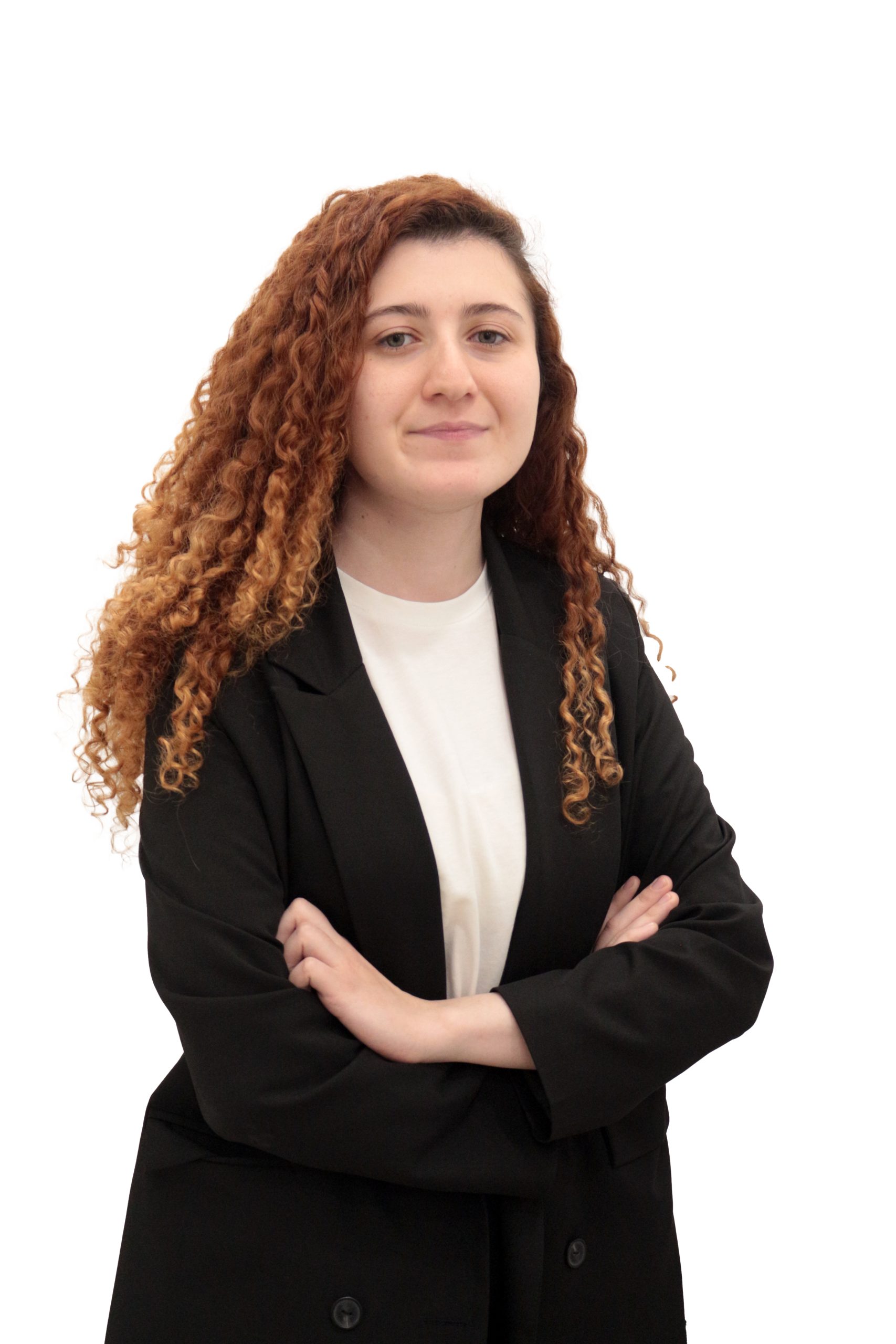
Lusine Sargsyan
Attorney
