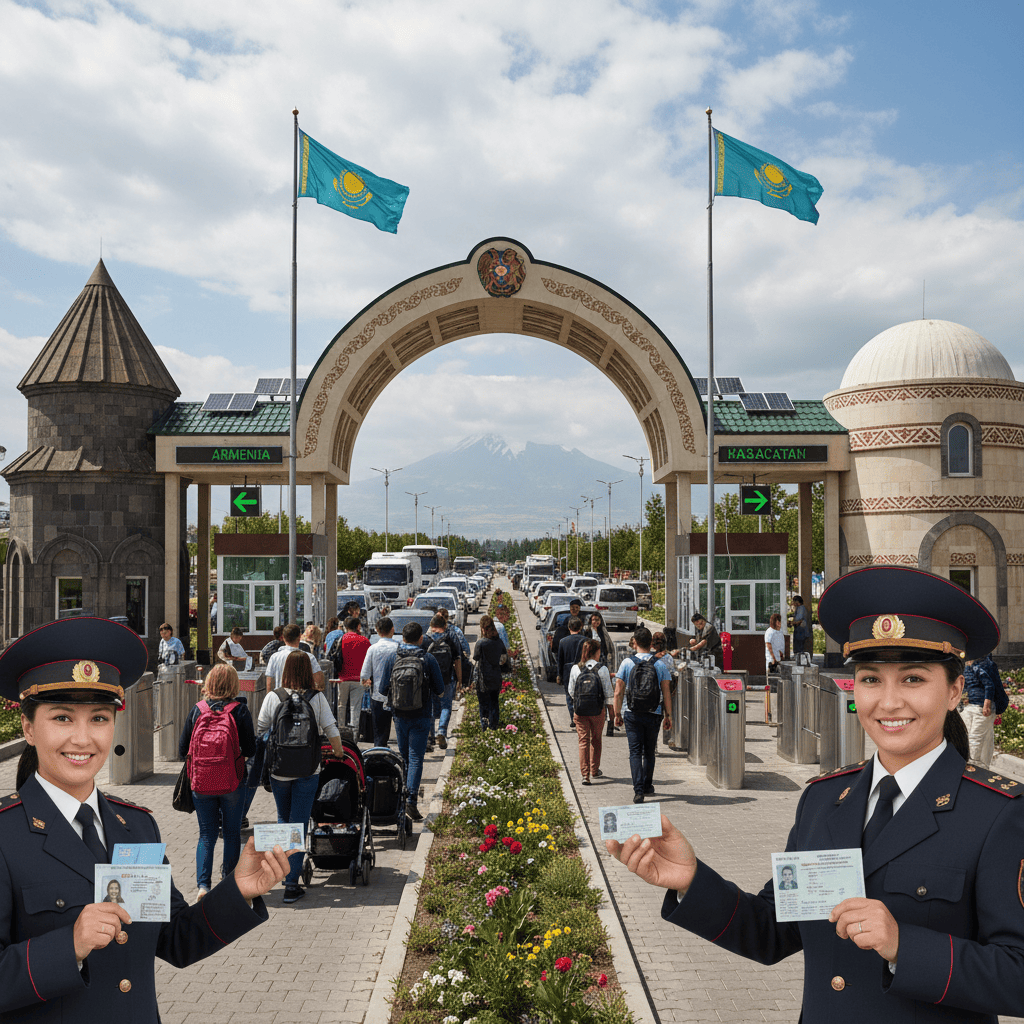
Armenia and Kazakhstan signed and ratified a bilateral migration cooperation pact, creating a framework for coordinated migration management and rights protection.
- Citizens can travel visa‑free for up to 90 days in any six‑month period and, crucially, may enter using national ID cards (no passport visa stamp required).
- For stays beyond 90 days, temporary residence permits for work, study, or business replace the old visa route; in Kazakhstan, permits for Armenian nationals are free and issued within one business day.
- Authorities will exchange statistical, legal, and methodological information on migrants, with safeguards allowing refusal of data requests that threaten national security.
- Expect smoother cross‑border mobility for tourists, students, professionals, and investors between Armenia and Kazakhstan.
Armenia and Kazakhstan's new migration agreement matters for anyone planning to travel, work, study, or invest across these two fast‑growing Eurasian markets. It locks in 90‑day visa‑free travel, introduces ID‑card entry, and streamlines longer‑stay permits—while strengthening official cooperation to protect migrants' rights and enforce the rules.
Table of Contents
- Background and ratification: how the Armenia–Kazakhstan migration pact came about
- Core travel changes: 90‑day visa‑free stays and ID‑card entry
- Pathways for longer stays: temporary residence permits for work, study and business
- Simplified administrative procedures: fast, low‑cost permit processing and Public Service Center role
- Mutual information exchange: statistical, legal and methodological data sharing between authorities
Background and ratification: how the Armenia–Kazakhstan migration pact came about
Armenia and Kazakhstan concluded a bilateral agreement on cooperation in the field of migration in Yerevan on April 15, 2024, creating a legal basis for coordinated migration management, rights protection, and information exchange between their competent authorities. Armenia's National Assembly subsequently ratified the agreement, confirming the state‑to‑state framework for joint procedures and cooperation on migration issues.
The framework builds on earlier government‑level cooperation instruments on migration and signals a policy push toward more transparent, coordinated handling of cross‑border mobility. Key outcomes include institutionalized data sharing, harmonized approaches to the legal status of each other's citizens, and mechanisms to address migrants' rights.
Mobility between the two countries is already significant: roughly 12,000 Armenian citizens entered Kazakhstan as of recent counts, and over 2,100 Armenians are employed there. The agreement is designed to support and manage these flows.
Core travel changes: 90‑day visa‑free stays and ID‑card entry
The agreement confirms mutual visa‑free travel for citizens of Armenia and Kazakhstan for up to 90 days within any six‑month period—ideal for tourism, family visits, and short business trips.
Importantly, the sides also agreed to allow entry using national ID cards, removing the need for a passport visa page and reducing travel friction and cost. This update aligns with broader regional practices to ease cross‑border movement.
Quick view: short‑term travel rules
| Topic | Armenian in Kazakhstan | Kazakh in Armenia |
|---|---|---|
| Visa for short stay | Not required up to 90 days in any 180‑day period | Not required up to 90 days in any 180‑day period |
| Accepted travel document | Passport or national ID card | Passport or national ID card |
| Beyond 90 days | Apply for temporary residence permit | Apply for residence permit |
Pathways for longer stays: temporary residence permits for work, study and business
Once the 90‑day visa‑free period ends, nationals can extend their legal stay via a temporary residence permit tailored to their purpose—work, study, business and other permitted activities—without needing to obtain a traditional visa. This approach is now explicit in the bilateral arrangements.
Kazakhstan has announced accelerated and cost‑free processing for Armenian citizens' temporary residence permits: applications are processed within one business day and issued free of charge, significantly simplifying long‑term mobility.
How to apply (Armenian citizens seeking to stay in Kazakhstan beyond 90 days)
- Confirm your purpose of stay (e.g., employment, education, entrepreneurship) fits a temporary residence category.
- File a temporary residence permit application with the competent migration authority in Kazakhstan before your 90‑day period ends.
- Expect same‑day (within one business day) processing and no government fee for Armenian nationals.
- Comply with any additional documentation requirements relevant to your purpose (e.g., work contract or university enrollment), as set by Kazakh authorities.
Simplified administrative procedures: fast, low‑cost permit processing and Public Service Center role
The hallmark of the new regime is administrative simplicity. For Armenians seeking to remain in Kazakhstan beyond 90 days, the temporary residence permit is issued free of charge and processed within one business day, reducing both cost and uncertainty compared to legacy visa routes.
Operational details—such as the exact counters or platforms that accept applications—are implemented by each country's competent authorities under domestic procedures. The bilateral agreement provides the framework; national services handle intake and issuance through their established public service channels. Applicants should follow instructions from the local migration service at the time of filing.
Key timelines and fees (Armenian nationals in Kazakhstan)
| Item | Rule | Source |
|---|---|---|
| Short stay | Visa‑free up to 90 days per 180‑day period | Armenpress |
| Entry document | National ID card accepted (passport not required for visa) | Orda.kz |
| Temporary residence permit (beyond 90 days) | Free of charge; processed within one business day | NEWS.am |
Mutual information exchange: statistical, legal and methodological data sharing between authorities
The migration pact creates formal channels for authorities to share statistical data on migration flows, legal and methodological materials, and information necessary to clarify the legal status of each other's citizens. This is intended to improve law enforcement cooperation, prevent violations, and protect migrants' rights.
To balance cooperation with sovereignty, either side may refuse to provide requested information if doing so would threaten national security or contravene domestic law—an explicit safeguard written into the arrangements.
For Kazakh citizens planning extended stays in Armenia, equivalent residence pathways apply on the Armenian side under national procedures.
Bottom line:
The Armenia–Kazakhstan migration agreement cements visa‑free, ID‑card travel for short visits and replaces long‑stay visas with fast, free temporary residence permits—backed by deeper inter‑agency cooperation and data sharing. If you plan to study, work, or do business across Armenia and Kazakhstan, we can help you structure the right residence and tax setup from day one.
FAQ
Do Armenians need a visa to enter Kazakhstan?
No. The agreement confirms visa‑free entry for up to 90 days within any six‑month period for citizens of both countries.
Can I travel using only my national ID card?
Yes. The sides agreed to ID‑card entry, eliminating the need for a passport visa page for short stays.
How do I stay longer than 90 days in Kazakhstan?
Apply for a temporary residence permit based on your purpose (work, study, business, etc.). For Armenian citizens, these permits are issued free and processed within one business day under the simplified rules.
Will authorities share my personal data under this agreement?
Authorities will exchange statistical, legal, and methodological information to manage migration and protect rights, with the ability to refuse requests that threaten national security or breach domestic law.
Is the agreement reciprocal for Kazakh citizens in Armenia?
Yes. The visa‑free entry and the cooperation framework apply in both directions. Long‑stay procedures are handled under each country's national rules.