
TL;DR
- In Armenia, real estate rights and encumbrances bind buyers only after they are registered in the State Cadastre; contracts alone are not enough (source).
- An official Cadastre extract reveals the registered owner, co-owners, and all recorded encumbrances (mortgages, liens, easements, seizures) (source).
- Spousal or co-owner consent is required for disposal of joint property, and missing consent can derail registration (source).
- Pre-1998 or partially registered assets need first-time formalization before a secure transfer; otherwise, disputes and financing are riskier (source).
- Run your Armenia title search and Cadastre encumbrance check before paying deposits or signing, and coordinate results with your notary.
Buying property in Armenia? A quick title search can save you months of delay and thousands in avoidable risk. Armenia’s Cadastre system is the single source of truth for who owns a property and what burdens it carries—so a careful review is essential for any buyer doing property due diligence in Armenia.
Table of Contents
- Why verify title through Armenia’s State Cadastre (legal effect, buyer protection)
- How to obtain an official cadastre extract: e-Cadastre; what the extract shows and how to request it
- Interpreting ownership entries: registered owners; co-owners; spousal consent and heirs
- Identifying and understanding encumbrances: mortgages
- How to Apply: practical steps to run your lien search and close safely
- Pre-contract buyer checklist
- FAQ
Why verify title through Armenia’s State Cadastre (legal effect, buyer protection)
Armenia is a registration-first jurisdiction: real estate rights and claims are effective against third parties only once they are entered into the State Cadastre register. A signed or even notarized deed by itself does not transfer ownership or perfect a mortgage until the right is registered (source). This is why an Armenia title search is a buyer’s primary protection—if a right is not registered, you may not acquire it; if an encumbrance is registered, you will take subject to it.
Encumbrances such as mortgages, liens, easements, and seizures are made legally enforceable through Cadastre registration, and a proper search reveals these burdens before you commit funds (source). With transaction volumes high, oversights can happen; Armenia’s Cadastre recorded more than 16,000 real estate rights registration transactions in July 2019 alone (source). A disciplined Cadastre encumbrance check reduces avoidable surprises and keeps closings on track.
How to obtain an official cadastre extract: e-Cadastre; what the extract shows and how to request it
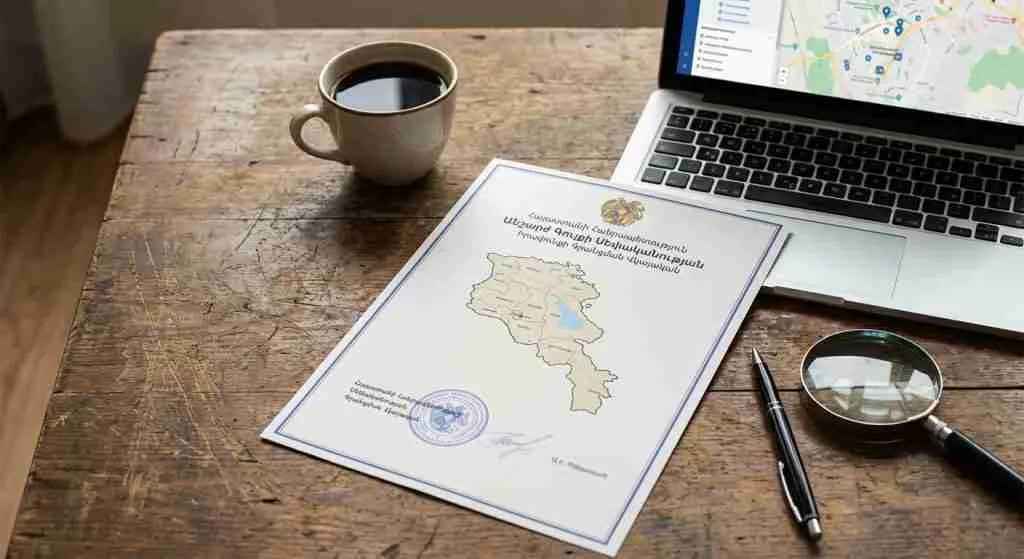
The Cadastre Committee issues official information on real estate rights. An extract (often called a property clearance extract) shows the property’s identification data and all registered rights and restrictions, including ownership details and encumbrances such as mortgages, liens, and easements (source).
You can request the extract by providing the property’s address or cadastral code and following the Cadastre’s information provision channels. For transactions handled electronically, Armenia’s e-cadastre.am platform supports filing and registration workflows using recognized electronic signatures (source).
What the extract typically shows (and how to read it):
- Property identification: address, cadastral number, description, etc. (source).
- Current registered owner(s): individual(s) or legal entity, and basis of ownership.
- Encumbrances: mortgages/pledges, pre-emptive rights, easements/rights of way, and any seizures or prohibitions if recorded (source).
- Other registered rights/claims that may affect use or transfer (e.g., restrictions) (source).
Interpreting ownership entries: registered owners; co-owners; spousal consent and heirs
Focus on the “owner” section first. The extract should show who is the registered owner and whether there are multiple owners with shares (common in inherited or jointly purchased assets). Any mismatch between the seller and the registered owner is a red flag that requires resolution before signing.
Where a property is marital joint property or otherwise co-owned, Armenian law requires written consent from the spouse or co-owner for a valid sale; lack of consent can invalidate the sale and block registration (source). Buyers should review the extract for co-ownership entries and ensure that the notary receives all necessary consents with the deed.
If ownership derives from inheritance, ensure the heir is properly registered as the owner before closing. A Cadastre extract will reflect the registered owner of record; transfers should proceed only after the correct heir is recorded to avoid contestability (source).
Identifying and understanding encumbrances: mortgages
Encumbrances are legal burdens that can limit your rights or delay transfer. Significant encumbrances—mortgages/pledges, liens, easements, and seizures—must be recorded in the Cadastre to become enforceable against third parties (source). An official extract will list any such recorded restrictions (source).
How to interpret common encumbrances on the extract:
- Mortgage/Pledge: The lender and loan reference are usually named. The mortgage must be discharged and the release registered for a clean transfer (source).
- Seizure/Prohibition: Indicates a court or authority has restricted disposal; transfer will be blocked until lifted (source).
- Easement/Right of Way: A burden that stays with the property, potentially affecting use or value (source).
Special case: pre-1998 or partially registered assets. Armenia’s modern Cadastre came online in the late 1990s. Properties that remain unregistered or only partly registered should undergo first-time formalization before sale. Until state registration is complete, even notarized deeds are not fully effective and risks of disputes or financing refusals are higher (source).
How to Apply: practical steps to run your lien search and close safely
- Identify the property: obtain the exact address and cadastral code from the seller or prior documents.
- Request an official Cadastre extract: apply through the Cadastre’s information provision service and obtain an extract listing ownership and encumbrances (source).
- Verify ownership against the seller: ensure the seller matches the registered owner and check for co-owners or marital joint property requiring consent (source).
- Review encumbrances: identify any mortgages, liens, easements, or seizures; plan discharges or conditions precedent accordingly (source).
- Address pre-1998/partial registrations: if the property is not fully registered, complete first-time registration before or alongside the sale to secure title (source).
- Sign with a notary and register the transfer: notarize the sale deed with all required consents and file registration; rights become effective only upon entry into the Cadastre (source).
Tip: Armenia supports electronic filings via e-cadastre.am with recognized e-signatures—useful for coordinating releases and registration in parallel (source).
Pre-contract buyer checklist
| Item | Check |
|---|---|
| Official Cadastre extract obtained (current date) | ☐ |
| Seller matches registered owner (ID verified) | ☐ |
| Co-owners/spousal consent identified and documented | ☐ |
| No active mortgages, liens, seizures, or restrictions—or release plan agreed | ☐ |
| Pre-1998/partial registration resolved or scheduled | ☐ |
| Notary coordination and registration path confirmed | ☐ |
For broader context on acquisition and structuring, see our guides on real estate in Armenia, investing in Armenia, and post-acquisition tax considerations. If you plan to live in Armenia after purchase, consider our residency and citizenship resources.
Conclusion
A thorough Cadastre encumbrance check is the backbone of property due diligence in Armenia. By verifying registered ownership, screening for liens and other burdens, securing all consents, and completing registration, you transform a risky promise into a legally protected right. Before you wire a deposit or sign a contract, run your Armenia title search and align your notary, lender, and seller around a clear registration plan. For help with title reviews, pre-1998 formalizations, and safe closings, contact our team.
FAQ
What does an official Cadastre extract include?
It lists the property’s identification data and all registered rights and restrictions, including ownership and encumbrances such as mortgages, liens, and easements (Cadastre Committee).
Does a notarized sale deed transfer ownership without registration?
No. Rights to real estate take effect against third parties only when entered into the State Cadastre. Notarization alone is not sufficient (guide).
Are unregistered mortgages or liens enforceable against a buyer?
Encumbrances become legally enforceable against third parties through registration in the Cadastre. Proper searches reveal registered burdens so buyers don’t inherit undisclosed debts (analysis).
Do I need spousal consent to buy or sell?
If the property is joint marital property or co-owned, written consent of the spouse or co-owner is required for disposal; missing consent can invalidate the sale and block registration (checklist).
How should I handle pre-1998 or partially registered properties?
Complete first-time registration before or alongside the sale. Until registration is finalized, title is not fully secure and risks of disputes or financing refusals are higher (guide).
