
At a glance
- Status: Special municipality of the Netherlands (BES islands)
- Languages: Dutch, Papiamentu, English
- Legal system: Dutch civil law
- Tax system: Worldwide (BES tax system)
- Max personal income tax: 35.4%
- Corporate tax (revenue tax): 7.5%
- Capital gains tax: 7.5%
- Inheritance/estate tax: None
- Investment residency: Investor permit via Dutch Caribbean program (~US$420,000)
- Citizenship by investment: Not available (naturalization after 5 years of legal residency)
- Dual citizenship: Not permitted under Dutch law (exceptions apply)
- Dutch passport strength: 188 destinations visa-free
- Foreign property ownership: Unrestricted
- Currency: US dollar (official currency since 2011)
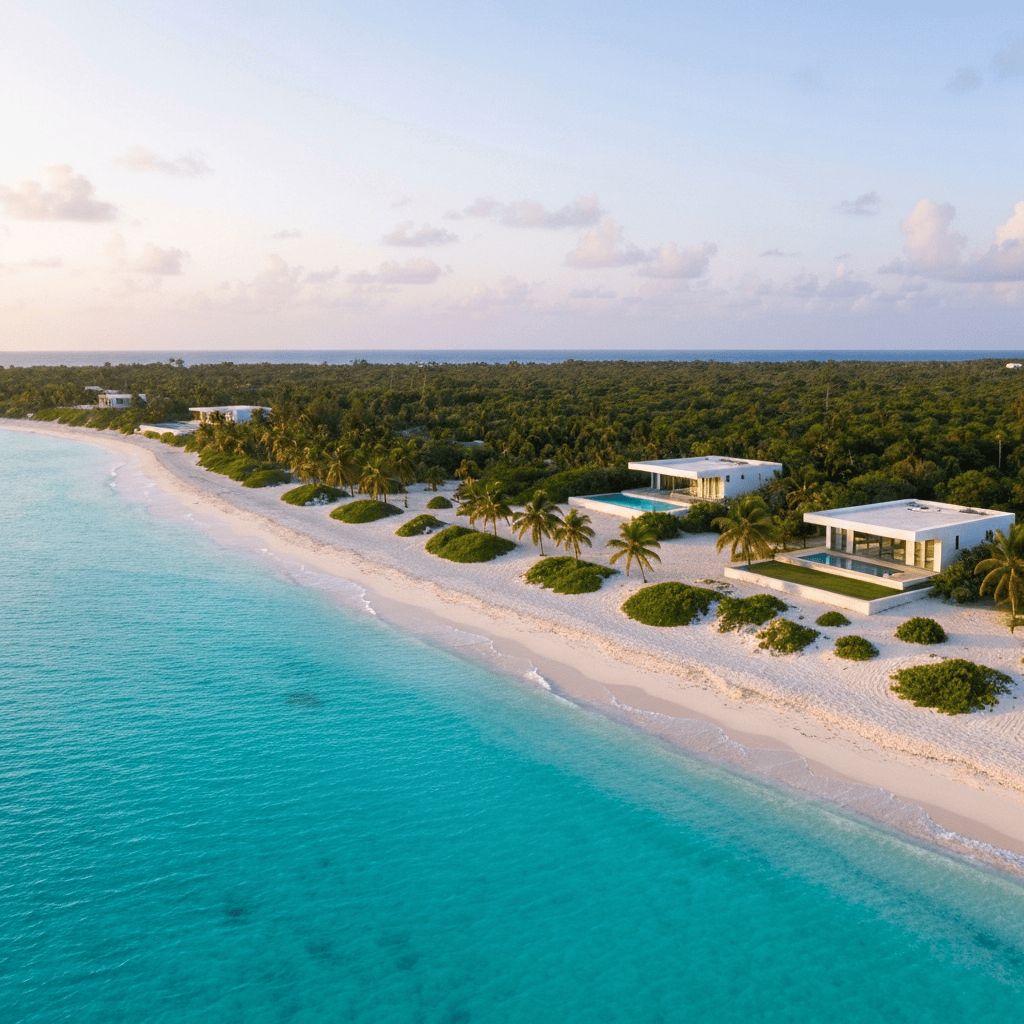
Bonaire is a special municipality of the Netherlands located in the southern Caribbean, approximately 80 kilometers north of Venezuela. Unlike Curaçao and Aruba, which are autonomous countries within the Kingdom of the Netherlands, Bonaire (along with Sint Eustatius and Saba) is directly part of the Netherlands as a public body — commonly referred to as the BES islands. This distinction carries significant implications for residency, taxation, legal protections, and access to European institutional frameworks.
For investors, entrepreneurs, and individuals seeking a stable Caribbean base with Dutch legal protections, NATO security, and a USD-denominated economy, Bonaire offers a distinctive combination. This guide covers residency pathways, the BES tax system, business formation, real estate, banking, and practical considerations for relocating to Bonaire in 2026. If you are comparing Bonaire with other jurisdictions as part of a broader international strategy, our team at Vardanyan & Partners can help you evaluate the options.
Residency pathways
Investor permit (Dutch Caribbean)
The Dutch Caribbean investor permit program allows foreign nationals to obtain residency in Bonaire by making a qualifying investment. The minimum investment threshold is approximately US$420,000, with qualifying sectors including real estate and business investment. Applicants must demonstrate that the investment creates local economic value, generates employment, or contributes to the island’s development.
Applications are processed by the Rijksdienst Caribisch Nederland (RCN) and the Immigration and Naturalisation Service (IND). Applicants must provide proof of investment, a clean criminal record, health insurance, and sufficient financial means. Because Bonaire is part of the Netherlands, the residency permit is governed by Dutch immigration law as adapted for the BES islands — not by a separate local immigration regime.
Standard residency
Non-investors can apply for residency through employment, family reunification, or as a self-employed person. Applicants must demonstrate a legitimate purpose, financial self-sufficiency, and health insurance coverage. The process follows Dutch immigration standards and applications are handled through the IND.
EU/EEA nationals benefit from simplified procedures given Bonaire’s status within the Kingdom of the Netherlands, though the BES islands are not part of the European Union and EU free movement rules do not apply directly.
Path to Dutch citizenship
After five years of continuous legal residency in Bonaire, individuals may apply for Dutch citizenship through naturalization. Applicants must pass a civic integration exam, demonstrate sufficient knowledge of Dutch or Papiamentu, have no serious criminal record, and renounce their previous citizenship — the Netherlands generally does not permit dual nationality, though exceptions exist for certain categories including those married to Dutch nationals.
A Dutch passport ranks among the strongest in the world, providing visa-free or visa-on-arrival access to 188 destinations. This is a significant draw for individuals seeking enhanced global mobility through a Caribbean residency pathway. For a comparison with other citizenship programs, consult our team.
Tax system
BES tax framework
Bonaire operates under the BES tax system, which is separate from the European Netherlands tax code. This system was introduced in 2011 when Bonaire became a special municipality. The BES tax framework is simpler and, in several respects, more favorable than the Dutch mainland system — though it uses worldwide taxation rather than a territorial model.
Key characteristics include a flat-rate income tax, a low revenue tax replacing traditional corporate tax, no VAT (a general expenditure tax or ABB applies instead), no inheritance or estate tax, and no wealth tax. The system is designed to be straightforward with fewer deductions and brackets than the European Netherlands.
Personal income tax
Personal income tax on Bonaire applies at a maximum rate of 35.4% on worldwide income for tax residents. The tax-free threshold and brackets are adjusted periodically. Income from employment, business, and investments are all subject to this tax. Notably, there is no separate social security contribution system equivalent to the European Netherlands — healthcare and social insurance premiums are integrated differently on the BES islands. For individuals and businesses comparing jurisdictions, see our overview of taxes in Armenia as a reference point.
Revenue tax (corporate)
Bonaire does not have a traditional corporate income tax. Instead, businesses pay a revenue tax (opbrengstbelasting) of 7.5% on profits distributed or deemed distributed. Undistributed profits retained in the company are not taxed until distribution. This creates a significant incentive for reinvestment and is one of Bonaire’s most attractive features for business owners.
Capital gains are taxed at 7.5% under the same framework. There is no separate capital gains tax regime. Combined with the absence of inheritance tax, this creates a favorable environment for wealth accumulation and business growth.
General expenditure tax (ABB)
Instead of VAT, Bonaire applies a general expenditure tax (ABB — Algemene Bestedingsbelasting) on goods and services. The standard rate is 8% on most goods and services, with different rates for specific categories. This applies to new construction (8% ABB on new-build property), imports, and most commercial transactions. Exports are zero-rated.
Important: While Bonaire’s tax system offers advantages over the European Netherlands, residents must consider worldwide income reporting obligations. The Netherlands participates in the OECD Common Reporting Standard (CRS) and FATCA. Individuals with tax obligations in other jurisdictions should obtain professional advice to ensure compliance with all reporting requirements.
Banking and business formation
Banking environment
Bonaire’s banking sector is supervised by De Nederlandsche Bank (DNB), the Dutch central bank, which provides a high degree of regulatory oversight and institutional credibility. The primary banks on the island include MCB Bonaire and Banco di Caribe. Accounts are denominated in US dollars, which has been the official currency since 2011 — eliminating currency exchange risk for USD-based investors.
Opening a bank account typically takes around three weeks and requires standard KYC documentation: passport, proof of address, source of funds documentation, and a local address or residency permit. SWIFT transfers are fully supported, and there are no capital controls or cross-border payment restrictions. FX convertibility is full. Bank secrecy is low — consistent with Dutch and international transparency standards including CRS participation. For assistance with banking in other jurisdictions, our team can advise.
Business formation
Company registration on Bonaire follows Dutch commercial law as adapted for the BES islands. The most common structures are the Besloten Vennootschap (BV — private limited company) and the Naamloze Vennootschap (NV — public limited company). Registration is handled through the Chamber of Commerce Bonaire (Kamer van Koophandel). Typical registration takes approximately 14 business days.
There is no minimum share capital requirement for BES companies. Foreign ownership is unrestricted, and Dutch legal protections apply — including strong contract enforcement, a reliable judiciary (rated 9/10 for reliability), and protection against expropriation. A business licence is required for most commercial activities on the island.
For entrepreneurs comparing business registration options across jurisdictions, Bonaire’s combination of Dutch legal standards, USD economy, and 7.5% revenue tax on distributions makes it worth evaluating against other Caribbean and European options.
Real estate and property
Bonaire allows unrestricted foreign ownership of both freehold and leasehold property. No special licence or permit is required for foreigners to purchase residential, commercial, or industrial real estate. Property rights are protected under Dutch law, and expropriation risk is rated low.
Property transfer tax is 5% on existing property. New construction is subject to 8% ABB (general expenditure tax) instead. Notary fees apply on top of these taxes. There is no capital gains tax on property appreciation beyond the standard 7.5% revenue tax on realized gains.
The real estate market on Bonaire is relatively stable (rated 4/5) and has seen growing demand driven by tourism, remote workers, and investors attracted to the island’s political stability and USD economy. Market liquidity is lower than larger Caribbean islands, and inventory is limited — which supports price stability but can make finding suitable properties more challenging.
The island’s cost of living is moderate by Caribbean standards (rated 75 on a 100-point index) but higher than mainland Latin American alternatives. Housing, imported goods, and utilities tend to be the primary cost drivers.
Political stability and international standing
As a special municipality of the Netherlands, Bonaire benefits from one of the highest levels of political stability and institutional quality available in the Caribbean (rated 9/10). The island is governed under Dutch law, with appeals handled through the joint Court of Justice of Aruba, Curaçao, Sint Maarten, and the BES islands, and final appeals to the Supreme Court of the Netherlands in The Hague.
Bonaire is covered by the Kingdom of the Netherlands’ extensive extradition treaty network, including agreements with the United States, United Kingdom, EU member states (via the European Arrest Warrant), and many other nations. The Netherlands is a NATO member, and Bonaire falls under its defense umbrella. There are no sanctions or restrictions on the jurisdiction, and it applies EU and UN sanctions as part of the Kingdom framework.
The FATF status is standard (not greylisted or blacklisted), and regulatory oversight from DNB and Dutch authorities provides institutional credibility that many Caribbean jurisdictions cannot match. This makes Bonaire particularly attractive for individuals and businesses that prioritize reputational safety alongside tax and lifestyle benefits.
Cryptocurrency and digital assets
Cryptocurrency regulation on Bonaire is currently unregulated in the sense that no specific crypto-licensing framework exists for the BES islands. However, general Dutch AML standards apply, and DNB supervision extends to financial services on the island. Local banks do not advertise crypto-friendly services and are likely cautious in line with broader Dutch regulatory attitudes toward virtual assets.
Crypto gains are likely taxed under the general BES income tax rules, though there is no explicit crypto-specific guidance. Individuals holding significant cryptocurrency positions should seek professional advice on reporting obligations under both BES tax law and any applicable home-country rules. The evolving EU Markets in Crypto-Assets (MiCA) framework does not directly apply to the BES islands, but Dutch regulatory trends may influence future policy.
Lifestyle and practical considerations
Bonaire has a warm, dry, semi-arid tropical climate influenced by trade winds. It sits outside the main hurricane belt, giving it lower hurricane risk than many northern Caribbean islands — though it faces some climate-change vulnerability related to sea-level rise and coral reef degradation.
The island is known for its world-class diving and marine park, low crime rate, and laid-back lifestyle. Accessibility is moderate (rated 3/5): Flamingo International Airport receives direct flights from Amsterdam, Miami, and several regional hubs, but connections are less frequent than to larger Caribbean destinations. Expat comfort is rated 4/5, with a growing international community, good healthcare access (supported by Dutch standards), and reliable infrastructure.
English is widely spoken alongside Dutch and Papiamentu, making daily life accessible for English-speaking expatriates. The island’s small size (approximately 22,000 residents) means limited entertainment and dining options compared to larger Caribbean islands, but this is part of its appeal for those seeking a quieter, more focused environment.
