
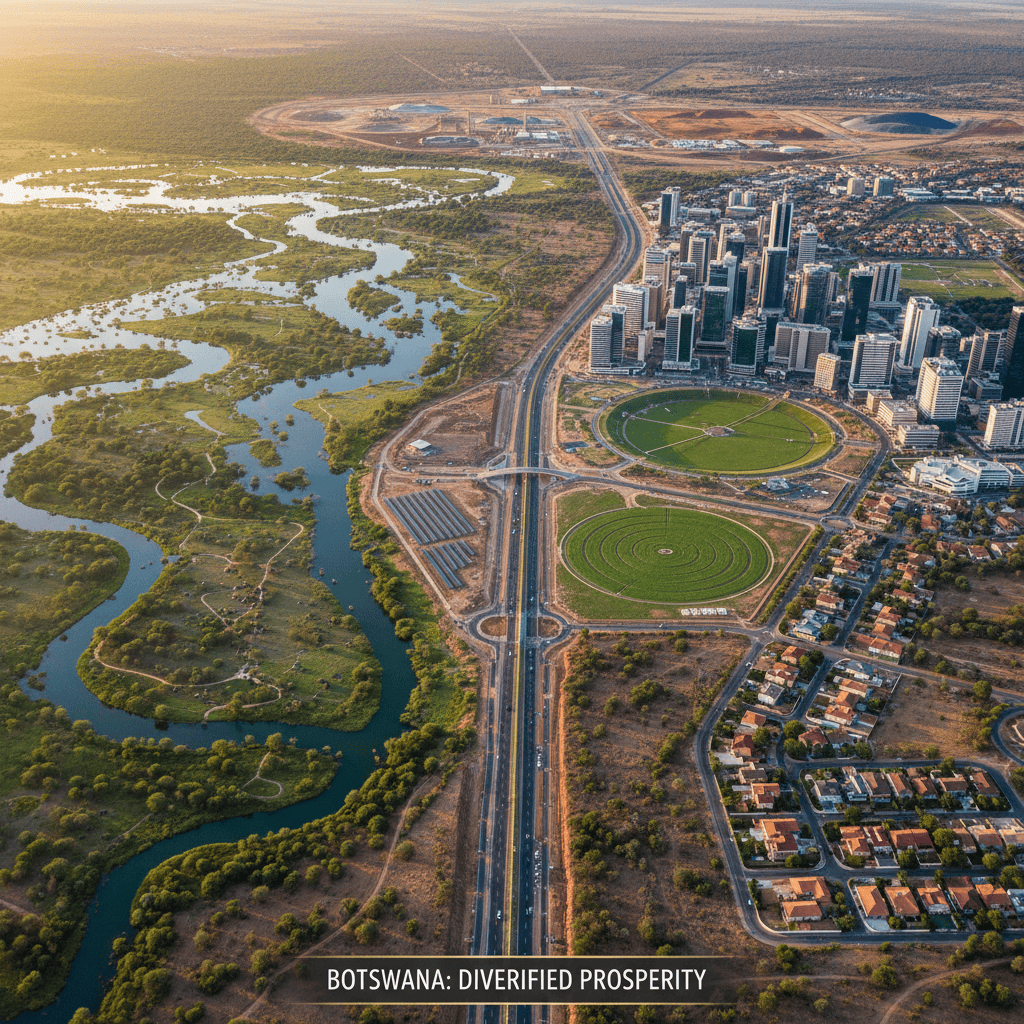
- Botswana has announced a citizenship-by-investment (CBI) program to diversify its economy beyond diamonds, with details still to be finalized.
- The economy has been hit by a diamond downturn, with GDP contracting and unemployment high, intensifying the search for new capital and jobs.
- Government says program revenue will target housing, tourism, renewables, mining, and financial services.
- Citizenship is to be granted in exchange for investment, but the minimum investment threshold has not yet been set.
- Botswana is working with specialist adviser Arton Capital on program design, amid global scrutiny of "golden passport" schemes.
Botswana is moving to launch a citizenship-by-investment program in a bid to counter a deep diamond slump and attract fresh capital. For investors tracking Africa's most stable economies, this development could open a rare, direct path to citizenship—if and when the final rules are published.
Table of Contents
- Botswana's economic snapshot: diamond dependence
- Contraction and unemployment
- Why Botswana is turning to citizenship-by-investment now: drivers and policy aims
- Official announcement and political framing of the CBI initiative
- Program design: investment-for-citizenship model
- Thresholds and eligibility questions
- Revenue allocation and targeted sectors: housing
- Tourism
Botswana's Economic Snapshot: Diamond Dependence
Botswana's export base is heavily concentrated in diamonds—about 80% of total exports—making the economy highly sensitive to global jewelry and luxury demand cycles. The recent downturn in the diamond market has therefore had outsized effects on growth, jobs, and fiscal space.
| Program at a Glance | Details (Subject to Confirmation) |
|---|---|
| Status | Program announced; details to be finalized |
| Pathway | Citizenship in exchange for qualifying investment |
| Minimum Investment | To be determined |
| Use of Proceeds | Housing, tourism, renewable energy, mining, financial services |
| Adviser | Arton Capital engaged by government |
| Global Context | EU court struck down Malta's "golden passport," underscoring scrutiny |
Contraction and Unemployment
Macro indicators show the pressure points. Botswana slashed its 2024 growth outlook as the diamond downturn persisted, with GDP projected around -3% for the year. The hit intensified into 2025: the economy contracted 5.3% year-on-year in Q2 2025 amid continued sector weakness.
On the labor side, unemployment has hovered near 27%, a politically and socially sensitive level that focuses policymakers on job creation and investment inflows.
Why Botswana Is Turning to Citizenship-by-Investment Now: Drivers and Policy Aims
The government has framed the CBI initiative as a diversification tool to reduce reliance on diamonds, attract foreign capital, and channel funds to productive sectors. Proceeds are earmarked for housing, tourism, renewable energy, mining, and financial services—areas with potential for jobs, infrastructure, and export growth beyond commodities.
In parallel, Botswana continues to court large-scale investment partnerships, such as a reported $12 billion framework with Qatar's Al Mansour Holdings covering multiple sectors—signaling a broader push to mobilize capital at scale alongside the CBI track.
Official Announcement and Political Framing of the CBI Initiative
Botswana's leadership announced the new citizenship-by-investment program as a deliberate policy shift to boost the economy beyond diamond mining. The timing intersects with domestic debate over growth and employment prospects; the diamond trade has been a defining issue in the country's political discourse, underscoring the urgency of diversification.
Program Design: Investment-for-Citizenship Model
The core architecture is clear: qualifying investors can obtain citizenship in exchange for an investment that aligns with national priorities. The government is working with Arton Capital to structure the offer, a sign that specialized program design and international benchmarking are underway.
For investors, that means due diligence standards, compliance checks, and sectoral investment routes are likely to be defined in implementing regulations. While specifics are pending, the involvement of an experienced adviser suggests the government aims to balance capital attraction with integrity and reputational risk management.
Thresholds and Eligibility Questions
Key terms—including the minimum investment amount—have not been finalized. The threshold is still to be determined, so any circulating figures should be treated as indicative until official rules are published.
Globally, CBI programs face heightened scrutiny. The EU's top court recently ruled that Malta's "golden passport" scheme undermined EU law, forcing its termination. While Botswana is not in the EU, this ruling underscores the compliance and reputational environment in which all such programs now operate.
Investor Readiness Checklist
- Wait for official gazetted rules and confirm the investment threshold.
- Review sector options and whether your investment qualifies under program criteria.
- Assess due diligence requirements and source-of-funds documentation standards.
- Plan for timelines, escrow mechanisms, and refund contingencies if applicable.
- Consider geopolitical and regulatory risk, including international scrutiny of CBI schemes.
Revenue Allocation and Targeted Sectors: Housing
Housing is one of the core destinations for program proceeds. Channeling CBI funds into housing can address urbanization pressures, support construction supply chains, and stimulate local employment—provided procurement and project controls are robust. The government explicitly includes housing among the target sectors for CBI-funded investment.
Tourism
Tourism is another priority sector—logical for a country known for its conservation model and high-value safari experiences. Allocating CBI resources to tourism aligns with Botswana's shift toward diversified, service-oriented growth. Tourism is listed alongside renewable energy, mining, and financial services as target areas for program funds. In parallel, major investment partnerships under discussion signal the government's appetite for large, multi-sector capital flows to complement the CBI channel.
Considering diversification across jurisdictions? If you are assessing residence or citizenship planning beyond Southern Africa, explore our resources on citizenship, residency, investment, business setup, taxes, and real estate in Armenia.
Bottom Line
Botswana's citizenship-by-investment program is a notable new entrant in the global investor-migration landscape, driven by the need to diversify away from diamond dependence and counter a steep economic slowdown. The core promise—citizenship in exchange for investment—is confirmed, but key terms like the minimum investment are still pending. Investors should monitor the official framework, sector routes, and due diligence standards as they are released.
For tailored planning and to benchmark Botswana against other residence and citizenship strategies, contact us.
FAQ
Has Botswana launched a citizenship-by-investment program?
Yes. The government has announced a CBI program aimed at diversifying the economy beyond diamonds. Detailed rules are to be finalized.
What is the minimum investment amount?
It has not been set yet. The threshold will be determined in the final program rules.
Which sectors will benefit from CBI funds?
Proceeds are earmarked for housing, tourism, renewable energy, mining, and financial services.
Who is advising Botswana on the program design?
The government has engaged Arton Capital to help structure the CBI initiative.
How does global scrutiny affect the program?
CBI schemes face increasing regulatory scrutiny. The EU's top court ordered Malta to end its "golden passport" program, highlighting compliance and reputational risks for similar initiatives worldwide.
