
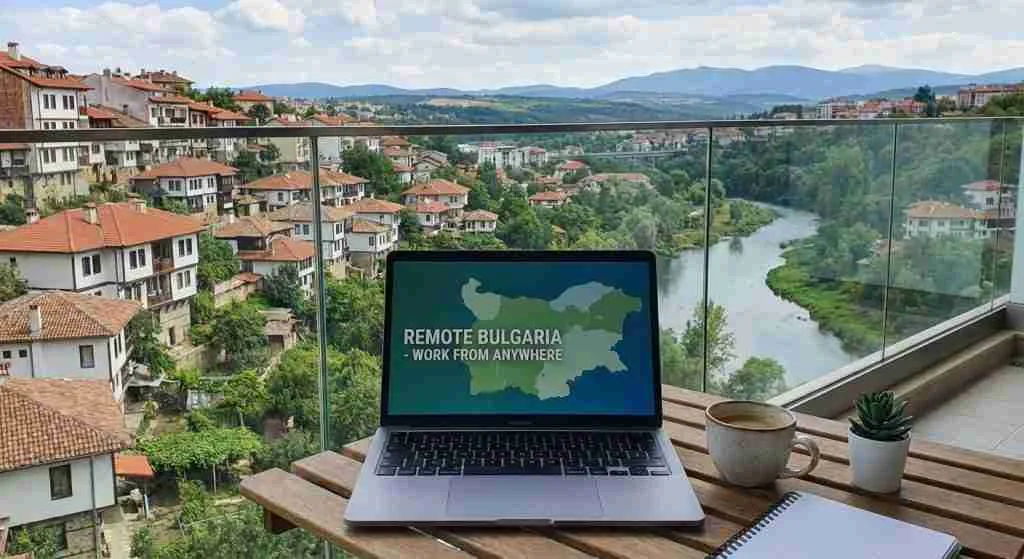
Bulgaria has launched a one‑year, renewable Digital Nomad Visa for non‑EU remote workers, creating a new EU base without property investment or an employer sponsor in Bulgaria.
Eligibility centers on remote work for a foreign employer/company and proof of foreign‑sourced income at roughly 50× Bulgaria's minimum monthly wage (est. ~€28,000/year) or about 46,650 BGN (~€23,850) depending on source.
Permit holders gain residence rights that support daily life—healthcare access, banking and rentals—under a formalized pathway not previously available to remote workers in Bulgaria.
As traditional Golden Visa routes tighten (e.g., Spain's property-based path curtailed in 2024), Bulgaria's Digital Nomad Visa offers a timely non‑investment EU alternative.
Plan ahead for tax and employment compliance—cross‑border remote arrangements can trigger local tax, payroll or establishment risks if not structured properly.
EU remote work is moving mainstream. Bulgaria's new Digital Nomad Visa (DNV) opens a practical entry point into the European Union for remote professionals who don't want to tie residency to real estate or large investments. As Golden Visa programs across Europe are reshaped, this Bulgaria DNV adds a valuable, flexible option for clients diversifying mobility strategies.
Table of Contents
Bulgaria's Digital Nomad Visa: What It Is and Why It Matters for EU Access
Bulgaria has introduced a Digital Nomad Residence Permit in late 2025—a one‑year permit designed for non‑EU nationals who work remotely for foreign employers or businesses. It is renewable and establishes a formal immigration pathway that did not previously exist for remote workers in Bulgaria.
The Bulgaria digital nomad visa matters because it offers EU access without property investment or a local employer sponsor—at a time when some investment‑linked routes are being curtailed. For example, Spain moved away from traditional Golden Visa pathways in 2024, directing applicants toward passive‑income options instead. For clients and firms planning long‑term mobility, Bulgaria's DNV aligns with the broader shift to non‑investment residency models.
Snapshot: Bulgaria DNV vs. Property‑linked Residency (example: Spain)
| Feature | Bulgaria DNV | Property‑linked Example (Spain Post‑2024) |
|---|---|---|
| Core requirement | Remote work + foreign income | Passive income (property route curtailed) |
| Investment needed | No property investment | No property route; income proof required |
| Indicative annual income | Approx. 46,650 BGN–€28,000 (sources vary) | Approx. $32,000 passive income |
| Permit length | 1 year, renewable | Varies by category |
Who Qualifies: Eligibility
The Bulgaria DNV targets non‑EU nationals who can work remotely and support themselves with income generated outside Bulgaria. Key elements reflected in public briefings include:
- Remote work for a foreign employer or a foreign‑registered company (including your own).
- Proof of stable, foreign‑sourced income meeting the minimum threshold (see next section).
- A one‑year residence permit with renewal options, giving a formal immigration route not previously available to remote workers in Bulgaria.
Public reports anticipate several thousand applicants, with about 2,000 digital nomads forecast annually as Bulgaria markets its affordability and connectivity.
Income Thresholds and Target Applicants
Two commonly cited benchmarks have emerged in early coverage of the Bulgaria DNV's financial requirements:
- Approx. 46,650 BGN yearly (~€23,850) as a minimum income level.
- Alternatively framed as roughly 50× Bulgaria's monthly minimum wage (about ~€28,000/year, depending on exchange and wage updates).
Because Bulgaria's implementing rules are communicated through different channels, applicants should be prepared to document foreign income above the higher end of the range and show stability over time. This aligns with the DNV's goal: attracting genuine remote professionals and founders who can base themselves in Bulgaria without relying on local employment.
Who Is This For?
- Salaried remote employees of a non‑Bulgarian company.
- Freelancers and contractors billing foreign clients (e.g., software, design, marketing).
- Owners of foreign‑registered companies who draw income from abroad.
Quick Fit‑check:
- You are a non‑EU national and work fully remotely for a non‑Bulgarian employer or business.
- Your provable foreign income meets or exceeds 46,650 BGN–€28,000/year (prepare for the higher figure).
- You can maintain comprehensive documentation (contracts, invoices, payroll, company certificates) to demonstrate eligibility.
Rights and Practical Benefits: Healthcare, Banking, Rentals and Schengen Mobility
Healthcare, Banking and Rentals: Everyday Living Enabled
While the DNV is not a traditional employment permit, it does grant core residence rights that make life functional in Bulgaria—access to healthcare, opening bank accounts, and entering into rental contracts—benefits that are typically tied to residence status.
Schengen Mobility from a Bulgarian Base
One reason this EU remote work visa is drawing attention is regional travel. Public reports emphasize that basing in Bulgaria under the DNV facilitates access around Europe and Schengen travel for remote workers seeking a practical EU hub.
Tax, Employment and Cross‑border Compliance Risks for Nomads and Employers
Tax: Plan Before You Land
Cross‑border remote work can create tax obligations for the individual and, in some cases, for the employer or the individual's foreign company. Immigration advisors note that failure to structure arrangements correctly can trigger penalties or loss of foreign‑hire rights. A bespoke tax review should address where your income is sourced, where services are performed, and whether any permanent‑establishment or payroll exposure could arise for your employer/company.
Employment and Cross‑border Compliance Risks
- Employment law: A remote worker in Bulgaria, even if employed abroad, can still be affected by local rules (e.g., mandatory benefits or labor protections) depending on how the arrangement is documented. Properly drafted remote‑work addenda and independent‑contractor agreements are essential.
- Payroll and social contributions: Employers may face obligations if deemed to have a local presence or if specific social security coordination rules apply. Early, fact‑specific analysis is recommended.
- Corporate "permanent establishment" risk: Certain activities performed in Bulgaria could expose a foreign company to local tax or compliance filings. Structure roles and signing authority carefully.
Strategy Note for Firms and Teams: With investment‑linked routes tightening in parts of the EU, Bulgaria's DNV is a timely addition to the mobility toolkit. For multi‑jurisdiction planning beyond Bulgaria, consider sequencing with long‑term residency options and citizenship strategies.
Program Quick Facts
- Launch: Late 2025.
- Validity: 1 year, renewable.
- Who can apply: Non‑EU nationals working remotely for foreign employers or foreign‑registered companies, with proof of foreign‑sourced income.
- Income baseline: Approx. 46,650 BGN–€28,000/year (sources vary).
- Rights: Residence enabling access to healthcare, banking, and rentals.
Bottom line: The Bulgaria digital nomad visa is a pragmatic EU access point for remote workers and distributed teams—one that prioritizes proof of foreign income over property investment. With the right tax and compliance planning, it can anchor a flexible European mobility strategy.
