
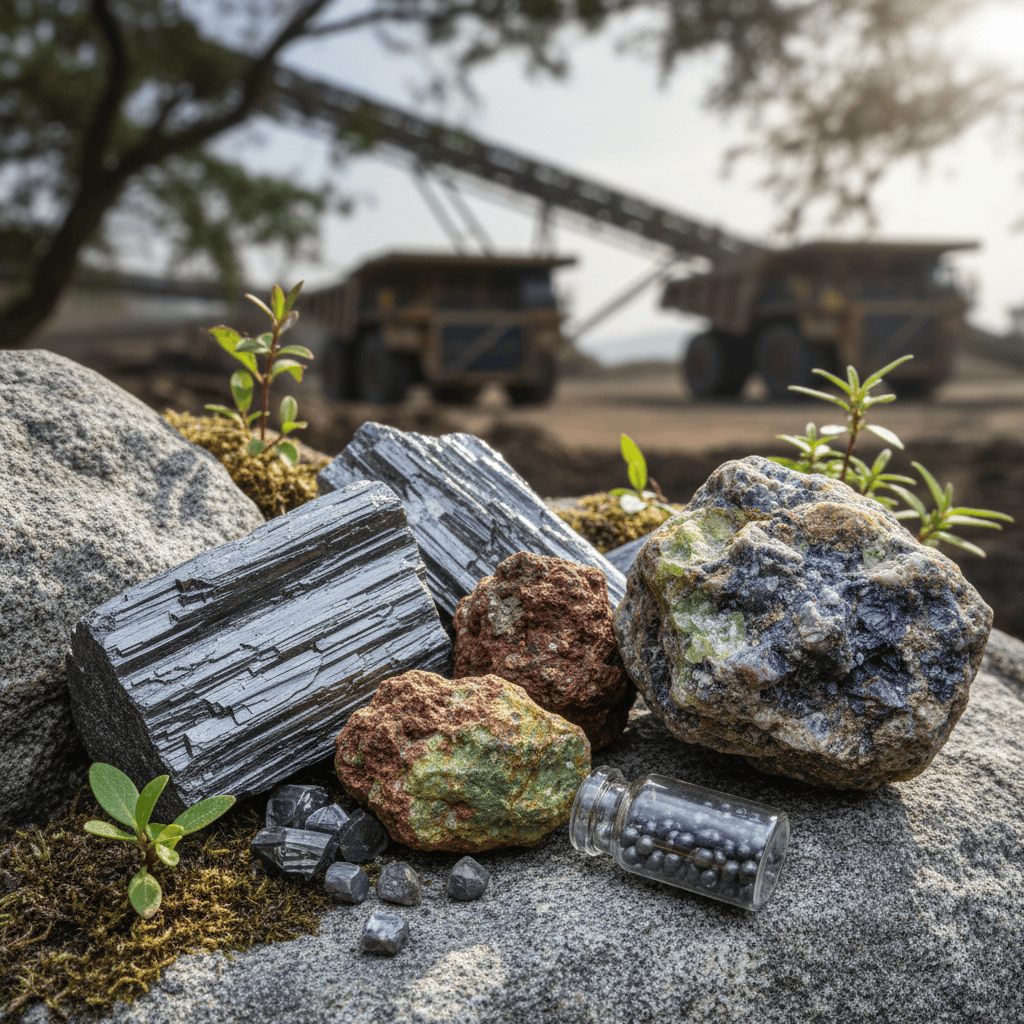
- Canada announced 26 new investments and partnerships with nine allied countries, unlocking about C$6.4 billion in critical minerals projects aimed at resilient supply chains and clean-tech manufacturing.
- A new G7 Critical Minerals Production Alliance will fast‑track production of graphite, rare earth elements, and scandium by mobilizing public and private capital.
- Allied coordination across G7 and NATO partners—and a Canada–Australia pact—expands cross‑border deal flow in mining, processing, and advanced materials.
- Foreign investment faces a higher bar: Canada has tightened reviews in critical minerals, with approvals for significant acquisitions granted only in "the most exceptional of circumstances."
- Immediate actions for investor migrants: shortlist qualifying projects, stress‑test KYC/source‑of‑funds, and align sector investments with compliant mobility and corporate structures.
Canada's critical minerals pivot is accelerating. With 26 new investments and partnerships spanning nine allied countries, Ottawa is positioning itself—and trusted partners—to supply the metals that power EVs, renewables, and defense technologies. For global investors and investor migrants, this opens a timely pathway to deploy capital into the resource sector and supply chain investment, provided structures meet tightened review standards and mobility needs are planned early.
Table of Contents
- Global Context: Secure Critical Minerals Supply Chains
- Highlights of the 26 Strategic Projects
- Canada's G7 Critical Minerals Production Alliance
- Allied Partnerships and Supply Chain Diversification
- Opportunities for Foreign Investors and Migrant Capital
- Regulatory and Compliance Considerations
- How to Apply: Deploy Capital and Align Immigration Strategy
- Conclusion
- FAQ
Global Context: Secure Critical Minerals Supply Chains
Canada has unveiled 26 new investments, partnerships, and measures with nine allied countries, intended to secure critical minerals supply chains and catalyze industrial capacity across mining, processing, and technology applications. The package is expected to unlock about C$6.4 billion in projects across the resource sector and its downstream uses, signaling immediate opportunities for supply chain investment and strategic co‑investment with public partners.
Highlights of the 26 Strategic Projects
While each project is distinct, the program's common thread is supply chain resilience—from upstream extraction to midstream processing and downstream advanced manufacturing. The 26 projects and partnerships reflect multi‑country engagement to de‑risk critical inputs for batteries, clean energy infrastructure, aerospace and defense applications. The total project value cited by the government—about C$6.4 billion—suggests a blended pipeline of direct investments, co‑funded facilities, and strategic offtake frameworks capable of attracting foreign capital alongside public sponsors.
Canada's G7 Critical Minerals Production Alliance
In parallel, Canada is spearheading a G7 Critical Minerals Production Alliance to accelerate production of strategic inputs, including graphite, rare earth elements, and scandium. The plan is to fast‑track projects by mobilizing public and private investment, a signal that blended finance and allied procurement will be central to bringing capacity online for EV batteries, rare earth magnets, and advanced components.
Allied Partnerships and Supply Chain Diversification
Canada is coordinating with G7 and NATO allies to co‑fund critical minerals projects and distribute output across partner markets, explicitly seeking to diversify supply chains away from concentrated suppliers. This multilateral approach broadens geography‑based risk management and allows investors to engage through multi‑jurisdictional projects and offtake agreements across the alliance.
One example is the Canada–Australia joint declaration to strengthen critical minerals cooperation, targeting resilient supply for technologies such as rare earth magnets and battery metals. The bilateral pact widens channels for joint exploration, processing facilities, and technology transfer, all attractive to cross‑border capital seeking scale and allied market access.
Opportunities for Foreign Investors and Migrant Capital
The immediate opportunity set includes:
- Direct equity in upstream projects supported by allied procurement or grant components.
- Midstream processing and refining JVs aligned with the G7 Production Alliance focus on graphite, rare earth elements, and scandium.
- Downstream manufacturing and magnet/battery metals supply via Canada–Australia corridors and allied distribution frameworks.
Investor migrants can align capital deployment with mobility planning—for example, assigning executives to project sites, or establishing regional headquarters and support services in business‑friendly jurisdictions. For clients using Armenia as a strategic base for engineering, procurement, or data/finance support, consider early coordination on corporate setup and tax planning:
- Corporate vehicle and operations hub: see business registration in Armenia.
- Holdings and portfolio diversification: explore investment in Armenia where relevant.
- Mobility for founders and key staff: review Armenia residency options and taxes in Armenia for efficient structuring.
Deal Route Comparison (Quick View)
| Route | What It Is | When to Use |
|---|---|---|
| Direct project equity | Minority/majority stake in mining or processing asset | When you seek reserves exposure and long‑term offtake leverage; ensure compliance with foreign investment reviews |
| Processing JV | Partner with local operator to build/expand refining capacity | When upstream supply is secured and midstream bottlenecks exist |
| Offtake + prepay | Finance in exchange for future supply at agreed formula | When capital efficiency and supply assurance trump asset control |
| Allied corridor platform | Multi‑jurisdictional vehicle leveraging G7/NATO procurement | When diversifying away from single‑country supply risk |
Regulatory and Compliance Considerations
Canada has tightened foreign investment scrutiny for critical minerals. Recent policy signals indicate that net benefit approval for significant acquisitions in this sector will be granted only in "the most exceptional of circumstances," underscoring a markedly higher bar for foreign buyers and state‑linked capital. Early, rigorous legal and financial due diligence—including KYC and source‑of‑funds documentation—is therefore essential.
Market practitioners also report that, even as governments push critical minerals forward, foreign investment reviews and national security screening can squeeze access to capital or change deal contours late in the process—making transaction sequencing and stakeholder mapping critical from day one.
Implications for Structuring:
- Assess control, governance, and information rights to minimize review risk while preserving economics (e.g., minority structures where appropriate).
- Ring‑fence sensitive assets and data; delineate supply to allied markets consistent with diversification aims.
- Stage investments with contingent capital and milestones aligned to permitting and review timelines.
- Front‑load KYC/SOF and sanctions screening of all LPs, co‑investors, and counterparties to withstand heightened diligence environments.
How to Apply: Deploy Capital and Align Immigration Strategy
-
Map the pipeline and shortlist targets
Compile government‑announced projects and allied partnerships from official releases and backgrounders as your primary pipeline. Prioritize upstream‑midstream integration and allied procurement potential (G7 alliance minerals focus: graphite, rare earths, scandium). -
Run a regulatory feasibility scan
Identify national security review triggers and thresholds; anticipate higher scrutiny in critical minerals with limited approvals for significant acquisitions. Consider partnering with allied entities to align with diversification goals. -
Choose the capital route
Evaluate direct equity, processing JVs, and offtake+prepay structures based on control appetite and review risk. Stage capital commitments against permitting and construction milestones. -
Structure entities and governance
Form SPVs with governance calibrated to review sensitivities; document information rights and reserved matters transparently. If consolidating ancillary functions regionally, plan an efficient base jurisdiction. For support hubs, see business registration and taxes in Armenia. -
Front‑load KYC/SOF and stakeholder diligence
Collect ultimate beneficial ownership, source‑of‑funds/source‑of‑wealth evidence, and sanctions/PEP screenings for all investors. Stress‑test documentation against bank, regulator, and partner standards. -
Align executive mobility early
Coordinate travel and residence strategies for principals and project teams in parallel with deal timelines. For a second base in the region, consider residency in Armenia. -
Negotiate offtake and ESG covenants
Secure volume, pricing formulas, and sustainability standards consistent with allied market access. -
Close with compliance certainty
Sequence signing/closing to accommodate any required reviews; maintain communications strategy with government stakeholders.
Conclusion
Canada's critical minerals drive—anchored by 26 new investments and partnerships with nine allied countries—creates a near‑term window for investor migrants to deploy capital into the resource sector and supply chain investment while advancing mobility objectives. The opportunity is real, but so is the scrutiny. Winning strategies will pre‑clear regulatory risks, document funds impeccably, and align with allied diversification goals.
