
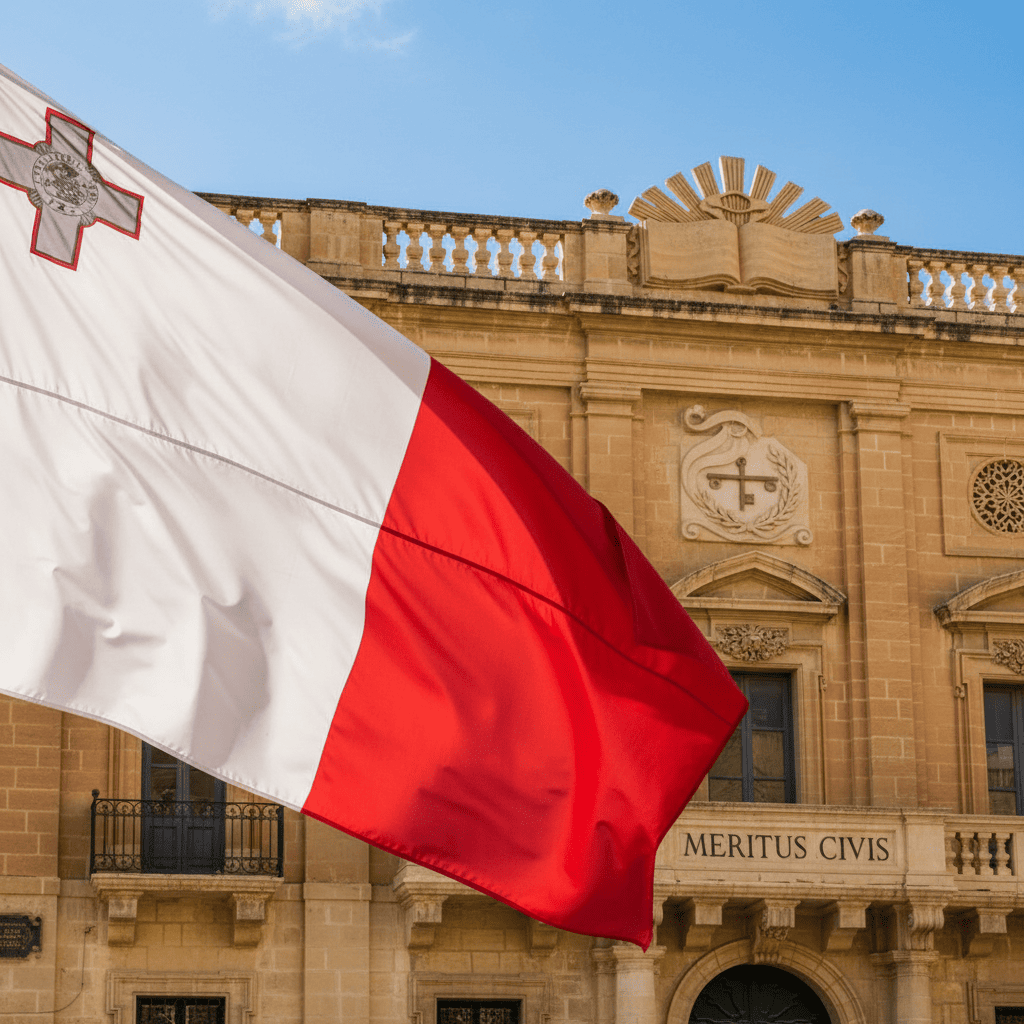
- Malta's classical citizenship-by-investment (CBI) was struck down by the EU Court of Justice in April 2025; Malta is pivoting to a citizenship-by-merit framework targeting exceptional contributors, not investors.
- Act XXI of 2025 repeals the investor route and limits grants to "exceptional services," with no fixed price tag or mandatory contributions.
- Expanded eligibility highlights philanthropy, technology, creative excellence, and job creation—each case must show a clear national-interest benefit.
- Applications move from fixed payments to tailored proposals, vetted by an expert board with final ministerial approval.
- For non‑EU remote workers, Malta's Digital Nomad Visa (Nomad Residence Permit) offers 1‑year residence (renewable up to 4 years) and 90/180‑day Schengen travel.
Malta has exited classical CBI and is reorienting toward a merit-based citizenship route that rewards philanthropists, innovators, creatives, and job creators. For talent migration strategies, this Malta citizenship by merit pivot changes eligibility, evidence, and gatekeeping overnight—and places renewed focus on the Digital Nomad Visa (DNV) for non‑EU applicants seeking residence while building a merit case.
Table of Contents
EU Court Ruling Ends Malta's 'Golden Passport' Program
In April 2025, the EU Court of Justice ruled Malta's investment‑for‑citizenship scheme unlawful and ordered its termination. The "golden passport" program had generated an estimated €1.4 billion in revenue between 2015 and 2025, underscoring its scale and political salience. Following the ruling, Malta suspended classical CBI and signaled a pivot to a merit‑based approach aligned with EU legal principles.
Malta's New Merit-Based Citizenship Law (Act XXI of 2025)
Malta's Citizenship Amendment Act (Act XXI of 2025), effective July 2025, repeals the investor route and restricts naturalization by exception to "exceptional services" or contributions—ending fixed contributions or intermediated investment paths. Officials and practitioners emphasize there is no fixed "price tag" under the new framework; each application stands or falls on the merits of demonstrable national‑interest benefit.
At-a-Glance: From Classical CBI to Citizenship by Merit
| Feature | Classical CBI (ended) | Citizenship by Merit (current) |
|---|---|---|
| Legal basis | Investment for citizenship (struck down by EU Court) | Exceptional services/contributions only (Act XXI/2025) |
| Financial model | Fixed capital contributions | No fixed price tag; case‑specific proposals |
| Eligible profiles | Primarily investors | Philanthropists, technologists, creatives, job creators |
| Decision pathway | Programmatic | Due diligence, expert board review, ministerial approval |
Expanded Eligibility
Philanthropy
The merit route explicitly accommodates high‑impact philanthropists whose track record aligns with Malta's national priorities—for example, measurable outcomes in education, healthcare, or social inclusion. Advisers should translate philanthropic impact into evidence that demonstrates sustained, non‑financial benefit to Malta's society or institutions, as contemplated by the broadened "exceptional services" scope.
What to Document
Audited donations and programs, outcome metrics, third‑party evaluations, governance roles, and long‑term commitments.
Technology
Technologists and innovators—founders, researchers, patent holders—are now directly named as potential merit candidates. The emphasis is on concrete innovation and knowledge transfer that serve Malta's economic and strategic interests, not simple capital injections.
What to Document
Patents and IP filings, commercialization milestones, grants, peer‑reviewed work, partnerships with Maltese universities or firms, and projected spillovers (training, spin‑offs).
Creative Fields and Job‑Creation
Merit eligibility continues to recognize exceptional accomplishments in arts and sports and now explicitly values job creation and enterprise development. Candidates who can establish or scale operations that generate Maltese jobs and creative outputs will be stronger contenders.
What to Document
Production portfolios, awards, economic impact studies, hiring plans, executed employment contracts in Malta, and industry endorsements.
From Fixed Payments to Tailored Proposals: Due‑Diligence
There is no standard fee or contribution under Malta citizenship by merit. Each applicant must submit a tailored proposal detailing how their achievements advance Malta's national interests; authorities will test claims through rigorous due diligence.
Advisor Checklist: Building a Merit Case
- Narrative: A clear statement of exceptional service and Malta‑relevant impact (public good, innovation, jobs).
- Evidence: Objective records (awards, patents, audited accounts, media, peer references).
- Implementation plan: Concrete activities in Malta (partnerships, hiring, projects) with timelines and KPIs.
- Compliance: Background checks and source‑of‑funds records to withstand enhanced due diligence.
For clients comparing global options, we can also map non‑investment routes and residence strategies in parallel—see our guidance on visas, residency, and investment pathways to calibrate long‑term mobility plans.
Expert Board and Ministerial Approval
Merit applications are assessed case‑by‑case by an expert board, with final decision by the competent minister. This two‑stage process emphasizes independent evaluation and political accountability rather than transactional thresholds.
Practical Implications for Advisory Teams
- Triage early: Gatekeep for credible philanthropic, technological, creative, or job‑creation credentials.
- Re‑map evidence: Prioritize third‑party validation and Malta‑specific outcomes over capital sums.
- Scenario plan: If a client cannot yet meet merit criteria, build a pathway using residence, employment, or nomad permits while developing a merit dossier—compare regional business setup and tax considerations for complementary strategies.
Nomad Residence Permit: Digital Nomad Visa — Terms
For non‑EU/EEA/Swiss remote workers, Malta's Nomad Residence Permit (often called the Digital Nomad Visa, launched in 2021) provides a parallel residence route without investment.
- Validity: Initial 1‑year residence, renewable up to three times (maximum 4 years).
- Mobility: Up to 90 days of travel in the Schengen Area within any 180‑day period.
- Core requirements: Proof of remote employment or business outside Malta, sufficient income, health insurance, and accommodation (e.g., lease) in Malta.
How to Apply (Nomad Residence Permit)
- Confirm eligibility: Non‑EU/EEA/Swiss nationality and remote work status with employer/clients outside Malta.
- Assemble documents: Employment contract or business registration, income proof, health insurance, Malta lease, passport, and background checks as required.
- Submit application: File with the responsible Maltese authority and await residence card issuance; plan travel to respect Schengen 90/180 rules.
- Renew as needed: Maintain eligibility and documentation for up to the 4‑year maximum.
For clients exploring a staged approach—reside now, build a merit case later—the DNV can anchor presence and partnerships in Malta while you develop philanthropy, innovation, or job‑creation credentials relevant to citizenship by merit.
FAQ
Has Malta Closed Its Citizenship-by-Investment Program?
Yes. In April 2025, the EU Court of Justice ruled Malta's investment‑for‑citizenship scheme unlawful and ordered its termination, leading Malta to suspend classical CBI and pivot to a merit‑based model.
What Is Malta Citizenship by Merit and Who Qualifies?
Act XXI of 2025 restricts discretionary grants to "exceptional services" rather than investment. Eligible profiles include philanthropists, technologists, creatives, athletes, and business leaders who can demonstrate national‑interest impact such as innovation or job creation.
Is There a Minimum Investment or "Price Tag" Under the Merit Route?
No. Authorities stress there is no fixed "price tag." Each application must present a tailored proposal evidencing exceptional contributions to Malta's priorities, subject to rigorous due diligence.
Who Decides Merit Applications?
Applications undergo due diligence and are reviewed by an expert board, with final approval by the responsible minister, on a case‑by‑case basis.
What Are the Terms of Malta's Digital Nomad Visa?
The Nomad Residence Permit is a 1‑year permit renewable up to three times (maximum 4 years). It permits up to 90 days' Schengen travel in any 180‑day period, and requires proof of remote employment/business, income, health insurance, and accommodation in Malta.
