
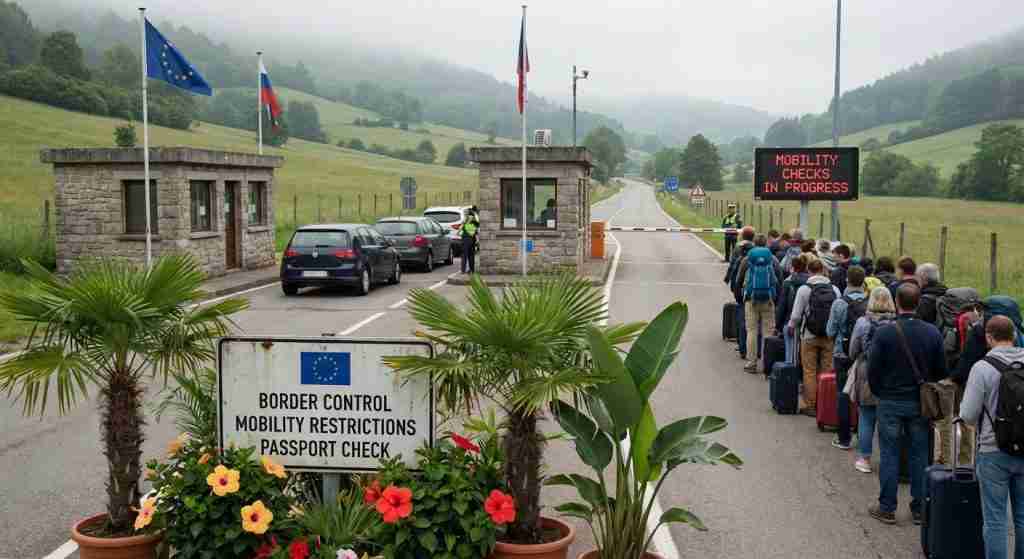
- Norway has reportedly been denying entry to holders of Caribbean citizenship-by-investment (CBI) passports since August, treating them as invalid for Schengen entry at its borders.
- The EU’s Visa Suspension Mechanism gives Brussels the power to suspend visa-free Schengen access for the five Eastern Caribbean CBI states if concerns persist.
- Applicants and advisors should not assume visa-free travel; build contingency plans (Schengen visas, alternative routes) and update engagement letters and disclaimers.
- Expect reform pressure on Caribbean CBI programs (tighter due diligence, potential pricing/timing changes) as US/EU leverage mounts.
- Monitor official EU reporting and Caribbean government responses closely to time filings and manage disclosures.
Schengen Mobility Risks Escalate for Caribbean CBI: Norway Denials and EU Suspension Powers
Schengen mobility has long been a headline benefit of Caribbean CBI. That assumption is now under stress. Reports confirm Norway has been quietly denying entry to certain Caribbean investor-passport holders, while the EU has reinforced the tools it can use to suspend visa waivers for the region’s five CBI programs. For clients and advisors, this materially changes travel-risk calculus, due diligence expectations, and disclosure obligations.
Table of Contents
- Norway’s confirmed denials: scope
- reported cases and official posture
- Norway treating Caribbean CBI passports as invalid travel documents: border practice and legal rationale
- EU Visa Suspension Mechanism explained: powers
- precedent and coverage of the five Eastern Caribbean CBI states
- International pressure and reform moves: US/EU leverage and Caribbean joint programme responses
- Immediate mobility impacts for CBI passport holders: Schengen 90‑day rules
- denials and travel‑risk consequences
Norway’s confirmed denials: scope
Industry reporting indicates that Norway has been denying entry to holders of Caribbean CBI passports since August, treating certain investor-issued travel documents from Antigua & Barbuda, Dominica, Grenada, St Kitts & Nevis, and St Lucia as unacceptable for entry at its borders. These reports were corroborated through case-level accounts and confirmation of the posture by sources cited in IMI Daily’s coverage and other media reports (IMI Daily); Village Voice News.
reported cases and official posture
At least five denied-entry or removal cases have been publicly reported in recent months, underscoring that the issue is not theoretical for travelers relying on visa-free access (Village Voice News). IMI Daily reports that Norwegian authorities have quietly adopted a stance against these investor-issued documents, leading to practical refusals at the border for impacted nationalities (IMI Daily).
Norway treating Caribbean CBI passports as invalid travel documents: border practice and legal rationale
According to IMI Daily, Norway is treating Caribbean CBI passports as invalid travel documents for entry, regardless of the underlying visa-waiver agreements that would normally enable short stays (IMI Daily). In practice, this means a traveler may arrive believing they meet the standard visa-free conditions but be refused entry on document-validity grounds at Norwegian border control.
For compliance planning, the key takeaway is that visa-free status does not guarantee admission if the receiving Schengen state does not accept the document presented. Advisors should treat Norway’s approach as a specific country-level risk that can affect itinerary planning, intermediate stops, and intra-Schengen movements, even for travelers who have not previously encountered issues (IMI Daily).
EU Visa Suspension Mechanism explained: powers
The European Commission’s seventh report under the Visa Suspension Mechanism highlights the EU’s power to react when security, migration, or public-policy concerns arise in visa-free partner countries. The mechanism permits the Commission to monitor, report, and recommend the suspension of visa-free travel, subject to the EU’s decision-making process (European Commission – Home Affairs). The Commission also summarized ongoing monitoring of partner-country compliance and the policy levers at its disposal in an accompanying communication (European Commission – Enlargement).
For Caribbean CBI applicants, the practical implication is that visa-free Schengen access is not guaranteed and can be curtailed at the EU level. The Commission’s reports serve as early-warning signals for potential policy changes and help advisors time applications and client disclosures (European Commission – Home Affairs).
precedent and coverage of the five Eastern Caribbean CBI states
The Commission’s seventh Visa Suspension report identifies and reviews the five Eastern Caribbean CBI states within its monitoring scope, acknowledging specific concerns linked to investor-citizenship schemes and the integrity of visa-free travel frameworks (European Commission – Home Affairs). The Commission’s parallel communication confirms the continued scrutiny of partner countries’ compliance with the conditions underpinning visa-free travel, which directly includes the Caribbean CBI jurisdictions (European Commission – Enlargement).
International pressure and reform moves: US/EU leverage and Caribbean joint programme responses
Geopolitical and security concerns have intensified US and EU pressure on Caribbean CBI programs. Reporting indicates the five Eastern Caribbean states have drafted joint reform measures—such as tighter vetting or harmonized standards—to safeguard their visa-waiver relationships in response to explicit concerns from Washington and Brussels (Le Monde). Advisors should anticipate potential changes to due diligence thresholds, processing times, and pricing as governments seek to demonstrate compliance and risk mitigation to international partners (Le Monde).
Immediate mobility impacts for CBI passport holders: Schengen 90‑day rules
Under current arrangements, eligible Caribbean nationals can normally enter the Schengen area visa-free for up to 90 days in any 180-day period, a rule that shapes business and leisure travel plans (EEAS). If visa-free status is suspended at EU level, these travelers would need to obtain short-stay visas before traveling, adding lead time, cost, and uncertainty to itineraries (European Commission – Home Affairs).
Separately, Norway’s current approach means even visa-free eligible travelers risk refusal if Norwegian border officers do not accept the specific investor-issued passport presented. Clients should be advised that visa-free eligibility does not override a receiving state’s document-acceptance policies, and that Norway’s practice can affect Schengen-bound trips that route through or terminate in Norway (IMI Daily).
denials and travel‑risk consequences
For investors and their advisors, the immediate priority is to de-risk mobility while maintaining transparent client communications. Consider the following plan:
| Risk | Actionable response |
|---|---|
| Norway entry denials for Caribbean CBI passports | Re-route away from Norway; obtain Schengen C visas where feasible; carry secondary travel documents if available (IMI Daily). |
| EU-level Schengen suspension risk | Monitor Commission reports; prepare clients for visa applications and longer lead times if suspension is announced (European Commission – Home Affairs). |
| Program reforms affecting timelines and pricing | Budget for stricter due diligence, possible fee adjustments, and documentation updates as joint reforms advance (Le Monde). |
| Client expectations and reputational exposure | Update engagement letters, travel-risk disclaimers, and disclosure schedules; maintain contemporaneous advice records. |
Contingency mobility checklist for advisors
- Screen itineraries for Norway touchpoints; if present, obtain a Schengen visa in advance or re-route (IMI Daily).
- Build a default “Schengen visa first” protocol for high-risk profiles, even while visa waiver formally applies (European Commission – Home Affairs).
- Prepare alternative mobility options (residency in safe jurisdictions, multi-passport strategies, or workarounds via different carriers and hubs). See our guidance on residency planning and citizenship strategies.
- Align client tax and business structuring with evolving travel realities. Our teams support visa, business registration, and investment planning to keep cross-border operations resilient.
Advisors should also track reported denials and governmental statements to anticipate when the risk picture changes. Village Voice News has documented several denied-entry cases, illustrating the immediate need for itinerary screening and backup documentation (Village Voice News).
Bottom line: while the Schengen visa waiver still applies as a rule for these Caribbean passports, the combination of Norway’s border practice and the EU’s suspension powers means clients cannot plan travel on autopilot. Proactive screening, early visa applications, and clear client communications are now standard of care for Caribbean CBI mobility.
Conclusion
Schengen suspension risk for Caribbean CBI is no longer hypothetical. With Norway’s entry denials on document-validity grounds and the EU’s Visa Suspension Mechanism actively scrutinizing the five Eastern Caribbean programs, advisors must recalibrate assumptions on EU mobility and due diligence. Build contingency mobility plans, update engagement letters and disclaimers, and monitor official EU reporting and Caribbean responses to time filings and disclosures (IMI Daily); (European Commission – Home Affairs); (EEAS). For tailored mobility strategies that integrate visas, residency, and investment planning, contact our team.
