
At a glance
- Timeline edge: European innovation and startup visas typically deliver residence cards within two to eight months — far faster than property-based golden visas that can stretch beyond a year.
- Golden visa rollback: Spain scrapped its €500,000 property route in April 2025. Portugal closed real estate. Greece raised thresholds to €400,000–€800,000. Hungary launched a new guest-investor visa in July 2024.
- Innovation programs named: France Tech Visa, Netherlands Startup Visa, Italy Startup Visa, Estonia Startup Visa, Lithuania Startup Visa, Ireland STEP, and UK Innovator Founder — all accept founders with dependants.
- Capital advantage: Innovation routes require operating funds and a business plan, not a six- or seven-figure property purchase — keeping capital liquid and avoiding housing-market politics.
- Armenia option: Armenia offers business-based residency for entrepreneurs within two to four months, with a 1% turnover tax for qualifying IT companies and no minimum-stay requirement.
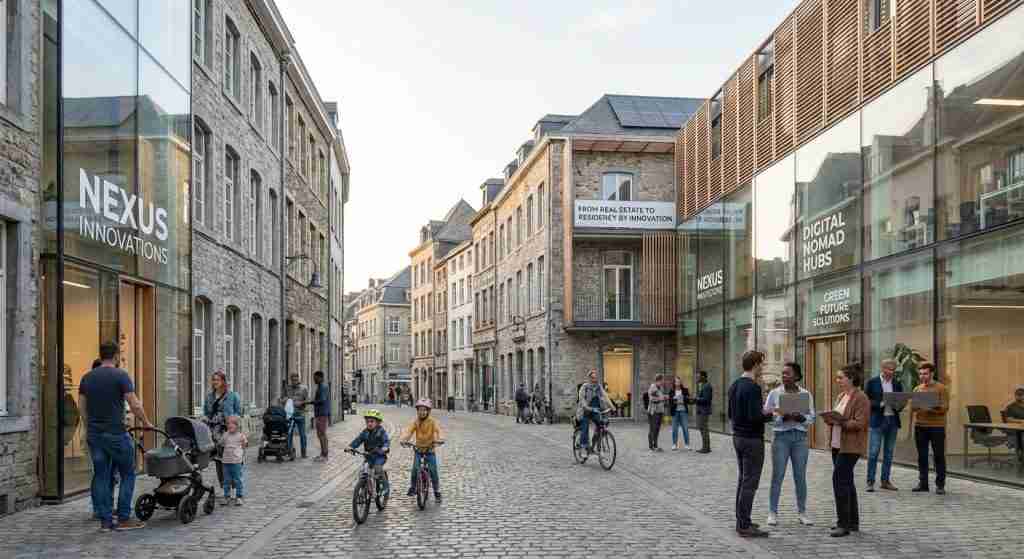
Families want mobility, not balance sheets stuffed with illiquid property. Across Europe, innovation-led residency programs are stepping into the space long dominated by real-estate golden visas, promising faster processing timelines and fewer political risks. If speed, liquidity, and optionality matter more than owning bricks, these fast-track residency routes are compelling golden visa alternatives.
This guide names the specific programs, breaks down fees and timelines country by country, and explains why innovation residency in Europe now outperforms legacy property schemes for globally mobile founders and their families.
Contents
- Why Innovation Residency Is Outpacing Legacy Golden Visas
- Golden Visa Status in 2026: Spain, Portugal, Greece, and Beyond
- European Innovation and Startup Visa Programs Compared
- Fees and Timelines at a Glance
- Investment and Liquidity Trade-Offs
- Family Mobility Without Illiquid Assets
- Evidence That Wins: Proving Innovation Value
- How to Apply for Innovation-Led Residency in Europe
- Armenia: A Fast, Low-Cost Alternative for Entrepreneurs
- Strategic Advice: Recalibrate Your Roadmap
- Frequently Asked Questions
Why innovation residency is outpacing legacy golden visas
European policy is pivoting away from real-estate-centric visas. Spain officially scrapped its €500,000 property pathway through Organic Law 1/2025, effective 3 April 2025, repealing the golden visa provisions that had been in place since 2013. Portugal closed its real estate route and is redirecting resources toward affordability. Greece has sharply raised thresholds. The trend is unmistakable: governments now favor visa channels that attract founders and skilled talent over passive real-estate capital.
The macroeconomic case for property-based golden visas has always been thin. Analysis from Reuters Breakingviews found that golden visa GDP impacts were less than 0.1% in Spain (2014–2019) and about 0.4% in Portugal (2013–2019) — marginal figures that failed to justify the political controversy. Meanwhile, research from Funcas found that immigrant workers contributed roughly half of Spain’s GDP growth in 2023, with 64% of newly created jobs going to foreign-born workers. Governments are drawing the obvious conclusion: innovation-driven migration delivers more economic value than property purchases.
At the EU level, the Court of Justice ruled in April 2025 (Case C-181/23, Commission v. Malta) that investor-citizenship schemes are incompatible with EU law. While residency-by-investment is not categorically banned, the European Commission’s 8th Report (December 2025) signals growing pressure on all investment-migration programs that lack genuine economic contribution requirements.
Golden visa status in 2026: Spain, Portugal, Greece, and beyond
Spain: The property-based golden visa was eliminated by Organic Law 1/2025, effective 3 April 2025. The €500,000 real estate route is no longer available. Existing permit holders can renew, but no new applications are accepted.
Portugal: The real estate route (both direct and indirect) is closed. Remaining golden visa pathways include: €500,000 in non-real-estate fund units, creation of ten or more jobs, €500,000 in scientific or technological research, €250,000 in cultural or artistic support, and €500,000 in company capitalisation with job-creation conditions.
Greece: A tiered structure under Law 5100/2024 now applies. High-demand areas (Athens, Thessaloniki, Mykonos, Santorini, and islands with populations above 3,100) require €800,000. Other regions require €400,000. Commercial-to-residential conversions and historic building restorations qualify at €250,000.
Other active property-linked routes: Cyprus offers a residency route with a €300,000 real estate investment. Latvia maintains a real-estate-linked residence option. Malta continues its residence programme. Hungary launched a guest-investor golden visa in July 2024, adding a new option to the European landscape.
European innovation and startup visa programs compared
Unlike golden visas that hinge on a large capital transfer, innovation routes evaluate the founder and the business plan. Here are the major programs available in 2026, with verified fees and timelines.
France: Tech Visa (Talent Passport)
France’s Talent Passport for tech founders grants a multi-year residence card. The visa fee is approximately €99, with a permit fee of €350 (from 1 May 2026, increased from €225). End-to-end processing typically takes two to four months. The four-year carte de séjour (VLS-TS long-stay visa) covers the founder and allows spouse and children as dependants.
Netherlands: Startup Visa
The Netherlands issues a one-year residence permit for startup founders who secure endorsement from a recognised facilitator (incubator or accelerator). The IND processing fee is €423, with facilitator fees typically ranging from €4,000 to €7,000. The IND has a 90-day processing window, making the realistic end-to-end timeline three to five months. US nationals may also consider the Dutch-American Friendship Treaty (DAFT) route with a €4,500 investment. Dependants are included.
Italy: Startup Visa
Italy’s startup visa targets founders of innovative startups with a minimum capital of €50,000. The evaluation committee typically reviews applications within 30 days. The visa fee is approximately €116. End-to-end processing runs two to four months. The initial visa is valid for one year, renewable to two years. Dependants qualify through family reunification.
Estonia: Startup Visa
Estonia’s Startup Committee reviews applications within approximately ten business days. The D-visa fee is €120, and the temporary residence permit fee is €225 or more. The 18-month initial TRP, combined with Estonia’s advanced digital infrastructure (e-Residency for company management), makes this a popular choice for tech founders. End-to-end processing takes roughly 1.5 to three months. Dependants are included.
Lithuania: Startup Visa
Lithuania’s Startup Committee reviews applications within seven to fifteen working days. End-to-end processing typically runs two to four months. The program is designed for early-stage founders with an innovative and scalable business concept.
Ireland: Startup Entrepreneur Programme (STEP)
Ireland’s STEP requires a minimum of €50,000 in funding and an innovative business idea. Processing typically takes three to six months. The programme is aimed at non-EEA founders launching high-potential startups in Ireland.
United Kingdom: Innovator Founder Visa
The UK’s Innovator Founder visa has no formal minimum investment requirement. The application fee is £1,357 (from 8 April 2026, up from £1,274), plus the Immigration Health Surcharge of approximately £1,035 per year. Endorsement from an approved body costs around £1,000. Once endorsed, processing typically takes one to two months. The visa leads to settlement (permanent residence) after three years. Dependants are included.
Fees and timelines at a glance
| Programme | Government fees | Min. investment / capital | End-to-end timeline | Dependants |
|---|---|---|---|---|
| France Tech Visa | ~€99 visa + €350 permit | No formal minimum | 2–4 months | Yes |
| Netherlands Startup | €423 IND fee | No formal minimum (facilitator fees €4–7k) | 3–5 months | Yes |
| Italy Startup | ~€116 visa | €50,000 capital | 2–4 months | Via family reunification |
| Estonia Startup | €120 D-visa + €225+ TRP | No formal minimum | 1.5–3 months | Yes |
| Lithuania Startup | Varies | No formal minimum | 2–4 months | Yes |
| Ireland STEP | Varies | €50,000 funding | 3–6 months | Yes |
| UK Innovator Founder | £1,357 + ~£1,035/yr IHS + £1,000 endorsement | No formal minimum | 1–2 months (post-endorsement) | Yes |
| Armenia (business-based) | AMD 105,300 (~$267) | No formal minimum (currently) | 2–4 months | Yes |
Government fees shown. Professional, translation, and relocation costs are additional. Timelines reflect typical cases and may vary by individual circumstances. Fees current as of April 2026.
Investment and liquidity trade-offs
For many families, the decision pivots on liquidity, not just price. Property-based golden visas require capital commitments starting at €250,000 (Greece, conversion projects) and reaching €800,000 in prime locations — locking wealth into illiquid assets plus transaction costs, taxes, and management fees. Innovation programs emphasise operating funds and a viable business plan rather than property purchases, keeping capital working and reducing exposure to housing-market politics and price swings.
| Factor | Innovation residency | Legacy golden visa |
|---|---|---|
| Core requirement | Innovative business plan, founder profile, sufficient resources | Property purchase or large capital investment (€250k–€800k+) |
| Asset liquidity | High — funds stay liquid and operational | Low — illiquid real estate plus transaction costs |
| Processing timeline | Typically 2–6 months end-to-end | Often 6–18 months (property search, closing, permits) |
| Political risk | Lower — governments actively promoting innovation migration | Higher — programs being scrapped or restricted across Europe |
| Family inclusion | Spouse and children included as dependants | Spouse and children typically eligible |
| Citizenship path | Varies: UK 3 years to settlement; most EU 5–10 years to naturalisation | Varies: typically 5–10 years continuous residence |
Family mobility without illiquid assets
Startup and entrepreneur visas grant residency to founders and typically allow spouse and children to accompany or join as dependants. Every programme listed above — France, Netherlands, Italy, Estonia, Lithuania, Ireland, and the UK — includes a dependant pathway. This delivers family mobility without concentrating wealth in a single property asset and avoids the volatility and political backlash that have increasingly targeted property-linked visas.
For families considering long-term options, Armenia’s citizenship programme allows naturalisation after three years of residency — one of the shortest paths to a second passport in the region.
Evidence that wins: proving innovation value
Innovation routes hinge on the merit of the business and the founder. While exact requirements vary by country, endorsing bodies and evaluation committees generally assess the same core elements. Most programmes require an endorsement from an approved incubator, accelerator, or government body — this is mandatory for the Netherlands (recognised facilitator), UK (approved endorsing body), and Estonia (Startup Committee), and effectively required for Italy’s evaluation committee approval.
In our practice, the checklist we use with clients typically includes: a business plan emphasising novelty or technology, target markets, and growth pathways; proof of sufficient operating funds with a clean source-of-funds trail; founder CVs and track record (exits, patents, sector expertise); early traction such as pilot users, letters of intent, or contracts; IP position or defensibility where applicable; and a compliance plan covering tax footprint, employment obligations, and regulatory requirements.
For broader planning around structure and compliance, review our guides on business registration, taxes in Armenia, and long-term residency strategy.
How to apply for innovation-led residency in Europe
Step 1 — Programme selection and pre-screening. Choose a jurisdiction aligned with your sector and family goals. Confirm that founder and dependant criteria are met and that processing timelines fit your plan. If you need a European base, consider France or Estonia for speed. If settlement in three years matters, the UK Innovator Founder is the fastest path to permanent residence.
Step 2 — Endorsement and business plan. Secure endorsement from the required body (facilitator, incubator, or evaluation committee). Prepare an innovation-focused business plan, proofs of sufficient funds, and personal documentation as outlined by programme guidance.
Step 3 — Filing and review. Submit the application for the founder and, where applicable, dependants. Respond promptly to any requests for additional information. Processing times range from 30 days (Italy committee review) to 90 days (Netherlands IND).
Step 4 — Approval and entry. On approval, secure visas as needed, enter the country, and complete biometrics and registration formalities for residence cards.
Step 5 — Operational setup. Incorporate the company, register for tax and social security, open bank accounts, and begin hiring according to the plan.
Step 6 — Family onboarding. Enrol spouse and children for residency and services (schooling, healthcare) per programme rules.
Armenia: a fast, low-cost alternative for entrepreneurs
While European innovation visas are an excellent option for founders targeting EU markets, Armenia offers a compelling alternative — particularly for tech founders, remote workers, and entrepreneurs who want fast residency with minimal bureaucracy and favourable tax treatment.
Business-based residency in two to four months. Foreign entrepreneurs can register a private enterprise (PE) or LLC in two to three days and apply for a temporary residence permit based on business activity. The current government fee is AMD 105,300 (~$267). There is no minimum-stay requirement, and the permit grants the right to work, study, and sponsor family members.
Favourable tax incentives for tech companies. Under Armenian tax incentive legislation, qualifying IT and software companies registered in the High-Tech Registry pay just 1% turnover tax on gross revenue (for annual turnover under AMD 115 million, approximately $291,000). Additional incentives include a 60% personal income tax reimbursement for new tech hires and a reduced 10% PIT rate on R&D staff salaries (versus the standard 20%). These incentives run through 2031.
Upcoming changes from November 2026. New legislation taking effect 1 November 2026 introduces clearer thresholds: LLC owners will need AMD 2,000,000 (~$5,063) in charter capital, while PEs will need an AMD 1,000,000 (~$2,532) bank balance or equivalent turnover. The system will move to a digital platform, and fees will increase to AMD 150,000 (~$380) for temporary permits and AMD 250,000 (~$633) for permanent permits. For more details, see our guides on business registration and residence by investment.
Path to citizenship. Armenian citizenship is available after three years of residency — faster than most European programmes. Combined with zero capital gains tax on securities, no inheritance tax, and over 50 double tax treaties, Armenia offers a strong total package for globally mobile entrepreneurs.
Strategic advice: recalibrate your roadmap
Given reform momentum across Europe, families and their advisors should shift default roadmaps toward innovation residency programmes that balance speed, liquidity, and policy durability. In our practice, that means prioritising processing timelines and liquidity over property exposure, building robust innovation dossiers early (business plan, traction, founder credentials), sequencing filings to move families within a two-to-six-month window where feasible, and planning for multi-jurisdiction tax and corporate structuring from day one.
If long-term naturalisation is a goal, integrate residency days, tax presence, and family timelines into a single plan from the outset. Consider whether a European innovation visa, Armenia’s business-based residency, or a combination of both best serves your mobility and financial objectives.
For families exploring options beyond Europe, see our guides on digital nomad visas, work permits, and banking in Armenia.
