
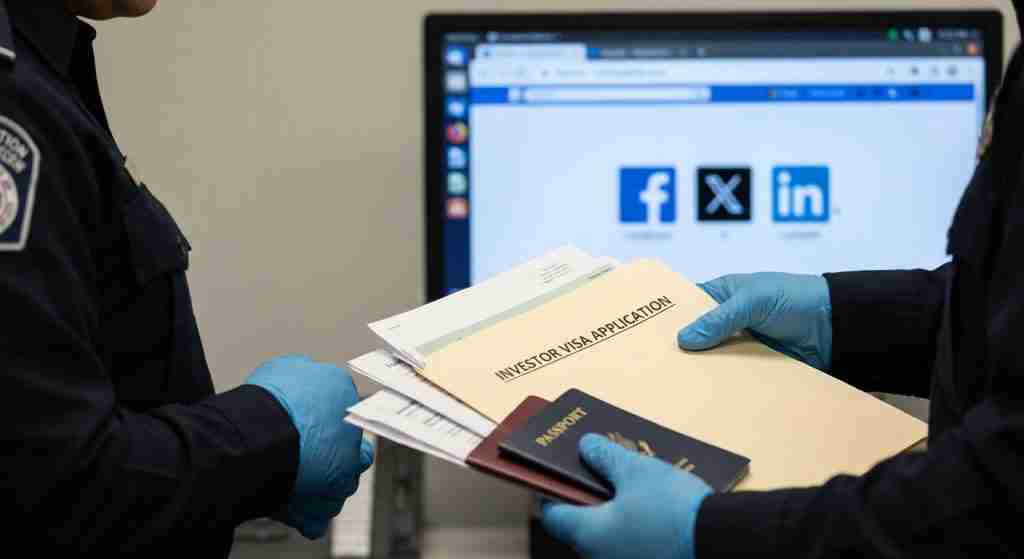
- U.S. authorities have proposed collecting five years of social media history from Visa Waiver Program travelers and expanding reviews to applicants' broader online presence, signaling KYC/AML-style vetting for mobility programs worldwide.
- The U.S. also launched a donation-based "Gold Card" route requiring $1 million per applicant on Dec. 11, reinforcing expectations of intensive due diligence for high‑net‑worth individuals.
- EB‑5 policy tightening in 2024 shows a broader shift toward integrity safeguards and investor diligence comparable to AML controls.
- Scale matters: expanded social‑media screening could touch 3.6 million applicants annually and spans travelers from 42 Visa Waiver countries.
- Action now: update privacy notices, evidence checklists, and data‑retention policies; pre‑brief clients on online‑activity risks; coordinate with data‑protection teams for cross‑border compliance.
Investor migration is entering a new era of digital scrutiny. With U.S. agencies proposing five years of social media history for visa‑waiver travelers and expanding online‑footprint reviews, investor due diligence is starting to resemble bank‑grade KYC and AML screening. This shift has immediate implications for how advisers prepare clients and manage data.
Table of Contents
- Snapshot: New U.S. Digital‑Vetting Moves
- The $1 Million "Gold Card": Signals for Investor Programs
- AML/KYC‑Style Upgrade in Investor‑Visa Oversight
- Scale and Operational Impact
- Visa Waiver Scope and Gold Card Demand
- Privacy
- Data Retention and Cross‑Border Compliance Risks
- What Armenia‑Based Advisers and Applicants Should Do Now
Snapshot: New U.S. Digital‑Vetting Moves
U.S. immigration authorities have proposed requiring Visa Waiver Program (VWP) travelers to provide five years of social media history, including handles, as part of pre‑travel screening. The proposal, reported Dec. 11, would significantly expand visibility on applicants' online activity and add to the evidentiary record examined in admissibility decisions.
In parallel, the State Department's approach to vetting has evolved to encompass a visa applicant's broader online presence—not only limited social media fields—reflecting a more holistic digital‑footprint review by consular officers. Together, these measures point to an environment where investor due diligence increasingly crosses into the digital realm, closer to KYC norms in financial services.
The $1 Million 'Gold Card': What Its Launch Signals for Investor Migration Programs
On Dec. 11, the United States launched a donation‑based "Gold Card" pathway requiring a $1 million payment per applicant, marketed as a route to expedited permanent residency processing. Early reporting indicated the program's debut the same day the social‑media screening proposal made headlines, underscoring a dual trend: monetized investor routes paired with heightened integrity screening.
For investor‑migration advisers, the signal is clear. Where programs handle significant capital inflows or direct contributions to government funds, authorities will likely adopt AML‑style checks that probe source of funds, beneficial ownership, sanctions exposure—and, increasingly, online reputational risk markers.
Evidence of an AML/KYC‑Style Upgrade in Investor‑Visa Oversight
U.S. EB‑5 policy changes in 2024 tightened oversight of entities and clarified due‑diligence expectations, signaling a sustained integrity push in investor programs. The updates, reflected in USCIS policy guidance, emphasize program compliance and investor protections—hallmarks of an AML/KYC operating model applied to migration benefits.
Combined with expanded social‑media checks (proposal) and broader online‑presence reviews (policy posture), this amounts to a layered risk‑based approach: identity corroboration, financial traceability, and digital‑footprint analysis. Even where rules differ by jurisdiction, the compliance direction of travel is consistent.
Scale and Operational Impact: Millions Affected
Scale is the story. The Department of Homeland Security has estimated that expanded social‑media screening could affect roughly 3.6 million immigration applicants annually—volumes that demand new triage, analytics, and retention protocols in government systems and that will reverberate across private advisers' workflows.
With such numbers, investors should expect longer document lists, more follow‑up questions, and closer scrutiny of inconsistencies across forms, banking records, public filings, and online content. Advisers will need to align their client onboarding and evidence gathering with these operational realities.
Visa Waiver Program Scope and Gold Card Demand
The Visa Waiver Program encompasses travelers from 42 participating countries, underscoring how widely a social‑media reporting requirement would reach if implemented. On the investor side, initial figures suggest strong interest in the new "Gold Card," with reports of 10,000 pre‑registered applicants around launch—an indicator that high‑net‑worth demand remains robust despite intensifying vetting.
At-a-Glance: Scale and Demand
| Measure | Figure |
|---|---|
| VWP participating countries | 42 |
| Applicants impacted by expanded social‑media checks | ~3.6 million per year |
| "Gold Card" pre‑registrations at launch | 10,000 |
| "Gold Card" donation | $1,000,000 per applicant |
Privacy
Collecting five years of social media history raises clear privacy considerations for travelers and investors alike. Authorities may require disclosure of platform identifiers, potentially linking public and semi‑public activity to immigration adjudications. Likewise, broader reviews of online presence increase the amount of personal data processed by governments and, indirectly, by advisers who help clients prepare.
Investors should expect more intrusive document requests, including historical posts or explanations for online content that conflicts with application narratives. Proactive curation and consistency checks—akin to financial statement reconciliations—are quickly becoming part of investor due diligence.
Data‑Retention and Cross‑Border Compliance Risks for Advisers and Governments
Expanded screening scales up data collection, which in turn elevates data‑protection risk. Advisers handling social handles, screenshots, or analytics output need clear retention periods, lawful bases for processing, and secure cross‑border transfer mechanisms if files are shared with foreign counsel or authorities. Government volume—millions of applicants per year for social‑media checks alone—compounds the challenge of storage, access controls, and timely deletion.
Practically, this calls for coordination between immigration teams and data‑protection officers to align consent wording, data‑minimization practices, and incident response plans. Where investor migration intersects with corporate structures, KYC artifacts (e.g., UBO charts, bank letters) should be segregated and encrypted, with audit trails for any third‑country transfers.
What Armenia‑Based Advisers and Wealthy Armenian Applicants Should Do Now
Armenia‑based investor‑migration advisers and HNW clients are not immune to these shifts. Even where Armenian programs or regional destinations have different rules, the direction is toward enhanced KYC/AML checks and digital‑footprint screening. Concrete steps:
Immediate Actions
- Update privacy notices to cover social‑media identifiers, online‑presence reviews, and cross‑border data sharing (purpose, legal basis, retention).
- Revise evidence checklists: include five‑year social handles, platform lists, and a brief client declaration on aliases/usernames; reconcile public posts with application narratives.
- Pre‑brief clients on online‑activity risks: political content, sanctions‑exposure discussions, or misaligned employment claims can trigger inquiries.
- Coordinate with data‑protection teams on retention schedules tied to case closures and appeal windows; document deletion protocols.
- Adopt a risk‑based review: high‑profile or politically exposed clients warrant deeper open‑source checks and adverse‑media sweeps before filing.
For clients weighing regional or global options, align mobility planning with Armenia‑specific tax, residence, and investment considerations:
- Residency planning and documentation: see Armenia's temporary and permanent residence permits.
- Citizenship strategies tied to investment or ancestry: overview at Citizenship.
- Corporate structuring and UBO clarity for source‑of‑funds: Business registration and tax resources.
- Portfolio diversification and compliant capital pathways: Invest in Armenia and related real estate guidance.
- Program eligibility and travel logistics for third‑country filings: Visas.
Adviser Action Checklist
| Action | Owner | When |
|---|---|---|
| Update privacy notice (social handles, online‑presence review, retention) | Firm DPO + Immigration Lead | Before next onboarding cycle |
| Revise client checklist (5‑year handles; alias disclosure) | Case Manager | Immediately |
| Run pre‑file adverse‑media and OSINT sweep | Compliance Analyst | 2–4 weeks pre‑submission |
| Set data‑retention and deletion schedule by case milestone | DPO | Immediately |
| Train staff on documenting online‑content inconsistencies | Training Lead | This quarter |
Preparing Clients: A Simple Sequence
- Inventory digital identifiers: list all social handles used in the last five years (major platforms and any relevant forums).
- Reconcile narratives: ensure employment, travel, and affiliations match what appears online.
- Collect KYC artifacts: UBO charts, bank letters, and proof of source of funds for anticipated capital transfers.
- Address red flags: draft concise explanations for any adverse or ambiguous online content.
- Secure data transit: share evidence through encrypted channels and limit internal access on a need‑to‑know basis.
Bottom line: As social media screening matures, investor due diligence will look and feel more like financial KYC and AML checks. Building these processes into your standard operating procedures will reduce surprises and speed adjudications.
Considering an investor migration strategy with robust compliance support? Our licensed attorneys can help structure your case and evidence plan across jurisdictions.
Get in TouchFAQ
Will Travelers Really Have to Provide Five Years of Social Media History?
U.S. officials have proposed that Visa Waiver Program travelers submit five years of social media identifiers as part of pre‑travel screening. This proposal, reported Dec. 11, would materially expand digital vetting if adopted.
Does Consular Vetting Cover an Applicant's Full Online Presence?
Reporting indicates the State Department's policy now contemplates reviews of an applicant's broader online presence, beyond specific social media fields, aligning with a more holistic approach to digital screening.
What Is the New "Gold Card" Investor Pathway and What Does It Cost?
The U.S. launched a donation‑based "Gold Card" route on Dec. 11 requiring a $1,000,000 payment per applicant for expedited processing of permanent residency. Early reports also showed strong initial interest.
How Many People Could Be Affected by Expanded Social‑Media Screening?
DHS estimates suggest roughly 3.6 million immigration applicants each year could be impacted by the expanded checks, highlighting operational and data‑retention challenges.
What Should Armenian HNW Applicants Do to Prepare?
Compile five‑year social handles, reconcile online narratives with filings, organize source‑of‑funds evidence, and work with advisers to set data‑retention and deletion timelines. For Armenia‑specific planning, see residence permits, citizenship, and investment resources.
