
At a glance
- Belize’s Cabinet approved a US$500,000 commercial investment route to permanent residency on December 11, 2025. As of April 2026, the enabling immigration bill has not been confirmed as passed by the National Assembly.
- Target sectors include port modernization (now a US$410–450 million project), tourism, renewable energy, sustainable agriculture, and digital services, coordinated through IPCU and BELTRAIDE.
- Investors should prepare now: build screening criteria, due diligence checklists, and governance controls so they can file quickly once the legislation is enacted.
- Belize uses a territorial tax system — only Belize-sourced income is taxed. There is no capital gains tax for individuals, and the flat personal income tax rate is 25%.
Belize’s proposed investor permanent residency pathway ties eligibility to “commercial investments” aligned with national priorities — notably ports, tourism, and export-led projects. For investors planning a Belize investment migration strategy, preparation now — before legislation is enacted — can secure first-mover advantages once the US$500,000 residency route goes live.
This guide covers the legal workstreams and risk controls investors need to structure qualifying commercial investments for Belize permanent residency, including updated legislative status, tax implications, and a practical readiness framework.
Table of contents
- Program overview and legislative status (April 2026 update)
- National priorities and target projects
- Eligibility criteria and core documentation
- Medical and personal requirements
- Role of IPCU and BELTRAIDE
- Tax implications for PR holders
- Investor PR vs. Qualified Retirement Programme (QRP)
- How to apply and prepare
- Screening, governance, and risk controls
- Readiness briefing table
- Frequently asked questions
Program overview and legislative status (April 2026 update)
Belize’s Cabinet approved the concept of a direct permanent residency route for foreign investors who commit at least US$500,000 to approved commercial investments on December 11, 2025. The proposal is designed as a fast-track, bypassing the usual one-year continuous residency requirement that traditionally applies to permanent residency applications.
Cabinet approval was only the first step. An immigration bill must pass both Houses of the National Assembly (House of Representatives and Senate) and receive the Governor-General’s assent before the pathway becomes operational. As of April 2026, publicly available records from multiple deep-research sources have not confirmed that the enabling bill has been enacted into law. No Act number, enactment date, or commencement date has been documented. The initiative continues to be described in government and media sources as “proposed,” “pending enactment,” or “expected to launch in 2026 if passed.”
The ruling party holds a supermajority in the House of Representatives (26 of 31 seats), which means the bill could pass quickly once formally introduced. The program is calibrated to Belize’s small, open economy — with an estimated US$3.52 billion in nominal GDP (2024) and a population of approximately 416,656 — aimed at attracting “productive” capital and experienced operators rather than passive investment.
For more context on how Belize compares with other fast-track residency options, see our legal readiness checklist for the Belize $500k investor PR.
National priorities and target projects
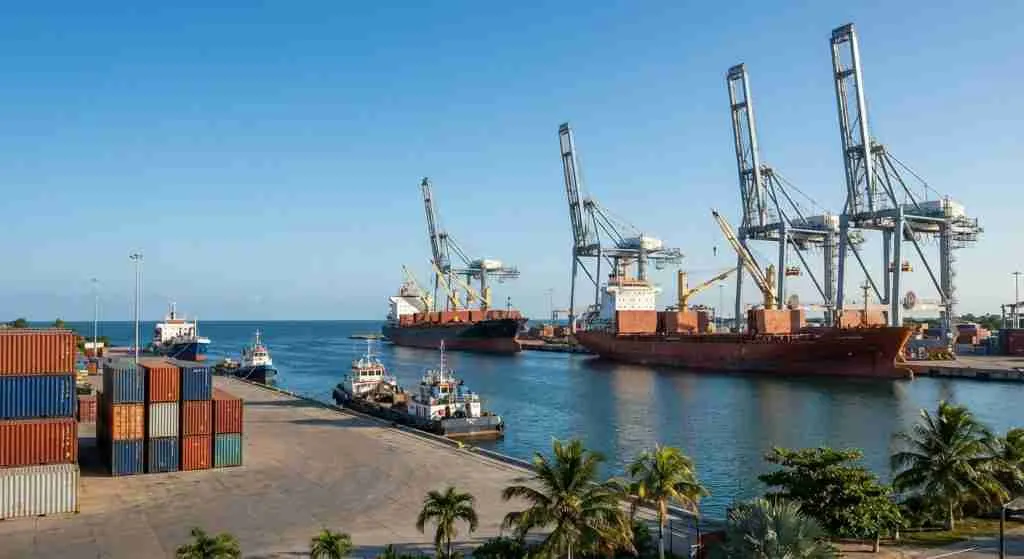
Policy signals indicate that “commercial investments” should support national priorities across several sectors. The government has outlined plans for a major modernization of the Port of Belize — a dual-use cruise and bulk cargo facility — with the budget now scaled to approximately US$410–450 million according to statements by the Prime Minister, significantly larger than the earlier US$140 million figure. The port project is currently in advanced planning and partner-selection (pre-construction), with the government expected to issue a call for interest soon. SSA Marine (linked to BlackRock) and Global Ports Holding (Turkey) have been reported as interested bidders, though no contractor has been confirmed.
Other major infrastructure projects that may align with the investor PR pathway include the San Pedro and Placencia airport upgrades, Port Coral cruise port (approximately US$67 million), the San Pedro hospital, and road infrastructure programs (BZ$528 million in capital spending).
Translating this into deal-screening terms:
Ports and logistics: investments linked to cargo throughput, cruise capacity, warehousing, or ancillary services that de-bottleneck trade.
Tourism: eco-lodges, boutique hotels, marina development, hospitality assets, or vertically integrated platforms with job-creation plans.
Exports and agriculture: agri-processing, fisheries value-add, light manufacturing, cold-chain infrastructure, or digital export services with clear market access pathways.
Renewable energy: solar and wind generation, microgrids, and storage solutions.
Digital services: nearshore BPO, data centers, and tech-enabled exports.
Belize’s Designated Processing Areas (DPA) program also offers incentives for investment in aquaculture, data processing, and business parks — sectors that may overlap with the investor PR qualifying criteria once the legislation is finalized.
Eligibility criteria and core documentation
While implementing regulations are pending, publicly available government communications point to the following core elements:
- Minimum investment: At least US$500,000 committed to an approved commercial investment in productive sectors.
- Business plan: A detailed plan demonstrating productivity, operational capacity, and economic contribution (jobs, exports, foreign exchange), coordinated through government channels.
- Proof and source of funds: Verifiable evidence that the capital is lawfully obtained and available for deployment — including bank statements, tax returns, sale agreements, and audited financials.
- Inter-ministerial approvals via IPCU: Regulatory coordination and sector-specific approvals routed through the Investment Policy & Compliance Unit, with guidance from BELTRAIDE.
- Family inclusion: Details on dependent inclusion (spouse, children) have not yet been published. Competitor programs in the Caribbean typically allow family members to be included, though age thresholds and documentation requirements vary. Investors should monitor for implementing regulations that specify family eligibility.
Because this is an immigration-by-investment pathway, applicants should expect to assemble typical immigration and compliance files (identity, civil status, background, and financial integrity documents), alongside project materials. The proposal’s fast-track nature — bypassing the standard one-year residency — suggests emphasis on early completeness and verifiability.
Medical and personal requirements
Standard Belize residency applications require medical documentation. Based on existing Immigration Department procedures, applicants should prepare for the following tests: HIV, VDRL (syphilis screening), and tuberculosis (TB) testing. Passport copying rules require certified copies of every page, including blank pages.
Additional personal documents typically required include recent passport-sized photographs (per Belize Immigration specifications), police clearance certificates from each country of residence, birth certificates, and civil status documentation. Common-law partnerships may be recognized in Belize, but recognition varies by context — investors should verify whether common-law partners qualify as dependents under the investor PR pathway once regulations are published.
Role of IPCU and BELTRAIDE
The Investment Policy & Compliance Unit (IPCU), established in 2005 under the Ministry of National Development, Investment & Culture, is expected to act as a centralized gateway to align projects with sector criteria, coordinate inter-ministerial approvals, and shepherd filings through the bureaucracy. Its mandate covers investment policy, project implementation, and compliance with incentive regulations (including EPZs, gaming, lotteries, and fiscal incentives).
BelizeINVEST, a unit of BELTRAIDE, provides end-to-end investment support and promotes the Belize Investment Portfolio with pre-packaged projects. While BELTRAIDE’s facilitation role is well-documented, the formal decision authority for PR approval sits with government decision-makers (relevant ministers and Cabinet), not with BELTRAIDE itself.
No official IPCU regulations, application handbooks, or forms have been published for the $500k investor PR track as of April 2026. Investors should monitor the IPCU and Immigration Department websites for updates. All investments are subject to government vetting, and Central Bank registration is required for foreign capital inflows.
Tax implications for PR holders
Belize operates a territorial tax system, meaning income “accruing in or derived from Belize” is taxable — foreign-sourced income is generally exempt for permanent residents. However, investors should note that the business tax may reach certain foreign-source receipts in specific circumstances, so the “only Belize-sourced income” rule is not universal across all taxpayer categories.
Personal income tax: A flat rate of 25% applies above a BZD 26,000–29,000 threshold/relief structure.
Capital gains tax: Widely reported as non-existent for individuals in Belize, though this finding is based primarily on secondary tax advisory sources rather than direct legislative confirmation.
Tax treaties: Belize has a limited treaty network. There is no comprehensive double taxation agreement with the United States. However, Belize does have treaties or tax information exchange agreements with Austria, the UAE, the United Kingdom, Switzerland, and CARICOM member states — a broader network than is sometimes reported. US persons would rely on domestic foreign tax credits.
Sector-specific incentives: Priority sectors such as tourism, renewables, and digital services are promoted, but no codified sector-specific tax holidays for investor PR holders have been published. Investors should explore existing incentive regimes (EPZs, DPA program, fiscal incentives) alongside their PR application strategy.
For a comparison of territorial tax systems and investment structuring in other jurisdictions, see our guides on taxes in Armenia and business registration.
Investor PR vs. Qualified Retirement Programme (QRP)
The QRP is Belize’s established program for retirees and offers a different value proposition from the investor PR pathway. Key differences:
| Feature | $500k Investor PR | QRP |
|---|---|---|
| Status granted | Immediate permanent residency | Temporary residence |
| Key requirement | US$500,000 commercial investment | Age 40+ with US$24,000/year foreign income |
| Citizenship timeline | Eligible after 5 years of PR | Not a direct PR-to-citizenship route |
| Tax treatment | Standard territorial system | Explicit foreign-income exemption + duty-free imports |
| Business activity | Full commercial activity expected | Now allowed if US$500k invested + 5 Belizean employees |
| Residency waiver | Proposes to waive 1-year pre-grant requirement | No pre-grant residency requirement |
For investors who want broader tax exemptions and have no need for a citizenship pathway, the QRP may be more suitable. For those seeking permanent status and a route to Belizean citizenship, the investor PR pathway — once enacted — offers a clearer trajectory. See our detailed comparison in the Belize investor PR legal readiness checklist.
How to apply and prepare
- Track the legislative timeline: Cabinet approved the concept on December 11, 2025. The bill must pass both Houses and obtain assent. As of April 2026, enactment has not been confirmed — monitor the National Assembly website and Belize Government Press Office for updates. The ruling party’s supermajority means the bill could advance quickly once introduced.
- Define eligibility fit: Map your project to national priorities (ports/logistics, tourism, exports, renewables, digital services) and confirm it constitutes a “productive” commercial investment per government guidance.
- Engage IPCU early: Establish a pre-filing workflow with IPCU and BELTRAIDE to align on sector requirements and anticipated approvals, even before the legislation is enacted.
- Assemble the core file: Business plan, proof/source of funds, ownership/UBO charts, draft project contracts, and a compliance statement tailored to productive-sector criteria.
- Prepare immigration materials: Passport (certified copies of every page including blank pages), birth certificate, civil status records, police clearances, medical tests (HIV, VDRL, TB), and recent photographs per Belize Immigration specifications.
- Design governance and disbursement controls: Establish SPV, board/governance charters, milestone-based funding, escrow controls, and independent oversight to strengthen approval readiness and bankability.
- Register with Central Bank: Foreign capital inflows into Belize require Central Bank registration — factor this into your deployment timeline.
Screening, governance, and risk controls
To reduce approval friction and operational risk, build structured screening and governance frameworks now.
Promoter diligence checklist
- Identity/KYC, beneficial ownership, and political exposure screening.
- Track record in the relevant sector (ports/logistics, tourism, exports, renewables).
- Audited financials and solvency; litigation and sanctions checks.
- Bank reference letters and verifiable source of funds trail.
- Compliance attestations (AML/CFT), internal controls, and key policies.
Project diligence checklist
- Business plan with demand drivers, route-to-market, and sensitivity analysis.
- Technical feasibility, delivery timetable, and capex/opex budget.
- Land/asset control evidence; draft commercial contracts; insurance planning.
- Regulatory pathway mapped to IPCU coordination; draft permits/approvals list.
- Economic contribution narrative (jobs, exports, foreign exchange) aligned to “productive” sector goals.
Governance and risk controls for infrastructure-adjacent projects
- Project SPV with clear shareholder rights, reserved matters, and step-in rights.
- Independent director or investment committee; quarterly reporting cadence.
- Milestone-based disbursements; escrow; independent engineer/monitor for capex.
- Counterparty due diligence; sanctions and procurement integrity clauses.
- Whistleblowing, conflict-of-interest, and gifts/hospitality policies.
Readiness briefing table
| Program element | Detail |
|---|---|
| Minimum investment | US$500,000 in approved commercial investments (productive sectors) |
| Policy intent | Fast-track PR, bypassing usual one-year residency requirement |
| Legislative status (April 2026) | Cabinet approved Dec 11, 2025; enactment by National Assembly not confirmed |
| Target sectors | Port modernization, tourism, exports, renewables, digital services, agriculture |
| Coordinating bodies | IPCU (policy/compliance), BELTRAIDE (investor facilitation) |
| Tax system | Territorial — Belize-sourced income taxed at flat 25%; no individual capital gains tax |
| Citizenship pathway | Eligible after 5 years of permanent residency |
| Port of Belize | US$410–450 million modernization; pre-construction phase |
For broader context on investment migration and structuring, review our guides on residency pathways, business registration and governance, tax planning frameworks, and real estate considerations. For structuring options specific to the Belize investor pathway, see our guide on structuring options for counsel.
Frequently asked questions
What is the minimum investment for Belize’s proposed PR route?
US$500,000 committed to an approved commercial investment aligned with productive sectors such as tourism, port infrastructure, renewables, and export-oriented projects.
Does the investor route bypass Belize’s usual one-year residency requirement?
Yes, the government’s proposal is designed as a fast-track that would waive the standard one-year continuous residency prerequisite. However, since the enabling legislation has not been confirmed as enacted (as of April 2026), this waiver is not yet operational.
What is the current legislative status of the $500k investor PR pathway?
Cabinet approved the concept on December 11, 2025. As of April 2026, the enabling immigration bill has not been confirmed as passed by the National Assembly. No Act number, enactment date, or commencement date has been documented in public records. The ruling party’s supermajority (26 of 31 House seats) means the bill could pass quickly once formally introduced.
What medical tests are required for Belize residency?
Standard Belize residency applications require HIV, VDRL (syphilis screening), and tuberculosis (TB) testing. Specific requirements for the investor PR track will be confirmed once implementing regulations are published.
How does the investor PR route compare to Belize’s Qualified Retirement Programme (QRP)?
The QRP grants temporary residence for retirees (age 40+ with US$24,000/year foreign income) with explicit foreign-income tax exemptions and duty-free imports. The investor PR route offers immediate permanent residency and a five-year path to citizenship, but under the standard territorial tax system without the QRP’s extra exemptions. The QRP now allows business activity if US$500,000 is invested and five Belizean employees are hired.
Does Belize tax worldwide income for permanent residents?
No. Belize uses a territorial tax system, meaning only income accruing in or derived from Belize is taxed. Foreign-sourced income is generally exempt for permanent residents. However, the business tax may reach certain foreign-source receipts in specific circumstances. The personal income tax rate is a flat 25% above the BZD 26,000–29,000 threshold, and there is no capital gains tax for individuals.
Last updated: April 2026. This page will be updated when the enabling legislation is confirmed. For the latest developments on Belize investment migration, see our Belize investment residency overview.
