
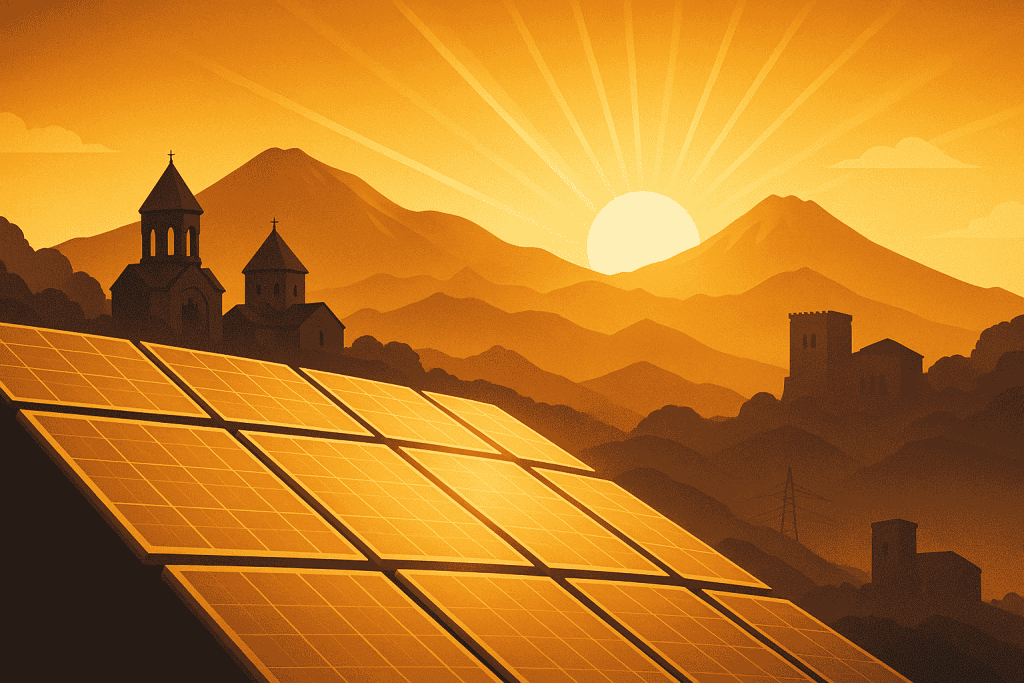
Discover comprehensive tax benefits, customs exemptions, and support mechanisms driving Armenia's clean energy transformation
Armenia offers attractive incentives for renewable energy investments, including feed-in tariffs, net metering, tax exemptions, and streamlined regulatory processes designed to accelerate clean energy development.
Armenia has established a comprehensive legal and regulatory framework to support renewable energy development, positioning itself as an attractive destination for international clean energy investments.
Clean Energy Target
Armenia aims to expand clean power sources to 66% of its electricity generation mix by 2036
Market Growth
Solar PV capacity expected to reach 1,000 MW by 2030, with significant wind and hydroelectric potential
Investment Support
Comprehensive support through grants, loans, tax incentives, and streamlined permitting processes
For expert guidance on navigating Armenia's renewable energy compliance requirements and maximizing available incentives, consult with our specialized Armenian renewable energy legal team who can provide tailored support for international investors.
Tax Benefits and Incentives
Corporate Income Tax Exemptions
- Renewable energy producers eligible for feed-in tariffs are exempt from standard licensing requirements, reducing administrative costs and barriers
- Net metering participants with installations up to 150 kW are not taxed on income from electricity surpluses sold to the grid
- Special economic zones offer additional corporate tax exemptions for qualifying renewable energy projects
Value Added Tax Benefits
- Feed-in tariff rates are set without VAT, providing cost advantages for renewable energy sales
- Reduced VAT rates may apply to specific renewable energy equipment and installations under government programs
- VAT exemptions are often included in comprehensive support packages for large-scale renewable projects
Theoretical Example: Solar Installation Tax Benefits
Note: This is a theoretical example for illustration purposes.
Consider a hypothetical 500 kW commercial solar installation. Under Armenia's net metering program, the owner would benefit from tax-free income on surplus electricity sales, potentially saving thousands of dollars annually in tax obligations. Additionally, the absence of licensing requirements for feed-in tariff eligible projects reduces initial compliance costs by an estimated $5,000-10,000 compared to traditional power generation licensing.
Customs Duties and Import Exemptions
Equipment Import Benefits
Eligible Equipment Categories
- Solar photovoltaic panels and components
- Wind turbines and related equipment
- Small hydropower plant components
- Geothermal energy systems
- Energy storage systems and batteries
- Installation and maintenance equipment
Exemption Process
- Application through Ministry of Economic Development
- Processing time typically 2-4 weeks
- Government approval required for exemption
- Project-specific exemptions based on investment value
Success Case: Investment Media Group
In a precedent-setting decision, the Armenian government granted Investment Media Group (IMG) exemption from customs duties for solar PV components worth approximately $600,000. This exemption was part of Armenia's broader $58 million solar program, demonstrating the government's commitment to supporting renewable energy investments through tangible financial benefits.
Theoretical Import Savings Calculation
Note: This is a theoretical example for illustration purposes.
Hypothetical 1 MW Solar Project:
• Equipment cost: $800,000
• Standard customs duty rate: 5-10%
• Potential savings with exemption: $40,000-80,000
• Additional VAT savings potential: $60,000-120,000
• Total potential savings: $100,000-200,000
Feed-in Tariff Schemes
Solar PV
- Capacity: Up to 5 MW
- Duration: 20 years
- Rate: Competitive with regional standards
- Adjustments: Annual inflation and currency indexing
Wind Energy
- Capacity: Up to 30 MW
- Duration: 20 years
- Rate: AMD 42.645 ($0.09)/kWh
- Protection: Currency and inflation risk mitigation
Small Hydro
- Capacity: Up to 30 MW
- Duration: 15 years
- Rate: Regulated by PSRC
- Benefits: No licensing required
Key FIT Advantages
Financial Security
- Long-term power purchase guarantees provide revenue certainty
- Annual tariff adjustments protect against inflation and currency fluctuations
- Government-backed offtake agreements reduce investment risk
Regulatory Benefits
- Streamlined approval process for FIT-eligible projects
- Guaranteed grid access and connection rights
- Exemption from standard power generation licensing requirements
Net Metering Programs
Standard Net Metering
- Capacity Range: Up to 500 kW for autonomous power producers
- Tax Benefits: Installations up to 150 kW enjoy tax-free income on surplus electricity
- Settlement: Annual net billing with Electric Networks of Armenia (ENA)
- Installation Cost: Minimal setup cost (reverse-flow meter ~$100)
Advanced Net Metering
- Virtual Net Metering: Generation and consumption at different grid locations
- Group Net Metering: Multiple consumers sharing one generation facility
- Scheduling: Hourly advance schedules required for virtual arrangements
- Fees: Only regulated transmission/distribution fees apply
Theoretical Net Metering Scenario
Note: This is a theoretical example for illustration purposes.
Commercial Building with 100 kW Solar Installation:
• Annual generation: 150,000 kWh
• Annual consumption: 120,000 kWh
• Annual surplus: 30,000 kWh
• Surplus income: Tax-free under 150 kW threshold
• Estimated annual tax savings: $2,000-4,000
• Setup cost: Under $100 for reverse-flow meter
Additional Support Mechanisms
Government Support
- Land Use Permits: Assistance in obtaining necessary land permits for renewable projects
- Grid Connection: Non-discriminatory access and connection conditions guaranteed
- Regulatory Support: Streamlined approval processes for qualifying projects
- PPAs: Long-term power purchase agreements through competitive tenders
Financial Support
- Grants: Direct grants available through R2E2 Fund and international programs
- Soft Loans: Below-market interest rates for qualifying renewable energy projects
- Risk Mitigation: Currency and inflation risk protection in long-term contracts
- International Funding: Access to World Bank, ADB, and Climate Investment Funds
Key Implementing Organizations
R2E2 Fund
Renewable Resources and Energy Efficiency Fund facilitates investments and provides technical assistance
PSRC
Public Services Regulatory Commission sets tariffs and regulates market conditions
MTAI
Ministry of Territorial Administration and Infrastructure oversees energy policy development
Legal and Regulatory Framework
Primary Legislation
Core Energy Laws
- Energy Law: Provides comprehensive framework for energy sector regulation and licensing
- Law on Energy Savings and Renewable Energy: Establishes renewable energy development principles and mechanisms
- 20-Year Energy Sector Development Program: Strategic roadmap for energy system transformation through 2040
Key Principles
- Efficient use of domestic energy resources and alternative sources
- Enhancement of energy independence and security
- Encouragement of private investments in energy sector
- Ensuring transparency and fair competition
Recent Regulatory Developments
Market Liberalization
Amendments to the Energy Law introduced competition among electricity suppliers, breaking ENA's distribution monopoly and allowing consumers to choose suppliers.
EU Alignment
Comprehensive and Enhanced Partnership Agreement (CEPA) with the EU includes timetable for approximating Armenian energy laws to EU regulations by 2029.
Current Investment Opportunities
Solar Projects
- Planned Capacity: 520 MW across seven facilities
- Target: 1,000 MW by 2030
- Potential: 1,720 kWh/m² annual solar flow
- Status: Government planning competitive tenders
Wind Energy
- Estimated Potential: 450 MW capacity
- Key Locations: Karakhach, Pushkin, Jajur passes
- Project Support: Up to 150 MW in MOUs
- Development: Mountain regions with high wind resources
Hydroelectric
- Current Capacity: 1,293 MW installed
- New Opportunities: Lori-Berd (60 MW), Shnogh (76 MW)
- Rehabilitation: Sevan-Hrazdan Cascade upgrade needed
- Potential: Modernization of existing facilities
Why Choose Armenia for Renewable Energy Investment?
Strategic Advantages
- Strategic location connecting Europe, Asia, and Middle East energy markets
- Strong government commitment to clean energy transition
- Skilled workforce and growing technical expertise
Investment Climate
- Competitive project costs and attractive returns
- Stable legal framework with transparent regulations
- International donor support and financing availability
Navigate Armenia's Renewable Energy Landscape with Expert Legal Guidance
Armenia's renewable energy sector offers tremendous opportunities, but success requires navigating complex regulatory requirements, maximizing available incentives, and ensuring full compliance with evolving legislation.
Compliance Expertise
Navigate complex regulatory requirements and ensure full legal compliance
Incentive Optimization
Maximize available tax benefits, customs exemptions, and support mechanisms
Project Acceleration
Streamline approvals and fast-track your renewable energy investments
Get specialized guidance from Armenia's leading renewable energy legal experts
Consult with Armenian Renewable Energy Legal SpecialistsFrequently Asked Questions
What is the maximum capacity eligible for feed-in tariffs in Armenia?
Feed-in tariffs are available for solar PV projects up to 5 MW, wind projects up to 30 MW, and small hydropower plants up to 30 MW. Projects above these thresholds must participate in competitive tenders for long-term power purchase agreements.
Are there specific tax exemptions for renewable energy equipment imports?
Yes, Armenia provides customs duty exemptions for renewable energy equipment imports on a project-by-project basis. The government has established precedent with companies like Investment Media Group, and exemptions are available for solar panels, wind turbines, hydroelectric equipment, and related components through the Ministry of Economic Development.
How does Armenia's net metering program work for commercial installations?
Net metering allows autonomous power producers up to 500 kW to inject surplus electricity into the grid and offset it against future consumption. Annual net billing with ENA settles the difference at regulated prices. Installations up to 150 kW benefit from tax-free income on surpluses, with setup costs limited to a reverse-flow meter (~$100).
What financing support is available for renewable energy projects?
Armenia offers multiple financing options including grants through the R2E2 Fund, soft loans with below-market interest rates, international donor funding from World Bank and Asian Development Bank, and private investment facilitation. The government also provides currency and inflation risk mitigation in long-term contracts.
Do renewable energy projects require special licensing in Armenia?
Power producers eligible for feed-in tariffs (below capacity thresholds) are exempt from standard licensing requirements. Larger utility-scale projects above FIT thresholds require licensing and must go through the same tariff-setting procedures as conventional power plants, typically through competitive tender processes.
What are Armenia's renewable energy targets and timeline?
Armenia aims to expand clean power sources to 66% of its electricity generation mix by 2036. Specific targets include solar PV capacity reaching 1,000 MW by 2030, with government planning competitive tenders for 520 MW across seven facilities. The 20-Year Energy Sector Development Program guides this transition through 2040.
Need specific guidance on your renewable energy project in Armenia?
Get Expert Legal Consultation →Armenia: Your Gateway to Renewable Energy Success
With comprehensive tax incentives, customs exemptions, feed-in tariffs, and government support mechanisms, Armenia offers one of the most attractive renewable energy investment environments in the region.
Don't navigate this complex landscape alone. Partner with legal experts who understand Armenia's renewable energy sector inside and out.
Start Your Armenian Renewable Energy Journey Today