

Expats often move abroad in search of better opportunities or quality of life, but being away from family can be challenging. Fortunately, many countries offer family reunification visas that allow expats to sponsor family members for residency, with some even providing a pathway to eventual citizenship. In this comprehensive guide, we compare the best countries for expat family sponsorship, covering their reunification policies, eligibility criteria, processing times, financial requirements, residency/citizenship pathways, and any notable restrictions, benefits, or drawbacks. Whether you’re a professional, retiree, or digital nomad, this overview will help you balance affordability, ease of process, and long-term stability when choosing a country to bring your loved ones.
Key Factors in Expat Family Sponsorship and Permanent Residency
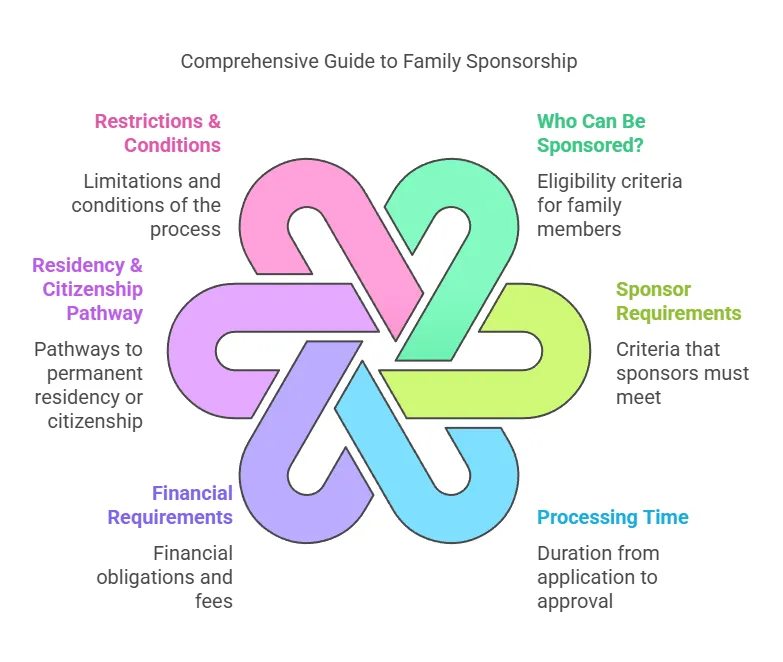
When evaluating countries for family sponsorship, consider the following factors which we will cover for each destination:
Family Reunification Policies: Who counts as family (spouse, children, parents, etc.) and how easy it is for them to join you.
Eligibility Criteria for Sponsors: Requirements the expat sponsor must meet (residency status, duration of stay, income level, etc.).
Processing Times: Typical timelines for family visa or residency applications – some countries process within weeks, others take over a year.
Financial Requirements: Minimum income, savings, or fees required to sponsor family members (e.g. income thresholds, visa fees, investments).
Residency and Citizenship Pathways: Whether family members get permanent residency and how/when they can qualify for citizenship.
Restrictions and Conditions: Any quotas, language requirements, or special conditions on sponsoring certain relatives.
Unique Benefits or Drawbacks: Notable perks (like work rights for spouses, broad definition of family) or downsides (high costs, limited rights, lack of permanency).
Cultural Ties: How having cultural ties, such as a strong link to Ireland, can enhance eligibility for certain visas, making it easier for individuals to immigrate and access job opportunities abroad.
Comparison of Family Sponsorship Policies
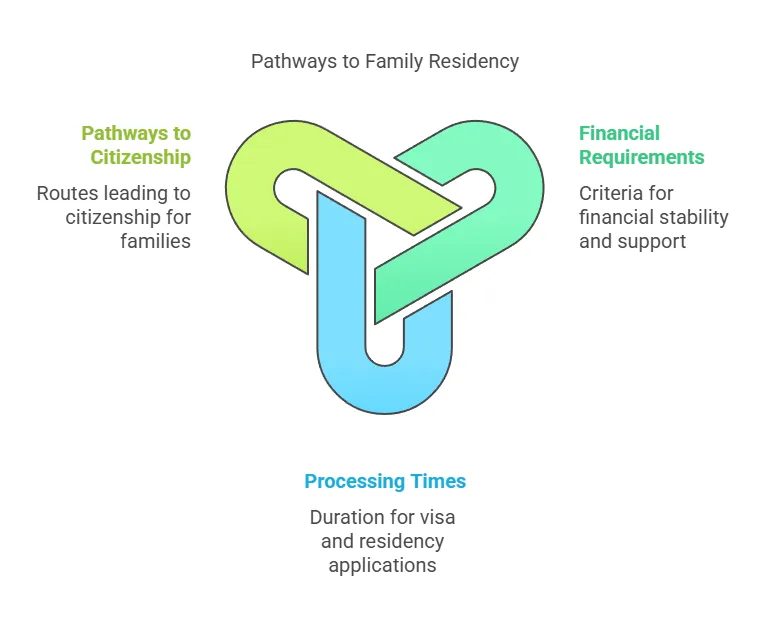
| Country | Eligible Family to Sponsor | Key Sponsor Requirements | Processing Time | Notable Benefits & Restrictions |
|---|---|---|---|---|
| Canada | Spouse/partner; children < 22; Parents/Grandparents (via lottery) | Must be Citizen or PR; No income required for spouse/child (income needed for parents) | ~12 months for spouses; Parents 2+ years if selected | Benefit: Spouse gets PR on arrival; broad family definition. Drawback: Parent visas limited by lottery; processing can be long for extended family. |
| USA | Spouse; children (any age, categories vary); parents (if sponsor is citizen); siblings (citizens only) | Sponsor must be Citizen or LPR; 125% of poverty income required Affidavit of Support with co-sponsor if needed | ~12–18 months for immediate relatives Siblings 10–15+ years | Benefit: No quota for immediate family ; eventual Green Card → citizenship (5 yrs). Drawback: Long backlogs for non-immediate; high fees and paperwork; no automatic work for spouses until green card. |
| UK | Spouse/partner; fiancé; children < 18 (no parents unless exceptional) | Sponsor must be Citizen/ILR; £29,000/yr income (combined) needed English A1 test for spouse | ~3 months standard (faster with priority); 8 weeks inside UK | Benefit: Spouse can work; ILR after 5 years, citizenship after 6. Drawback: High income bar and visa fees; no sponsoring parents; “no recourse to public funds” until ILR. |
| Germany | Spouse/registered partner; children < 18 | Sponsor on valid residence (work/EU Blue Card/PR); must have adequate income & housing; No language required if sponsor is skilled worker (otherwise A1 German for spouse) | ~2–4 months (varies by embassy) | Benefit: Spouse gets open work permit PR possible after ~5 years; citizenship ~8 years (3 if married to German) Drawback: Bureaucracy and ~basic German needed eventually; cannot easily sponsor parents. |
| Australia | Spouse/partner; fiancé; children; (parents via separate category) | Sponsor must be Citizen/PR; 18+ years; sponsorship limited to 2 partners lifetime. No specific income test (must sign support undertaking). | ~12–18 months for partner visa (temporary + PR stages); Parent visas 4–30+ years (depending on type). | Benefit: Direct PR for spouse (after initial temporary) citizenship in ~4 years; full work rights for partners. Drawback: Very high application cost (~AUD $9k) parent visas extremely costly or limited. |
| New Zealand | Spouse/partner (including unmarried); children < 21; (parents via limited quota) | Sponsor must be Citizen/PR (or on work visa for temporary sponsorship); No minimum income for partner, but must show ability to support and cohabitation ≥12 months for residence | ~6–9 months for partner residence 1–2 months for partner work visa; Parent residence limited and slow. | Benefit: Spouse gets residence with work rights; citizenship after 5 years; no high income barrier. Drawback: Strict proof of genuine relationship; adult children 21+ not covered. |
| Portugal | Spouse or long-term partner; children (minors or dependent students); parents (if dependent); minor siblings under custody | Sponsor must hold Portugal residence; Income ≈ €760/mo + 50% for spouse +30% per child; adequate housing No language or integration requirements. | ~2–3 months for approval (plus scheduling SEF appointment) | Benefit: Low income threshold; includes parents family gets equal residency rights; eligible for citizenship after 5 years (basic language A2 needed). Drawback: Bureaucratic delays possible during SEF transitions; job opportunities for expats not as abundant as some countries. |
| Singapore | Spouse; children < 21 (unmarried). Parents and common-law partner via Long-Term Visit Pass (LTVP) in special cases. | Sponsor must be Employment Pass/S Pass holder or PR; Min salary S$6,000/mo for spouse/child S$12,000 for parent LTVP | ~3 weeks for Dependant’s Pass a few months for PR applications. | Benefit: Fast processing; world-class safe environment; possibility of PR for whole family Drawback: Dependant pass tied to job (no PR unless sponsor gets it); spouse needs own work pass to work; citizenship for expats is rare. |
| UAE (Dubai, Abu Dhabi, etc.) | Spouse; children (usually sons < 18–25, daughters until marriage); Parents (with higher income) | Sponsor must be UAE resident (work or investor); Min salary AED 4,000 (~$1,100) must have housing. Marriage certificate required (no cohabitation sponsorship). | ~2–4 weeks (quick entry permit + in-country visa stamping) | Benefit: Low income requirement quick process; Golden Visa offers 5–10 year security and can sponsor family regardless of age Drawback: No permanent residency (visas tied to employment or renewable schemes); no citizenship for most; spouse can’t work without own work visa. |
| Sweden | Spouse/registered partner; cohabiting partner; children < 18 | Sponsor (in Sweden) must have sufficient income & housing (e.g. ~SEK 10,219/month after rent for couple) unless exempt; both parties age ≥18. | ~12–16 months common for spouses (application can be made online) | Benefit: Generous welfare (health, education, parental leave); spouse gets work rights; citizenship in 5 years (3 if married to Swede) Drawback: Long processing times; maintenance requirement must be met before approval; limited to core family. |
Canada
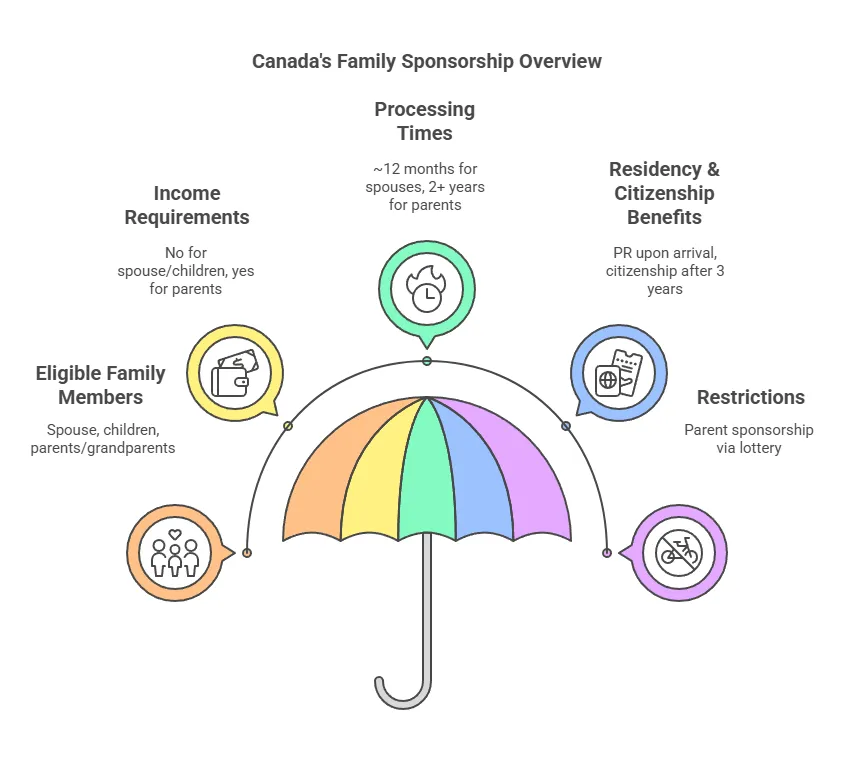
Canada is often praised for its family-friendly immigration system. Family reunification is a cornerstone of Canadian immigration policy, making it a top choice for expats who want to sponsor loved ones.
Who Can Be Sponsored: Spouses or common-law partners, dependent children (usually under 22), and in separate programs, parents and grandparents. Canada defines family class broadly, but siblings or extended family generally cannot be sponsored except in specific circumstances.
Sponsor Eligibility: The expat must be a Canadian citizen or permanent resident to sponsor a family member. (Citizens can sponsor while living abroad if they plan to return to Canada; permanent residents must reside in Canada to sponsor.) Uniquely, there is no minimum income requirement to sponsor a spouse or child in most cases – the sponsor just cannot be on social assistance (welfare) and must promise to support the family member. (An exception: if the sponsored spouse or child has their own dependent, a modest income threshold applies.) For parents/grandparents, sponsors must meet a higher income requirement for three consecutive years and apply through an annual lottery system due to caps.
Processing Times: Spousal sponsorships are processed in about 12 months on average. This is a standard IRCC service goal for new applications. Parent sponsorship can take much longer (often 2+ years after being selected in the lottery). However, Canada offers a Super Visa as a faster temporary solution for parents, allowing extended stays.
Financial Requirements: Aside from the income test waiver for spouses/children, the main costs are application fees (around $750 for a spousal sponsorship including permanent residence fees) and showing an ability to support the family member. Parent sponsorship requires proving income above the Low-Income Cut-Off + 30% for your household size for the last 3 tax years. This can be in the range of ~$45k–$65k for a family of 4-7, for example.
Residency & Citizenship Pathway: Sponsored spouses and kids become permanent residents (PR) upon landing in Canada. This grants them the right to live, work, and study, and access public healthcare. After 3 years of physical presence in a 5-year period (or 5 years in some cases), they can apply for Canadian citizenship, which is one of the fastest citizenship tracks among Western countries. Parents/grandparents, once sponsored, also receive PR (although spaces are limited). Additionally, the essential skills work visa is another pathway for skilled workers to gain permanent residency in Canada.
Restrictions: A sponsor must sign an undertaking to financially support the family member (3 years for a spouse, 10 years or until age 25 for a child, 20 years for parents). During this period, the sponsored person should not draw social assistance or the sponsor must repay it. Also, a Canadian PR who was themselves sponsored as a spouse cannot re-sponsor a new spouse within 5 years of obtaining PR. There are also background checks and bars if the sponsor has certain criminal convictions (especially related to domestic violence).
Unique Benefits: Canada’s lack of an income bar for sponsoring a spouse is a huge advantage for expats with modest earnings. Additionally, the sponsored spouse gets an open work permit (if applying inland) and, as a PR, full work rights. All sponsored family members enjoy Canada’s high quality of life, universal healthcare, and eventually, a Canadian passport. A possible drawback is the cap on parent sponsorships – demand exceeds supply, making it uncertain to bring parents permanently (the Super Visa addresses this by allowing extended visits). Overall, Canada scores high on family reunification, prioritizing keeping families together, with a balance of reasonable requirements and strong long-term stability.
United States
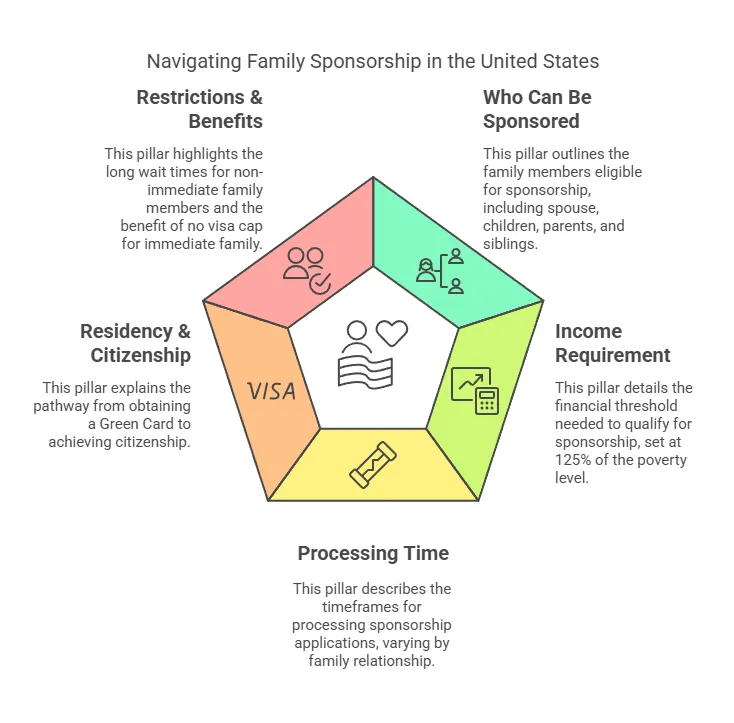
The United States offers one of the broadest scopes for family-based immigration, which has historically been a pillar of its immigration system. Expats (usually after becoming U.S. permanent residents or citizens) can sponsor various relatives, though wait times and processes vary greatly by relationship.
Who Can Be Sponsored: U.S. citizens can sponsor spouses, children (with different categories for minors vs. adults, married vs. unmarried), parents, and even siblings. Permanent Residents (green card holders) can sponsor spouses and unmarried children. Immediate relatives – defined as a U.S. citizen’s spouse, unmarried child under 21, or parent – have priority with no annual visa cap, making their process quicker than other categories. Family preference categories (e.g., siblings of citizens, adult children) are subject to yearly quotas and country caps, leading to very long queues (often 5 to 15+ years).
Sponsor Eligibility: The sponsor must be at least 18 (for filing the required Affidavit of Support) and either a U.S. citizen or a lawful permanent resident (LPR). U.S. citizens can sponsor a wider range of family and generally have faster processing for immediate relatives. Financially, the U.S. has a strict Affidavit of Support requirement – the sponsor (and joint sponsor, if needed) must show income or assets at least 125% of the poverty level for their household size. For example, a household of 2 (sponsor + spouse) typically needs about ~$22,000/year income. This ensures the immigrant won’t become a public charge. If the sponsor’s income is insufficient, a co-sponsor can help meet this requirement.
Processing Times: For immediate relatives (e.g., sponsoring a spouse), the timeline is roughly 12 to 18 months from the initial petition to the immigrant visa or green card, depending on USCIS backlogs and consular processing. Data as of 2024 shows median wait ~11.8 months for spouses/children of citizens. If the expat is a green card holder sponsoring a spouse, the category is usually current (no quota backlog in recent years), but still expect around 1.5–2 years total processing. For capped categories: adult children or siblings of citizens can wait many years (siblings from e.g. the Philippines have waits exceeding 15 years). These lengthy queues are a major drawback for extended family sponsorship.
Financial Requirements: Aside from the Affidavit of Support, costs include petition filing fees (an I-130 petition is $535) and visa or adjustment fees ($325 visa fee + $1200 immigration fee for a spousal visa, for example). There is no direct investment required and no application income fee (just the support obligation). Sponsors must maintain the required income level until the process completes and for about 10 years or until the immigrant becomes a citizen (the support obligation period for most family immigrants).
Residency & Citizenship Pathway: Family sponsorship leads to a green card (permanent residency) for the foreign family member. A spouse of a U.S. citizen gets conditional 2-year residency if the marriage is under 2 years old, then can apply to remove conditions for full 10-year green card. Expats can gain permanent residency through various visa programs, such as family sponsorship, employment-based visas, or investment programs. After obtaining a green card, most family-based immigrants can apply for U.S. citizenship after 5 years of residency. Spouses of U.S. citizens have an expedited path – eligible for citizenship after 3 years as a green card holder, if still married and living with the citizen spouse. Children under 18 typically automatically become citizens if a parent naturalizes and they are green card holders residing in the U.S. The U.S. passport is highly valued, and green card holders enjoy stability and the ability to work anywhere in the U.S. while waiting to naturalize.
Restrictions: The U.S. process can be bureaucratic. Each family member needs a separate petition. There are extensive background, medical, and security checks. Some relationships cannot be sponsored – e.g., grandparents, in-laws, or married children of green card holders (the LPR must naturalize first for that). Same-sex spouses are recognized for sponsorship since 2013. One challenge is that until the family member gets a work permit or green card, they often cannot stay with you in the U.S. on a long-term basis (unless they have another visa). This means some couples live apart during the process, unlike countries that issue temporary visas to spouses.
Unique Benefits: The U.S. allows sponsoring parents and siblings, which many countries do not permit at all. It also has no language or integration requirements for family immigrants – you don’t need to learn English to get a green card (though basic English and civics knowledge are required for citizenship). A big plus is that immediate relatives face no numerical visa limits, so their process is just about administrative timing. Upon arrival, family members get a green card which is a solid status (not just a temporary visa). A potential drawback is the high cost of living and healthcare in the U.S., as well as the uncertainty during long processing (for those not in immediate relative categories). Nonetheless, for core family (spouses, minor kids, parents), the U.S. remains a viable option with a clear path to eventual citizenship and an abundance of opportunity.
United Kingdom
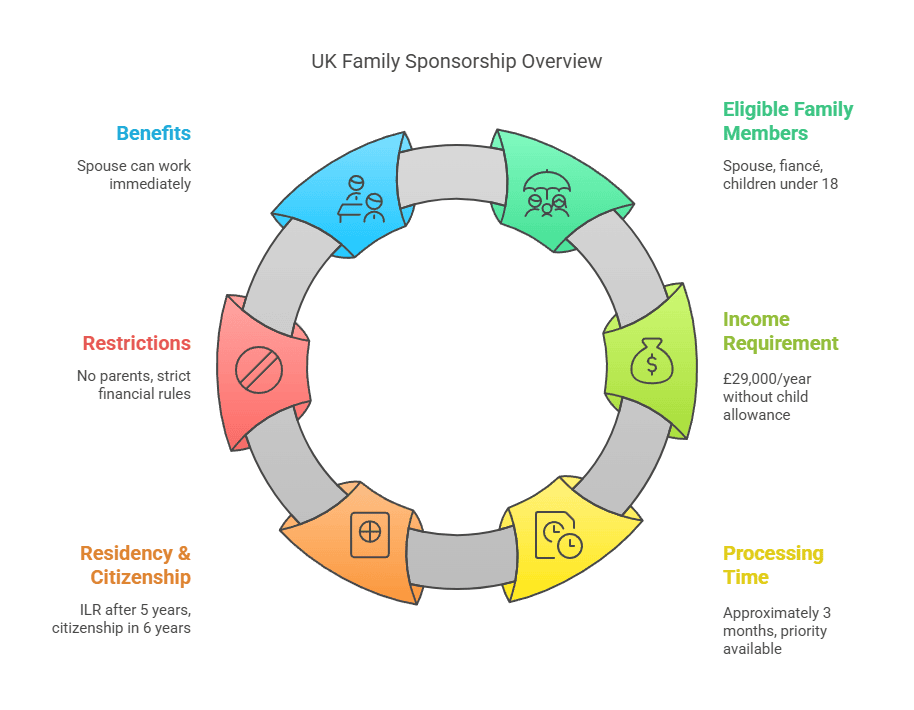
The United Kingdom allows expats to bring immediate family, but its rules are known to be stringent, especially regarding financial requirements. Still, many expats successfully sponsor spouses and children to join them in the UK, benefiting from its strong economy and global opportunities.
Who Can Be Sponsored: Primarily spouses/partners (including unmarried partners if you can prove at least 2 years of cohabitation), fiancés, and children under 18. The UK does not generally allow sponsoring parents or siblings for residency, except in rare cases (Adult Dependent Relative visas for parents require proving extreme dependency and come with tough criteria). So, the focus is on partner visas and dependent child visas.
Sponsor Eligibility: The sponsor must be either a British citizen, or settled in the UK (i.e., holds Indefinite Leave to Remain or permanent residence), or have refugee/humanitarian status. Unlike some countries, a UK temporary resident (on a work visa) typically can’t use the family route for a spouse; instead, their spouse comes as their dependent on the work visa (a different process with its own rules). Here we’ll focus on the standard Family Visa (spouse/partner) route for citizens/PR sponsors. The UK imposes a strict minimum income requirement (MIR): currently £29,000 per year for the sponsor’s gross income. (This was £18,600 from 2012 until 2024, when it was raised to £29k.) This income threshold is for sponsoring a partner; it no longer increases with additional children – previously an extra ~£3,800 for the first child and £2,400 for subsequent, but as of recent changes a flat £29k covers a partner and any number of children. If the sponsor doesn’t earn £29k, they can use savings (approximately £62,500 in savings meets the requirement, or lesser amounts can make up shortfalls). The sponsor (and spouse) also must be 18 or over, and the applicant must meet an English language requirement (usually an A1 or A2 level English test for initial entry, B1 for settlement).
Processing Times: The UK’s processing for spouse visas is relatively fast. For applications made outside the UK, the standard service aims at about 12 weeks (3 months) for a decision. Many applicants pay extra for a priority service to get a result in 4–6 weeks or even faster. For in-country applications (switching to a spouse visa or extending one), the wait is typically 8 weeks standard. These timelines can vary if backlogs occur, but the UK generally processes family visas quicker than many other Western countries.
Financial Requirements: As noted, the £29,000 income rule is a major hurdle. It means roughly half of UK workers may not qualify to sponsor a spouse on income alone. However, if the sponsor has sufficient cash savings or certain permitted income sources (pension, rental income, etc.), those can be used. The visa fees are also substantial: a spouse visa costs around £1,538 (outside UK) and there’s an Immigration Health Surcharge (IHS) of ~£624 per year per adult (so ~£1,560 for the 2.5-year visa). So upfront, one might pay over £3,000 in fees per applicant. Despite high costs, the UK visa, once granted, allows the spouse to work without restriction.
Residency & Citizenship Pathway: A spouse visa is typically granted for 33 months (2.5 years) if applied outside the UK (30 months if inside). After that, an extension for another 2.5 years is required, meeting similar requirements again. After 5 years total on this route, the spouse can apply for Indefinite Leave to Remain (permanent residency), provided they still meet requirements (including a higher English exam and passing the “Life in the UK” test). One year after ILR (or immediately if married to a British citizen and having 3 years of UK residence), they can apply for British citizenship. In summary, a British passport in about 6 years is common for foreign spouses of Brits, making it a relatively quick citizenship timeline in global comparison. Children under 18 usually get ILR with the parent and can register as British citizens once a parent is British or ILR, depending on circumstances.
Restrictions: The UK’s rules are tightly enforced. The income rule has caused hardship and is somewhat controversial – if the £29k threshold isn’t met (and no adequate savings), the visa will be refused, separating families. Also, the couple must intend to live together in the UK and prove their relationship is genuine (evidence of marriage, visits, communication may be scrutinized). No recourse to public funds: the sponsored family cannot access most welfare benefits until they get ILR, and the sponsor must sign an undertaking to not rely on public funds either. Another restriction is that the Adult Dependent Relative visa (for parents) is almost impossible to get unless the parent is in very poor health with no available care in their home country – very few of these are granted. This effectively means expats can’t bring elderly parents to settle in the UK under current rules, which is a drawback for those seeking long-term family unity.
Unique Benefits: The UK offers a high standard of education, healthcare (the NHS, which the IHS fee grants access to), and an English-speaking environment, which can ease integration for many families. The spouse’s right to work is a big plus – as soon as they have the visa, they can work for any employer or start a business. Children sponsored will usually be able to attend state schools and after some residency, may qualify for home student university fees. The timeline to permanent status (5 years) is fairly standard, and British citizenship gives rights to live/work in the UK and some travel benefits. Drawbacks include the very high cost (visa fees and ongoing renewal fees), the strict income bar, and the requirement to renew the visa halfway. However, for those who meet the requirements, the UK provides a stable and secure route for bringing your spouse and young children, with a clear path to settlement and citizenship. Additionally, living in major cities in the UK offers access to a wide range of services and amenities, making the transition smoother for expats and their families.
Germany
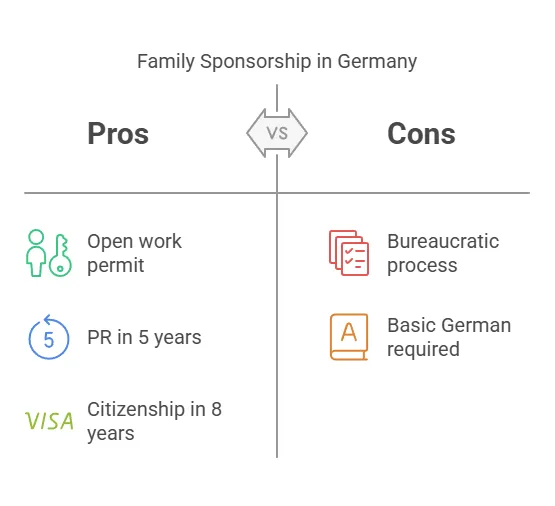
Germany, as Europe’s largest economy, is a popular destination for expat professionals – and it has relatively welcoming family reunification provisions. German law allows those residing in Germany to bring close family, with some conditions to ensure the family can be supported and integrated.
Who Can Be Sponsored: Spouses or registered partners, minor children of the expat (or of their spouse), and in some cases parents of minors in Germany. For non-EU expats, the core is usually spouse and children. (If the expat themselves are a minor, they can bring parents as guardians.) Unmarried partners might not qualify unless you formalize the relationship, though Germany recognizes fiancés through a separate fiancé visa if you plan to marry shortly after arrival.
Sponsor Eligibility: The sponsor (expat in Germany) must hold a valid residence permit – for example, a Work Visa, EU Blue Card, Student Visa, or be an EU citizen in Germany. If the expat is on a temporary residence permit, they can still generally sponsor immediate family after meeting certain conditions. Key requirements include having sufficient housing (an apartment large enough for the family) and sufficient income or resources so that the family will not need social welfare. Germany doesn’t set a fixed salary threshold for family reunification, but the sponsor’s income should cover their own living costs plus those of the family. In practice, if the expat has a steady job meeting the work permit’s salary, that often suffices, and they may need to show a rental contract to prove accommodation. One traditional requirement was basic German language skills (A1) for the spouse before entry – however, if the expat holds an EU Blue Card or other high-skilled permit, the spouse is exempt from the German language requirement. In fact, as of recent policy, family of skilled workers do not need to know German to get the visa(though learning it is encouraged for daily life). This is a big advantage for expat families. If the sponsor is a German citizen, the language requirement for the foreign spouse still formally exists, but in practice many manage with exemptions (e.g., if the spouse is highly educated or from a country where getting A1 certification is difficult). For children, language isn’t required; they often pick it up in school.
Processing Times: Family reunion visas for Germany are typically processed in a few months. The family members usually apply at the German embassy/consulate in their home country. Processing times can range from 2 to 6 months depending on the country and workload. German authorities will check documents and might involve the local Foreigners Office in Germany. It’s advised to apply well in advance and ensure all papers (marriage certificate, birth certificates) are in order. Once approved, the family member gets a visa to enter Germany, and upon arrival they convert it to a residence permit card. There is no annual cap on family visas – it’s an entitlement as long as conditions are met, especially for spouses and minor children of workers.
Financial Requirements: As noted, no fixed income number, but the sponsor must show they can financially maintain the family. For instance, if a work visa required a salary of, say, €50,000, that clearly covers a small family above subsistence. But if an expat has a modest stipend (as in the case of students), they may need to demonstrate additional funds for a spouse. Health insurance is mandatory for everyone in Germany, so adding family members means the expat needs to have them covered (usually under family coverage if on public insurance, or by paying additional premiums in private insurance). There is a fee for the residence permit for the family member (~€100 or so), and some minor fees for the visa application. Germany doesn’t require any investment or lump-sum payment for family visas.
Residency & Citizenship Pathway: Family members receive a temporary residence permit that is typically the same duration as the sponsor’s permit (if the sponsor is on a work visa or study visa, the family gets a permit tied to that). These permits are renewable as long as the sponsor’s status is maintained. Importantly, a spouse of a skilled worker usually gets an open work authorization – meaning the spouse can work for any employer in Germany without needing their own work permit. This greatly helps the family integrate. Expats can obtain residency through various visa programs, such as the EU Blue Card or the Job Seeker Visa, which offer pathways to long-term residence. After 5 years of continuous residence in Germany, family members can qualify for a settlement permit (permanent residence), potentially sooner if the main applicant is an EU Blue Card holder (Blue Card holders can get permanent residency in as little as 33 months, or 21 months with B1 German, and their family might also be eligible around that time or shortly after). For citizenship, Germany generally requires 8 years of residence (which can be reduced to 7 with integration course, or 6 in special integration cases). However, spouses of German citizens can often apply after 3 years of residence if married for at least 2 years – note this applies when one spouse is German; it’s a faster track separate from the work-based route. Children in Germany can sometimes naturalize with their parents or if they grow up in Germany. In sum, expat family members have a clear route: temporary residence → permanent residence → optional citizenship around 6-8 years (Germany now allows dual citizenship in many cases, as it’s reforming previously strict rules).
Restrictions: One requirement to be mindful of is age – both spouses must usually be at least 18 for the visa(Germany doesn’t recognize proxy or underage marriages for immigration). Also, polygamous marriages aren’t recognized – only one spouse can be sponsored. The initial residence permit for spouses is typically conditional on the marriage; if the couple separates within the first 3 years, the spouse’s residence permit might not be extendable on that basis (unless there are humanitarian factors or they secure their own work permit). But after 3 years of marriage in Germany, a spouse may retain the independent right to stay even if divorced. Another consideration: if the expat is a student or in Germany on a more temporary status, they can still bring family, but they must show higher finances (students need to show funds for themselves and each family member, which can be challenging on a student budget).
Unique Benefits: Germany offers free public education and has a reputation for safety and high living standards. Family members on residence permits can access public healthcare (usually the working spouse’s insurance covers the family). There are also integration courses available, and for any children coming in, many integration resources in schools. A standout benefit is the no prior language requirement for spouses of skilled workers/Blue Card holders, which removes a barrier and speeds up reunification. Additionally, spouses are allowed to work without needing a separate permit – this is not the case in every country. Over the long term, Germany’s permanent residency is robust (allowing you to stay indefinitely with almost all the same rights as citizens except voting), and citizenship grants EU freedom of movement. A minor drawback might be dealing with German bureaucracy (paperwork and appointments can be slow). Also, acquiring German language proficiency will be important for daily life and especially if aiming for citizenship (which requires B1 German and a civics test). However, overall, Germany’s relatively straightforward family reunification, strong economy, and secure status for family members make it one of the best options in Europe for expat family sponsorship.
Australia
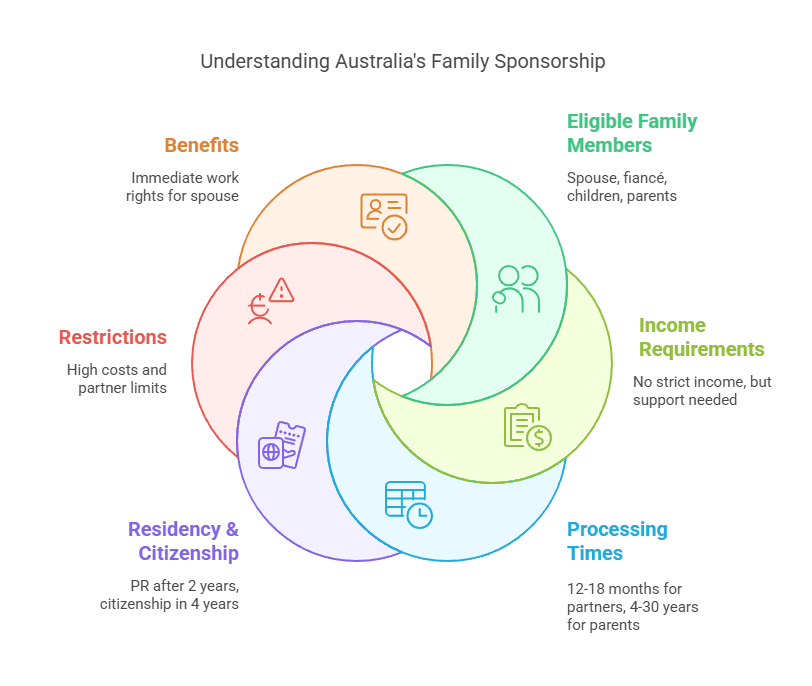
Australia is a highly desirable destination for expats and offers various family sponsorship options. The country’s immigration system has specific family visa categories for partners, children, and parents. While the quality of life in Australia is excellent and it offers long-term stability, the process can be lengthy and expensive, especially for partner visas.
Who Can Be Sponsored: Spouses or de facto partners, fiancés (prospective spouse visa), and dependent children are the main family members sponsored under the family stream. Australian citizens and permanent residents can also sponsor parents, but parent visas are numerically limited and involve either very long waits or very high fees (more on that below). There are also visas for last remaining relatives and carer visas, but those are niche. The majority of expat family sponsorship cases revolve around bringing a spouse/partner.
Sponsor Eligibility: The sponsor must be an Australian citizen, Australian permanent resident, or eligible New Zealand citizen. So, an expat on a temporary work visa in Australia would generally bring family as dependents on their work visa (not via a sponsorship visa). Here we focus on the scenario where the expat has settled in Australia (or is an Australian themselves) and is sponsoring family from abroad. Sponsors have to be adults and usually need to formally agree to support the applicant and provide accommodation. There’s no specific income threshold set in law for sponsoring a partner or child, unlike some countries – but the sponsor’s financial ability is considered (if they have very low income or are on welfare, it could be an issue). For parent visas, the sponsor (the child in Australia) must meet a “Balance of Family” test (at least half of the parent’s children are in Australia or more than any other single country) and also act as financial guarantor with an Assurance of Support (bond money to cover any welfare). Additionally, Australia has a limitation: a person can sponsor at most two partner visas in their lifetime, and there must be a 5-year gap between them, to prevent serial sponsorship.
Processing Times: Partner visas are notorious for taking time. Typically, the application for a partner visa (subclass 309 if applied offshore, which leads to 100 PR visa) can take around 12 to 18 months or more to be approved. Some applicants experience even longer waits (up to 2+ years) if there are backlogs. The process is two-stage: a temporary partner visa is granted first, then about two years after the initial application, the permanent residency is granted (subclass 100/801) – often it’s a formality if the relationship is ongoing. However, in many cases, especially when the couple has been together longer or have children, Australia may grant the permanent stage immediately. The fee is quite high (currently about $5,500 for partner visa applications, which increased to over $5,600 in 2024). On the positive side, child visas (subclass 101) are usually faster (several months) and much cheaper. Parent visas have two pathways: a non-contributory parent visa with a wait time that can exceed 10-20 years (effectively not practical), and a Contributory Parent Visa which is processed in a few years but costs about $29,000 per parent in visa fees. Due to these factors, many expats initially bring parents on long-term visitor visas or the new Temporary Sponsored Parent Visa (which itself requires a high income sponsor and costs several thousand dollars for a 5-year stay, but not PR).
Financial Requirements: As mentioned, no fixed salary requirement for partner sponsorship – but the application requires evidence the sponsor can support the partner. If the sponsor has limited means, sometimes an Assurance of Support may be requested (a financial bond to cover any welfare usage, similar to what is required for parent visas). The biggest financial aspect is the visa fee itself, which is among the highest in the world for partner visas. This fee can be a drawback, but it does cover both temporary and permanent stages. For parent visas, the financial outlay is huge for the contributory route and the sponsor must show three years of income above a high threshold (for the Temporary Sponsored Parent 870 visa, the sponsor must earn over $52,000/year). There’s no investment needed per se, just fees and proof of ability to support.
Residency & Citizenship Pathway: One great thing about Australia is that a partner visa leads to permanent residency (PR) relatively straightforwardly. After the initial temporary visa, the permanent residency is often granted at the 2-year mark (or immediately if the relationship is longstanding when applying). As a permanent resident, the spouse has almost all the same rights as a citizen (except voting), including Medicare (public healthcare) and work rights. Citizenship can be applied for after 4 years of residence, with at least 12 months of that as a permanent resident (and no more than 12 months absent in that period, and no more than 90 days absent in the last year). Many partner visa holders qualify for citizenship as soon as they hit the 4-year mark living in Australia, which is a relatively fast timeline to a second passport. Children who get PR can also become citizens once the residency requirement is met (or if one parent is an Aussie and the child was born overseas, they might even be a citizen by descent). Parent visa holders with PR can go for citizenship after 4 years too (if they ever get the PR).
Restrictions: The Australian partner visa has a strict fraud check – you must provide substantial evidence of your genuine relationship (photos, joint bills, statements from friends, etc.). If a relationship breaks down before the permanent stage, the temporary visa can be canceled (with some protections if there was domestic violence or if there are children). Also, the government has occasionally introduced queue or cap for partner visas indirectly by budgeting – but essentially, partners are categorized as “demand-driven” and usually granted if criteria are met, without a numeric cap. For sponsors, if someone has a history of violent offenses, they may be barred from sponsoring unless an exception is made – this is to protect the immigrating partner. For parent sponsorship, there is a cap per year which creates the queues. Another restriction: sponsors sign an undertaking to financially support the partner for 2 years (for parents, 10 years if using Assurance of Support). Practically, this just means the immigrant shouldn’t need social security in that initial period.
Unique Benefits: Australia is extremely attractive for families thanks to its climate, education system, and high standard of living. Sponsored partners immediately get full work rights on the temporary visa while waiting for PR. Healthcare (Medicare) becomes available usually shortly after arrival (once on temporary partner visa, one can enroll in Medicare). The country is very multicultural, so new family members often find support networks. Children can attend excellent public schools. Also, if the sponsoring expat is in Australia on a work visa, they might switch to partner visa if they marry an Australian, which offers a pathway to stay. One drawback is cost – the process is expensive and can be slow. But unlike some countries, once you have PR, you’re not required to continue proving income or renewing status annually – it’s a one-time process to PR and then you’re set for life (just need a resident return visa every 5 years, which is automatic if you live in Australia). The citizenship timeline (4 years) is also relatively short and gives access to an excellent passport. Compared to other countries, Australia’s visa programs offer a unique combination of long-term stability and a clear pathway to citizenship, making it a highly attractive option for expats. In summary, Australia is family-friendly in outcome (PR and citizenship), if you can navigate the initial bureaucracy and costs.
New Zealand
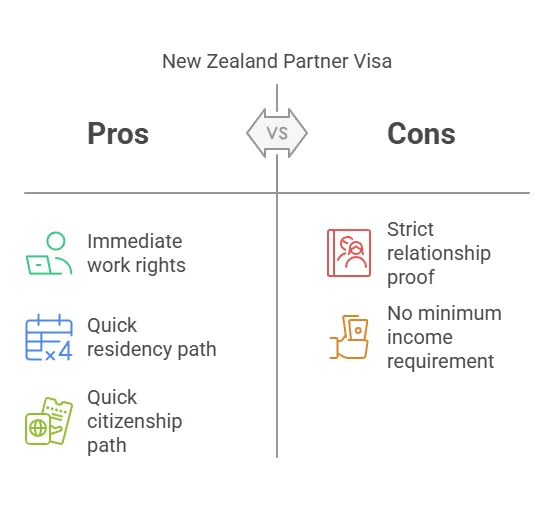
New Zealand, like its neighbor Australia, is a welcoming country for immigrants and places a strong emphasis on family unity. It offers partnership-based visas and other family categories that allow expats to sponsor their loved ones. The process is somewhat more straightforward than Australia’s and often faster, though still requires proper documentation of relationship and meeting certain criteria.
Who Can Be Sponsored: Spouses or partners (including unmarried/de facto partners, with evidence of a stable relationship), fiancés (via a culturally recognized engagement or intent to marry), and dependent children (usually under 21 and single) are covered under family sponsorship. Parents can be sponsored for residence under a Parent Residency category, but it has limited slots and either high income requirements for the sponsor or high investment from the parent. (New Zealand had paused parent visas for a while and recently reopened under new criteria). Expats cannot sponsor siblings or extended relatives except under the special “Parent” or an adult sibling if using the limited “brothers or sisters” quota (rare). So the typical scenario is sponsoring a partner.
Sponsor Eligibility: The sponsor needs to be a New Zealand citizen or permanent resident (or a temporary resident in some cases, like a work visa holder can support a work visa for their partner). Most expats aiming to bring a spouse will either have become NZ residents or citizens, or the partner will come along on a temporary visa leading to residency. Sponsors must be 18 or over (or 16-17 with parental consent). They also must be of good character (certain criminal convictions can bar sponsorship). New Zealand does not impose a specific income threshold for sponsoring a partner; however, if the partner is applying for a visitor or work visa based on partnership, the couple must show they have sufficient funds to support themselves. For a residence visa via partnership, the sponsor signs that they will support the applicant for their first couple of years. Importantly, the couple must prove a “genuine and stable relationship” and usually have lived together for at least 12 months if applying directly for residence. (If not, one strategy is the partner can first get a temporary work visa to join the sponsor, then after accruing 12 months cohabitation, transition to residence.) Also, a New Zealand citizen/resident can only sponsor one partner every 5 years (to prevent misuse), and if they themselves were sponsored as a partner, they cannot sponsor a new partner for at least 5 years from their own residence.
Processing Times: New Zealand’s Immigration department provides typical processing times. As of current data, Partner Residence visa (for a spouse of a NZer) processing can be around 6 to 9 months for most applications – 80% processed in about 7.5 months. This is faster than many Western countries’ spouse residency processes. If one goes the route of a temporary partnership work visa first, those are often processed in a few weeks to 2 months, giving a quick interim solution for the partner to join in NZ and work. Parent residency visas, when available, have a much longer cycle (could be years due to limited slots). Child visas are relatively quick (a few months). Overall, NZ is considered reasonably efficient, though applicants should ensure all evidence is provided to avoid delays.
Financial Requirements: No fixed income floor for partner sponsorship is a big plus. However, the couple should have plans for maintenance. If applying for a partnership-based visitor or work visa, you may need to show funds (e.g. $560 per month for visitors if no prepaid accommodation). For residence, the sponsor must sign a form committing to maintenance of the partner for 5 years (for parents, 10 years). The visa fees are moderate: a Partner Residence visa costs around $1,110 plus immigration levy, and a temporary Partner Work visa is about $282. There’s also a requirement that the sponsor (for parents) have a certain income (for parent category one option: the sponsor must earn about $59,000+ for 2 years or so). But again, focusing on partners and children, financial barriers are lower than places like the UK. One thing to note: if the foreign partner has dependent children, the sponsor might need to meet a higher income to bring step-children (to ensure they are supported) – typically meeting NZ’s income threshold for sponsoring dependents, which is around $34,000 for one child plus more for additional if using certain temporary visa categories.
Residency & Citizenship Pathway: New Zealand offers a direct path to residence for partners. Once a resident visa is granted (either immediately or after a temporary period), that is essentially permanent residency with travel conditions. After 2 years as a resident, the person can get a Permanent Resident Visa that has no travel expiry. The partner is on equal footing to any other resident. For citizenship, New Zealand requires 5 years of residence (with actual presence in NZ for a majority of that time) before one can apply to naturalize. There is no language test for NZ citizenship (just a good character requirement and intent to continue living in NZ). A special benefit: if an expat is a NZ citizen who has been living abroad with a partner for 5+ years, when they move to NZ with that partner, the partner can often get residence immediately as a Permanent Resident (skipping the usual temporary stage). This is a unique fast-track: “If your New Zealand citizen partner has been living overseas with you for 5+ years, you may be granted PR outright”. This benefits long-term couples returning to NZ. Children get residence alongside the parent and can usually register as citizens if born overseas to a NZ parent. Additionally, New Zealand offers a digital nomad visa for remote workers, providing an opportunity for skilled professionals to live and work legally while enjoying the local amenities and communities. Once a partner has citizenship, they enjoy all rights including an appealing passport and the ability to live/work in Australia (thanks to Trans-Tasman agreements).
Restrictions: Like Australia, New Zealand closely checks the genuineness of relationships. Evidence like joint tenancy, finances, photos, communications, etc., will be required. They may conduct interviews. Living together is a critical factor – generally, they expect 12 months cohabitation for a residence class visa (exceptions for cultural or work separation reasons can be made, but you need strong proof of relationship if not cohabiting). If a couple hasn’t lived together that long, getting a temporary visa first is advisable. There’s also a character requirement for the applicant; certain criminal convictions can fail the character test (or require a waiver). For parent visas, the restrictions (quota and high bar) are a significant limiting factor.
Unique Benefits: New Zealand is known for its friendly, low-density lifestyle and is great for raising a family. A huge benefit is that partnership visas allow the spouse to work (if on a partnership work visa) or obviously if they become a resident, they have full work rights. The speed and simplicity of the process (in comparison to many countries) is a selling point – many partners get residence in under a year. The cost is also lower than comparable nations. Moreover, NZ recognizes partnerships without marriage (including same-sex, which has equal footing as marriage in immigration since NZ has both marriage equality and recognizes de facto relationships), so expats don’t necessarily have to rush into marriage to be together. As a bonus, once you’re a resident in NZ, you can easily move to Australia and live there indefinitely (holding a NZ passport or even just as a NZ resident/citizen you get a special category visa in Australia) – thus sponsoring family to NZ potentially gives access to Australia too. One drawback could be the smaller job market in NZ for the incoming spouse, but many manage fine. Overall, New Zealand offers a very balanced route for family sponsorship with a focus on genuine relationships and without onerous financial demands, making it one of the best countries for expats ensuring long-term family stability.
Portugal Golden Visa Program
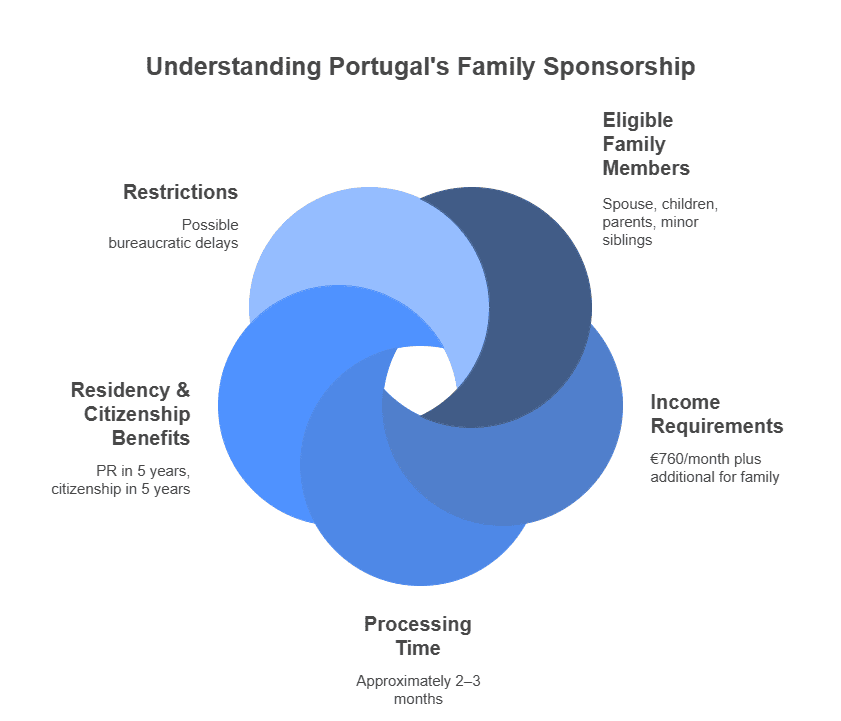
Portugal has become increasingly popular among expats (retirees, remote workers, and investors alike) due to its warm climate, affordable cost of living, and friendly immigration policies. In terms of family sponsorship, Portugal stands out in Europe for its relatively easy family reunification process and accelerated pathway to citizenship (just 5 years of residency). This makes it an attractive option for those looking to relocate with family or bring family later.
Who Can Be Sponsored: Any non-EU resident in Portugal holding a valid residence permit can apply for reagrupamento familiar (family reunification). Eligible family members include: spouse or domestic partner (Portugal recognizes opposite or same-sex partners, and even unmarried partnerships if you can prove a lasting relationship), children under 18 (of either the sponsor or partner, including adopted children) and dependent adult children who are studying, dependent parents of the sponsor or spouse (if over a certain age, generally 65+, or if exceptionally dependent on the sponsor), and minor siblings of the sponsor who are under their legal custody. This is quite broad – notably, parents can be included, which many countries don’t allow until the sponsor is a citizen. Also, step-children and adopted children are treated equally. Essentially, Portugal aligns with EU family reunification directives but with some flexibility.
Sponsor Eligibility: The sponsor is the expat residing in Portugal. They must hold a valid residence permit (temporary or permanent). Even holders of temporary visas (like the popular D7 passive income visa, Golden Visa, work visa, etc.) are eligible to bring family immediately after they have their own residency card. There is no waiting period; you can apply for family reunification once you have your residence. The key requirements: the sponsor must have sufficient means of subsistence and accommodation for the family. In practice, Portugal uses a guideline: the sponsor should have an income at least equal to the national minimum wage (for themselves), plus 50% of that minimum for each adult dependent (spouse or parent), plus 30% of the minimum for each child. For example, if the minimum monthly wage is €760, a family of four (couple + 2 kids) might need around €760 + €380 + €228 + €228 ≈ €1,596/month available. This is a relatively low threshold compared to many countries. Accommodation means having a rental lease or property sufficiently large for the family. There’s no strict language requirement for family members, and no integration test to reunite. The process is more administrative: proving the family relationship (with official certificates) and showing you can support them. The family members must also not have serious criminal records.
Processing Times: The family reunification application is submitted in Portugal to the immigration authorities (SEF). Processing can take a few weeks to a few months depending on backlogs. Typically, one might get an approval in 2-3 months. If family members need an entry visa to come, they can apply at the consulate with the SEF approval. If they are visa-free (e.g., from the US, Canada, etc.), they often enter Portugal as tourists and then finalize the residency after approval (SEF will issue residence permits). Overall, Portugal’s process is reasonably efficient, though SEF appointment scheduling can sometimes be a challenge. Once approved, family members receive their own residence permit cards, usually valid for the same duration as the sponsor’s permit. Family permits are typically linked to the sponsor’s permit – if the sponsor has a 2-year residence card, the family gets the same end date and all renew together.
Financial Requirements: As mentioned, the income requirement is modest. The sponsor will need to show proof of income (job contract, pension, savings, etc.) and possibly bank statements. The costs are low – just the fees for residence cards (on the order of €158 per person for a two-year card). There is no separate hefty visa fee or anything for reunification. Portugal doesn’t require the sponsor to pay extra taxes or bonds for family. Health insurance is recommended if family are not yet covered under Portugal’s system, but once resident, they typically can join the national health service. In summary, affordability is a strong point – bringing family doesn’t multiply costs drastically.
Residency & Citizenship Pathway: Family members receive the same status as the sponsor. If the sponsor is on a temporary residence (which is most cases for the first 5 years), the family gets temporary residence, renewable alongside the sponsor. After 5 years of legal residency, family members can apply for permanent residence and also become eligible for Portuguese citizenship (by naturalization), just like the main applicant. Portugal’s citizenship law is one of the most lenient in Europe: 5 years residence and an A2 basic Portuguese language exam are the main requirements, with no obligation to give up previous citizenship. This means an expat’s spouse and children could potentially become EU citizens within five to six years of moving. Moreover, Portuguese law allows a spouse of a Portuguese citizen to apply for citizenship after 3 years of marriage (if the spouse is already a citizen). So if one expat naturalizes, the other could fast-track. Another positive: family members gain independence after 2 years – the law says after 2 years on their family residency, they can get an autonomous residence permit in their own right. For example, if a couple divorces after 2+ years in Portugal, the previously sponsored spouse can keep their residency independently. Even earlier, if a marriage has lasted 5+ years, the spouse can get an independent permit immediately upon arrival (though this is more relevant if the sponsor already had permanent residency). These provisions give families stability. Additionally, retirees can apply for a retirement visa, which offers a pathway to residency for those who can demonstrate financial stability and wish to enjoy Portugal’s lower cost of living and vibrant communities.
Restrictions: One requirement is that the family relationship existed before the expat’s move to Portugal (for spouses/partners). If the relationship formed later, you can still reunite, but if it’s a new marriage that occurs after the sponsor got residence, sometimes initial residence might be harder (they might ask for evidence if they suspect marriage of convenience). Generally, though, it’s not a big issue. Criminal record checks are done for adult family. Also, if the sponsor loses their residency (say they don’t renew because they left Portugal), the family’s residency tied to them would also end. However, after those 2 years, family could stay independently in some cases. Portugal recently has been reforming SEF and immigration structures, but family reunification rights are enshrined in law and EU directives, so they remain robust.
Unique Benefits: Portugal is extremely attractive because of its balanced approach – relatively easy entry for family and a quick route to citizenship (5 years) which is one of the shortest in the world for a major country. That citizenship is EU citizenship, granting the right to live anywhere in the EU. While living in Portugal, family enjoy a safe environment, good healthcare (often free or low cost under the SNS system), and free education for kids. Unlike some nations, parents of the expat can join without the expat having citizenship, which is a huge benefit for those wanting to care for aging parents – you must show they’re dependent or of pension age, but once approved, they get residency. Drawbacks are few: learning Portuguese is advisable (especially for citizenship, one needs A2 level which is basic). Also, economic opportunities (jobs) in Portugal may not be as plentiful or high-paying as in larger countries, so supporting a large family might require careful financial planning or remote income. Overall, for those seeking a family-friendly, affordable, and citizenship-generating option, Portugal ranks at the top.
Singapore
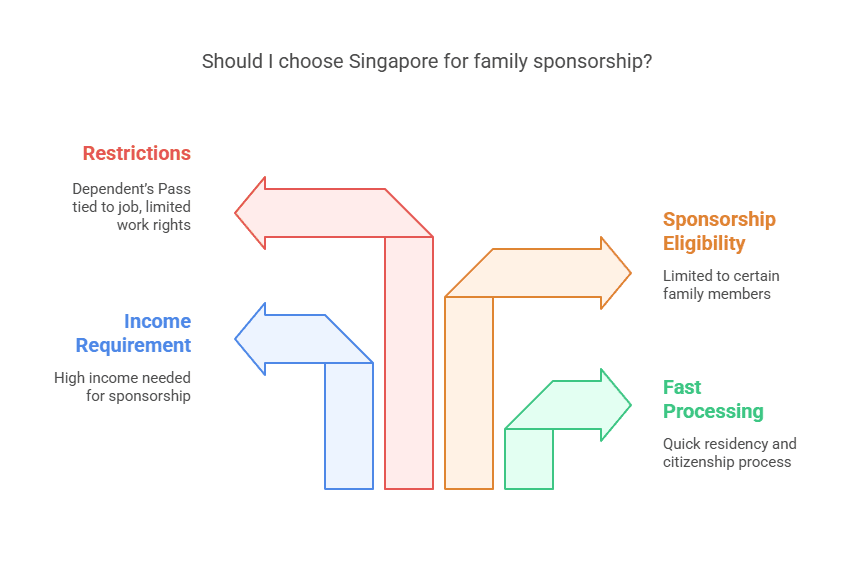
Singapore is a prime destination for expat professionals and entrepreneurs in Asia, known for its modern infrastructure, safety, and high quality of life. When it comes to sponsoring family, Singapore has specific dependent visa policies tied to the expat’s own employment status. While Singapore doesn’t easily grant permanent residence or citizenship to family members unless the main expat also attains that status, it does provide relatively hassle-free residence visas for spouses and children of foreign workers, and eventual paths to residency.
Who Can Be Sponsored: Legally married spouses, and unmarried children under 21 (including biological, step, or adopted) can be sponsored for a Dependant’s Pass (DP) if the expat holds an eligible work visa. Common-law partners and other family like parents cannot get Dependant’s Passes, but there is a separate Long-Term Visit Pass (LTVP) which can be granted to common-law spouses, disabled adult children, or parents, under certain conditions. In practice, many expats bring spouses and kids under the DP/LTVP system. To sponsor parents, one usually needs to be a Singapore Permanent Resident or Citizen – though recently, work visa holders with very high salaries can get an LTVP for parents (for example, via the new Overseas Networks & Expertise Pass, or ONE Pass).
Sponsor Eligibility: The ability to sponsor in Singapore is directly linked to the type of work pass and the income of the expat. Employment Pass (EP) holders and S Pass holders (mid-level skilled visa) are eligible to sponsor family if they earn above a minimum salary. As of current rules, the expat must earn at least $4,400 per month to sponsor a spouse and children. For sponsoring parents on an LTVP, a higher salary of $8,900 per month is required. Other passes like the EntrePass (for entrepreneurs) have their own criteria (business spending and local hires) to qualify to bring family. The sponsor also needs to have at least 6 months of validity on their work pass. There’s no specific duration you must wait – if you move to Singapore on an EP and meet the salary, you can immediately apply for your family’s passes. One more route: Singapore offers a Permanent Resident (PR) status by application. If an expat becomes a PR, they can directly sponsor their spouse and children for PR as well. PR sponsorship is subject to approval (points system considering salary, integration, etc.), but it is a pathway to longer-term stability for the family without needing to renew DPs.
Processing Times: The Dependant’s Pass process is relatively quick and straightforward. Many are approved in around 3-4 weeks, since it’s an online application by the employer or an agent to the Ministry of Manpower. It can even be done alongside the main work pass application. LTVPs might take a bit longer, but generally within 4-8 weeks. Singapore’s bureaucracy is efficient; you won’t be waiting many months as is common with visas elsewhere. PR applications for family, on the other hand, can take 6-12 months for a decision, given they are a different category.
Financial Requirements: The main requirement is the salary bar for the sponsor as mentioned. There’s no separate bank balance requirement beyond that. The sponsor’s company usually has to provide a letter or incorporate the family in the EP application. The costs are minimal: application fee about $78 and issuance fee $2168 per DP. Healthcare and schooling are something to consider financially: expat dependents won’t automatically have subsidized healthcare (unless the sponsor is PR, then dependents can get local rates). Many expats get private health insurance for family or pay as they go. International school fees can be high if one chooses that route, or one can enroll children in local schools (which are low-cost but require going through admission queues and are competitive for foreigners).
Residency & Citizenship Pathway: A Dependent’s Pass is a temporary residence visa tied to the main work pass. It does not lead to permanent residence on its own, and DPs must be renewed when the main pass is renewed (typically every 2-3 years). However, if the expat lives in Singapore for a few years and has a stable, well-paying job, they can apply for Permanent Residency (often after 2+ years). If the main expat gets PR, their spouse and children can usually also get PR as a family unit, especially if the spouse isn’t working. As PRs, the family then enjoys more security (PR is indefinite, with re-entry permits renewable every 5 years) and access to local benefits (like Central Provident Fund, public housing eligibility over time, local school quotas). After holding PR for typically 2 years, one can apply for Singapore Citizenship, but this is not guaranteed and is quite selective. Singapore has strict criteria for citizenship (they consider your economic contribution, integration, etc.). If granted, it usually requires renouncing other citizenships (as Singapore generally disallows dual citizenship). Many expats remain as PRs long-term which is usually sufficient. Notably, male children who become PRs/citizens are subject to national service (military draft) once they come of age (~18), which is an important consideration for some families. Additionally, the essential skills work visa is another pathway for skilled workers to gain residency in Singapore.
Restrictions: Dependent’s Pass holders (spouse) are not automatically allowed to work. In the past, they could get a Letter of Consent to work for an employer easily; now they must qualify for a Work Pass on their own merit if they seek employment. So a trailing spouse may not be able to work unless they have skills an employer will sponsor separately (except in certain cases like if the main expat holds the new ONE Pass, the spouse can work on a Letter of Consent). Also, if the main expat loses their job and work pass, the family’s DPs get canceled quickly (usually within a short grace period). So the family’s stay is contingent on the main expat’s employment – it’s not permanent security. Additionally, Singapore’s immigration is strict on dependents’ conduct; any criminal issues can result in revocation. For LTVP for parents, note that’s typically only available to PRs/citizens (or the new ONE Pass holders with high salary).
Unique Benefits: Singapore’s dependent visa process is fast and relatively unbureaucratic – no extensive proof of relationship beyond marriage/birth certificates, no interviews or long waits. The country provides an extremely safe environment, top-notch healthcare and education (one can access private international schools or the excellent local schools). The quality of life for families is high, with many expat communities and activities. If one does attain PR, Singapore offers strong stability and a route to an excellent passport (Singapore’s passport is one of the world’s strongest for travel). Another benefit is taxation – Singapore has low income tax rates and no tax on foreign income, so financially it can be great for expat families. A drawback is that PR/citizenship is not automatically conferred; some families remain on renewable passes which, while usually fine, are tied to the job. Also, housing in Singapore is expensive (many expats rent condos which can be a significant cost). Overall, Singapore is ideal for expats who have secured employment and want to immediately bring their spouse and kids to a clean, efficient mega-city where the hurdles to entry for family are minimal (just salary based), even if the trade-off is that long-term citizenship is not as certain as in Western countries.
United Arab Emirates (UAE)
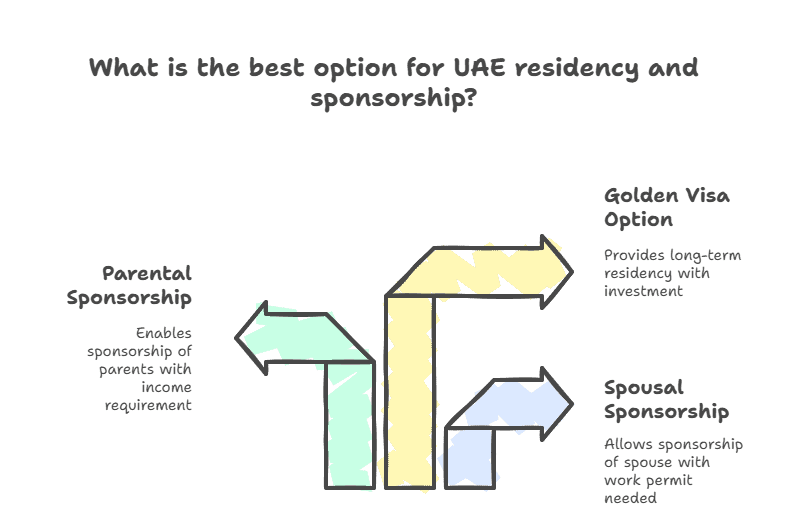
The UAE (which includes expat hubs Dubai and Abu Dhabi) is a notable case: it has long been a magnet for expats due to tax-free incomes and modern lifestyle. Traditionally, expats in the UAE are on temporary visas tied to employment, but they are able to sponsor their immediate family members for residence. While the UAE historically did not offer a path to citizenship for expats, recent reforms have introduced long-term residency (Golden Visas) that greatly enhance stability for those who qualify. For family sponsorship, the UAE’s policies are quite accommodating in terms of who can be sponsored, but it’s not a destination for those seeking eventual citizenship (except in rare cases).
Who Can Be Sponsored: Spouses and children are straightforward to sponsor in the UAE. A male expat can sponsor his wife and children; a female expat can sponsor her husband and children as well, although historically the requirements for a female sponsor were stricter (needing a higher salary and certain professions, but this has been relaxed recently as long as income criteria are met). Children must usually be under 18, or under 21/25 if studying (rules vary) and unmarried. Daughters can often be sponsored until marriage (no strict age limit if unmarried). You can also sponsor step-children with additional NOC paperwork from the other parent. Parents can be sponsored as well, if the expat meets a higher income (and in Dubai, puts down a deposit) – typically you must sponsor both parents together and show you are their sole support. Extended family like siblings generally cannot be sponsored for residence.
Sponsor Eligibility: The sponsor must be a UAE resident (typically on a work visa or a long-term residence) with a minimum income. The UAE sets a low bar: currently an expat needs to earn at least AED 4,000 per month (about $1,090), or AED 3,000 + accommodation provided, to sponsor family. This salary requirement is quite achievable for most professionals in the UAE. It applies to both men and women sponsors now. There is no requirement of being a permanent resident or citizen – in fact UAE citizenship for expats is extremely rare. Instead, as soon as you have your residency (e.g., your work visa stamped), you can apply to sponsor family. You must have a valid Ejari (tenancy contract) for housing in most emirates to prove accommodation. For sponsoring parents, the salary needed is higher (around $2,700 or more per month plus a larger apartment). Also, importantly, the profession used to matter (some low-skill workers couldn’t sponsor) but now job title is no longer a condition, only income is. The sponsor’s residence visa must be valid – if it’s canceled (e.g., job loss), the family’s visas will eventually cancel too unless transferred.
Processing Times: Very fast – typically the whole process for a family visa in the UAE can be done in a couple of weeks. It involves getting entry permits (if family is outside UAE) within days, then doing medical tests and visa stamping. The UAE’s systems are efficient and often online. There are dedicated Amer/Tasheel centers in Dubai, or similar in other emirates, to handle paperwork swiftly.
Financial Requirements: Besides the salary requirement, there are costs for visas. For each family member, one must pay for an entry permit, status change (if inside country), medical exam, emirates ID, and visa stamping. All told maybe around AED 1,000–2,000 per person ($300-600) depending on duration (2 or 3 year visa) and emirate fees. Health insurance is mandatory in the UAE – sponsors must purchase a health insurance plan for each family member as per local laws (especially in Dubai and Abu Dhabi). Those costs vary by coverage but are an important consideration (could be a few hundred dollars per person annually for a basic plan). There is no need to show bank balances or assets, just ongoing income.
Residency & Citizenship Pathway: Family members receive a UAE residence visa (linked to the sponsor’s visa). It typically is valid for 2 or 3 years and renewable. This visa allows them to live in the country, enroll in schools, etc., but it is not permanent residency in the traditional sense – it’s a temporary residency that can be kept as long as the sponsor remains in status. The UAE does not have a concept of permanent residence for most expats (outside the Golden Visa scheme). There is no direct path to citizenship for those on normal family or work visas. However, the UAE introduced the Golden Visa (5 or 10-year long-term residency) for certain investors, professionals, and talents. If an expat qualifies (e.g., through high salary, outstanding achievements, large investment in property or business), they get a renewable long-term visa not tied to an employer. Golden Visa holders can sponsor their spouse and children with the same 5 or 10-year residency easily, regardless of age of children. This is a game-changer because it provides stability; even adult children can stay (which regular visas wouldn’t allow, as sons past early 20s normally have to leave or get their own visa). Still, even Golden Visa is not citizenship – but the UAE has started granting citizenship by invitation to certain prominent investors or people (rare and case-by-case). Generally, expat family will remain on renewable residencies. The benefit is, UAE residency has no minimum stay requirements (except some Golden categories), so families often come and go as needed. Expats can also gain permanent residency through different visa programs, such as the Golden Visa, which offers long-term stability and integration into the country.
Restrictions: The UAE is an Islamic country, so it requires proof of marriage to sponsor a spouse (no recognition of common-law partnerships). Cohabitation of unmarried couples was illegal until recently – now decriminalized, but you still can’t sponsor someone who isn’t your legal spouse. If you have a child out of wedlock, new laws allow getting a birth certificate but to sponsor the child you might need to show you are married now or otherwise. Polygamous men can sponsor two wives (some emirates allow this if conditions met). Additionally, family members over 18 must pass a simple medical exam (screening for TB, HIV – if positive for certain diseases, a visa can be denied or deportation can occur). Another restriction: sponsored family (on normal 2-3 year visas) cannot work unless they transfer to a work visa or, in some cases, get a work permit under spouse visa (e.g., a wife can work if an employer sponsors a labor card for her, with husband’s no objection). So, spouses often don’t automatically have work rights like in Western countries; they need their own employer-sponsored visa to take up employment. Children on student visas might need to switch to a student visa at age 18+ if staying for university (or qualify as dependents until 25 in some cases if sponsored).
Unique Benefits: The UAE offers an excellent lifestyle for families – great housing, education options (international schools), and a very safe environment with low crime. No income tax is a huge financial incentive, allowing potentially more savings for the family. The sponsorship process is relatively quick and straightforward compared to many places (no need for extensive proof of relationship beyond attested certificates, no long waits). For those who qualify, the Golden Visa program’s benefit of sponsoring family regardless of age is significant, making the UAE more attractive for long-term settlement than before. A drawback is the lack of permanence – one always needs to maintain a visa status. However, the UAE in 2022 even introduced a 5-year Green Visa (for self-sponsored workers/freelancers) which also lets them sponsor family for 5-year stays. In short, the UAE is adapting to encourage expats to stay longer with their families. While it may not offer an easy route to citizenship, it compensates with a high standard of living and increasingly flexible residency schemes for families. Expats who plan wisely (for example, investing or achieving Golden Visa to cover retirement, since work visas end when employment ends) can now feasibly make UAE a long-term family base.
Sweden
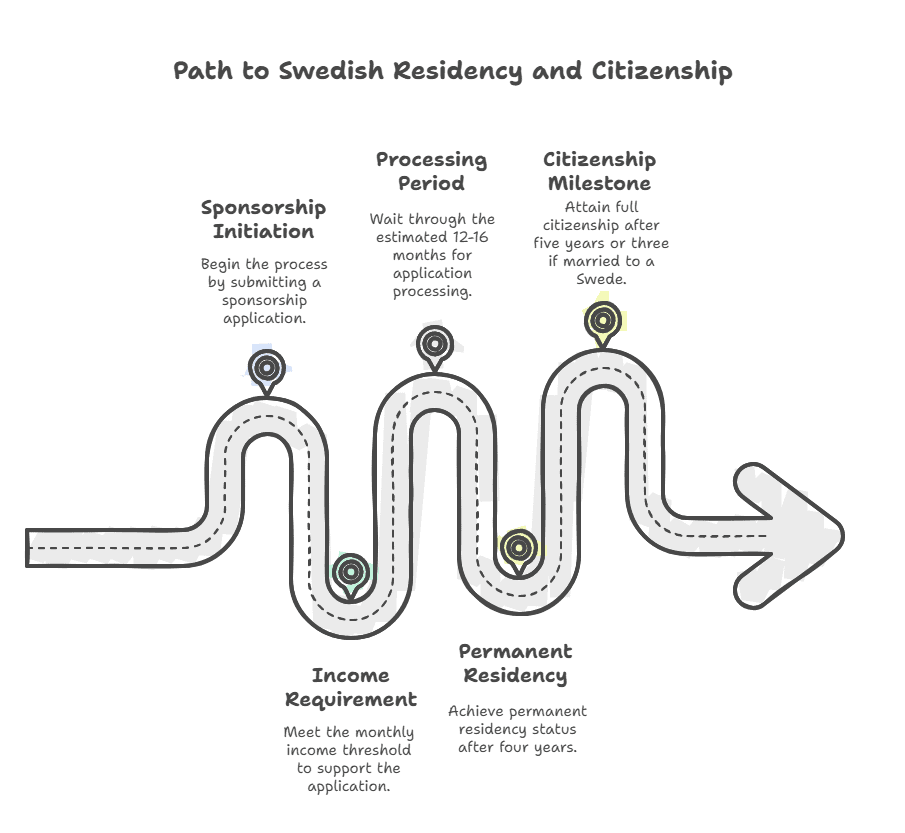
Sweden consistently ranks high in measures of quality of life and is known for progressive social policies, which extend to family reunification for immigrants. Expats moving to Sweden, whether for work, study, or as refugees, will find that Sweden provides a clear route to bring immediate family members. The country emphasizes family unity, although recent years have introduced some maintenance requirements and waiting times can be long.
Who Can Be Sponsored: Spouses or registered partners, cohabiting partners (sambo) – Sweden recognizes long-term unmarried relationships (including same-sex) for reunification – and children under 18 are all eligible. If the expat is an adult, they generally cannot sponsor parents or siblings except under very special circumstances (Sweden, like most EU countries, doesn’t have a standard category for bringing parents until possibly the expat becomes a citizen and even then it’s restricted). However, if the expat is a minor in Sweden (e.g. a child who got refugee status), they can bring their parents. For most expat scenarios (work or study), it’s spouse/partner and children that qualify.
Sponsor Eligibility: The sponsor is the person in Sweden (expat) who has a residence permit (or is a Swedish citizen). If the expat is in Sweden on a work permit or study permit, they can generally have their family apply for residence permits to join them. Sweden imposes a maintenance (financial) requirement and housing requirement for the sponsor in many cases. This means the sponsor must show they have an income sufficient to support their family (and themselves) and a home of enough size. The exact amount needed depends on family size – as of 2025, for example, a couple needs about SEK 10,219 (≈ $1,000) left after rent per month to meet the requirement, plus around SEK 3,000–4,600 ($293-$450) for each child depending on age. They also must have a rental contract or owned housing that is not too small (generally, for a couple no kids, a studio might suffice; add a bedroom if kids). Notably, if the sponsor is a Swedish citizen or a permanent resident, this maintenance requirement applies. If the sponsor is a temporary resident (like a worker), it also applies after the first 2 years when extending permits. But there are exemptions: those with certain refugee status may be exempt for initial 3 months, and if the relationship existed before the sponsor came to Sweden, the rule can sometimes be waived. The spouse being sponsored must be 18 or older (and so must the sponsor). Also, Sweden in general requires the couple to be at least 18 to even recognize the relationship for migration. There’s no language requirement for entry on a family visa (though note: acquiring citizenship down the line will likely require Swedish language knowledge, as new rules are being implemented).
Processing Times: Sweden’s migration agency has been known for lengthy processing times for family reunification applications. It’s not uncommon for it to take 12 to 18 months to get a decision. (Recent estimate: ~16 months for spouse cases.) This is a downside – the queue can be long due to high demand and thorough scrutiny. If the sponsor is an EU citizen in Sweden, the process can be faster under EU free movement rules (few months). For non-EU expats, one must apply online or via embassy and then possibly have an interview at a Swedish mission abroad. The waiting time has been a point of frustration for many. Swedish authorities will not generally issue temporary visas to come during the wait (unless the sponsor is an EU citizen) – so families often have to stay apart until approval. Once approved, the family member gets a residence permit card and can travel to Sweden. Initial permits for spouses usually are for 2 years.
Financial Requirements: As discussed, the income and housing requirement is key. In real terms, if an expat has a job in Sweden, chances are they meet the income part, since the bar (se around 10k SEK after rent for a couple) is not very high and Swedish salaries and rents usually align such that someone employed full-time can support a small family. The sponsor will need to present payslips, an employment contract, or bank statements if using savings, plus a rental lease. There’s also an application fee (currently about SEK 2,000 (~$190) for an adult, half for a child). Sweden doesn’t require any bond or such. Healthcare is not required to be pre-arranged; once the family member is resident they access the Swedish healthcare system (might need to pay local municipality fees for a person number, etc., but healthcare is largely state-funded). Overall, aside from living expenses and demonstrating them, there’s not a big financial barrier.
Residency & Citizenship Pathway: When family members join on a residence permit, they typically receive the same length of permit as the sponsor. If the sponsor is on a 2-year work permit, the spouse gets a 2-year family permit (with full work rights). After two years, they can extend. After 4 years of continuous residency on work permits, one can get permanent residency – but note Sweden changed rules: now to get permanent residency, you need to have held a temporary permit for at least 3 years and meet a higher bar (like a secure income, etc.). Family members can qualify for PR alongside the sponsor if timelines align. If the sponsor becomes a permanent resident or citizen, the family’s next extension could potentially be permanent if they’ve spent the requisite time. For citizenship, Sweden currently requires 5 years of residence (if not married to a Swede) or 3 years if married to a Swedish citizen, and a record of good conduct (no big criminal issues, debts). Sweden is introducing a basic Swedish language and civics requirement for citizenship likely by 2025, but it’s still generous in terms of time. Dual citizenship is allowed. One advantage: time in Sweden on any legal residence (work, family, refugee, etc.) counts toward citizenship – no PR needed first as long as you fulfill the time and other criteria. Expats can obtain residency through various visa programs, making it easier to settle in Sweden.
Restrictions: Sweden is very generous in defining who’s a partner (cohabiting counts), but you must provide evidence of your relationship (photos, correspondence, perhaps joint bills if applicable). If you haven’t lived together, they might not grant a residence permit unless you plan to marry or so – in which case a fiancé visa may be possible, but generally they like to see the couple has spent in-person time together. The maintenance requirement can postpone processing if the sponsor just moved and doesn’t have a job yet – typically a Swedish citizen returning with a foreign spouse must secure housing/income first to apply. Another thing: Once the family member is in Sweden, they are expected to integrate. If a couple separates during the temporary permit period, the family member’s permit might not be renewed (with exceptions if there was domestic violence or if they have strong ties like children in Sweden). But if separation happens after they got permanent residency, then it doesn’t affect their status.
Unique Benefits: Sweden offers extensive social benefits – family members will benefit from free healthcare (after a small co-pay), free schooling, and child allowances. The work permit for spouses is unrestricted – a spouse who comes on a family permit can work for any employer from day one, which is great for dual-career families. The society is very welcoming to families; things like parental leave (480 days split between parents) can apply once both are residents, which is exceptional. Safety and quality of life are high, and English is widely spoken (though learning Swedish is important for jobs/citizenship). The ability for a foreign spouse to naturalize in 3 years if married to a Swede is one of the fastest routes to EU citizenship(especially useful if an expat marries a Swede). The main drawback, as noted, is the long wait times and the need to handle interim separation or uncertainty. However, given Sweden’s overall pro-family stance and the strong rights given once in country, it remains a top choice for expats prioritizing family reunification and long-term security.
Conclusion: Finding the Right Balance
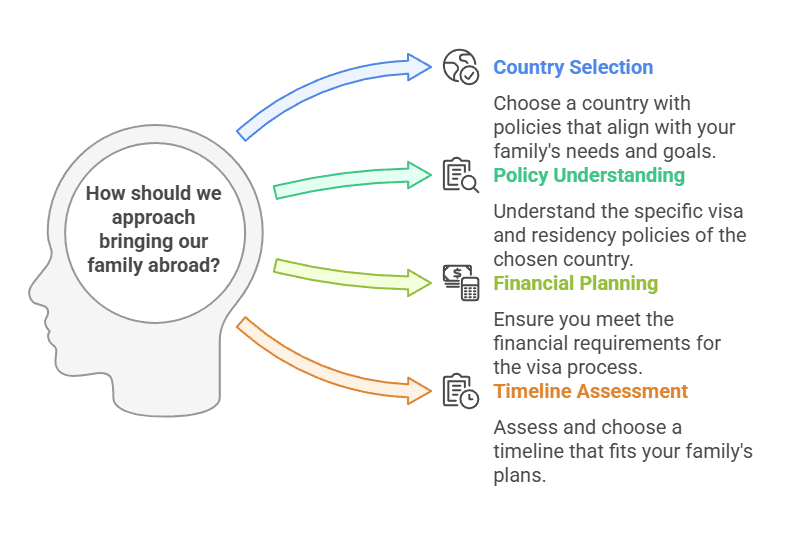
Choosing the best country for expat family sponsorship depends on your priorities – be it speed and ease of reunification, long-term citizenship opportunities, or economic prospects for your family.
If your goal is quick family unification with minimal fuss, countries like Singapore or the UAE stand out for their fast processing and straightforward criteria (largely income-based). However, they offer less permanency – you’ll be on temporary visas unless you meet criteria for special long-term schemes.
For a clear path to citizenship for your family, Canada, New Zealand, Portugal, and Australia are excellent, all allowing your spouse and kids to become permanent residents and citizens typically within 5 years or so. Canada has an edge with no income requirement for sponsoring spouses, while Portugal’s 5-year citizenship law is one of the fastest in the EU.
If you value a high standard of living and social benefits and don’t mind some bureaucracy, Sweden and Germany are very family-friendly once you’re there, offering extensive support (like free education and healthcare) and work rights for spouses. Just plan for potentially longer processing and requirements like learning the local language for deeper integration.
For those who have aging parents or extended dependents, consider Canada (Parent/Grandparent sponsorship or Super Visa) or Portugal (dependent parents allowed). The UK and Australia also have parent visas but with more restrictions/costs.
Financial considerations vary: the UK demands a high salary but others like Portugal and Canada have modest or no income asks for immediate family. Cost of living and taxes differ too – e.g., UAE has no tax but high out-of-pocket costs for schooling; Sweden has free services but higher taxes.

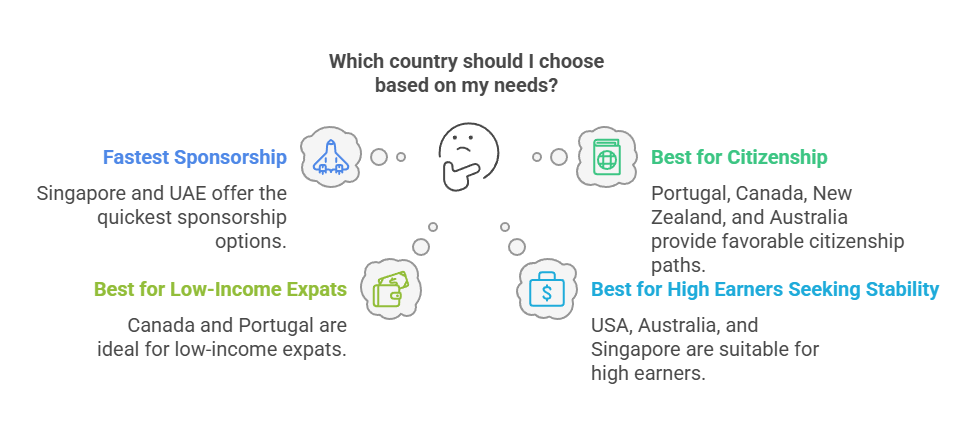
Ultimately, “best” is subjective, but a common theme among the top countries is long-term stability. Bringing your family is not just about the initial visa – it’s about knowing you can build a future together. Countries that provide a route to permanent residence or citizenship give that peace of mind. On the other hand, some expats might only need a few years abroad with family, in which case a country with an easy visa but no citizenship (like UAE or Singapore) could suffice.
Before deciding, ensure you research the latest policies (they do change: e.g., the UK’s income threshold recently rose, and the UAE launched new visa types). Engage with immigration authorities or consult experts if needed, and prepare your documents (marriage certificates, birth certificates, etc. often need official translations and apostilles).
By weighing factors of affordability, process difficulty, and long-term benefits, you can find the country that best aligns with your family’s needs. With the right choice, you’ll be on your way to reuniting with loved ones and creating a fulfilling life abroad – together. Additionally, consider exploring options in other countries that offer favorable visa programs, such as Working Holiday Visas or citizenship-by-investment, which might provide unique benefits and opportunities for your family.
