

Moving abroad in search of affordable and high-quality healthcare is an increasingly popular idea among expats. Many countries offer free or universal healthcare systems that are free or heavily subsidized for residents – meaning that once you become a legal resident, you can access medical services at little to no direct cost. In this comparative guide, we’ll explore the best countries for expats with free healthcare, focusing on healthcare quality, residency eligibility, costs, and waiting periods.
Healthcare Systems for Expats
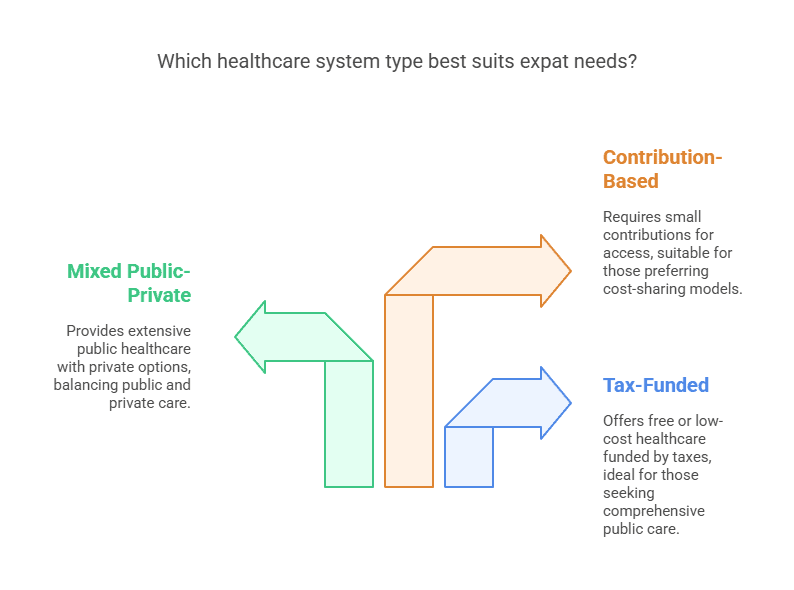
Healthcare systems around the world vary greatly in terms of funding models, access levels, and the quality of care provided. For expats, understanding these differences is crucial when choosing a new country to call home.
Most healthcare systems are funded by taxes or other contributions from residents. In countries with universal healthcare, these contributions ensure that everyone, including expats, can access essential healthcare services without facing financial hardship. However, the specifics of how these systems operate can differ widely.
For example, some countries have a single-payer system where the government is the sole provider of healthcare services, funded through general taxation. Others might have a multi-payer system, where both public and private entities provide healthcare, and residents can choose between them. In some cases, expats might need to pay into the system through social security contributions or mandatory health insurance premiums.
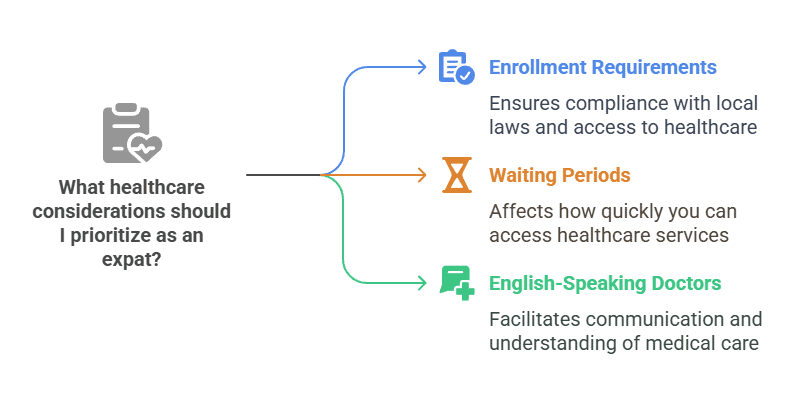
Expats should thoroughly research the local healthcare situation and regulations in their destination country. This includes understanding the process for enrolling in the public healthcare system, any waiting periods before coverage begins, and the availability of private health insurance options. It’s also important to consider the quality of care, availability of English-speaking healthcare providers, and any specific policies that might affect expats, such as those related to pre-existing conditions.
What Makes a Country Ideal for Healthcare-Seeking Expats?
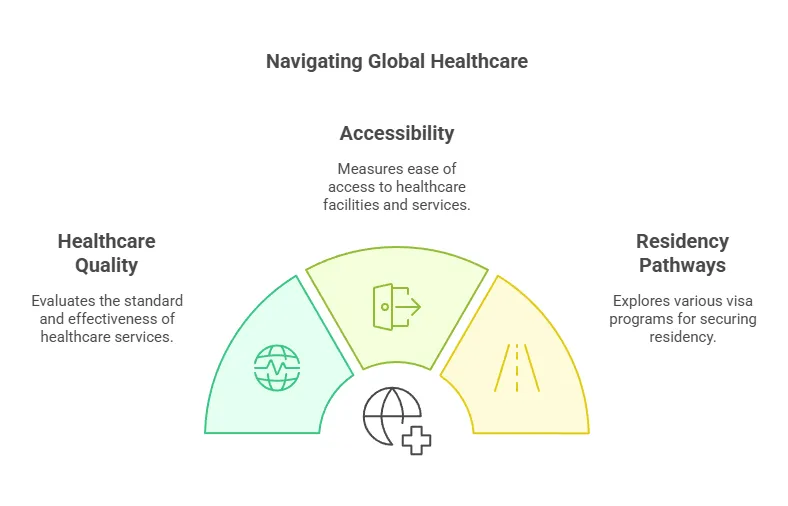
Quality of healthcare is paramount – expats want assurance that the care they receive abroad is as good as (or better than) back home. For example, France is often cited as providing the “best overall health care” in the world by the World Health Organization, and countries like Spain, Italy, and Singapore also rank among the top in various health indexes. High rankings typically reflect excellent medical outcomes, accessibility, and patient satisfaction.
Universal coverage and accessibility are also key. The ideal destination has a national health system that covers all residents (including expats) either for free or at a low cost. “Free” healthcare usually means tax-funded healthcare with no point-of-service charges for most services. However, truly free care is rare – most systems require modest co-pays or insurance contributions. Still, compared to paying full private insurance premiums, these subsidized healthcare systems offer huge savings by providing comprehensive medical services that are accessible and affordable for residents and expats alike.
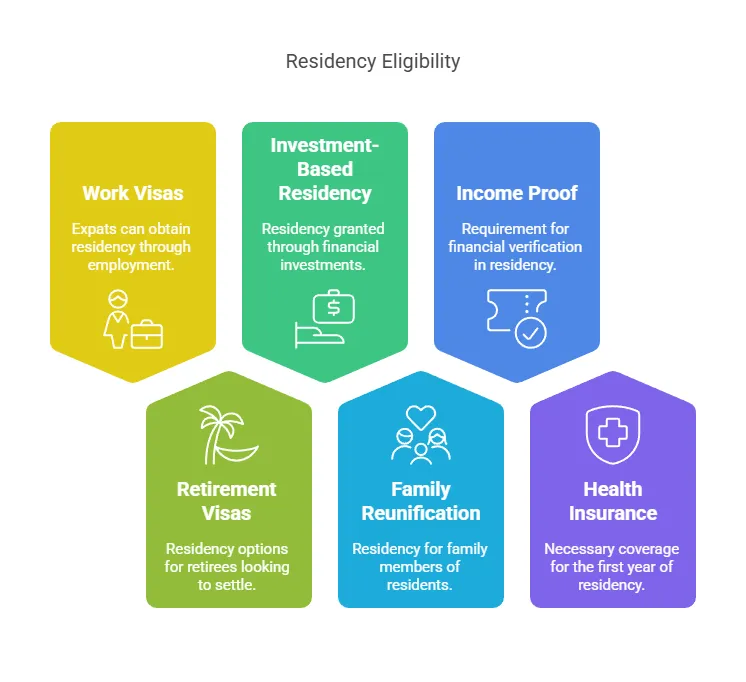
Residency eligibility is the other side of the coin. Expats need a pathway to legal residency to access public healthcare. We’ll outline common residency pathways – from work visas and family reunification to retiree visas and investment programs – and note any special requirements (like minimum income for retiree visas or health insurance for visa approval).
Comparative Table of Key Healthcare Factors for Expats
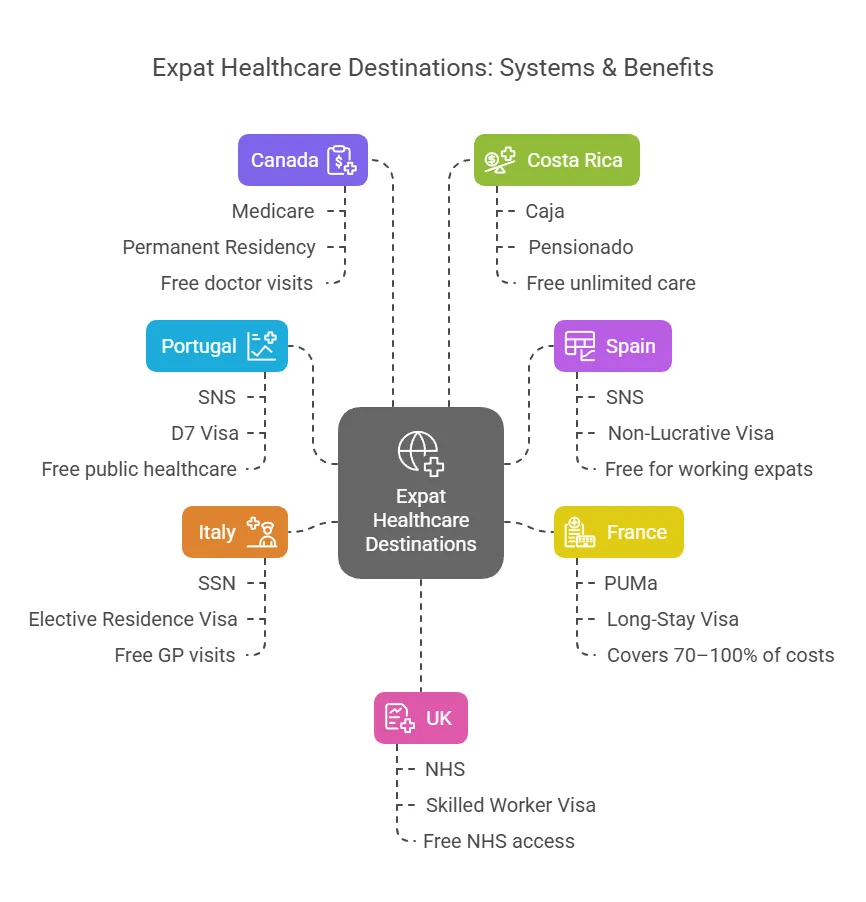
| Country | Healthcare System & Quality | Residency Options for Expats | Expat Healthcare Access & Costs | Waiting Period |
|---|---|---|---|---|
| Portugal | Tax-funded SNS (universal). Ranked among top globally; outperforms UK, ES, IT in access | D7 retiree visa; Digital Nomad visa; Golden Visa (investment); work visas. PR eligible after 5 years. | Public SNS for all residents. Free at point of use except small co-pays. Expats join SNS upon residency | None (coverage starts upon registering after obtaining residency). No special wait, just register locally. |
| Spain | Tax-funded SNS (NHS-style). WHO top 10 for qualityvery high life expectancy. | Non-Lucrative retirement visa (requires income & private insurance 1st year); Golden Visa; work visas; EU Blue Card. PR after 5 years. | Universal coverage for residents. Free doctor visits, surgeries, etcNon-working expats pay ~€60/mo via Convenio Especial after 1 year | 1 year wait for non-employed expats (must use private insurance first year)No wait if employed (instant access via social security). |
| France | Insurance-based universal system (PUMa). WHO #1 ranking high spending, excellent outcomes. | Long-stay visitor visa (for retirees with income); work visas; talent visas; family reunion. PR after 5 years. | State health insurance for all residents. Covers ~70–100% of costs; small co-pays. Most expats join PUMa after 3 months residenceOptional mutuelle for full coverage. | 3 months (for non-workers)Workers get immediate coverage (employer enrolls them). No exclusion of pre-existing conditions. |
| Italy | Tax-funded SSN (national health service). WHO #2; high doctor-to-patient ratio, great outcomes. | Elective Residence visa (retirees – requires ~€31k income); work visas; investor visa. PR after 5 years. | Universal healthcare for residents. Free GP/family doctorspecialist visits and hospitals mostly free (small ticket fees). Non-employed expats pay ~€400/yr to join SSN. | None (coverage upon residency). Must show private insurance for visa, but can enroll in SSN immediately after obtaining Permesso (no gap in coverage). |
| Canada | Tax-funded Medicare (single-payer by province). High quality care; some wait-time issues. Ranked #18 in one global innovation index | Permanent Residency via Express Entry (skilled workers), family sponsorship, etc.; some work visas offer temporary coverage. Citizenship after ~3+ years of PR. | Universal healthcare for PRs. No fees at use for doctor/hospitalDoesn’t cover dental/vision/drugs (can use private insurance for those). | Up to 3 months in some provincesNew PRs need private insurance during wait. (E.g. Ontario, BC: 3-month wait; Alberta: no wait). |
| Costa Rica | Tax-funded Caja universal system. Best in region; high satisfaction. Outcomes rival developed nations (blue zone longevity). | Pensionado visa ($1k/mo pension)Rentista ($2.5k/mo income) Investor ($150k). Permanent residency after 3 years. | Universal coverage via Caja for residents. Mandatory enrollmentFree unlimited treatment – no additional cost at point of serviceMonthly contribution 6–13% of income | None (coverage begins immediately upon residency – enrollment in Caja is part of the process). No exclusions (covers pre-existing conditions) |
| United Kingdom | Tax-funded NHS (single-payer). Legendary free healthcare system; quality high but strained in recent years. Model for universal care worldwide | Skilled Worker visa (job offer + sponsorship); family (spouse) visa; student visa; innovator/investor routes. ILR (permanent residency) after 5 years in many cases. | NHS for all residents. Free GP, ER, surgery, etc. funded by taxes. Expats on visas pay Immigration Health Surcharge (~£624/yr) to access NHSOnce paid, no charges per use. | None (immediate NHS access once visa active/IHS paid). Tourists or short-term visitors are not covered (charged if they use NHS). |
Portugal – High Quality Care, Private Health Insurance, and Expat-Friendly Residency
Healthcare Quality and System: Portugal has a well-regarded healthcare system that consistently scores high on international indices. In fact, Portugal’s system ranks higher than those of the UK, Spain, and Italy on measures of patient rights, accessibility, and health outcomes. The national health service, the Serviço Nacional de Saúde (SNS), is a tax-funded universal system. It provides mostly free care at the point of use, with small co-pays for certain services (and exemptions for children under 18 and seniors over 65). Overall, expats can expect high-quality, modern care in Portugal’s public hospitals and clinics, with an extensive network of English-speaking doctors.
Residency Pathways: Portugal is famously welcoming to foreign residents. Expats have multiple visa options, including the popular D7 visa (for retirees or those with passive income) and the Digital Nomad (D8) visa for remote workers. The Golden Visa program (investment-based residency) has also attracted many expats (though it’s undergoing changes). These visas typically lead to a residence permit valid for 1–2 years, renewable, and one can apply for permanent residency after 5 years. Eligibility requirements are reasonable – for example, the D7 visa requires proof of a sufficient stable income (around €8,800/year for a single applicant, plus more for dependents) and a place to live in Portugal. Importantly, there’s no language test or point system at the residency stage, making Portugal one of the easier pathways into Europe for non-EU citizens.
Healthcare Access for Expats: Legal residents in Portugal can access the SNS on the same terms as citizens. Once you receive your residence permit, you can register for public healthcare at the local health center (getting your “utente” health number). There is no long waiting period – coverage begins as soon as you’re registered. Expats on work visas will likely start contributing to social security via their paychecks, which funds the system. If you’re not working (e.g. retired), you may still access SNS; you might not even be charged any monthly premium, since general taxes support the system. In practice, many non-working expats use the public system and just pay the same nominal fees per visit as locals. For instance, a routine GP visit might cost a few euros, and many services are free.
Private Insurance: While additional private insurance isn’t required, some expats opt for it to supplement the public system. Private health insurance in Portugal is relatively affordable and can offer faster access for elective specialists or private hospitals. However, it’s optional – the public SNS is comprehensive. Do note that when applying for the initial visa (such as D7), Portuguese consulates often require proof of travel health insurance to cover you until you formalize residency. After you become a resident and join SNS, that private cover can be dropped if you wish. In summary, Portugal offers affordable expat healthcare options through its excellent public system, with minimal hassle for new residents.
Spain – World-Class Healthcare with Full Coverage for Residents
Healthcare Quality and System: Spain’s healthcare is frequently lauded as one of the best in the world. The Sistema Nacional de Salud (SNS) is Spain’s public healthcare network, operating on a Beveridge model like the UK’s NHS. It is tax-funded and provides universal coverage. For residents, healthcare in Spain is free at the point of service – doctor visits, hospital treatments, and most procedures incur no charge. (Patients may pay small co-pays on prescriptions, but even those are subsidized.) According to the WHO’s historic assessment, Spain ranked in the top 10 globally for overall health system performance, and Spaniards enjoy one of the highest life expectancies in the world – a testament to the quality of care and healthy lifestyle. Infrastructure is modern, and there’s a wide availability of specialists. Many doctors in urban areas speak some English, though learning basic Spanish will greatly help navigate the system.
Residency Pathways: Spain offers multiple residency options for non-EU expats. One popular route is the Non-Lucrative Visa (NLV), designed for retirees or persons with independent income who won’t be working in Spain. This visa requires proof of sufficient funds (about €28,000 per year for an individual) and private health insurance for the first year. There are also work visas for those with a job offer in Spain, EU Blue Cards for highly skilled professionals, student visas, etc. After five years of continuous residence, expats can apply for permanent residency (and even citizenship after 10 years, in most cases).
Healthcare Access for Expats: Legal residents in Spain are eligible for the public healthcare system, but the route to access depends on your status. Expats employed in Spain (or self-employed and paying social security) are automatically contributing to the SNS and can register for free healthcare immediately. They simply need their social security number and local residency registration to get a health card. Retirees and non-working residents have a path to coverage too, but it comes with a catch – Spain requires non-working foreigners to live in the country for a period before joining SNS. Specifically, non-EU residents on visas like the NLV must maintain private health insurance during their first year. After one year of legal residency, they become eligible to apply to Spain’s Convenio Especial healthcare program. The Convenio Especial is a government scheme allowing non-working residents to buy into the national system for a monthly fee. The fee is around €60 per month (if under 65) or ~€157 per month (if 65+), granting full access to public healthcare. Once enrolled, expats get the same range of services as any Spaniard – including free primary care, specialist visits, and surgeries. It’s worth noting that if you eventually attain permanent residency or start working, you would transition to ordinary free SNS coverage.
For expats from EU countries (or those drawing a state pension from an EU country), access is even easier: they can often register in Spain’s system immediately using an “S1” form from their home country, transferring health coverage. But for non-EU expats (e.g. Americans, Canadians), planning for that first year with private insurance is key. After that, Spain’s public healthcare can take over, ensuring you have subsidized healthcare for the long term.
Private Insurance: Private health insurance is mandatory for visa applicants like the NLV because of the initial exclusion from SNS. Spain has many private hospitals and clinics, and insurance costs are moderate (much cheaper than in the US, for example). Many expats use private insurance in parallel with public healthcare – relying on public care for serious or expensive treatments (since it’s excellent), but using private insurance for more immediate access to elective specialists or English-speaking facilities. However, it’s perfectly feasible to rely solely on Spain’s public healthcare once you’re eligible; the care is high-quality and free, with some of the best health outcomes in Europe.
France – Top-Tier Healthcare and Universal Coverage for Residents
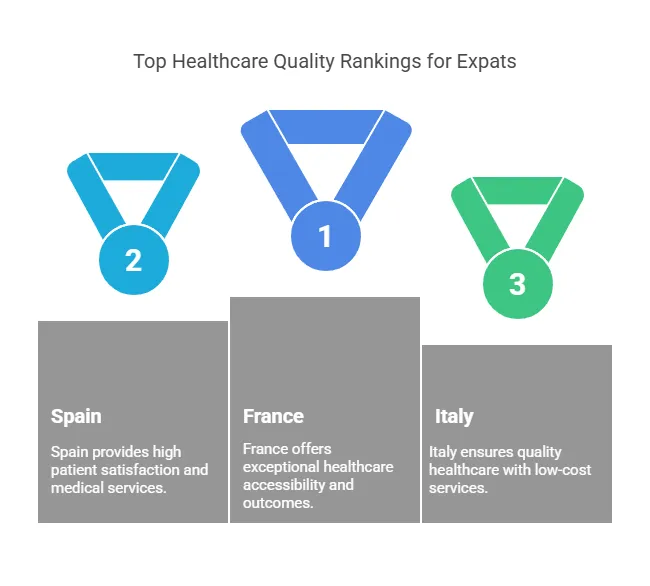
Healthcare Quality and System: France is renowned for its healthcare excellence. In the World Health Organization’s landmark ranking, France was rated #1 out of 191 countries for overall health system performance. The system is characterized by a mix of public and private provision but with universal insurance coverage known as Protection Universelle Maladie (PUMa). All legal residents in France are entitled to public health insurance, which covers around 70%–80% of most healthcare costs (and 100% for costly or chronic conditions). Patients typically pay a small co-pay at the doctor or pharmacy, which can be reimbursed if they carry a voluntary health insurance (mutuelle). This structure means healthcare is heavily subsidized – practically free at point of use once you’re in the system, aside from modest co-pays. The quality of care is outstanding: France has a high density of doctors, modern hospitals, and an emphasis on preventative care. It also spends a high percentage of GDP on health (about 12%, among the top in Europe), which translates to well-funded services.
Residency Pathways: France doesn’t have a specific “retiree visa” program like Portugal or Spain, but it does allow non-EU citizens to move on a long-stay visitor visa if they have sufficient income and won’t work (this can be ideal for retirees). There are also work visas, talent visas, entrepreneur visas, and family reunification visas. Any of these, once approved, grant a titre de séjour (residence permit), typically valid for 1 year (visitor) or up to 4 years (some talent visas), renewable. After five years of continuous residence, one can apply for a 10-year resident card or even citizenship. France does require visa applicants to show proof of health coverage for the initial visa – often private travel insurance covering at least €30,000 in medical expenses – but this is mostly to ensure you’re covered until you join the national system.
Healthcare Access for Expats: Under French law, everyone who is a resident (staying 3 months or more) is eligible to join public health insurance (PUMa). If you come to France on a work contract, your employer will register you for social security and health insurance immediately – there’s no waiting period, and you and your family will receive coverage from day one. If you are not working (e.g. retiree on a visitor visa), you typically need to show 3 months of residency (e.g. utility bills or lease proving you’ve lived in France for 90+ days) before you can apply to enroll in PUMa. During those first three months, expats usually rely on their travel/expat insurance. After that, you’ll file an application with your local CPAM (the healthcare administration office) to get your French health card (Carte Vitale). The process can take a couple of months, but once completed, you’ll have the same public healthcare rights as French citizens.
It’s important to note that healthcare in France is not completely “free” – residents pay via social contributions or taxes. If you are working, contributions are deducted from your salary. If you are retired or not working, France may levy a health contribution on your income (around 8% on income above a threshold) as part of PUMa – but many retirees with moderate incomes find they pay little to nothing for this. In exchange, you get access to arguably the world’s best healthcare, with coverage for general medicine, specialists, hospitalizations, and even things like home nursing care and extensive preventive services.
Supplemental Insurance: While not strictly necessary, about 95% of people in France (including expats) carry a mutuelle, a supplemental private insurance that covers the remaining co-pays and items not fully covered by the state (like eyeglasses or dental work beyond basics). Some employers provide a mutuelle; otherwise, an individual can buy one. Even without a mutuelle, the out-of-pocket costs under French public insurance are very low – for example, a standard doctor’s visit costs €25, of which €17 is reimbursed by the state, leaving €8 (which a mutuelle would typically cover). No exclusion for pre-existing conditions applies in the public system – coverage is universal. Overall, France offers expats a combination of easy residency in a beautiful country with healthcare that is high-quality, universal, and affordable.
Italy – Excellent Healthcare and Low-Cost Access for Residents
Healthcare Quality and System: Italy’s healthcare system is a national health service (Servizio Sanitario Nazionale – SSN) providing universal coverage. It was ranked #2 globally by the WHO’s analysis, and Italians enjoy very high life expectancy and health outcomes. The SSN is regionally organized but nationally funded through taxes. For patients, most services are free or have only token co-pays (ticket fees). You choose a family doctor (general practitioner) who is your primary point of care – and as an expat resident, “you will have, for free, a family doctor” in Italy. This doctor can refer you to specialists or hospitals as needed, nearly all of which will be covered by the SSN. Emergency care and essential surgeries are covered at 100%. There may be small fees for things like specialist visits or diagnostic tests, but the costs are controlled (e.g. €20–€30 for an MRI is not uncommon). The quality of care is high – Italy has world-class hospitals (especially in the north) and highly trained medical professionals. However, like many countries, public facilities can face wait times for non-urgent procedures, so some Italians and expats use private providers for faster service when they’re willing to pay out-of-pocket.
Residency Pathways: Italy is popular for retirees and others who want “la dolce vita.” The primary option for non-EU retirees is the Elective Residence Visa, which is essentially a retirement visa. To qualify, you must demonstrate a stable passive income (generally around €31,000/year for an individual, plus about 20% more for a spouse) and have a long-term accommodation in Italy (owned or rented). Importantly, applicants must show proof of health insurance to cover them upon entry – typically a private policy with at least €30,000–€50,000 coverage. This visa doesn’t allow you to work in Italy. Other pathways include work visas (if you have a job offer and Italy’s quota allows it), investor visas, or family reunification if you have Italian family. Once you have a visa and arrive, you’ll obtain a Permesso di Soggiorno (residence permit). After 5 years of continuous residency, one can apply for a long-term EU residency permit, and after 10 years you could seek citizenship.
Healthcare Access for Expats: The great news is that legal residents in Italy can enroll in the SSN, often for a very low cost. If you are employed in Italy, you are automatically covered – your employer’s payroll taxes fund your enrollment, and you just register locally to get your health card (tessera sanitaria). If you are on an Elective Residence (retiree) visa or another non-working visa, you can voluntarily join the SSN by paying an annual fee. This fee is quite reasonable – roughly in the €400 range per year for an individual (the exact amount can vary by region and income). In fact, some sources note that elective residence visa holders get “free registration with the national healthcare” for residents, aside from the standard enrollment fee. Once enrolled, you receive full access to Italy’s public healthcare: assignation of a free family doctor, specialist visits, hospital treatments, etc., largely at no out-of-pocket cost.
It’s worth emphasizing that the initial visa requirement of private insurance is only to cover the period before you become a resident. After obtaining residency and joining the SSN, you do not need ongoing private health insurance (though some keep it for supplemental coverage). Italy does not impose a long waiting period for coverage – as soon as you have your residence permit and have paid the annual SSN fee (if required), you can use public healthcare. There are no exclusions for pre-existing conditions and no age limits. This makes Italy an extremely attractive option, since you could be paying a few hundred euros per year for healthcare that would cost tens of thousands in the US.
In summary, Italy offers high-quality, mostly-free healthcare to expat residents, with straightforward access. Combine that with Italy’s rich culture and you have a compelling expat destination.
Canada – Universal Healthcare After a Short Waiting Period
Healthcare Quality and System: Canada’s healthcare system, often referred to as Medicare, provides universal coverage to all citizens and permanent residents. It is a single-payer system managed provincially, meaning each province/territory runs its own health insurance plan under federal guidelines. In practice, healthcare in Canada is free at point of service for patients – doctor visits, hospital stays, surgeries, etc., are covered by the government. Canada consistently ranks high in global quality of life, and healthcare access is a big reason why. That said, Canada has faced challenges with wait times for certain non-urgent procedures, and in global healthcare rankings among developed countries it sometimes scores mid-pack on outcomes. But Canadians have very good health overall and do not face financial barriers to accessing care. The Commonwealth Fund in 2021 ranked Canada #10 of 11 high-income countries for healthcare system performance (notably lower due to wait times and lack of prescription/drug coverage in the public system). Still, the medical quality – especially for acute and emergency care – is excellent, with cutting-edge hospitals and highly trained staff.
Residency Pathways: For expats, the main way to access Canada’s healthcare is by becoming a permanent resident (PR). Canada has various immigration programs: the merit-based Express Entry system for skilled workers, provincial nominee programs, family sponsorship, investor programs, etc. Gaining PR can be competitive and requires meeting criteria like education, work experience, language ability (for skilled workers) or having family ties or job offers. Once you become a PR, you are entitled to public healthcare. (Some expats also come on work permits; many provinces extend health coverage to temporary workers on permits valid for >6 months, but ultimately PR offers the security of long-term access.)
Healthcare Access for Expats: Public healthcare in Canada covers PRs and citizens, but new residents should be aware of provincial wait times. Some provinces (like Ontario, British Columbia, and Quebec) impose a waiting period of up to 3 months after you move there before your government health insurance begins. This policy is designed to prevent people from immediately consuming care when they haven’t contributed taxes yet. Other provinces, like Alberta, have no waiting period – coverage starts right away upon arrival. To give an example, if you land in Ontario as a new PR, you’ll apply for an OHIP (Ontario Health Insurance Plan) card, but OHIP will become effective only after 3 months. During those initial months, expats must rely on private insurance or pay out-of-pocket if they need care. It’s highly recommended to purchase a travel health insurance plan to cover that gap. After the wait, you’ll receive a provincial health card and can access the full range of medically necessary services free of charge.
Canada’s Medicare does not cover prescription drugs, dental, or vision care for most adults (those are often paid out-of-pocket or via private insurance from employers). Many Canadians (and expats) carry supplemental insurance for those items. For basic medical care though – like seeing a family doctor or going to the ER – there is no charge with your health card. No monthly premiums are charged in most provinces either (funding comes from general taxes, except in a couple provinces that charge a nominal health premium).
In summary, if you can navigate the immigration process, Canada rewards you with world-class, tax-funded healthcare. Aside from a possible short wait at the start, expats get the peace of mind of free hospital and physician services. The combination of a high standard of living and healthcare security makes Canada one of the best countries for expats with free healthcare, especially for families seeking a safe, healthy environment.
Costa Rica – Affordable Paradise with Universal Healthcare
Healthcare Quality and System: Costa Rica might surprise some with its inclusion among top healthcare destinations, but it has earned the spot. This small Central American nation has a universal public healthcare system known as the Caja Costarricense de Seguro Social (CCSS), often just called “Caja”. The Caja operates an extensive network of hospitals (30 public hospitals) and clinics (250+ clinics). Through Caja, all citizens and legal residents have 100% coverage for medical care – including doctor visits, hospitalization, surgeries, and prescription drugs. In effect, once you’re in the system, healthcare is free at the point of use. Costa Rica’s healthcare outcomes are remarkably strong: life expectancy is about 80 years (on par with the USA), and its system was ranked higher than that of the U.S. in the WHO’s analysis (the WHO ranked Costa Rica’s system #36 vs #37 for the U.S.)! Many doctors are trained abroad and speak English, especially in private facilities. Public hospitals may not have the ultra-luxury feel, but they deliver solid care – albeit with the common issue of wait times for some specialists. Preventive care is a priority in Costa Rica, contributing to its reputation as a “blue zone” (areas with unusually long-lived populations). Overall, the quality is high and continually improving, making it a top affordable expat healthcare option.
Residency Pathways: Costa Rica actively encourages foreign retirees and investors. The three main residency categories for expats are:
Pensionado – for retirees with a lifetime pension of at least $1,000 per month (Social Security, government or private pension). This is the most popular for North American retirees.
Rentista – for those with no pension but with funds to support themselves. It requires showing an income of $2,500 per month for at least 2 years, often by depositing $60,000 in a Costa Rican bank (which then pays you $2,500 monthly).
Inversionista – for individuals who invest at least $150,000 in Costa Rica (could be real estate, business, etc.).
All these types grant temporary residency (usually 2-year term, then renewable) and can lead to permanent residency after 3 years. Crucially, enrollment in the national health system (Caja) is a mandatory part of the residency process. In fact, you cannot receive your final residence card (cédule) until you show proof of joining Caja and paying the required fees. The linkage is explicit: upon approval of your application, you’ll be instructed to sign up at the local Caja office, and only then do you become a resident.
Healthcare Access for Expats: The moment you become a resident in Costa Rica, you and your dependents can use the public healthcare system without exclusion. To join Caja, you’ll have a short interview to declare your income, and then you’ll be assigned a monthly fee based on that income. The fees range from about 6% to 13% of your reported income (the rate is on a sliding scale). For example, a pensionado with a $1,000/month pension might pay around $50–$60 a month into Caja, whereas someone with $3,000/month income might pay around $240 (approximately 8% of $3k). This contribution covers your entire family (spouse is included under one fee). Once enrolled, healthcare is free at the point of service – you won’t be billed for doctor visits, surgeries, or medications; it’s all covered by your Caja contributions and Costa Rica’s government funding. There are no exclusions for pre-existing conditions in Caja – coverage is truly universal and regardless of age.
Expats often praise the low cost and comprehensive nature of Caja, but some do complain about the bureaucratic process and wait times for non-urgent appointments. For instance, routine specialist consultations or elective surgeries in the public system can take months. Because of this, many expats and locals use a dual system approach: they maintain their Caja membership (since it’s mandatory and great for serious issues or anything expensive) and also use private doctors/hospitals for faster service when willing to pay out of pocket. Private healthcare in Costa Rica is still much cheaper than in the U.S. – and there are world-class private hospitals like CIMA, Clínica Bíblica, etc., which are JCI-accredited and popular for medical tourism. Some expats buy private insurance (from the state INS or international insurers) to cover private care. But importantly, even without private insurance, an expat resident has full medical coverage thanks to Caja.
In summary, Costa Rica stands out as a country where obtaining residency is quite straightforward for retirees, and it guarantees affordable healthcare. The combination of a tropical lifestyle, low cost of living, and free/unlimited medical treatment for a modest monthly feemakes it extremely appealing. It’s no wonder Costa Rica often ranks among the top expat retirement destinations for healthcare and lifestyle.
United Kingdom – The UK’s National Health Service and Free Healthcare (with a Catch)
No discussion of free healthcare is complete without mentioning the UK’s National Health Service (NHS). The NHS is a single-payer, tax-funded system that provides free healthcare to all UK residents. It was a model for many systems worldwide (Spain and others emulate the “Beveridge model” of the NHS). Through the NHS, doctor visits, emergency care, and hospital treatments are generally free. Patients pay only for some prescriptions (in England) or dental/vision services, but even those have caps and exemptions. The NHS has a proud history and offers high-quality care, though in recent years it has faced capacity challenges (longer waits for some treatments due to underfunding and high demand).
For expats, the key issue is residency eligibility. The UK doesn’t have easy retirement visas. Typically, non-EU foreigners can become residents by obtaining a work visa, a skilled worker sponsorship, a family (spouse) visa, or an investor visa. If you do manage to secure a long-term visa (for example, a Skilled Worker Visa for a job in the UK), you will be required to pay the Immigration Health Surcharge (IHS) as part of your visa fees. The IHS is currently around £624 per year (per adult). By paying this, you gain access to the NHS from the moment you arrive – effectively, the NHS is then “free” at point of use with no further charges. In other words, expats on work visas or student visas who have paid the IHS use the NHS just like any resident (GP visits, ER, surgery – all covered). If you become a permanent resident or citizen, you no longer pay the surcharge; healthcare is funded via general taxes and National Insurance contributions.
One scenario to note: if an expat is in the UK on a tourist visa or some short-term stay, they are not eligible for free non-emergency NHS care. The NHS will charge visitors (and those charges can be very high). But as long as you obtain legal residency (temporary or permanent), you can benefit from the NHS. The quality of NHS care is generally very good (world-class doctors, especially in specialties). However, expats may encounter wait times for certain elective procedures. Many UK residents (about 11%) supplement with private insurance to get faster private care when needed. Still, the peace of mind of comprehensive free healthcare is a huge draw for those moving to the UK.
In summary, the UK’s healthcare is excellent and free for residents, but the challenge for expats is obtaining the residency in the first place. If you have a path to live in the UK, you will enjoy the cradle-to-grave coverage of the NHS. Just budget for the immigration health surcharge in your first years, and after that, it’s all cared for by the system.
Final Thoughts
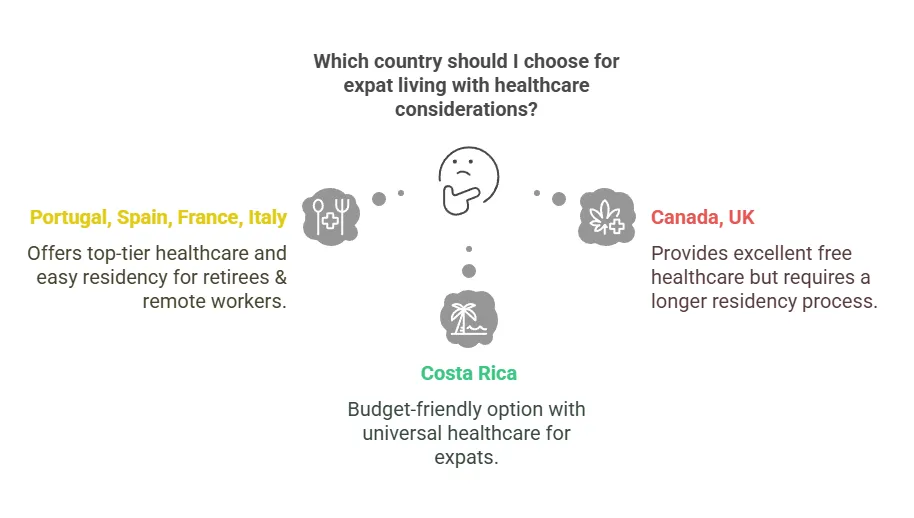
When considering affordable expat healthcare options, it’s clear that several countries stand out for combining high-quality medical services with accessible residency pathways. European nations like Portugal, Spain, France, and Italy offer first-class healthcare and relatively straightforward visa options for those with steady income or employment – making them prime destinations for retirees and remote workers seeking “free” healthcare abroad. Canada and the UK provide Western-standard care and a familiar language/culture, though gaining residency can be more competitive. Meanwhile, Costa Rica shows that even in the developing world, one can find universal healthcare and a warm welcome for foreign retirees.
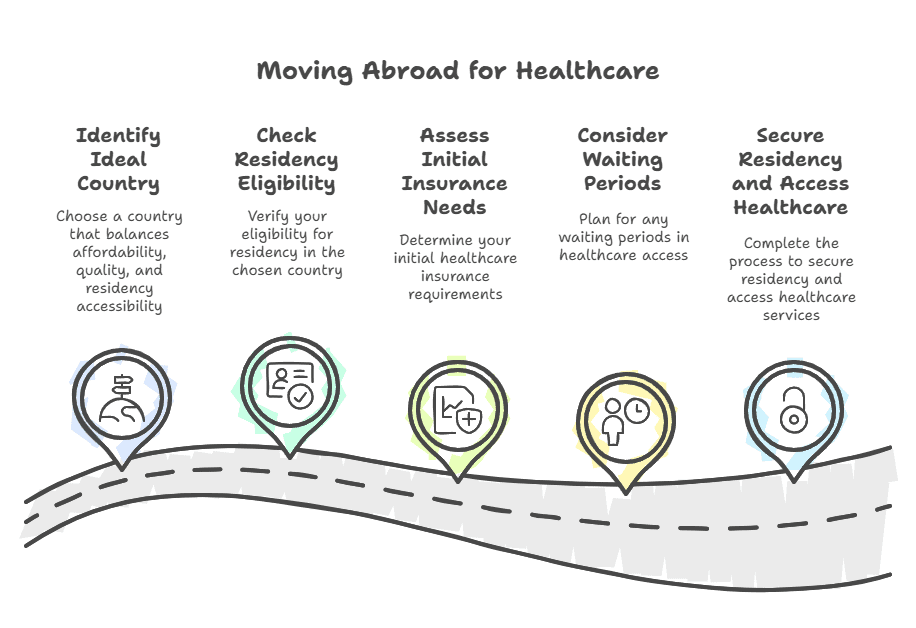
Before moving, expats should always verify the latest eligibility requirements for residency (income thresholds, visa quotas, etc.) and plan for any initial insurance needs during transition periods. It’s wise to budget for private health insurance in the short term, especially for countries with waiting periods or mandatory private coverage for visa issuance. Over the long term, however, the ability to integrate into a country’s public healthcare system can save you enormously on medical costs and provide peace of mind.
Each of the countries above has its nuances, but all share a common trait: if you become a resident, you won’t need to worry about crushing medical bills. From the Iberian Peninsula to the tropics of Central America, the world’s best healthcare systems are ready to care for you as an expat. By choosing your destination wisely, you can enjoy both a new life abroad and the security of free or subsidized healthcare – truly the best of both worlds for expat individuals and families.
