

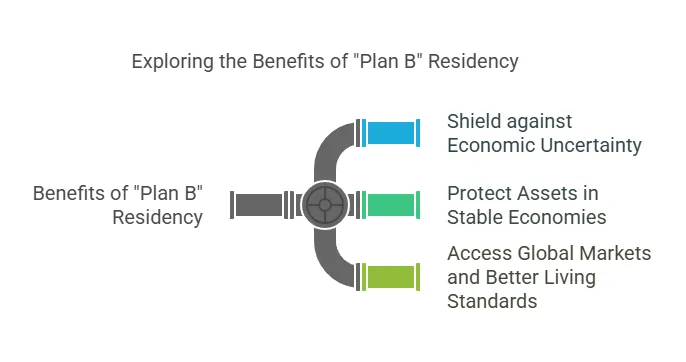
When economic uncertainty looms at home, securing residency in a stable, prosperous country can be a smart “Plan B” for professionals, entrepreneurs, and high-net-worth individuals. In this global analysis, we compare top-ranked countries that offer expat-friendly residence permits as a hedge against economic downturns and attract foreign investment through appealing investment opportunities.
Each country profiled below combines a relatively accessible residency pathway with a resilient economy and favorable living conditions. Comparative tables are included for a side-by-side overview of these factors. Read on to discover which safe-haven residency might best fortify your financial future.
Residency Pathways & Requirements Comparison
Country | Main Residency Options (Ease) | Financial/Investment Requirements | Time to Permanent Residency | Time to Citizenship & Dual Citizenship |
|---|---|---|---|---|
Portugal | Multiple visa pathways – D7 passive income visa, Digital Nomad visa, Golden Visa (investment). Process ~6–12 months; relatively low bureaucracy | D7: ~€760/mo passive income; Nomad: ~€3,040/mo income Golden Visa: €280k–€500k+ investment (business/fund) | 5 years (temporary residency renewed, then eligible for PR) | 5 years to apply for citizenship (language A2 test) Dual citizenship allowed (no renunciation) |
Spain | Non-Lucrative Visa (retirees); Digital Nomad visa (remote workers) Moderate bureaucracy, 1–3 months. | NLV: ~€27k/year income. Nomad: ~€2,650/mo income | 5 years continuous residency for Permanent Residence | 10 years to apply for citizenship Dual citizenship generally NOT allowed with U.S. (renunciation required) |
Malta | Malta Permanent Residence Program – one-step PR by investment, ~4–6 months Also Global Residence (annual tax scheme). Very straightforward with agents. | Property + Contribution: e.g. rent ≥€10-12k/yr or buy €300-350k; Government contribution €30k–€60k; €2k donation ~€100k total outlay. | Immediate PR granted (no interim temporary status) PR is lifelong (renewable card every 5 years) | ~5 years (standard naturalization) if residing. Citizenship by investment program suspended (was ~1-3 years). Dual citizenship allowed. |
UAE | Property Investor Visa (2-year or 10-year Golden Visa) – very fast (weeks); Company formation visa (3-year); Employment visa (duration of job); Remote work visa (1-year). Minimal bureaucracy. | 2-year Investor: property ≥ AED 750k ($205k) 10-year Golden: property ≥ AED 2M ($545k) or significant business investment; or special talent (salary ~AED 30k+). Remote work: $5k/mo income. | No formal “PR” – visas are long-term renewable. Golden Visa valid 10 years (renewable) acts as de facto PR. | No routine citizenship path for expats (naturalization by exception only). Effectively no citizenship for most, hence dual N/A. Residency can be kept indefinitely via renewals. |
Singapore | Employment Pass (work visa) – ~1–2 months via employer; Global Investor Programme (direct PR for S$2.5M investment); EntrePass for startups. High requirements but efficient processing. | Employment Pass: job with ≥S$5k monthly salary. Investor PR (GIP): S$2.5 million investment in business/fund + substantial business track record. EntrePass: min S$100k startup funding or innovation criteria. | Varies: PR can be obtained upfront via GIP (on approval) Employment Pass holders: ~6–12 months before eligible to apply for PR, which once approved is permanent (renewable 5-year Re-Entry Permit). | The Global Investor Programme allows wealthy individuals to establish permanent residency through a S$2.5 million investment, highlighting the stability of the Singaporean economy. ~2+ years as PR to be eligible for citizenship, but many wait longer. Dual citizenship not allowed – must renounce previous citizenship to naturalize. Many remain PR long-term. |
Panama | Friendly Nations Visa – 2-year temporary then PR ; Pensionado (immediate PR for retirees); Reforestation or Investment visas. Process ~3–6 months, relatively easy | Friendly Nations: $200k real estate or local employment Pensionado: $1,000/mo pension. Self-solvency: $300k bank or property + $3k/mo income | 2 years (Friendly Nations temp resident converts to Permanent Residence after 2 years) Some programs (Pensionado) give immediate PR. | 5 years of PR to qualify for citizenship Spanish language and integration required. Dual citizenship technically not recognized (Panama requires renunciation, though enforcement is lax). |
Canada | Express Entry (Skilled Worker PR) – ~6 months process; Start-Up Visa (PR for entrepreneurs); Provincial Nominee Programs; Family sponsorship. Very transparent, points-based. | Express Entry: points based on skills (no set investment; need proof of ~CAD 13k funds). Start-Up Visa: endorsement by investor + ~$CAD 300k net worth. Provincial investor visas: vary (e.g. CAD 150k business investment). | Immediate PR upon visa approval (Express Entry and Start-Up Visa grant direct permanent residency). No temporary stage needed for these pathways. | Citizenship after 3 years (of last 5 years) physical presence as PR. Dual citizenship allowed. Canada allows/recognizes multiple citizenships freely. |
New Zealand | Skilled Migrant Visa (points-based residency) – currently undergoing changes; Investor Visa (Active Investor Plus) – invest NZ$5M+; Work to Residence pathways. Friendly process but high criteria. | Skilled Migrant: points for age, skills, job offer, etc. Investor Visa: NZ$5 million (Growth category) or NZ$15M (was $10M, being updated) in investments Entrepreneur Work Visa: NZ$100k capital + business plan (leads to PR). | 2 years (some investors get PR immediately; others after 2–3 years of meeting criteria). Skilled workers often get Resident Visa on approval, then can get Permanent Resident Visa after 2 years of commitment. | Citizenship after 5 years of residence (with >=240 days each year). Dual citizenship allowed (NZ permits dual nationality). Citizenship requires basic English and good character. |
Economic Factors Comparison
Country | Economic Stability & Growth | Tax Regime Benefits | Employment/Business Opportunities |
|---|---|---|---|
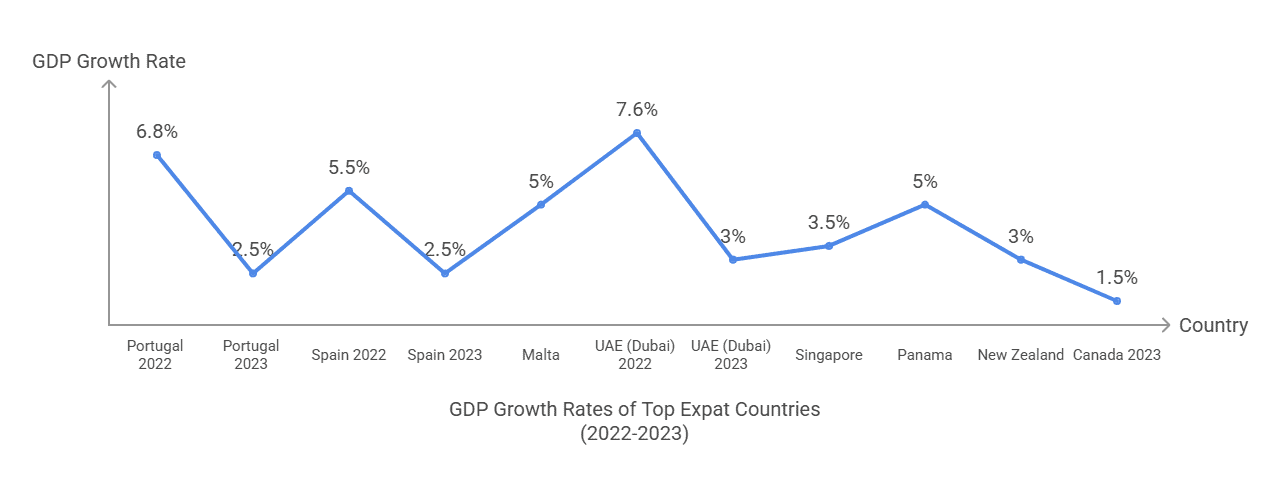
Portugal | Moderately stable EU economy; GDP +6.8% in 2022 (post-COVID boom), ~2.5% in 2023 Diversified (services, manufacturing, tourism). Euro currency, low inflation ~4%. Resilient and backed by EU support. | NHR scheme (now phased out) gave 10-year tax breaks (0% foreign income, 20% on local) Even without NHR: no tax on overseas pensions (under some treaties), no wealth/inheritance tax. Moderate income taxes (progressive up to 48%). | Growing startup scene (Lisbon tech hub), demand in IT, tourism, renewable energy. Access to entire EU job market. Wages lower than US/UK, but improving. Good for remote work (time zone friendly). Entrepreneurship supported (Startup Visa, incubators). |
Spain | Large, 14th-largest economy globally GDP +5.5% in 2022, +2.5% in 2023 (outpaced EU average) Diverse industries (autos, pharma, tourism). Eurozone stability. Some structural unemployment but trending better. | Beckham Law for expats: flat 24% tax on Spanish income, foreign income exempt for up to 5 years (for qualifying remote workers/professionals). No wealth tax nationally (some regions have it). No tax on foreign income if non-tax-resident. | Strong job market in tourism, manufacturing, renewable energy, and a growing tech/startup ecosystem (especially Barcelona & Madrid). Need Spanish language for many roles. Good opportunities for entrepreneurs in EU market, though bureaucracy can be slow. |
Malta | Small but fast-growing economy (~5%+ yearly) A-rated stability. Key sectors: financial services, online gaming, tourism, maritime. Very low unemployment (3%). Euro currency; govt finances solid. | Tax-friendly for residents: No tax on foreign income not remitted to Malta. Flat 15% tax on remitted foreign income (with €5k minimum). No capital gains on worldwide assets for non-domiciled. No inheritance/estate tax. Corporate effective tax ~5% for many businesses (with refunds). | Good opportunities in finance, IT, and gaming industries (many international companies). English-speaking work environment. Small market but part of EU, so can leverage EU-wide business. Entrepreneur opportunities in digital sectors, but local market limited in size. |
UAE (Dubai) | Robust, diversified economy (though oil-backed in Abu Dhabi). Dubai: finance, trade, tourism powerhouse. GDP +7.6% in 2022, moderate ~3% 2023. Dirham currency pegged to USD (stable) – no currency risk. Inflows of capital and talent keep economy buoyant | Zero income tax on individuals No capital gains or dividend tax. 5% VAT only. Corporate tax 9% (from 2023) but many exemptions/free zones. No social security tax for expats. Essentially a tax-free personal regime, allowing maximum savings. | Extensive opportunities: Booming job market in construction, finance, hospitality, real estate, and emerging tech. 87% expat population in Dubai = strong professional networks. Easy to start businesses (free zones, 100% foreign ownership). Regional hub means access to Middle East/Africa markets. |
Singapore | Exceptionally stable, AAA-rated economy. Consistent growth ~3-4%. Low inflation, strong SGD currency (safe haven). Diversified – finance, tech, trade, biotech all strong. Govt with large reserves, no debt. Handles global downturns resiliently | Low-tax haven (territorial basis): No capital gains Max 22% income tax rate. No tax on foreign income if not remitted (and many exemptions if remitted). No inheritance tax. GST 8% (lower than many VATs). Numerous incentives for businesses (tax holidays, etc.). | Plentiful for high-skill roles: Global finance hub (banks, investment firms), big tech presence, HQ for multinationals in ASEAN. Startup ecosystem growing with govt support. Meritocratic job market – opportunities if highly qualified. Business launch easy (one of world’s easiest places to do business). Regional market access to Asia. |
Panama | Most stable in Central America – uses USD currency (no forex risk) Banking and canal-driven economy, ~5% average growth pre-2020. Moderate inflation, solid infrastructure in city. Lower risk of major downturn; somewhat reliant on global trade via Panama Canal. | Territorial tax system: No income tax on foreign-sourced income (if you earn abroad or online, it’s untaxed) Local income tax up to 25%. No tax on interest earned in Panamanian banks. Low property tax (primary residences often exempt). Various investor incentives (e.g. for tourism, reforestation). | Growing expat business scene; opportunities in logistics, tourism development, and services. Many multinationals have Latin America regional offices (in Panama Pacifico, etc.). Easy for entrepreneurs to start a boutique business. Local job market in corporate roles is smaller than bigger countries; Spanish language helpful. |
Canada | G7 economy, very stable. Diverse (natural resources, manufacturing, tech). GDP +3.4% in 2022, ~1.5% 2023 (slowed but positive) Low political risk, strong banking system. Currency (CAD) stable float. Economic prospects tied to US (generally positive correlation). | Not a tax haven, but social benefits in return. Progressive income tax ~15–33% federally+ provincial (combined top ~50%). No tax on primary home sale gains. Various credits/deductions. For new residents, step-up in asset basis can avoid some tax on pre-arrival gains. Dual citizenship means one can keep other fiscal options open. | Strong labor market, especially in IT (Toronto is a tech hub), engineering, healthcare, natural resources. Skill shortages in many fields – opportunities for skilled immigrants. Business-wise, welcoming environment for startups (esp. Toronto/Waterloo, Montreal for AI). As part of NAFTA/USMCA, access to U.S. market. Government incentives for investors and a straightforward business climate. |
New Zealand | Very stable, peaceful economy (ranked high on global stability). Reliant on agriculture exports, tourism, but also tech startups rising. Growth ~3% pre-COVID, a bit slower recently. Small population market. NZD currency, free-floating but generally stable. AAA credit rating. | No general capital gains tax (except some property flips). No payroll tax, no local/state taxes. Personal income tax up to 39%. 4-year tax exemption for new residents’ foreign income – great for expats with offshore investments. GST 15%. No estate tax. Overall moderate tax burden with unique new migrant relief. | Good demand for skilled workers in IT, engineering, healthcare, construction (rebuilding infrastructure). Entrepreneurial opportunities in agritech, renewable energy, tourism ventures. NZ is remote, so scaling a big business might mean going global online. But quality of life and ease of doing business are high, attracting innovators (Global Impact Visa program). |
Portugal – Easy Residency Options and EU Stability
Ease of Obtaining Residency
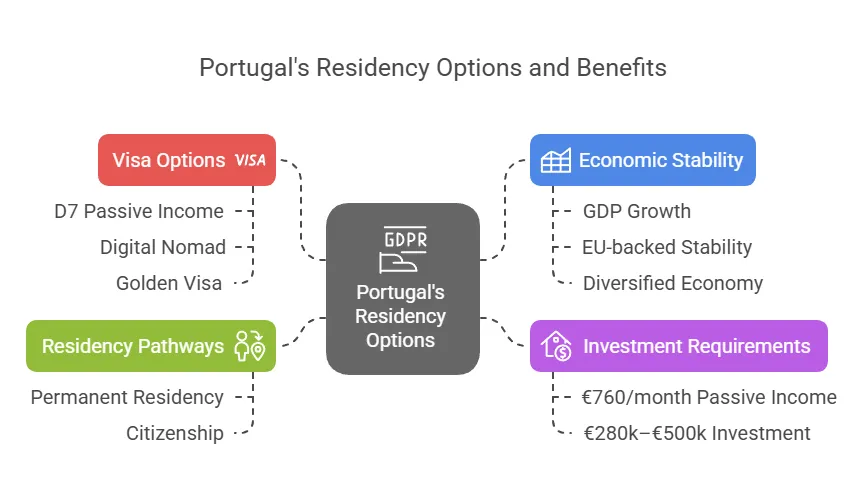
Portugal stands out as one of the easiest countries in Europe for non-EU expats to gain residency. It offers multiple visa pathways, notably the D7 Passive Income Visa (for retirees or remote workers with stable income) and the Golden Visa (residency by investment). The D7 visa process takes ~4–6 months and is known for reasonable bureaucracy and flexible criteria. By contrast, the Golden Visa involves more paperwork and can take ~12 months, but requires minimal stay (just 7 days per year) to maintain. Overall, Portugal’s immigration process is considered friendly and accommodating, with modest income thresholds and numerous options catering to different profiles.
Investment/Financial Requirements
The D7 visa requires proof of a passive income around Portugal’s minimum wage (about €760 per month, ~€9,120/year in 2024). This can come from pensions, rentals, dividends, or remote work. The bar is quite low compared to other Western European countries – much lower than Spain’s or Italy’s income visa requirements – making Portugal accessible to many middle-class expats. Applicants must also show a local accommodation (owned or rented) and maintain funds in a Portuguese bank (often a few thousand euros as a cushion). For the Golden Visa, investment options include €250k in arts donation or €500k in venture capital. These investments grant a two-year residency that’s easily renewable. Notably, Portugal no longer requires large donations – the focus is on investment funds, and even starting a company with job creation can qualify. The affordability and flexibility of Portugal’s financial criteria have made it a top choice for “residency by investment” seekers.
Pathway to Permanent Residency/Citizenship
Portugal offers a fast track to EU citizenship compared to many countries. A D7 or Golden Visa resident can apply for permanent residency after 5 years, or go directly for citizenship after 5 years of legal residence. This is contingent on maintaining the residency and (for citizenship) passing a basic A2-level Portuguese language test. Uniquely, continuous full-time stay is not required – Portugal allows absences as long as you spend at least 6 months per year (or 8 months in a 2-year period) in-country. This leniency means you don’t have to uproot your life to keep the residency status. Dual citizenship is allowed, so Americans and others can retain their original passport when naturalizing as Portuguese.
Economic Stability
Portugal’s economy is stable and growing, providing a safe haven for wealth. After rebounding with 6.8% GDP growth in 2022(one of the highest in the EU that year) and ~2.3% in 2023, it’s forecast to grow ~1.7–2% in 2024–2025. The country has a diversified economy (services, tourism, manufacturing, tech) and benefits from Eurozone protections. Unemployment is around 6–7%, below many peers, and Portugal has shown resilience through recent global downturns. For expats, this stability means a lower risk of currency crises or political upheaval. Portugal is an EU and Schengen member, providing broader market access and investment security under EU laws. In short, it’s a developed, peaceful economy where your assets and business interests can be considered relatively safe.
Tax Benefits
Portugal historically drew expats with its Non-Habitual Resident (NHR) tax regime, which offered 10 years of special tax treatment – including 0% tax on most foreign income and a flat 20% on local high-earnings, plus 10% on foreign pensions. However, this scheme closed to new applicants in 2024amid domestic policy shifts. Those who managed to enroll by the deadline can still enjoy its benefits for the remainder of their 10-year term. Even without NHR, Portugal’s taxes are moderate by EU standards – progressive income tax up to ~48%, but no wealth tax and no inheritance tax on close relatives. There are also regional incentives (e.g. flat 10% tax in Madeira’s Free Trade Zone). Real estate investors face relatively low property taxes, and capital gains tax has exemptions (e.g. if reinvesting in another property or gradually for long-term residents). While not a zero-tax haven, Portugal’s tax regime is manageable and can be optimized. Many expats find the trade-off of reasonable taxes for a high quality of life worthwhile, especially given Portugal’s social benefits (healthcare, etc.). Always consult a tax advisor, but Portugal can offer a balanced tax environment, especially if you had a higher tax burden back home.
Spain – Investor Visas and Lifestyle with a Large Economy
Ease of Obtaining Residency
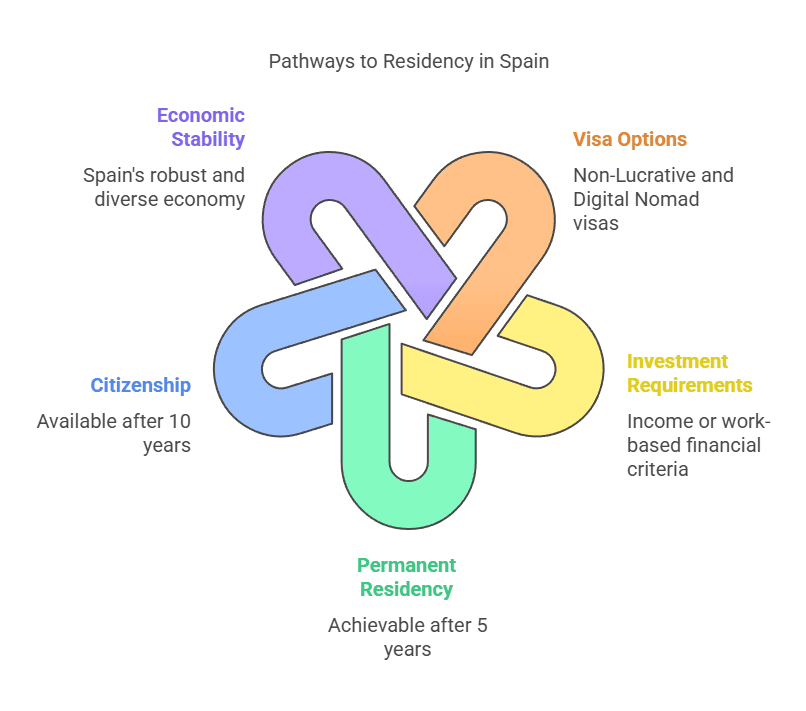
Spain, like its Iberian neighbor, offers relatively accessible residency routes for expats – particularly through its a new Digital Nomad Visa. Another popular route is the Non-Lucrative Visa (NLV), which requires proving sufficient savings or income (~€27,000+ per year for an individual) – ideal for retirees, though it doesn’t allow local work. In 2023, Spain also launched a Digital Nomad Visa for remote workers, requiring about €2,334 per month income (200% of the minimum wage). This visa is valid for 1 year and can be extended to a 3-year residency. Bureaucracy in Spain can be a bit heavier than Portugal – expect a few months of paperwork, translations, and appointments. However, overall it’s quite feasible for expats to secure legal residency if they meet the financial criteria. Spain’s multiple visa categories (investment, non-lucrative, work, student, etc.) and its welcoming attitude toward foreign retirees and investors make the initial residency acquisition reasonably straightforward.
Investment/Financial Requirements
For those opting for the Non-Lucrative Visa or Digital Nomad Visa, the requirements include making a significant financial contribution to demonstrate financial solvency: roughly €28,000 annual income (or savings equivalent) for the NLV, and for the Nomad Visa about €32,000+ annual income (≈€2.7k/month) plus proof of remote employment. These figures are higher than Portugal’s, reflecting Spain’s larger economy and cost base. If bringing family, additional amounts (e.g. €7,000/year per dependent on NLV) are needed. It’s worth noting that Spain’s financial requirements are stricter than some peers, but still attainable for many retirees or remote professionals with moderate means.
Pathway to Permanent Residency/Citizenship
Residency in Spain can lead to deeper status, albeit on a longer timeline. Permanent residency (PR) can be applied for after 5 years of continuous residence in Spain (meeting minimum stay requirements each year). As for citizenship, Spain requires 10 years of legal residence in most cases, double the timeframe of Portugal. This is a key distinction: Spain is somewhat conservative on naturalization. Additionally, Spain generally does not allow dual citizenship with the U.S. or many other countries. There are exceptions: citizens of Latin American countries, Philippines, or Equatorial Guinea can naturalize in 2 years and keep dual citizenship due to Spain’s historical ties. For most, though, the citizenship path is long and not the main draw.
Economic Stability
Spain boasts the 4th largest economy in the Eurozone and is highly developed and diverse, making it a secure choice for weathering global economic storms. After recovering from the 2008 crisis and the pandemic dip, Spain’s economy has shown strong resilience: it grew 5.5% in 2022, and about 2.5% in 2023, outperforming many European peers. In fact, Spain “bucked a downturn” in the EU by maintaining growth in 2023 while others slowed. Forecasts suggest ~3% growth in 2024, fueled by robust consumer spending, exports (Spain is a major exporter of cars and machinery), and booming tourism. The country benefits from a large internal market (47 million people) and being part of the EU’s stable monetary system (the euro).
Inflation has been moderating after a spike in 2022, and employment is improving – unemployment is around 12% (still high, but down from previous highs and with notable job creation recently). For expats, Spain’s size and integration in global trade mean more economic opportunities and a stable currency. It’s rated investment-grade (A- by Fitch) and has strong institutions. While its public debt is sizable (~113% of GDP), this is not unusually high in the EU context and is offset by low borrowing costs and EU support. Overall, Spain provides a stable economic environment with growth prospects, making it a reliable location to safeguard assets or build a new career base.
Tax Benefits
Spain is not a traditional tax haven – expect to pay taxes on your worldwide income if you become a tax resident. That said, it offers some tax incentives for newcomers and certain expats. The most notable is the “Beckham Law”, a special regime that allows qualifying expats working in Spain to be taxed as non-residents (flat 24% rate on Spanish-source income up to €600k) for up to 5 years, and exempts foreign income from Spanish tax. Originally for high-earning employees, this scheme was extended in 2023 to digital nomads and remote workers on the new visa. This means if you use Spain’s remote work visa, you might opt for the Beckham Law and pay 24% only on your Spanish-sourced salary (which in your case might be zero if your employer is foreign), effectively making your foreign income tax-free in Spain during that period. This is a significant benefit and puts Spain on the map for tax-savvy remote professionals.
For retirees, Spain taxes foreign pensions, but it has tax treaties to avoid double taxation. General income tax rates are progressive by region (top rates ~45-50% in many regions for high incomes). There are no wealth taxes federally, but some regions (like Catalonia, Valencia) levy a wealth tax on large net worth. On the flip side, Spain has no inheritance tax for close family in many regions, and capital gains tax tops out at 23%. Corporate taxes are 25%. Importantly, if one doesn’t spend over 183 days in Spain (e.g. some Golden Visa holders), they can maintain non-tax-resident status while holding residency, thereby owing no local income tax. Additionally, property investors enjoy relatively low annual property taxes. In summary, while day-to-day taxes in Spain can be high, the availability of the Beckham Law for many expats and the possibility to structure one’s stay to limit tax residency provide leeway to optimize taxes. Those seeking complete tax freedom may prefer zero-tax jurisdictions, but Spain balances tax with excellent public services (healthcare, infrastructure) and the intangible benefit of its lifestyle.
Malta – Investment Residency in a Stable, Tax-Friendly Haven
Ease of Obtaining Residency
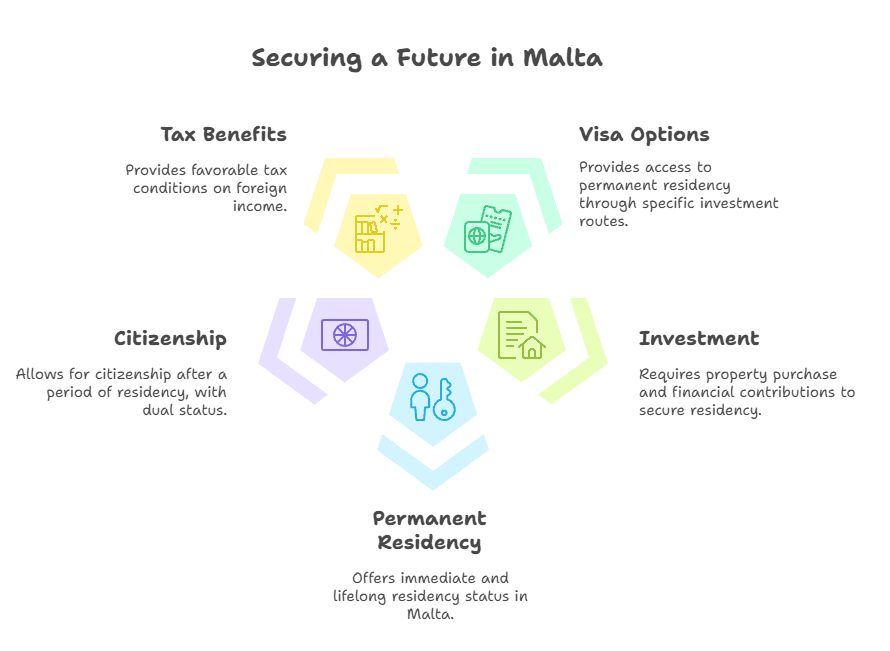
Malta offers a straightforward residency-by-investment program that is one of the most accessible in the EU for high-net-worth individuals. Through the Malta Permanent Residence Programme (MPRP), an applicant can obtain a permanent residence permit in roughly 4–6 months by making the required investments/donations. The bureaucracy is moderate but facilitated by licensed agents who handle the process. There is no requirement to live in Malta during or after the process, making it easy to maintain for those using it as a safety net. Apart from the investment route, Malta also has an ordinary residency scheme for those who rent/buy property and show income, and a Global Residence Program offering a renewable residency for financially independent persons. However, the fast-track nature of the MPRP – granting lifetime permanent residency in one go – sets Malta apart. Despite being a smaller country, Malta’s official language is English, which eases all administrative procedures and day-to-day life for expats. In summary, while the price tag is significant, the process is highly streamlined with clear legal frameworks, making Malta an attractive easy residency destination for those who can afford the initial costs.
Investment/Financial Requirements
Malta’s permanent residency program requires a combination of investment, fees, and donations rather than a single lump sum. Applicants have two main options: rent or buy property through a real estate purchase. If renting, you must lease a property for at least €10,000–€12,000 per year (South Malta/Gozo) or €12,000–€16,000 (elsewhere) for 5 years. If purchasing, you must buy real estate of at least €300,000 (South/Gozo) or €350,000 (elsewhere). In addition, there’s a government contribution of €60,000 (if buying) or €98,000 (if renting), and a charitable donation of €2,000. There’s also a one-time administrative fee of €40,000. All told, the minimum cash outlay (not including property purchase) is around €100k for renters or €70k for buyers (since buyers pay a smaller contribution), plus the property investment itself. These figures make Malta’s program one of the more affordable EU “golden visas” in terms of donation amount (cheaper than, say, Cyprus was, or Ireland’s now-closed program). Importantly, the residency granted is permanent – no renewal investment needed, just keep the property for 5 years and maintain conditions. Applicants must also demonstrate at least €500,000 in net assets (of which €150k liquid) to qualify – essentially a wealth test. For Malta’s other routes: the Global Residence Program requires about €15,000 annual tax payment and property rental/purchase at certain values, but that is a renewable visa, not permanent upfront.
Pathway to Permanent Residency/Citizenship
One of Malta’s selling points is that the investment route grants permanent residency from day one – you literally receive a Maltese PR card which is valid for life (renewed every five years). This status allows you to live, work, or study indefinitely in Malta and travel visa-free in the Schengen area. It’s a true Plan B that doesn’t expire as long as you meet minimal maintenance criteria (holding a property for 5 years and visiting Malta once per year or so, though even that is loosely enforced). When it comes to citizenship, Malta traditionally had a fast-track Citizenship by Investment scheme (often called the Malta Individual Investor Programme or MIIP, and its successor MEIN) which required around €750,000 donation plus residency for 1-3 years. That program is currently suspended (after EU pressures) and under revision. Absent that, the standard naturalization route in Malta is 5 years of residency (with actual physical presence required) before eligibility to apply for citizenship. Malta does allow dual citizenship, and as an EU member, a Maltese passport is extremely powerful. However, note that if you only hold the permanent residence and don’t actually reside in Malta most of the time, it might be tricky to naturalize via the ordinary route (you’d need to show strong ties, integration including knowledge of Maltese or at least long-term actual residence). Thus, Malta PR should be viewed as a lifetime residency status for stability, with citizenship a longer-term possibility if you decide to truly relocate. The bottom line: you can instantly secure permanent residency (a rarity in Europe), and enjoy that indefinitely, giving you and your family a European foothold. Citizenship could be a cherry on top after several years, but even without it, Maltese PR achieves the goal of a durable safe haven.
Economic Stability
Despite its small size, Malta has a robust, fast-growing economy that punches above its weight. It’s often cited for its economic resilience and growth rates. In recent years Malta saw GDP growth averaging 6–7% annually– among the highest in the EU. Even as growth normalizes, forecasts still put it around 5.0% in 2024 and 4.3% in 2025, outpacing most of Europe. Malta’s economy is diversified into services: it’s a major financial services and iGaming hub, hosts maritime and logistics industries (thanks to its strategic location in the Med), and has a strong tourism sector. The country has very low unemployment (~3.2%), indicating a tight labor market and opportunities for job seekers. It is rated A+ with stable outlook by credit agencies, reflecting strong public finances and governance. Malta’s use of the euro and EU membership anchors it in a stable monetary and regulatory regime. For expats, all this means Malta is unlikely to face severe economic turmoil; it has a steady inflow of foreign investment and a prudent banking sector. Moreover, Malta has shown that even during global downturns, it manages relatively well (for example, during COVID it contracted but rebounded quickly). The government actively promotes new sectors like blockchain and AI, aiming to keep the economy dynamic. In short, Malta offers the stability of an advanced economy with the growth of an emerging market. This stability is crucial if you’re using Malta as a hedge—your assets, whether property or business interests, sit in a safe, EU-regulated environment that historically only goes up.
Tax Benefits
Malta is famed for its favorable tax regime, especially for residents who are not domiciled there. Key highlights: no tax on foreign income not remitted to Malta. This means if you earn income abroad and don’t bring it into Malta, it isn’t subject to Maltese tax – a huge perk for global investors and retirees living off overseas assets. Even if remitted, many types of foreign source income can be exempt or subject to very minimal tax under Malta’s rules and tax treaties. Malta also has no capital gains tax on profits from securities held by non-residents, and no inheritance or estate tax (there’s just a small stamp duty on real estate inheritance). If you become an ordinary resident, Malta taxes you on a remittance basis, with a minimum tax of only €5,000 per year required under the Global Residence Program. High-net-worth individuals can even opt for a flat tax of €15,000 per year on all foreign income remitted (if structured via certain residency schemes). Corporate taxation in Malta is 35% on paper, but there’s an imputation system that often results in effective tax as low as 5% for many international businesses – that’s why many companies set up holding structures in Malta. Additionally, Malta has a wide network of double tax treaties and is very hospitable to pensioners (pension income remitted can be taxed at just 15% under special programs). For those obtaining Maltese permanent residency, you are not automatically a “tax resident” unless you spend 183+ days/year in Malta or declare it your domicile; so you could conceivably hold PR and pay no Maltese taxes at all if you’re not actually living there full-time, aside from an annual €300 PR fee.
United Arab Emirates (UAE) – Tax-Free Haven with Investor Residency
Ease of Obtaining Residency
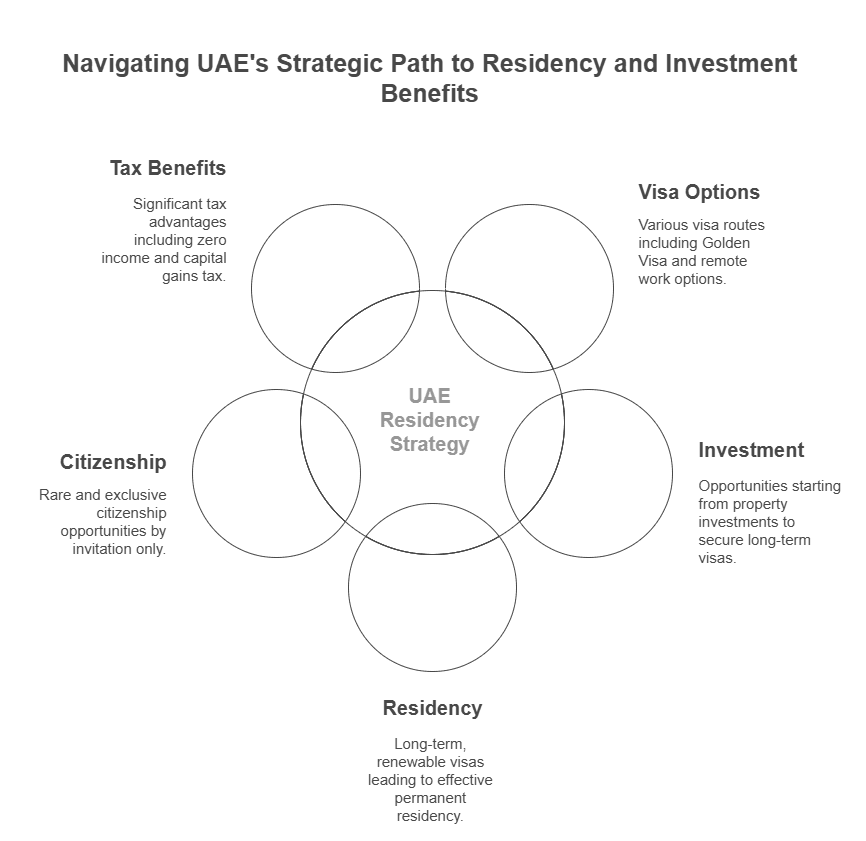
The UAE, particularly Dubai, has emerged as a top expat haven by offering a variety of easy residency options. Unlike the lengthy immigration processes elsewhere, UAE residency can often be obtained within weeks with minimal red tape. One common route is through real estate investment: owning property in Dubai valued at AED 750,000 (~$205,000) qualifies you for a 2-year investor visa, and owning AED 2 million (~$545,000) or more in property makes you eligible for a 10-year Golden Visa. The process is straightforward – after purchase, you apply through the land department and typically get your residence permit in a few weeks. Another route is setting up a business in a UAE free zone; incorporating a company and becoming its shareholder allows you to get a 3-year renewable residency visa (the UAE actively courts entrepreneurs with streamlined online setup processes). There are also employment visas (if you secure a job, the employer handles the paperwork, usually done in a month) and specialized long-term visas for talents, investors, and even remote workers. In 2021, Dubai introduced a Remote Work Visa for one-year residency if you earn $5,000/month working remotely – an extremely simple online application. Bureaucracy is relatively low; much is done via clear guidelines and government portals. The UAE Golden Visa program in particular has expanded categories in 2022-2023 (investors, doctors, PhDs, outstanding students, etc.), making 10-year residency accessible to a wider pool. In short, the UAE might have one of the fastest and easiest residency processes in the world for those who qualify – no language tests, no long wait times, and multiple avenues to qualify. This ease has contributed to the UAE’s huge expat population (over 85% of Dubai’s residents are foreign-born).
Investment/Financial Requirements
The UAE caters to various budget levels through different visas. For the coveted 10-year Golden Visa, the basic investment requirement is a substantial financial investment in the form of owning property worth at least AED 2 million ($550k). This can be one or multiple properties and can even be mortgaged (with certain conditions: at least AED 2M equity not loaned). The Golden Visa can also be obtained by investing AED 2M in a business or a government-approved fund, or by being a person of exceptional talent (with salary > AED 30k/month or achievements). For a 2-year investor visa, the threshold is AED 750k in property ($205k). This lower amount has made it popular for mid-range investors to base themselves in Dubai by buying a modest apartment. Starting a company can require as little as AED 50k–100k ($15k–$30k) in capital (depending on free zone rules) and maybe $5k in fees, making it an accessible path to residency if you intend to do business. The Remote Work Visa asks for proof of $5,000 monthly income, but no investment. If you go the employment route, there’s no investment needed – just a job offer (salaries in Dubai vary widely, but many professional jobs will meet the requirement for the employer to sponsor you).
The UAE has also introduced a 5-year Green Visa for freelancers and highly skilled workers which requires proof of around AED 360k ($98k) earnings over the last two years or equivalent, which broadens access for self-employed individuals. Notably, unlike many Western countries, UAE does not mandate any minimum stay to keep residency active (except some visa types like remote work require you to visit at least once every 6 months). Financially, maintaining UAE residency is cheap: it might cost a few hundred dollars to renew your ID every few years.
Pathway to Permanent Residency/Citizenship
The UAE is somewhat unique in that its “residency” is long-term but not permanent residency or citizenship in the traditional sense. All expat residencies in the UAE are essentially visas linked to a status (investment, employment, etc.) and are renewable indefinitely as long as you meet the criteria. The 10-year Golden Visa is effectively the closest to “permanent” as it’s long-term and renewable without a sponsor. However, UAE citizenship for expats is extremely rare – historically, it was not available. In 2021, the UAE announced a policy to grant citizenship by invitation to select prominent expats (investors or talents) under strict criteria, but it’s not an application process and remains exceptional. Therefore, one should view UAE residency as a long-term stable residency status, but not a path to a passport for most people. The good news: the UAE now allows dual citizenship for those few who do get naturalized, but again, that’s out of reach for the typical expat.
Economic Stability

The UAE’s economy is one of the most dynamic and stable in the Middle East. Known for its vast oil wealth (especially in Abu Dhabi), the country has diversified significantly into trade, tourism, finance, real estate, and technology. Dubai, in particular, is a global business hub. The UAE enjoys a high GDP per capita and had a strong growth of 7.6% in 2022 as it rebounded from COVID, and continued growth in 2023 (projected around 3-4%). The currency, the dirham, is pegged to the US dollar (1 USD = 3.67 AED), which provides monetary stability and eliminates currency risk – a huge plus if your home country has a volatile currency. The government is known for being forward-looking, investing heavily in infrastructure and smart-city initiatives (e.g., Dubai Expo 2020 gave a big boost). Despite being in a turbulent region, the UAE is very safe and politically stable; its autocratic but business-friendly governance ensures continuity of pro-growth policies.
For expats concerned about economic downturns, the UAE is a compelling choice: it has no income tax, high employment levels, and a constant inflow of foreign investment. Even during global recessions, people often move to Dubai because opportunities remain – evidenced by the recent influx of wealth (e.g., Russians in 2022, global remote workers) driving real estate booms. The major cities have thriving job markets across sectors. Dubai’s population surged by ~475,000 from 2020 to 2023, reflecting confidence in its economy. One thing to be mindful of: the UAE’s economy can be sensitive to global oil prices and regional issues, but prudent financial reserves (Abu Dhabi has one of the world’s largest sovereign wealth funds) act as a buffer. Additionally, the diversification into logistics (Jebel Ali Port), airlines (Emirates, Etihad), and finance (Dubai International Financial Centre) gives it multiple pillars of stability. The UAE ranks high in global ease-of-doing-business and competitiveness indices. In short, from an economic security standpoint, the UAE offers strong growth prospects, a stable currency, and a government with ample resources to manage shocks – a reassuring environment if you’re seeking refuge from economic uncertainty elsewhere.
Tax Benefits
The UAE is famous for its tax-free environment. For individuals, there is no personal income tax on salaries or worldwide income. This means if you’re an expat living in Dubai or Abu Dhabi, you keep 100% of what you earn. There’s also no capital gains tax, no inheritance tax, and no personal wealth taxes. This can be a game-changer for high earners or those with substantial investment income – relocating to the UAE can legally nullify your income tax bill (though U.S. citizens, for example, still have to consider U.S. IRS obligations). The UAE introduced a flat 5% VAT in 2018, but that’s relatively low and there’s still no sales tax on many services (plus things like education, healthcare, residential rent are VAT-exempt).
Corporate tax was non-existent until recently; starting 2023, the UAE implemented a corporate tax of 9% on business profits exceeding $100,000, as part of global agreements. However, free zone companies can often remain zero-tax by complying with certain rules (not doing business in the mainland). Even with this change, the UAE remains one of the lowest tax regimes globally. Additionally, there are no exchange controls, so you can move money freely – important for protecting wealth. Dubai has become a magnet for wealthy individuals partly due to these tax advantages. It’s not just income; if you sell assets or crypto, there’s no UAE tax on the gain. Owning property has no annual property tax (just a one-time 4% transfer fee at purchase). The only notable taxes are on specific goods (e.g., 50% on alcohol, which is like a sin tax, and recent excise on sugary drinks).
Singapore – Elite Stability, Business Hub with Investor PR
Ease of Obtaining Residency
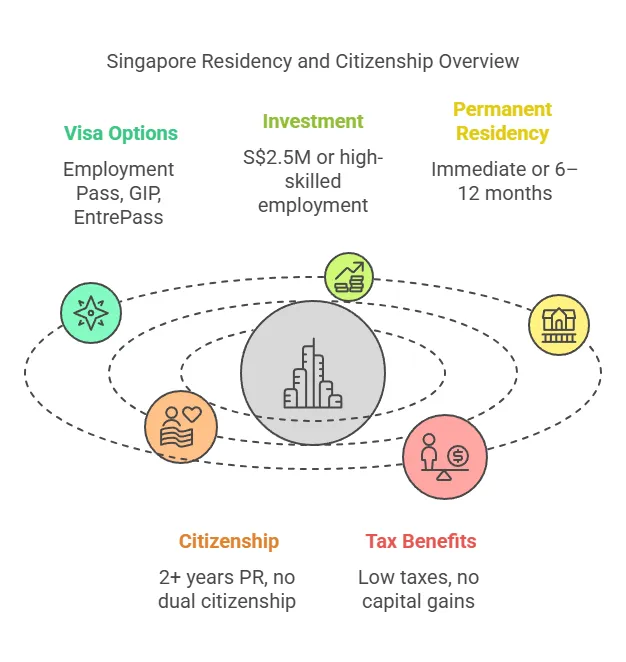
Singapore is a highly sought-after safe haven, but obtaining residency here is more demanding compared to the above countries. There isn’t a “quick visa for passive income” like Portugal or an easy property visa like Dubai. The main pathways are employment-based or investment-based. For professionals, securing an Employment Pass (EP) via a job offer is the common route – Singapore actively attracts global talent, but the job must pay a qualifying salary (minimum $3,000 for new EPs, higher for older candidates). The process for an EP is straightforward for the employer to sponsor and usually takes a few weeks; once you have an EP, you can often apply for Permanent Resident (PR) status after 6–12 months of working.
Singapore also rolled out the One Pass for top talent earning above $30,000/month, which is a 5-year work visa not tied to a single employer, making it easier for high achievers to move in. For investors and the ultra-wealthy, the Global Investor Programme (GIP) is the key route – by investing $2.5 million (~US$1.8M) in either a new or existing business, an approved fund, or a single-family office, you can apply directly for PR. Unlike some economic citizenship programs that offer minimal or no residency requirements, Singapore’s GIP involves active economic contribution and due diligence, with processing for GIP PR taking around 6-12 months. Singapore doesn’t have a golden visa for simply buying property or depositing money; they want active economic contribution or special skills. There are also Entrepreneur Pass (EntrePass) schemes for startup founders with innovative ventures (with lower capital, but you must build a viable business and hire locals to renew).
Investment/Financial Requirements
The hallmark of Singapore’s program is the Global Investor Programme. It requires an investment of $1.8 million into one of three options: Option A – invest in a new or existing business in Singapore (and present a credible business plan); Option B – invest in a GIP-approved private equity or venture fund; or Option C – establish a single-family office with at least $150M in assets under management (recently raised criterion). Most applicants go for Option A or B. Additionally, you must demonstrate a successful entrepreneurial background, such as a certain turnover in your existing business (e.g. >S$200M revenue per year for established business owners) or proven track record as a founder or family office principal.
So the financial bar is high – essentially aimed at multimillionaires or big company owners. Aside from GIP, the EntrePass route needs you to have funding from a recognized VC or bring in $100k+ capital and meet innovation criteria – more qualitative than pure cash. If going the Employment Pass route, financial requirements are indirect: you need a job salary of at least $3k (higher for older applicants, up to $7k+) to qualify. Many expats find jobs that pay well given Singapore’s high-income economy; however, note that bringing dependents requires a higher salary. Another aspect is cost of entry in terms of living – Singapore requires fairly high living costs , so one should have a solid financial footing to sustain themselves. Also, any foreigner buying property in Singapore faces additional stamp duties (an extra 60% for foreigners as of 2023), which is a hefty barrier if you hoped to invest in property as a way in – it’s not encouraged unless you become a PR (then it drops to 5% extra).
Pathway to Permanent Residency/Citizenship
Singapore is one of the few countries where permanent residency (PR) can be granted almost immediately for certain approved applicants (e.g., via the investor program or certain professionals). If you come in on an Employment Pass, typically after a year or so of stable work you can apply for PR under the Professional/Technical category. Many expats become PRs within 1–2 years of moving. PR in Singapore is quite valuable – it grants you many of the rights of citizens (except voting and a passport), including the ability to live in Singapore indefinitely and change jobs freely without needing new permits. It also allows you to sponsor certain family members. After holding PR and residing in Singapore for a minimum of 2 years, you become eligible to apply for citizenship. However, eligibility doesn’t guarantee approval; Singapore is selective with citizenship, often looking for longer integration (many apply after, say, 5+ years as PR).
And a critical point: Singapore does not allow dual citizenship for adults. You would need to renounce your previous citizenship upon becoming Singaporean. This is a deal-breaker for some. As a result, many expats remain PR for long term and do not naturalize, using PR as their stable status. PR itself must be maintained – it’s subject to renewal every 5 years via a Re-Entry Permit, which is usually straightforward if you show you’ve been contributing (working, paying taxes, or have family ties). Losing PR can happen if you leave Singapore for extended periods and don’t show ties. For children of PRs, interestingly, male PRs (including second-gen in families) are liable for Singapore’s mandatory military service – a factor to consider if you move with family and plan to stay.
Economic Stability
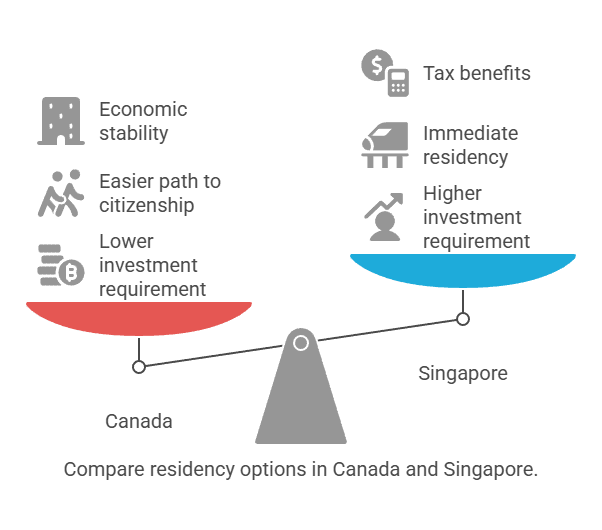
Singapore is synonymous with economic stability and success. It is an AAA-rated economy, with one of the highest GDP per capita in the world (~$72k). The economy is consistently growing (aside from rare contractions during global crises) at a moderate pace – roughly 3-4% annually in recent years, reflecting a mature economy with bursts of high growth in good years. Singapore’s strengths lie in its extremely diversified and open economy: it’s a global financial center, a trading hub (one of the world’s busiest ports), a high-end manufacturing base (semiconductors, biotech), and increasingly a tech and innovation center. The government has a sterling track record of prudent fiscal management and proactive economic planning (they identify growth areas and invest heavily – e.g., biotech, green finance). Unemployment is very low (2-3%).
For expats worried about downturns, Singapore is a safe harbor: it has no foreign debt, large national reserves, and a stable currency (the Singapore dollar) which has historically appreciated over time and is seen as a regional safe currency. The Monetary Authority of Singapore keeps inflation and currency stable via basket pegging and other measures. In times of global turmoil, capital often flows into Singapore (for example, wealth from around Asia and beyond finds refuge in Singapore’s banks). This resilience was evident in how Singapore navigated the 1997 Asian Financial Crisis and 2008 Global Financial Crisis with minimal damage, and quickly rebounded from COVID disruptions. Singapore’s political environment is very stable (the ruling party has been in power for decades with a focus on economic growth and multi-ethnic harmony). Rule of law is strong, corruption is virtually non-existent. These factors combine to provide extreme confidence to anyone placing their assets or business in Singapore.
Tax Benefits
Singapore’s tax regime is very attractive, especially for high earners and investors (though not zero-tax like UAE). No capital gains tax – so profits from stocks, properties, crypto, etc., are not taxed in Singapore. No dividend tax on foreign dividends, and local dividends are typically tax-exempt for individuals as they come from already-taxed corporate profits. Personal income tax rates are relatively low and progressive: starting at 0% and maxing out at 22% for income above S$320k (about US$235k). This top rate is much lower than Western countries which often go 35-50%. Many expats effectively pay in the teens percentage-wise. Moreover, certain income for expats may not be taxed: Singapore taxes on a territorial basis, meaning foreign-sourced income is taxable only if remitted to Singapore and it’s not already taxed elsewhere.
In practice, if you have overseas passive income (rent, etc.), you can often keep it offshore and pay no Singapore tax. Even if you do remit, if it was already taxed in, say, your home country, Singapore often exempts it due to tax treaties or unilateral exemptions. There are also tax reliefs for contributions to pension funds (CPF, though foreigners usually aren’t in CPF), donations, etc. Corporate tax is a flat 17%, but there are many incentives that reduce effective rates for businesses (new startups get tax breaks on first S$100k profits, etc.). For high-net-worth individuals, Singapore’s trust laws and family office incentives (like the Section 13X scheme) allow fund vehicles to be managed in Singapore with zero tax on investment gains. There’s also no inheritance/estate tax in Singapore, and no net wealth tax. Another plus: Singapore has a GST (VAT) of 8% (2023) rising to 9% in 2024, which is modest compared to 20% in Europe. The government is cautious in tax policy – it stays competitive to keep talent and capital coming. Compare this to many expats’ home countries: e.g., a U.K. expat in Singapore might go from a 45% tax bracket to effectively ~15% here; an American (though still taxed by the US on worldwide income) might use the Foreign Earned Income Exclusion and Singapore’s low rates to significantly reduce overall taxes. One should note, Singapore recently introduced a wealth tax-esque measure by raising stamp duties on luxury property and car ownership, but these are targeted measures and don’t affect everyday income or investments.
Panama
Ease of Obtaining Residency
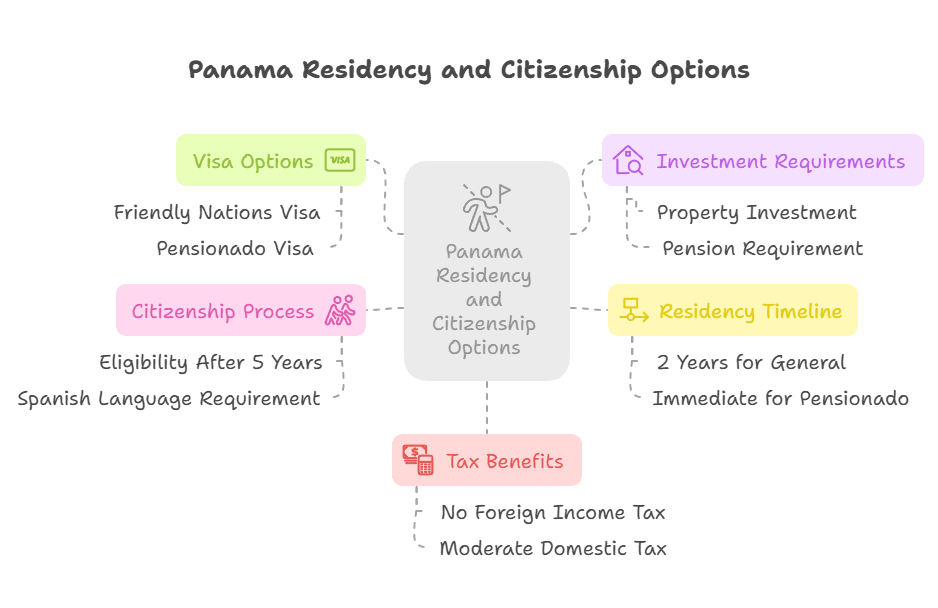
Panama has built a reputation for streamlined residency programs that are relatively easy to access. Two of the most popular routes are the Friendly Nations Visa (FNV) and the Pensionado (Retiree) Visa. The Friendly Nations program offers a quick pathway to permanent residency for citizens of about 60 designated “friendly” countries (including the US, Canada, and most of Europe). The process is efficient – initial approval can be obtained in a matter of months, after which applicants receive a provisional residency card. In fact, Panama’s FNV is known for fast processing (around 3–4 months) and minimal red tape, with no onerous interviews or language exams required. Notably, there is no physical stay requirement to keep your resident status; one can maintain Panama residency without living there full-time. Overall, Panama’s immigration bureaucracy is considered user-friendly and welcoming to investors and professionals, especially compared to more cumbersome processes elsewhere.
Investment or Financial Requirements
Financial thresholds in Panama are relatively low compared to other economic residency programs. For example, the Friendly Nations Visa now requires a significant financial investment of $200,000 in Panama (such as purchasing real estate or a fixed bank deposit) to qualify. This is a modest entry point – by contrast, many European “golden visas” demand two to three times that amount. Retirees can take advantage of the famous Pensionado Program, which grants lifetime residency for those with a pension income of at least $1,000 per month (plus $250 for each dependent). This $1,000/month requirement is one of the lowest in the world for a retiree visa, making Panama extremely accessible to pensioners. Beyond these, Panama also introduced a Qualified Investor program (a classic “golden visa”) allowing investors to fast-track residency by investing $300,000 in real estate (raised to $500,000 after 2022) or higher amounts in securities or bank deposits.
Pathways to Permanent Residency and Citizenship
A key advantage of Panama is the speed at which one can attain permanent residency and eventually citizenship. Successful Friendly Nations applicants typically first receive temporary residency, then become eligible for permanent residency after 2 years(under earlier rules, immediate permanent residency was common, and the current process still remains swift by global standards). The Pensionado visa is even more straightforward – it grants immediate permanent residency to qualifying retirees. After holding residency for 5 years, a foreigner may apply for Panamanian citizenship by naturalization. The timeframe – five years – is relatively short and on par with many Western countries’ citizenship timelines. However, there are some caveats: Panama’s constitution formally requires renouncing one’s previous citizenship upon naturalization. In practice, this policy is not strictly enforced – many naturalized citizens quietly maintain dual nationality since Panama does not actively police the renunciation oath. It’s worth noting that the citizenship process involves language and history tests (basic Spanish proficiency is expected). While dual citizenship is not officially recognized for naturalized persons, Panama’s approach is pragmatic, and it effectively tolerates dual nationality in many cases. Importantly, a Panamanian passport is quite respectable, granting visa-free access to 140+ countries including the Schengen EU zone. Overall, Panama offers a clear ladder: temporary residency → permanent residency → citizenship in ~5 years, with relatively light requirements to climb each rung.
Economic Stability
Panama stands out for its dynamic and stable economy, especially within Latin America. It has been one of the fastest-growing economies in the Western Hemisphere over the past decade. For instance, even after pandemic disruptions, GDP grew by 7.3% in 2023, rebounding strongly and outpacing many peers. In fact, Panama’s economy averaged an impressive 5.7% annual growth from 2010 to 2024, thanks to thriving sectors like logistics, banking, and construction. A cornerstone of Panama’s stability is the use of the US dollar as legal tender, which eliminates currency risk and has kept inflation low and stable. The country’s strategic asset – the Panama Canal – generates substantial revenue and spin-off services, anchoring the economy even during global downturns. Services make up about 68% of employment, reflecting Panama’s role as a regional hub for commerce and finance. Unemployment, which spiked in 2020, has since improved, falling to 7.7% in 2023, and poverty rates have dropped dramatically alongside growth (from 48% in 1991 to 12.9% by 2023). For investors, Panama’s economic resilience and pro-business policies provide confidence – the country has maintained an investment-grade credit rating (around BBB-) for over a decade, indicating solid fiscal management. While Panama is not as large an economy as G7 countries, it punches above its weight in financial services and foreign investment. The government actively encourages foreign capital, and the country’s removal from the FATF “grey list” in 2023 for anti-money-laundering improvements further boosts its credibility. In summary, Panama offers high growth and stability, a combination that appeals to those seeking economic security.
Tax Benefits
Panama’s tax regime is a major draw for financially savvy expats. The country operates on a territorial tax system, meaning only income earned within Panama is subject to local tax. Any foreign-sourced income is fully exempt from Panamanian taxes. In other words, if you run businesses or hold investments abroad, Panama will not tax those earnings– a stark contrast to countries that tax worldwide income of their residents. This policy enables international entrepreneurs, digital nomads, and retirees living off foreign pensions to live virtually tax-free in Panama on their non-Panamanian income. Even domestic taxes are relatively moderate: personal income tax tops out at 25%, and there are various incentives and exemptions for investors. Capital gains on securities can be as low as 10%, and certain real estate investments are given property tax holidays. Moreover, Panama imposes no estate or inheritance tax, allowing individuals to pass on assets to heirs without local tax erosion (apart from standard probate fees). For retirees under the Pensionado visa, Panama mandates a slew of discounts (20%–50% off various services) which, while not a tax measure per se, enhance cost savings. Collectively, these tax perks mean that a resident of Panama can legally reduce their global tax burden substantially. It’s important to note that simply obtaining residency doesn’t automatically make one a tax resident – one has to establish domicile ties or spend sufficient time in-country – but Panama intentionally has no minimum stay requirement for maintaining the visa. This flexibility, coupled with the territorial system, often makes Panama a top choice for those seeking residency as a tax optimization strategy.
Canada
Ease of Obtaining Residency
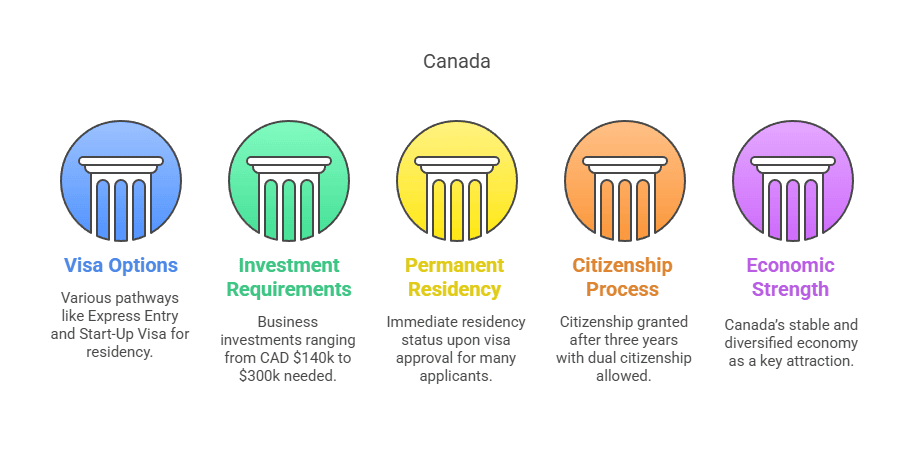
Canada offers multiple pathways to residency, but the ease of obtaining it varies by program. Unlike Panama, Canada does not have a single low-investment “golden visa”; instead, it welcomes economic immigrants through entrepreneur programs, skilled worker systems, and provincial nominations. For high-net-worth entrepreneurs, the notable option is the Start-Up Visa (SUV) Program. This program grants permanent residency to innovators who secure support from designated Canadian venture capital funds, angel investors, or business incubators. The SUV process, while competitive, is relatively straightforward in concept – one must have a qualifying business idea and a letter of support from an approved investor or incubator. There is no fixed net worth requirement and no government fee investment; the challenge lies in convincing a Canadian fund or incubator to back your start-up. Processing times for the Start-Up Visa can range around 12–18 months, and applicants often get a temporary work permit to launch their startup in Canada while PR is pending. Bureaucracy in Canada is thorough but transparent – all requirements are clearly published, and the system is points-based or criteria-based, reducing arbitrary decisions. For investors looking at more passive routes, some Provincial Nominee Programs (PNPs) have entrepreneur streams. These typically require establishing a business in a specific province under a performance agreement. The ease here depends on the province: for example, smaller provinces may have lower thresholds and faster processing, whereas popular provinces like Ontario have more competitive streams. Overall, while Canada’s residency process is not “easy” in the sense of quick or low-investment, it is highly accessible to those who qualify, thanks to clear criteria and an immigrant-friendly policy climate. The country is known for being welcoming – annual immigration targets are high (Canada plans to admit over 500,000 new permanent residents per year in the mid-2020s), and economic immigration is a major component of that. English or French language ability and documentation of funds/investment are usually required, which adds some steps. In summary, Canada’s residency pathways demand preparation and patience, but for professionals and entrepreneurs who meet the criteria, the process is reliable and worth the effort.
Investment or Financial Requirements
Canada’s financial requirements for economic residency can range from moderate to substantial, depending on the program. The Start-Up Visa Program itself does not mandate a personal minimum investment, but it does require applicants to secure funding from Canadian designated organizations. Specifically, one needs a commitment of at least $140,000 from a designated venture capital fund, or $50,000 from an angel investor group to qualify (no minimum if accepted into a business incubator). In practice, this means the applicant’s business idea must attract investors in Canada – an indicator of viability. Apart from that, SUV applicants must show they have enough personal funds to settle in Canada (the amount varies by family size, roughly $10,000 for a single applicant).
Many provinces offer Entrepreneur PNP streams: for example, Ontario’s Entrepreneur Stream requires a minimum personal net worth of $550,000–$1,000,000 (depending on location of business) and a minimum investment of $140,000–$400,000 into a new business, along with creating at least two jobs. British Columbia’s Base Entrepreneur stream has required a net worth of $400,000 and an investment of $140,000 in a business.
Additionally, Canada has a Self-Employed Persons Program for those in cultural or athletic fields, which doesn’t have a fixed investment but does require proving an ability to establish oneself (typically at least $70,000 in assets is suggested). It’s important to note that outside of Quebec (which allowed a purely financial investment for residency), most Canadian programs expect the investor to actively engage in business and job creation. Passive income alone is generally not enough – unlike some countries, Canada doesn’t grant permanent residency just for having a high bank balance or passive income stream. However, financial stability is still key: every economic immigrant must show proof of funds to support themselves, which can range from about $13k for singles to $30k+ for families, ensuring no burden on social services.
Pathways to Permanent Residency and Citizenship
Most of Canada’s economic residency programs directly lead to permanent residency (PR), which is a major advantage. For instance, successful applicants of the Start-Up Visa or many PNP entrepreneur streams are granted permanent resident status upfront (or after meeting short-term business milestones), rather than a long temporary period. Once someone becomes a PR, they enjoy almost all the same rights as citizens (except voting) and can live and work anywhere in Canada. The timeframe to citizenship in Canada is relatively short: you can apply for Canadian citizenship after 3 years of physical presence out of a 5-year period as a PR. In practice, many immigrants spend a bit longer to accumulate the required 1,095 days in Canada, but it often means citizenship roughly 4–5 years after first landing as a resident. Canada also fully allows dual citizenship, so immigrants are not required to renounce their original nationality when they naturalize. This is a significant benefit for those who want to retain ties to their home country. The eligibility for citizenship includes passing a test on Canadian rights, history, and basic language ability in English or French – requirements that the majority of long-term residents meet without issue. It’s worth noting that permanent residency itself has conditions: to maintain PR status, one must spend at least 730 days (2 years) in Canada in every 5-year period. This residency obligation is important for those who obtained PR via investment but still travel frequently – Canada expects immigrants to make it their primary home. For entrepreneurs in PNP programs, there may be an initial conditional period (e.g. run the business for 1–2 years under a temporary permit) before the province nominates them for PR, but once PR is granted, the conditions are lifted. Family reunification is another pathway often used: many HNW individuals first come on a business or work visa, then sponsor their spouse and children to join, all of whom get PR. In terms of citizenship quality: a Canadian passport is one of the strongest globally, with visa-free or visa-on-arrival access to 185+ countries (including the EU, UK, and more). Equally important, Canada is known for its stable and inclusive society, and many immigrants choose to naturalize – Canada consistently has one of the highest rates of naturalization, with over 85% of eligible immigrants becoming citizens.
Economic Stability

Canada is one of the world’s largest and most stable economies, offering immigrants a high degree of economic security. It boasts a GDP of around US $2.2 trillion (2023) and a per capita GDP over $53,000, placing it in the top tier of wealth globally. The economy is highly diversified across natural resources, manufacturing, and a booming services sector (including finance and tech). Over the past few years, Canada has shown resilience through global challenges. After the pandemic slump in 2020, the country saw a strong recovery – by 2023, Canada’s economy remained resilient with low unemployment and over 1 million more people employed than before the pandemic. The unemployment rate hovered around 5% in 2023 (rising slightly to the mid-6% range in late 2024 due to interest rate hikes), which is still low by historical standards and better than many peer countries. Moreover, wage growth in Canada has recently outpaced inflation, meaning living standards are improving despite global inflationary pressures.
Canada’s government maintains prudent fiscal and monetary policies – national debt levels and deficits are the lowest in the G7 on a net basis, providing a cushion for economic stability. Importantly for investors, Canada has a AAA credit rating and a banking system ranked among the world’s safest. The Canadian economy typically grows at a modest but steady pace (about 2% annually on average in pre-pandemic times). The International Monetary Fund projects Canada to lead G7 countries in growth in the near term, thanks to robust immigration fueling labor force growth and significant investments in infrastructure and clean technology. Another pillar of stability is Canada’s participation in major trade agreements (USMCA with the U.S. and Mexico, CETA with Europe, CPTPP with Asia-Pacific), giving businesses in Canada preferential access to markets totaling over $50 trillion in GDP. For relocating entrepreneurs and professionals, this means access to a huge customer base from a secure base in Canada. In terms of economic indicators: inflation has been managed down into the 2–4% range after a spike in 2022; interest rates have risen to combat inflation but are expected to stabilize. Canada’s currency (Canadian dollar) is free-floating but historically stable, usually trading in the range of 1 CAD = 0.75–0.80 USD in recent years. Sector-wise, there are booming tech hubs in cities like Toronto, Vancouver, and Montreal, a thriving energy and mining sector out west, and strong financial and real estate markets. All these factors contribute to an economy that is highly resilient to shocks and offers plentiful opportunities, making Canada a top choice for those seeking long-term economic stability and growth potential.
Tax Benefits
Canada’s tax system is often viewed as a trade-off for its stability and social benefits – taxes are relatively high, but they fund public healthcare, education, and infrastructure that benefit residents. Unlike tax havens or territorial tax countries, Canada taxes its residents on worldwide income. This means that once you become a Canadian tax resident, you are generally subject to Canadian tax on income earned anywhere. For high-net-worth individuals, this can imply higher income tax rates (federal rates up to 33%, plus provincial rates that bring the top marginal rate to ~50% in provinces like Ontario or Quebec). However, Canada does offer some notable tax advantages and planning opportunities. First, Canada has no estate or inheritance tax at death. This is significant – when a Canadian tax resident passes away, their estate isn’t hit with a separate estate tax (unlike in the U.S. or UK). Instead, Canada uses a deemed disposition system where unrealized gains are taxed as if sold, but savvy estate planning can minimize that, and heirs do not pay a tax just for receiving inheritance.
Moreover, capital gains are taxed favorably: only 50% of a capital gain is included in taxable income, making the effective tax rate on long-term investments roughly half the normal rate. Canada also has a wide network of tax treaties (with the U.S., UK, many EU countries, etc.) to prevent double taxation, which is beneficial for those who maintain businesses or assets abroad – foreign taxes can often be credited against Canadian taxes. New immigrants to Canada get a tax break on prior assets as well: when you become a resident, your assets are given a “step-up” in basis to their market value on arrival, so you won’t be taxed on pre-arrival appreciation if you later sell them. Additionally, there is a concept of a “transitional tax resident” exemption in Canada’s neighbor New Zealand (4-year foreign income exemption), but Canada itself removed a similar scheme in the past. Instead, Canada might be leveraged in a tax plan by timing one’s arrival or arranging finances (for example, realizing gains or taking dividends before becoming a resident).
Entrepreneurs can benefit from small business tax rates – active business income of a Canadian-controlled private corporation (CCPC) up to CAD $500k is taxed at a low ~12–15% rate, which is a boon for those starting companies in Canada. And when it’s time to sell a business, many qualify for the Lifetime Capital Gains Exemption (about CAD $971,000 in 2023) on the sale of a qualifying small business – effectively tax-free gains up to that limit. For those who plan carefully, there are even opportunities to use trusts or hold certain investments offshore before becoming resident, although aggressive tax avoidance is closely watched by Canadian authorities. It’s also worth noting that Canadian provincial tax competition can be used to advantage: some provinces (like Alberta) have no provincial sales tax and lower income tax rates, so choosing where to settle can impact your tax burden.
New Zealand
Ease of Obtaining Residency
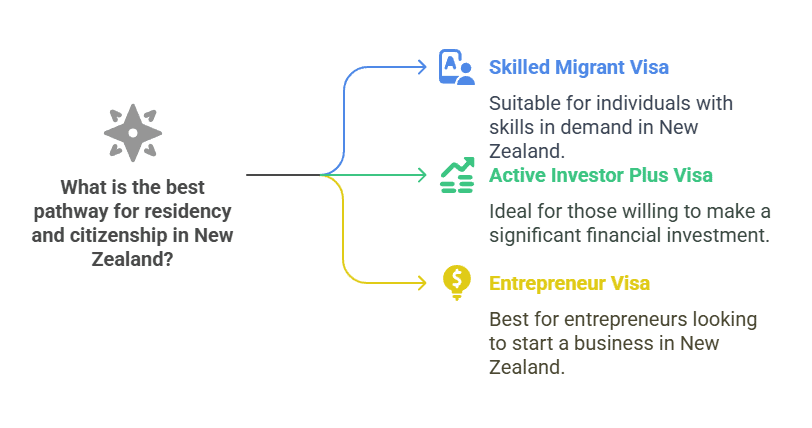
New Zealand, much like Canada, has a reputation for being welcoming but also selective in its residency programs. The pathways for economic residency in New Zealand mainly include investment visas and entrepreneur visas. Under current settings, the Active Investor Plus visa requires a substantial investment but offers different categories to choose from. For example, investing $2,8 million in growth investments (like startups or venture funds) over 3 years qualifies one for residency, whereas a more conservative path requires $5,7 million in balanced investments over 5 years. This change, effective 2025, actually lowers barriers from the previous flat $8,5 million requirement and reduces some bureaucratic hurdles. Despite the high sums, the process is relatively straightforward for those who meet the criteria: applications are handled by Immigration New Zealand with clear guidelines, and the government even introduced concierge services to assist investor migrants.
For entrepreneurs who can’t invest millions, New Zealand offers the Entrepreneur Work Visa, a points-based system where one must invest at least $50,000 in a new business and score 120 points on factors like business plan, experience, and job creation. This visa initially grants a 1-year work permit (extendable to 3 years) to establish the business, after which one can become eligible for residency. In terms of bureaucracy, New Zealand consistently ranks at the top globally for ease of doing business – it was #1 in the World Bank’s Ease of Doing Business index for 4 years running up to 2020. Processing times for investor visas can be as short as a few months for straightforward cases. One challenge can be the quota and quality expectations – for the entrepreneur visa, the points system ensures only high-potential business plans get approved, making it competitive.
Investment or Financial Requirements
New Zealand’s investment residency programs are geared toward high investment thresholds, reflecting its strategy to attract quality over quantity. The new Active Investor Plus Visa sets a minimum investment of $2,8 million for those willing to put funds into approved high-growth investments (like private equity or venture capital). This is the base threshold; interestingly, New Zealand uses a weighting system – more active investments “count” for more, whereas passive investments require a larger nominal amount. With the 2025 changes, they’ve simplified it into Growth ($2,8m over 3 years) vs Balanced ($5,7m over 5 years) categories. The key financial ask is clearly in the millions, which targets global investors in roughly the top 0.1%. For those who can commit that capital, the program is attractive because it doesn’t require additional fees or donations – you are investing in your own portfolio of NZ assets.
On the other end, the Entrepreneur Work Visa requires a much smaller investment: a minimum of $50,000 in a business you will start or purchase. However, merely investing $50k won’t guarantee approval; applicants are scored on criteria such as likely job creation, export potential, and industry (with extra points if the business is outside Auckland, to encourage regional development). In practice, successful entrepreneur candidates often plan on investing more ($100k+) to get higher points. Passive income visas are not really part of New Zealand’s system – there is a temporary retiree visa (for those over 66) that requires $400,000 invested in NZ for 2 years, plus $200,000 in savings and $30,000 annual income, but it does not lead to permanent residency (it’s a renewable temporary visa) and thus is a niche option.
Pathways to Permanent Residency and Citizenship
New Zealand provides clear pathways from initial visa to permanent residency (PR), and eventually citizenship, though the timelines are structured to encourage commitment to the country. For Investor Visa holders, the path usually works as follows: upon approval, you get a residence visa that is conditional on maintaining the investment for the stipulated period (3 or 4 years). If you meet the conditions (e.g., keep $2,8m invested for 3 years and spend at least 21 days in NZ each year for Growth category), you can then apply for conditions to be removed, resulting in permanent residency (indefinite). In many cases, Investor 1 category migrants were granted PR outright or very quickly; under Active Investor Plus, effectively after the investment period, one becomes a permanent resident (or even sooner, as the government indicated a desire to ease transition to PR). Entrepreneur visa holders typically can apply for PR after running their business successfully for about 2 years (meeting the goals in their business plan). So in practice, an entrepreneur might get a 3-year work visa, but as early as 2 years in, if they’ve met the criteria (say, X jobs created, Y revenue), they can be granted PR. One attractive feature is that New Zealand’s permanent residency, once granted, has no further requirements – it is truly “permanent” with no expiry and no stay obligation (unlike some countries where a PR card might lapse if you leave too long).
When it comes to citizenship, New Zealand requires a bit more physical presence than some other countries. To be eligible for citizenship by grant, an individual must have spent at least 5 years as a resident, with a minimum of 240 days in-country each year, totaling 1,350 days over 5 years. This essentially means you need to make New Zealand your primary home for five years. After 5 years, one can apply for citizenship (which includes a language requirement – basic English – and a good character check).
Many investor migrants choose to maintain PR and not rush for citizenship, but for those who do, the 5-year timeline is standard (similar to Australia, and a bit longer than Canada’s 3-year requirement). A positive note is that New Zealand allows dual citizenship – you are not required to renounce your original citizenship to become a Kiwi. This policy, combined with the high regard of a New Zealand passport (visa-free access to ~185 countries, very close to Canadian passport strength), makes citizenship attractive after the residency period. The New Zealand passport is especially valued for the ease of travel and the right to live/work in Australia indefinitely (by longstanding Trans-Tasman agreements).
To maintain permanent residency, New Zealand is very flexible. Once you have PR, there’s no minimum stay requirement to keep it (unlike the initial resident visa phase which had a days requirement). This means an investor could complete their 3-year investment, get PR, and thereafter come and go freely. However, if the goal is citizenship, they do need to actually reside as noted.
Economic Stability

Despite its small size, New Zealand boasts a highly stable and developed economy that offers a safe haven for investors. With a population of just over 5 million, New Zealand’s economy is agile and robust. It’s classified as a high-income country – GDP per capita is around $48,000 in USD terms – on par with Western Europe. The total GDP is about US$250 billion, making it relatively small in absolute terms (ranking in the global top 50), but what it lacks in scale it makes up in quality and resilience. New Zealand has consistently scored near the top of global rankings for economic freedom, lack of corruption, and ease of doing business. In fact, it was rated the #1 easiest country to do business by the World Bank for several years straight and typically ranks in the top 3 for transparency and rule of law. This reflects an environment of strong property rights, efficient regulations, and a pro-business government.
For an investor or relocating entrepreneur, New Zealand’s stability is found in its predictable policy environment (no sudden nationalizations or drastic regulatory shifts), sound banking system (all big banks are Australian-owned and very solid, under strict oversight), and social stability. Crime is low, governance quality is high, and the populace is generally supportive of sensible economic policies. Even changes in government cause relatively minor shifts in economic policy (for instance, a new government in 2023 is focusing on growth and attracting investors).
Tax Benefits
New Zealand’s tax system is straightforward and relatively favorable in certain aspects, especially for new residents and investors. It operates on a worldwide income taxation principle for residents (meaning if you’re a tax resident, your global income is taxable, similar to Canada), but it crucially offers a unique tax break for newcomers. Qualifying new tax residents (including investor migrants) can become Transitional Tax Residents, which grants a 4-year tax exemption on most foreign-sourced income. This exemption is a significant incentive: essentially, for your first four years living in NZ, income like overseas interest, dividends, rental income, or business earnings are not taxed in New Zealand at all. Only NZ-source income is taxed. This allows migrants to rearrange their financial affairs, perhaps realizing foreign gains or setting up trusts, within that window without incurring NZ tax.
Notably, you automatically get this 4-year exemption if you haven’t been a NZ tax resident in the past 10 years and you don’t apply for domestic welfare credits. This is a major boon for high-net-worth individuals with substantial passive income – for example, one could continue earning from foreign investments or a business sale and pay zero NZ tax during the exemption period. After the 4 years, if one remains a tax resident, foreign income becomes taxable, but by then many arrange their finances (some might even choose to leave NZ before the exemption expires if they prefer not to become fully taxable).
Aside from this newcomer benefit, New Zealand’s tax regime has other investor-friendly features. There is no capital gains tax (CGT) on most investments. Unlike many countries, NZ does not generally tax capital gains unless you’re in the business of trading or certain short-term property flips. This means if, say, your property or shares appreciate, you often won’t pay NZ tax on that profit. (There are exceptions: a “bright-line” rule taxes gains on residential property sold within 10 years, aimed at speculators, but long-term holds are exempt.) Likewise, no inheritance tax or gift tax exists in NZ, simplifying estate planning; you can pass on wealth without the taxman involved. There’s also no local or state taxes – only national taxes – which simplifies things (no complex multi-jurisdiction filing as in the US or Canada). The primary taxes are income tax, GST (15% sales tax), and property rates (local council fees).
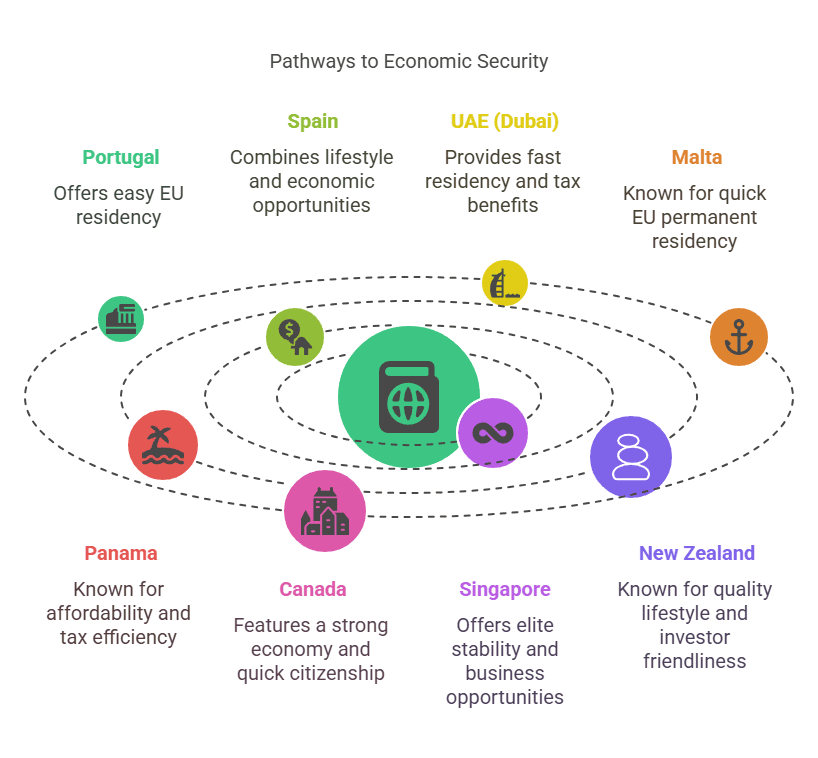
Choosing a country for a “residence permit insurance policy” involves balancing accessibility (how easily can you obtain and keep the visa) with the benefits it provides (economic safety, tax savings, lifestyle). For those seeking maximum tax advantages and an ultra-modern lifestyle, the UAE stands out, whereas Singapore offers unparalleled stability and business environment for those who can meet its high entry bar. Portugal and Spain provide a warm climate, relatively easy residencies, and a gateway to Europe, with Portugal edging out for ease and dual citizenship friendliness. Malta gives a one-step EU permanent residency with significant tax perks if you’re in the investment range for it. Panama is a top choice in the Americas for its low costs and easy-going residency rules, plus the dollarized economy. Canada and New Zealand represent excellent choices for those prioritizing quality of life, strong institutions, and don’t mind a standard tax regime – their residency paths double as immigration for eventual citizenship in very desirable countries.
Ultimately, the “best” country depends on your personal profile (financial means, work situation, family needs) and goals. Professionals might lean toward Singapore or Canada for career opportunities, retirees might favor Portugal or Panama for ease and climate, and entrepreneurs/high-net-worth individuals often opt for UAE, Singapore, or Malta for maximum financial optimization. Some choose to pursue multiple residencies to diversify risk – for example, pairing a European residency with a non-taxed Gulf residency.
By securing residency in one of these top jurisdictions, you create a valuable safety net. You’ll gain the freedom to relocate on short notice if needed, protect a portion of your wealth from home country troubles, and potentially access better healthcare, education, and lifestyle. In an unpredictable world, this kind of backup plan can greatly enhance your peace of mind. Each of the countries above has proven attractive to expats from around the globe seeking stability and prosperity – with the information in this guide, you can make an informed decision on joining them in building your own international resilience.

Lusine Sargsyan
Attorney
