
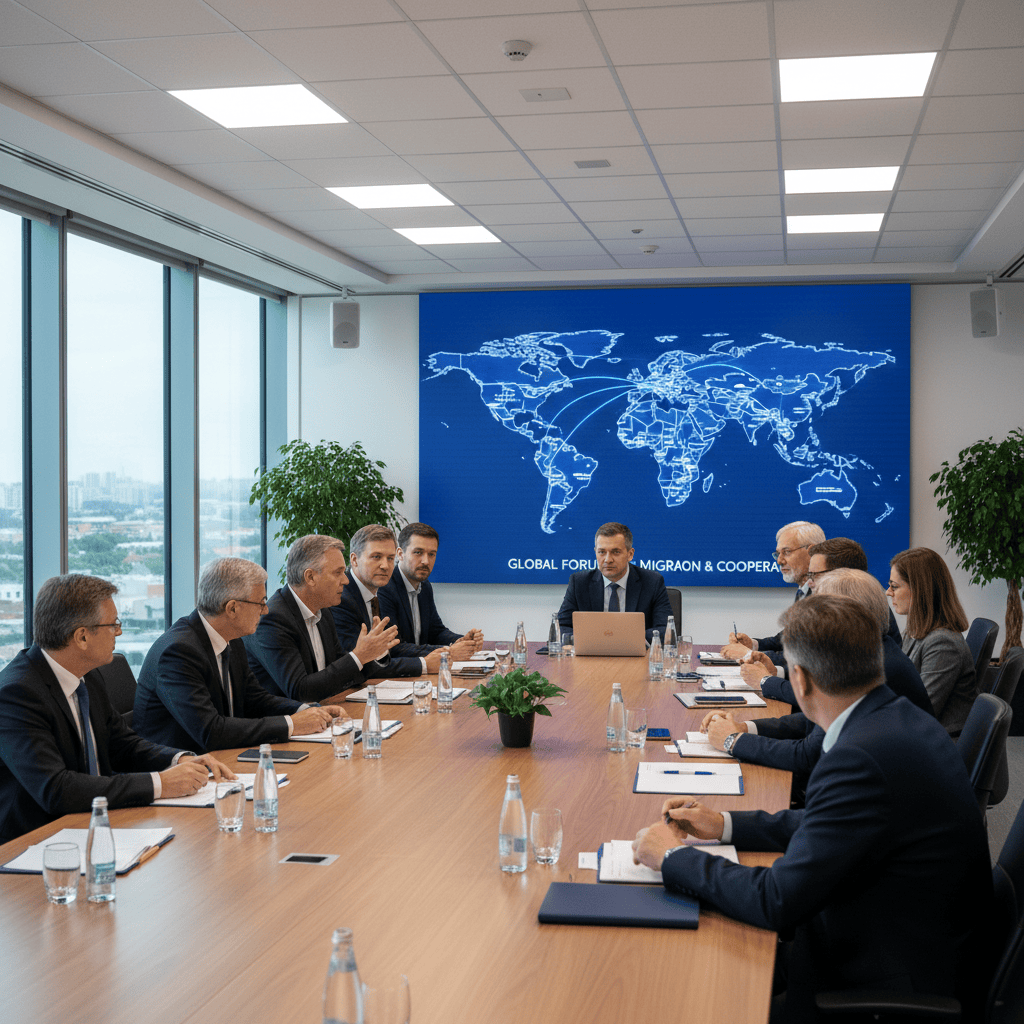
- The first EU–Egypt Strategic Partnership puts migration cooperation at the core, pairing mobility pathways with governance and development support.
- Finance: €7.4bn for 2024–27 (loans, guarantees, grants) with €200m earmarked for migration management, plus a new €75m grant package for local projects.
- Talent Partnership launched to create structured legal migration channels, implying future sponsor obligations and compliance for employers and institutions.
- Egypt's association to Horizon Europe expands R&D collaboration and researcher mobility, requiring coordinated visa and documentation workflows.
- Context: Egypt hosts about 1.5m Sudanese refugees and Europe has seen a 134% rise in Sudanese arrivals in early 2025—pressures that shape mobility responses and resettlement pledges.
The EU–Egypt partnership is moving from statements to instruments. For counsel advising corporates, universities, and investors, the focus on migration cooperation and mobility pathways signals imminent changes to sponsorship duties, due diligence standards, and cross‑border workforce planning. Preparing internal systems now will help organizations capitalize on new legal channels while staying compliant.
Table of Contents
- Summit context: the first EU–Egypt Strategic Partnership and why migration is central
- Scale and focus of financing: the €7.4bn package
- €75m local grants and migration earmarks
- Talent Partnerships and legal migration: structured labour-mobility channels and sponsor roles
- Horizon Europe association: R&D cooperation, researcher mobility and institutional implications
- Migration pressures on the ground: Sudanese refugees, rising arrivals to Europe and resettlement pledges
Summit Context: The First EU–Egypt Strategic Partnership and Why Migration is Central
The inaugural EU–Egypt Strategic Partnership summit affirmed a comprehensive agenda spanning macro-finance, investment, energy, and mobility. The European Commission frames migration cooperation as a core pillar of this partnership, linking governance, border management, and legal pathways with development and investment tools to stabilize livelihoods and manage flows. Egyptian officials likewise underscore migration as a priority file in cooperation with the EU.
Scale and Focus of Financing: The €7.4bn Package
The EU–Egypt package for 2024–27 totals €7.4 billion, combining up to €5 billion in macro-financial assistance loans, €1.8 billion via the European Fund for Sustainable Development Plus (EFSD+) framework, and €600 million in grants. Of the grant envelope, €200 million is earmarked specifically for migration management projects.
EU–Egypt Financing 2024–27: Components at a Glance
| Instrument | Amount | Focus | Notes (2024–27) |
|---|---|---|---|
| Macro-financial loans | Up to €5.0bn | Stability, balance-of-payments, reforms | Loan tranches tied to policy milestones |
| EFSD+ framework | €1.8bn | De-risking, guarantees, private investment | Mobilizes regional investments |
| Grants | €600m (incl. €200m migration) | Reforms, services, migration management | €200m reserved for migration projects |
For investors and employers, this mix matters: EFSD+ guarantees can catalyze private capital, while migration earmarks often translate into training, matching, and documentation systems that affect sponsor compliance and workforce planning.
€75m Local Grants and Migration Earmarks
Alongside the strategic financing envelope, the EU announced a €75 million grant package for local socio‑economic projects in Egypt, focusing on health, education, water, and sanitation with a special emphasis on women and youth. This links community-level stability with migration objectives. At the macro level, €200 million of the broader grant envelope is set aside for migration management, signaling that concrete programs—such as legal pathways, skills partnerships, and compliance upgrades—are expected outcomes.
Talent Partnerships and Legal Migration: Structured Labour-Mobility Channels and Sponsor Roles
The EU has launched a Talent Partnership with Egypt to support international labour mobility in cooperation with Member States. These partnerships are designed to create structured, skills‑based legal migration channels, typically combining training, matching, and placements with safeguards for ethical recruitment.
Joint technical migration workshops between Egypt and an EU delegation in late 2024 indicate an active track for implementing this pillar, with Egypt presenting migration policy priorities and cooperation proposals. Counsel should anticipate that Talent Partnership pilots can evolve into formal sponsor obligations, documentation checklists, and reporting standards, especially around due diligence on recruiters, wage floors, housing, and post‑arrival integration.
Compliance Checklist for Prospective Sponsors (Forward-Looking)
- Map roles suitable for cross‑border recruitment; align job descriptions with EU national visa categories and labour‑market tests where applicable.
- Prepare evidence files: corporate registration, financial standing, genuine vacancy proof, training plans, and safeguarding policies.
- Set up cross‑border payroll/tax workflows and onboarding to meet receiving‑country standards.
- Vet intermediaries; implement ethical recruitment clauses and audit trails.
- Design retention and compliance monitoring (attendance, wage, accommodation) to satisfy sponsor-review audits.
For parallel location strategies in the region, organizations sometimes establish a compliant base in nearby jurisdictions.
Horizon Europe Association: R&D Cooperation
Egypt formalized its association to Horizon Europe at the summit, opening access to Europe's flagship research and innovation framework for Egyptian entities. Association enables deeper participation in EU‑funded consortia and can scale researcher exchanges and innovation partnerships.
Researcher Mobility and Institutional Implications
R&D actors should plan for higher mobility volumes tied to Horizon Europe calls. Practical implications include:
- Visa and residence workflows: Identify appropriate research visas/permits and hosting agreements; designate internal case owners and timelines for each Member State route.
- Documentation: Institutional letters, grant agreements, ethics approvals, and IP frameworks should be standardized for repeated use across projects.
- Payroll and tax coordination: Determine split payroll or stipends and evaluate social security coverage.
- Data and compliance: Cross‑border data transfers, research integrity, and export‑control checks should be embedded in proposal and onboarding workflows.
Migration Pressures on the Ground: Sudanese Refugees
The mobility pillar is shaped by real pressures. Egypt hosts about 1.5 million Sudanese refugees as of June 2025, reflecting the scale of displacement following the Sudan conflict. Such volumes strain local services and employment markets, reinforcing the rationale for livelihood support and regulated pathways.
Rising Arrivals to Europe and Resettlement Pledges
Downstream, Europe recorded a 134% increase in Sudanese refugee arrivals in Jan–May 2025 versus the prior period. Against that backdrop, the EU has tabled resettlement and humanitarian‑admission pledges totaling about 60,000 persons in 2024, signalling a modest expansion of safe channels alongside border management.
For employers and universities, the policy direction is clear: more managed mobility, with stricter compliance gates. Expect Talent Partnership pilots, targeted traineeships, and expanded student/researcher routes—each with documentation and sponsor‑monitoring obligations. Building governance early will reduce friction when channels open.
Next Steps for Counsel and Mobility Leads
- Track EU–Egypt Talent Partnership announcements and Member State pilots to identify viable sectors and quotas.
- Engage internal stakeholders (HR, legal, compliance, research offices) to map process owners and SLAs for sponsor duties.
- Pre‑build document templates (job offers, training plans, housing attestations, hosting agreements, safeguarding policies).
- Run a mock audit of right‑to‑work, wage, and accommodation records to meet likely sponsor-review standards.
- Model cross‑border workforce scenarios to align visas, start dates, and payroll. For regional diversification, explore visa and residency options if building teams across jurisdictions.
Conclusion: The EU–Egypt partnership is a strong signal for migration cooperation, mobility pathways, and regional investments advancing in tandem. Organizations that prepare now for sponsor obligations, due diligence, and cross‑border workforce planning will be best placed to use new legal channels as they go live.
FAQ
At a glance
- The EU–Egypt Strategic Partnership, signed March 2024 and elevated at the first EU–Egypt Summit in October 2025, pairs mobility pathways with governance and development support.
- Finance: €7.4 billion for 2024–27 (loans, guarantees, grants), with €2 billion already disbursed by January 2026 and €200 million earmarked for migration management.
- The Talent Partnership with Egypt is operational, with the NET-Work You pilot in Italy placing 100 trainees in agri-food and hospitality sectors.
- Egypt’s association to Horizon Europe, signed October 2025, opens MSCA 2026 calls to Egyptian researchers from February 2026.
- Egypt hosts over 1.5 million Sudanese refugees. EU resettlement pledges were cut by 83% in 2024, increasing pressure on managed-mobility channels.
- For Egyptian nationals considering Armenia as a regional base, Armenian residency and business formation offer practical pathways with streamlined processing.
The EU–Egypt partnership has moved from statements to instruments. For counsel advising corporates, universities, and investors, the focus on migration cooperation and mobility pathways signals concrete changes to sponsorship duties, due diligence standards, and cross-border workforce planning. With the first summit held in October 2025 and €2 billion already disbursed, organizations that prepare internal systems now will be positioned to capitalize on new legal channels as they go live.
Table of contents
- Summit context and the six-pillar framework
- Scale and focus of financing: the €7.4 billion package
- €75 million local grants and migration earmarks
- Talent Partnerships and legal migration channels
- Horizon Europe association and researcher mobility
- Migration pressures: Sudanese displacement and resettlement
- What this means for Armenia
- Next steps for counsel and mobility leads
- Frequently asked questions
Summit context and the six-pillar framework
The EU–Egypt Strategic Partnership was signed in March 2024, establishing a comprehensive agenda spanning finance, investment, energy, and mobility. This was elevated at the first EU–Egypt Summit on 22 October 2025 in Brussels, attended by President el-Sisi, Commission President von der Leyen, and European Council President Costa. The next summit is planned for Egypt in 2027.
The partnership rests on six pillars: political dialogue, economic stability and investment, trade, migration and mobility, security and defence, and human capital. Migration cooperation sits at the core, linking governance, border management, and legal pathways with development and investment tools to stabilize livelihoods and manage flows.
For practitioners, the six-pillar approach means that migration-related obligations are embedded across multiple cooperation tracks. Energy partnerships, trade agreements, and security cooperation all carry mobility implications that affect compliance planning for employers and institutions operating across EU–Egypt channels.
Scale and focus of financing: the €7.4 billion package
The EU–Egypt package for 2024–27 totals €7.4 billion, combining up to €5 billion in macro-financial assistance loans, €1.8 billion under the EFSD+ framework, and €600 million in grants. Of the grant envelope, €200 million is earmarked specifically for migration management projects.
Disbursement has progressed significantly: €1 billion was released in December 2024 and a further €1 billion in January 2026, bringing total disbursements to €2 billion. The remaining €3 billion in MFA tranches is expected through 2026–27, tied to policy milestones.
Financing components at a glance
| Instrument | Amount | Focus | Status (May 2026) |
|---|---|---|---|
| Macro-financial loans | Up to €5.0 billion | Stability, balance-of-payments, reforms | €2 billion disbursed (Dec 2024 + Jan 2026) |
| EFSD+ framework | €1.8 billion | De-risking, guarantees, private investment | Mobilizing regional investments |
| Grants | €600 million (incl. €200m migration) | Reforms, services, migration management | €200m reserved for migration projects |
For investors and employers, this mix matters: EFSD+ guarantees can catalyze private capital, while migration earmarks often translate into training, matching, and documentation systems that affect sponsor compliance and workforce planning.
€75 million local grants and migration earmarks
Alongside the strategic financing envelope, the EU announced a €75 million grant package for local socio-economic projects in Egypt, focusing on health, education, water, and sanitation with a special emphasis on women and youth. This links community-level stability with migration objectives.
At the macro level, €200 million of the broader grant envelope is set aside for migration management, signaling that concrete programs — such as legal pathways, skills partnerships, and compliance upgrades — are expected outcomes. The combination of local grants and migration earmarks creates a dual-track approach: stabilizing source communities while building legal channels for managed mobility.
Talent Partnerships and legal migration channels
The EU launched a Talent Partnership with Egypt to support international labour mobility in cooperation with Member States. These partnerships create structured, skills-based legal migration channels that combine training, matching, and placements with safeguards for ethical recruitment.
The partnership is now operational. The NET-Work You pilot project in Italy’s Apulia region is training 100 Egyptian participants for agri-food and hospitality sector placements under the EU’s Migration Partnership Facility (2024–2027). The project is implemented by Confcooperative Puglia and CIHEAM Bari, using Italy’s study and traineeship visa categories. There is no EU-wide quota or dedicated Talent Partnership visa — each participating Member State applies its own national visa framework.
Counsel should anticipate that Talent Partnership pilots can evolve into formal sponsor obligations, documentation checklists, and reporting standards, especially around due diligence on recruiters, wage floors, housing, and post-arrival integration.
Compliance checklist for prospective sponsors
- Map roles suitable for cross-border recruitment and align job descriptions with EU national visa categories and labour-market tests where applicable.
- Prepare evidence files: corporate registration, financial standing, genuine vacancy proof, training plans, and safeguarding policies.
- Set up cross-border payroll and tax workflows and onboarding to meet receiving-country standards.
- Vet intermediaries and implement ethical recruitment clauses and audit trails.
- Design retention and compliance monitoring (attendance, wage, accommodation) to satisfy sponsor-review audits.
Horizon Europe association and researcher mobility
Egypt formalized its association to Horizon Europe at the October 2025 summit, opening access to Europe’s flagship research and innovation framework. The association agreement produced legal effects from 12 February 2026, making Egyptian organizations eligible for Marie Skłodowska-Curie Actions (MSCA) 2026 calls.
Even before association, Egypt had built a track record: 14 organizations participated in 20 MSCA projects involving approximately 100 researchers, while hosting 14 international MSCA researchers. Association is expected to significantly expand these numbers across health, climate change, food security, digital technology, and cultural heritage.
Institutional implications for R&D actors
R&D actors should plan for higher mobility volumes tied to Horizon Europe calls. Practical implications include:
- Visa and residence workflows: Identify appropriate research visas and permits, hosting agreements, and designate internal case owners and timelines for each Member State route.
- Documentation standards: Institutional letters, grant agreements, ethics approvals, and IP frameworks should be standardized for repeated use across projects.
- Payroll and tax coordination: Determine split payroll or stipend arrangements and evaluate social security coverage for mobile researchers.
- Data and compliance: Cross-border data transfers, research integrity, and export-control checks should be embedded in proposal and onboarding workflows.
Migration pressures: Sudanese displacement and resettlement
The mobility pillar is shaped by real pressures. Egypt hosts over 1.5 million Sudanese refugees as of January 2026, with UNHCR registering 849,364 Sudanese nationals out of 1,100,593 total registered refugees and asylum-seekers as of April 2026. Many more remain unregistered. Such volumes strain local services and employment markets, reinforcing the rationale for livelihood support and regulated pathways.
Downstream, Europe recorded 12,684 Sudanese arrivals between January and November 2025 — a 3.3-fold increase over the prior period, with 65% arriving via Greece and 31% via Italy. Against that backdrop, EU resettlement and humanitarian-admission pledges fell sharply: only 10,430 pledges from nine Member States in 2024, an 83% drop from the 61,000 initially committed.
For employers and universities, the policy direction is clear: more managed mobility through structured channels with stricter compliance gates. Expect expanded traineeships, targeted student and researcher routes, and each with documentation and sponsor-monitoring obligations.
What this means for Armenia
The EU–Egypt partnership creates practical implications for professionals and investors considering Armenia as a regional base. Armenia’s own EU relationship — anchored by the Comprehensive and Enhanced Partnership Agreement (CEPA) in force since March 2021, with a Strategic Agenda announced in December 2025 — positions the country within a broader network of EU cooperation frameworks.
For Egyptian nationals and businesses, Armenia offers complementary pathways. Armenian temporary residence can be obtained with streamlined processing, and business registration takes as few as one to three business days. Companies establishing operations in Armenia gain access to a growing network of bilateral investment treaties with EU states and can leverage the EU–Armenia Investment Coordination Platform.
Organizations building cross-border teams that span the EU, Egypt, and nearby jurisdictions may benefit from Armenia’s tax framework, including favourable rates for qualifying IT companies. Armenia’s visa regime and proximity to both European and Middle Eastern markets make it a practical hub for regional operations.
Next steps for counsel and mobility leads
- Track EU–Egypt Talent Partnership announcements and Member State pilots to identify viable sectors and quotas. The NET-Work You pilot in Italy provides a model for what sponsor obligations will look like.
- Engage internal stakeholders (HR, legal, compliance, research offices) to map process owners and SLAs for sponsor duties.
- Pre-build document templates: job offers, training plans, housing attestations, hosting agreements, and safeguarding policies.
- Run a mock audit of right-to-work, wage, and accommodation records to meet likely sponsor-review standards.
- Model cross-border workforce scenarios to align visas, start dates, and payroll. For regional diversification, explore residency options when building teams across jurisdictions.
- Monitor the next EU–Egypt Summit planned for 2027 in Egypt for further programme developments and expanded mobility channels.
