
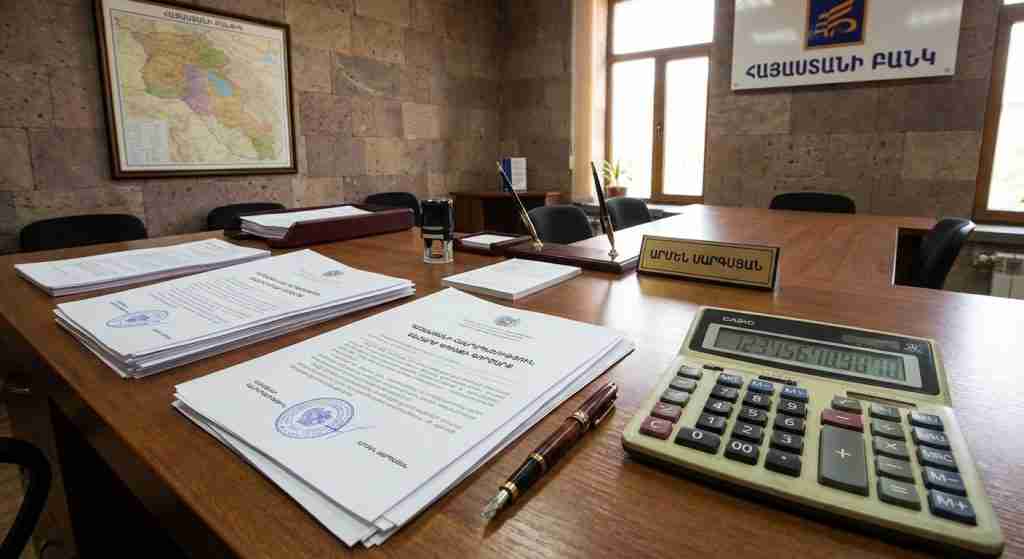
- High-value property payments in Armenia must be non-cash: real estate transactions above AMD 50,000,000 (about US$125,000) are paid by bank transfer, not cash.
- Contracts and payments should be in Armenian drams (AMD); paying in foreign currency risks penalties up to the transaction value.
- Use escrow/deposit accounts so funds are released only after notarization and Cadastre registration.
- Align your payment schedule with notary and Cadastre timing and keep bank transfer receipts for the file.
- Coordinate early with your bank (KYC/source-of-funds) and have a lawyer draft compliant payment clauses.
Closing on a home or investment property in Armenia? Understanding Armenia’s non-cash payment rule and how it affects real estate payments will help you avoid blocked transfers, notary delays, and tax risks. This guide explains when non-cash applies, why payments must be in AMD, how to use escrow safely, and the practical steps to structure your deal.
How Armenia’s non-cash threshold applies to property deals (who, when, and why it matters)
Armenia’s non-cash payment rule is especially relevant for real estate: for transactions above AMD 50,000,000 (around US$125,000), the purchase price must be paid by bank transfer rather than cash. Most property deals exceed this threshold, so plan non-cash channels early to avoid penalties and registration delays (armenian-lawyer.com).
Who is affected: both individuals and companies buying or selling property in Armenia. When it applies: at the payment stage documented in your notarized sale agreement—whether at closing, through a balance after registration, or via staged payments. Why it matters: non-compliant payments can cause notary refusals and tax exposure; the safest course is to execute payments via Armenian banks and keep transfer receipts aligned to the contract (armenian-lawyer.com).
Armenia’s property market is active—220,000 real estate transactions were recorded in 2023—so banks, notaries, and the Cadastre are well-practiced in processing compliant non-cash payments when buyers coordinate in advance (Aravot).
Currency and contract compliance: why sale agreements and payments must be in Armenian drams (AMD)
By law and notarial practice, the sale price in the contract and the matching payment should be in Armenian drams (AMD). Even if the parties negotiate in USD or EUR, the price is set in AMD, and funds are converted via an Armenian bank before transfer to the seller. Using a foreign currency directly in the transaction risks substantial fines—potentially up to the value of the transaction—and can jeopardize registration (armenian-lawyer.com).
Practical implications:
- Quote the price in AMD in the notarized sale agreement.
- If you hold USD/EUR, convert through an Armenian bank and transfer AMD to the seller’s AMD account.
- Ensure the bank transfer instruction references the exact contract number/date to create a clear audit trail for the notary and Cadastre (armenian-lawyer.com).
Prohibited tactics and anti‑circumvention rules: why you can’t split payments to evade the non‑cash requirement
Attempting to bypass non-cash rules by fragmenting payments or handling side-cash outside the contract risks serious issues. Notaries typically require that the payment mechanics (any deposit and the final balance) are recorded in the notarized contract and that payment evidence matches these terms. Buyers often pay a deposit upfront and the balance after ownership is registered; both flows should be properly documented and supported by bank receipts (armenian-lawyer.com).
Best practice:
- Cover any installment schedule in the notarized contract; avoid off-contract side-payments.
- Use bank transfers for the deposit and balance; keep receipts for notary review.
- If the total price exceeds the non-cash threshold, treat the entire transaction as a banked process and coordinate with your bank accordingly (armenian-lawyer.com).
Using escrow and deposit accounts to protect buyers and sellers (bank release conditions and safeguards)
Armenian banks offer escrow-style deposit arrangements for property deals. The buyer deposits the purchase funds, and the bank releases them to the seller only after the notarized sale agreement is in place and the title transfer is confirmed with the Cadastre. This structure reduces fraud risk and aligns payment with actual transfer of ownership (armenian-lawyer.com).
How it works:
- Buyer opens a dedicated deposit/escrow account and funds it in AMD.
- Release conditions are agreed in writing: typically, presentation of the notarized sale contract and proof of Cadastre registration.
- The bank releases funds to the seller only when conditions are met, otherwise returns them to the buyer after the agreed fallback date (armenian-lawyer.com).
Security note: Bank deposits in Armenia are protected by the deposit guarantee scheme up to AMD 16,000,000 for AMD deposits; understand the coverage that applies while funds are held in your name (Law on Guaranteeing Compensation of Bank Deposits).
| Method | When it’s useful | Key safeguard |
|---|---|---|
| Direct bank transfer | Simple deals with trusted counterparties; immediate closing | Reference the contract and keep transfer receipts for the notary |
| Escrow/deposit account | When you want funds released only after notarization and Cadastre confirmation | Bank releases funds strictly on agreed documents/conditions |
Preparing bank transfers: KYC, account setup
Armenian banks will conduct standard KYC/AML checks before processing high-value real estate payments. Build in lead time to open accounts, convert foreign currency to AMD, and clear source‑of‑funds review. Notaries generally expect to see bank receipts at signing or before the Cadastre filing, so coordinate payment timing with both the bank and your notary (armenian-lawyer.com).
Practical checklist:
- Open an AMD account with an Armenian bank in advance.
- Prepare identification and source-of-funds documentation consistent with bank AML policies.
- Pre-approve international transfer routes, conversion to AMD, and any escrow arrangement with the bank.
- Draft contract clauses that match the bank payment sequence (deposit, escrow funding, balance release).
- Share transfer receipts with your notary to avoid execution or registration delays (armenian-lawyer.com).
How to apply: step-by-step for a compliant property payment
- Engage counsel to draft the sale contract in AMD with clear payment mechanics (deposit, escrow, balance) and precise milestones (notarization and Cadastre filing) (armenian-lawyer.com).
- Open an Armenian bank account; agree on transfer paths, FX conversion to AMD, and, if used, an escrow/deposit account with tailored release conditions (armenian-lawyer.com).
- Fund the deposit (by bank transfer) and obtain receipts, or fund the escrow account according to the contract schedule (armenian-lawyer.com).
- Sign the notarized sale agreement; your notary may check payment evidence at this stage. Ensure the contract references the agreed payment form and bank details (armenian-lawyer.com).
- File the transaction with the Cadastre; once registration is confirmed, the bank releases escrow funds or you transfer the balance per contract (armenian-lawyer.com).
- Keep the full dossier: notarized contract, bank transfer receipts, escrow release notice, and Cadastre certificate—for audit defense and future resale (armenian-lawyer.com).
Fees and timing overview
Build these items into your budget and closing calendar:
- Bank transfer costs: card/transfer processing on large transactions is typically in the 1.5–3% range, depending on bank and channel (Eurasianet).
- Deposit/escrow fees: bank-specific (flat or percentage) and agreed when you open the account (armenian-lawyer.com).
- Payment proof timing: notaries generally want to see transfer receipts at signing or before registration, and buyers often pay the balance only after title is registered—plan your transfer cut‑offs accordingly (armenian-lawyer.com).
- Contract in AMD, with payment schedule and bank details captured.
- Non-cash channel confirmed with your bank (transfer limits, FX to AMD, escrow option).
- Proof of funds and KYC documents ready for the bank.
- Transfer references include contract number/date; obtain stamped receipts.
- Payment milestones synchronized with notarization and Cadastre filing.
Whether you’re buying a home or an investment unit, structuring real estate payments in Armenia around the non-cash payment rule, AMD‑denominated contracts, and secure bank mechanisms will keep your deal compliant and smooth. For end‑to‑end support—drafting, escrow coordination, notary/Cadastre alignment, and tax review—speak to our team. Learn more about real estate transactions in Armenia, explore investment routes, and review tax considerations. Ready to proceed? Contact us.
What is the non-cash payment threshold for property purchases in Armenia?
For real estate transactions above AMD 50,000,000 (about US$125,000), payments must be made via bank transfer rather than cash (armenian-lawyer.com).
Can I pay or contract in USD or EUR?
No. The sale agreement and payments should be in Armenian drams (AMD). If you hold foreign currency, convert via an Armenian bank and transfer AMD to the seller. Non‑AMD settlements risk fines up to the transaction value (armenian-lawyer.com).
Do notaries require proof of payment?
Yes. Notaries commonly request bank transfer receipts aligned with the contract. A frequent structure is a deposit first and payment of the balance after Cadastre registration is confirmed (armenian-lawyer.com).
Is escrow available for property deals in Armenia?
Yes. Banks offer escrow/deposit accounts in which the buyer deposits funds and the bank releases them to the seller only after notarization and title transfer are confirmed, per agreed release conditions (armenian-lawyer.com).
How much do bank transfers cost?
Processing costs on large transactions are typically in the 1.5–3% range, depending on bank and channel. Confirm fees and cut‑off times with your bank in advance (Eurasianet).
