
Cost of Living in Colombia
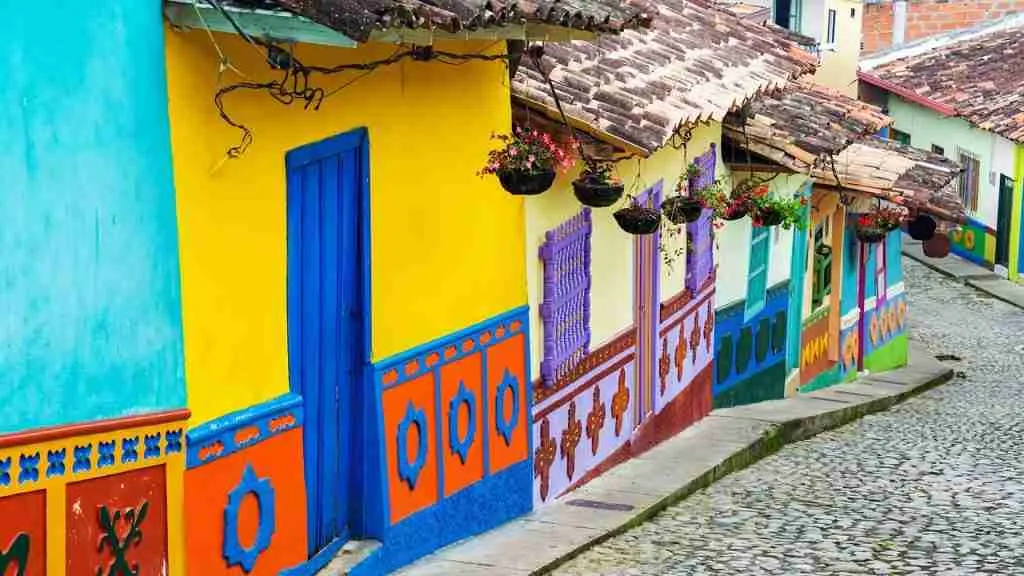
One of the main attractions of Colombia for foreigners is its low cost of living. Compared to many Western countries, expenses in Colombia are significantly lower, allowing for a comfortable lifestyle on a budget. The cost of living can vary significantly across different regions. Coastal cities like Cartagena tend to have a higher cost of living due to tourism and higher demand for services. Inland cities and rural areas generally offer a more affordable lifestyle, with lower costs for housing and basic necessities. Utilities and healthcare are also relatively affordable in Colombia.
Overall, the cost of living in Colombia is about 64% lower than in the United States.
Housing
Housing costs vary depending on the location and type of property. Major cities like Bogotá and Medellín are generally more expensive than smaller towns or rural areas. In Bogotá, the median price of an apartment for sale is COP 5,642,410 ($1367) per square meter, while houses have a median price of COP 4,068,997 ($986) per square meter. Rent for a one-bedroom apartment in the city center varies by city, but is generally affordable. For example, in Usaquen, Bogotá, you can find one-bedroom apartments for rent between $256 and $533 per month.
Food
Food costs in Colombia are generally affordable, especially if you opt for local produce and cuisine. A meal at an inexpensive restaurant might cost around COP 15,000 ($3.64) to COP 20,000($4.85). Groceries are also relatively inexpensive, especially when buying local products. You can find a variety of fresh fruits, vegetables, and seafood at local markets for a fraction of the cost in Western countries.
Transportation
Public transportation in Colombia is relatively inexpensive. In major cities, a single bus or metro ticket typically costs around COP 2,500 ($0.61) to COP 3,000 ($0.73). Taxis and ride-sharing services are also available and affordable compared to many Western countries. For example, a 1.5-hour Uber ride might cost around $10.
Healthcare
Colombia has a two-tier healthcare system, with public and private options available. Healthcare in Colombia is significantly more affordable than in many other countries, especially for those on the public health insurance plan. The public health insurance system, EPS (Entidad Promotora de Salud), offers all residents a low-cost public health insurance plan. Expats typically pay a minimum of $36 per month for EPS coverage. Private health insurance is another option, offering more comprehensive coverage and faster access to care, but it is more expensive.
Visas and Residency Permits
Colombia offers a range of visas to suit different needs and purposes of stay. For those seeking a low-cost lifestyle, the following visa options are particularly relevant:
Visa Type | Subcategory | Validity | Requirements |
|---|---|---|---|
Visitor (V) | Tourist | Up to 180 days per calendar year | Valid passport, proof of onward travel, proof of sufficient funds |
Rentista | Up to 2 years | Proof of passive income of at least $2,577 per month | |
Digital Nomad | Up to 2 years | Proof of remote employment with a foreign company and income of at least $900 per month | |
Business | Up to 2 years | Valid passport, proof of sufficient funds, business plan, proof of health insurance | |
Courtesy | Varies | For diplomats and participants in international agreements | |
Migrant (M) | Retirement | Up to 3 years | Proof of retirement income of at least three times the Colombian minimum wage |
Real Estate Investor | Up to 3 years | Investment of at least COP 460,414,524 (approx. USD 117,100) in Colombian real estate | |
Marriage | Up to 3 years | Marriage certificate to a Colombian citizen | |
Work | Up to 3 years | Employment contract with a Colombian company | |
Freelance | Up to 3 years | Proof of freelance work and income of at least COP 13,006,060 (approx. USD 3,300) per month | |
Resident (R) | Accumulated Time | 5 years | Continuous legal residence in Colombia for 5 years with an M visa |
Family Connection | 5 years | Spouse, parent, or child of a Colombian citizen | |
Investor | 5 years | Significant investment in Colombia | |
Peace Special | 5 years | For individuals involved in the peace process |
Visitor Visa (V)
- Tourist Visa: This visa allows you to stay in Colombia for up to 180 days per calendar year. You can enter visa-free for 90 days and apply for a 90-day extension before the initial period expires. This option is ideal for those who want to experience Colombia before committing to long-term residency.
- Rentista Visa: This visa is for those who receive regular passive income from sources such as pensions, rental income, or investments. You need to prove a monthly income of at least $2,577 to qualify. This visa allows you to live in Colombia for up to two years, but you cannot work or generate business income while in the country.
- Digital Nomad Visa: This visa is for remote workers who earn at least $900 per month working for a foreign company. It is valid for up to two years and allows you to travel around Colombia and other parts of the globe.
- Business Visa: This visa is a good option for business owners or investors who will not spend more than 180 days a year in Colombia. It allows you to obtain a Colombian ID card (cédula de extranjería), which is useful for various purposes such as banking, signing contracts, and obtaining a driver's license.
- Courtesy Visa: This visa is granted to diplomats, participants in international agreements, and those involved in specific programs or initiatives. It is typically issued for a shorter duration and may have specific requirements depending on the purpose of the visit.
Migrant Visa (M)
- Retirement Visa: This visa is for retirees who can demonstrate a monthly income of at least three times the Colombian minimum wage. This visa allows you to live in Colombia and enjoy your retirement income.
- Real Estate Investor Visa: This visa is for foreigners who have made a significant investment in Colombian real estate. The minimum investment amount is COP 460,414,524 (approx. $ 117,100) for 2024.
- Marriage Visa: This visa is for foreigners who are married to Colombian citizens. It allows you to live and work in Colombia and potentially apply for citizenship after a certain period.
- Work Visa: This visa is for foreigners who have secured employment with a Colombian company. It allows you to work legally in Colombia and potentially apply for residency after a certain period.
- Freelance Visa: This visa is for foreign freelancers who intend to work independently in Colombia. You need to demonstrate an average monthly income of at least COP 13,006,060 (approx. $ 3,300) to qualify.
Resident Visa (R)
The Resident Visa (R) is typically obtained after holding a Migrant Visa (M) for five years. It offers long-term stability, access to the national healthcare system, and fewer work restrictions compared to temporary residency. After holding the Resident visa for a certain period, you can apply for Colombian citizenship.
There are a few scenarios where you can receive a resident visa sooner:
- Accumulated Time in Colombia with a Migrant Visa: If you have lived in Colombia for five years on a Migrant Visa (M), you may be eligible to apply for a Resident Visa (R).
- Family Connections: If you are the parent or child of a Colombian citizen, you may be eligible for a Resident Visa (R).
- Investors: If you have made a significant investment in Colombia, such as in real estate or a business, you may be eligible for a Resident Visa (R).
- Peace Special: This visa is for individuals who have been involved in the Colombian peace process.
Requirements for Visas and Residency Permits
The specific requirements for each visa and residency permit vary, but some common requirements include:
- Valid Passport: You must have a valid passport with at least six months of validity remaining. This is essential for identification and international travel.
- Completed Visa Application Form: You need to complete the visa application form accurately and truthfully. This form collects personal information, travel details, and other relevant information for your visa application.
- Passport-sized Photographs: You must provide recent passport-sized photographs that meet the specifications outlined by the Colombian authorities. These photographs are used for identification purposes.
- Proof of Economic Capacity: You need to demonstrate that you have sufficient financial resources to support yourself during your stay in Colombia. This can be proven through bank statements, income statements, or other financial documents.
- Health Insurance Policy: You must have a valid health insurance policy that covers your stay in Colombia. This ensures that you have access to medical care if needed.
- Criminal Background Check: You may be required to provide a criminal background check from your home country or any country where you have resided in the past. This is to ensure that you do not have a criminal record that would disqualify you from obtaining a visa.
- Check-Mig Form: All travelers must complete the online Check-Mig form within 72 hours of boarding a flight to or from Colombia. This form collects travel information and health declarations.
It is crucial to consult the official website of the Colombian Ministry of Foreign Affairs (https://www.cancilleria.gov.co/en) or the nearest Colombian consulate for the most up-to-date and specific requirements for the visa you are applying for.
It's important to note that overstaying your visa can result in fines and may prevent you from leaving Colombia until the fines are paid.
Process for Applying for Citizenship in Colombia
There are several pathways to Colombian citizenship:
- By Birth: If you were born in Colombia or have a Colombian parent, you are automatically a Colombian citizen.
- By Adoption: If you are a foreign national who has adopted a Colombian child, you may be eligible for Colombian citizenship.
- By Marriage: If you are married to a Colombian citizen, you can apply for citizenship after two years of continuous residency with a Resident Visa (R).
- By Naturalization: This is the most common path to citizenship for foreigners. You can apply for naturalization after fulfilling the residency requirements, which vary depending on your nationality. Colombia allows dual citizenship, so you won't have to renounce your current citizenship if you become a Colombian citizen.
Application Process for Naturalization
The general process for applying for citizenship by naturalization is as follows:
- Check your eligibility: Ensure you meet the residency and other requirements. This includes having a valid Resident Visa (R) and meeting the specific residency requirements based on your nationality.
- Gather required documents: This includes:
- Official application form addressed to the Minister of Foreign Affairs.
- Valid passport with at least six months of validity remaining.
- Birth certificate or equivalent document showing place and date of birth.
- Foreign Resident ID card and a copy of your Colombian residency visa.
- Police background check.
- Proof of civil status of any dependents if they are included in your application.
- Proof of profession or occupation, such as a certificate from your employer or income tax return.
- If married to a Colombian citizen, a marriage certificate.
- Five photographs (4x5 cm) on a blue background.
- Official translations of documents into Spanish.
- Submit your application: Submit your application and documents to the Ministry of Foreign Affairs. You can do this in person or through the online visa application portal.
- Pay application fees: The fee for citizenship by naturalization is approximately $90.
- Attend an interview and examination: You may be required to attend an interview to assess your Spanish language skills and knowledge of Colombian history, geography, and the constitution. Individuals who show proof of having obtained a high school or university degree, as well as persons over 65 years of age, are exempted from this requirement. The Spanish language test is waived for natives of Spanish-speaking countries.
- Await processing and notification of decision: The processing time can vary, but it may take from 6 to 12 months.
- Attend a naturalization ceremony: If your application is approved, you will be invited to a ceremony where you will take an oath of allegiance to Colombia.
- Get your ID card and Colombian passport: After the ceremony, you will receive your Colombian citizenship certificate and can apply for a Colombian ID card and passport.
Benefits of Living in Colombia as a Resident or Citizen

Living in Colombia as a resident or citizen offers numerous benefits:
- Stable political and economic environment: Colombia has made significant progress in recent years in terms of political stability and economic development. This provides a secure and promising environment for individuals and businesses.
- Right to live and work: As a resident or citizen, you have the right to live and work in Colombia without restrictions. This allows you to pursue your career goals and contribute to the country's economy.
- Business opportunities: Colombia offers a favorable environment for entrepreneurship and investment. The government has implemented various initiatives to support businesses and attract foreign investment.
- Social and healthcare benefits: Residents and citizens have access to affordable healthcare and social welfare programs. The healthcare system in Colombia is ranked among the best in the world, offering quality care at a fraction of the cost in many Western countries.
- Educational opportunities: Colombia has a well-established education system with a range of quality institutions and programs. The government is committed to improving the quality of education and expanding educational opportunities for all citizens.
- Family benefits: Citizens can sponsor family members for immigration. This allows you to reunite with your loved ones and build a life together in Colombia.
- Cultural richness: Colombia has a vibrant and diverse culture with a rich history and traditions. You can experience a unique blend of indigenous, European, and African influences in the music, art, and cuisine.
- Natural beauty: Colombia boasts stunning landscapes, from the Andes Mountains to the Caribbean coast. You can enjoy a variety of outdoor activities, such as hiking, trekking, and water sports.
- Tax Benefits: You can apply for tax resident status if you stay in Colombia for more than 183 days a year. This can provide various tax advantages and incentives.
- Colombian Culture: Colombians value personal relationships and have a family-centric culture. The pace of life is generally more relaxed than in many Western countries, with an emphasis on enjoying life and spending time with loved ones.
Potential Challenges of Living in Colombia as a Foreigner
While Colombia offers many advantages, there are also potential challenges to consider:
- Language barrier: Spanish is the official language of Colombia, and while English is spoken in some tourist areas, it is essential to learn Spanish for daily life and integration. This can be a challenge for some foreigners, but there are many resources available to help you learn the language.
- Cultural differences: Adapting to a new culture can be challenging, and it is essential to be respectful of local customs and traditions. For example, Colombians may have different perceptions of time and personal space compared to those from other cultures. There may also be differences in social etiquette and communication styles.
- Safety and security: While Colombia has made significant progress in terms of safety, crime remains a concern in some areas. Common crimes include pickpocketing, mugging, and armed robbery. The illicit drug trade also poses potential risks in some parts of the country. It is essential to be aware of your surroundings, take necessary precautions, and avoid high-risk areas.
- Bureaucracy: Navigating the legal and administrative processes in Colombia can be challenging, and it is essential to be patient and persistent. Obtaining visas, residency permits, and other official documents may involve dealing with bureaucratic procedures and potential delays.
It's also worth noting that some foreigners may experience a perception that "all Americans are rich”. This can sometimes lead to inflated prices or attempts to take advantage of foreigners.
Testimonials from Foreigners
Many foreigners have successfully gained residency or citizenship in Colombia and are enjoying a low-cost and fulfilling lifestyle. Here are a few examples:
- Investors: Foreign investors who have obtained residency through investment visas are benefiting from the stable legal status and access to business opportunities in Colombia. They are able to invest in real estate, start businesses, and contribute to the country's economic growth.
- Retirees: Retirees who have obtained retirement visas are enjoying a comfortable retirement in Colombia with a lower cost of living and access to affordable healthcare. They are able to live comfortably on their retirement income and enjoy the relaxed pace of life.
- Digital Nomads: Digital nomads who have obtained digital nomad visas are enjoying the flexibility of working remotely while experiencing the vibrant culture and natural beauty of Colombia. They are able to work from anywhere in the country with a reliable internet connection and explore different regions during their free time.
Conclusion
Colombia offers a variety of pathways to gain residency or citizenship, making it an attractive destination for those seeking a low-cost lifestyle. The country boasts a low cost of living, affordable healthcare, a stable political and economic environment, and a rich cultural heritage. By carefully considering the different visa options, understanding the requirements, and being prepared for the potential challenges, foreigners can successfully establish themselves in Colombia and enjoy the many benefits of living in this beautiful and welcoming country.
However, it's important to be aware of the potential challenges, such as the language barrier, cultural differences, safety concerns, and bureaucracy. By being prepared and proactive, you can overcome these challenges and enjoy a fulfilling life in Colombia.

Lusine Sargsyan
Attorney
Last updated May 2026
Colombia has become a top destination for remote workers, retirees, and investors seeking affordable residency and, eventually, citizenship. With a low cost of living, diverse visa options, and clear paths from temporary stay to permanent residence and naturalization, the country offers compelling immigration routes for a range of profiles.
Colombia at a glance (2026)
Minimum wage: COP 1,750,905/month (~USD 4,430/year) · Digital Nomad income: COP 5,252,715/month (~USD 1,300) · Visa fee (Visitor): USD 186 · Naturalization: 5 years standard · Dual citizenship: Yes · Tax residency trigger: 183+ days · Legacy R-visa deadline: Oct 31, 2026
Why Colombia for long-term residency
Colombia remains competitively priced among Latin American destinations. Bogotá’s cost-of-living index sits at roughly 29 on a scale where New York City equals 100, giving foreign earners significant purchasing power. Medellín and Cartagena offer similarly affordable lifestyles with growing expat infrastructure.
The 2026 monthly minimum wage (SMLMV) is COP 1,750,905 — a 23% increase over 2025’s COP 1,423,500. This matters because most visa income thresholds are pegged to the SMLMV and adjust annually each January.
Visa categories and entry requirements
Colombia’s immigration framework uses three main visa categories administered by the Cancillería (Ministry of Foreign Affairs): Visitor (V), Migrant (M), and Resident (R). Each has subcategories tailored to different profiles — digital nomads, workers, students, investors, and retirees.
Visa fees (Cancillería Resolution 10452/2023)
| Category | Study fee | Issuance fee | Total |
|---|---|---|---|
| Visitor (V) — incl. Digital Nomad | USD 54 | USD 132 | USD 186 |
| Migrant (M) — work, investment, pension | USD 54 | USD 195 | USD 249 |
| Resident (R) | USD 54 | USD 175 | USD 229 |
UK nationals: In late 2024, Colombia announced reciprocity measures requiring British citizens to obtain visas following the UK’s reimposition of a visa requirement on Colombians. As of 2026, full implementation status remains uncertain — UK travelers should confirm their entry requirements before departure.
Legacy R-visa deadline: Holders of pre-2022 permanent resident visas must transfer their status under the current regime by October 31, 2026 (Resolution 9316 of 2024). No further extension has been announced.
Digital Nomad Visa (V-TP-11)
Colombia’s Digital Nomad Visa allows remote professionals to live in the country while employed by or providing services to foreign entities. You cannot enter the local labor market on this visa.
Key requirements
Income: 3× SMLMV = COP 5,252,715/month (~USD 1,300) · Duration: Up to 2 years · Fee: USD 186 · Processing: 30 calendar days official; 2–5 weeks typical · Documents: Passport (6+ months validity), bank statements (3 months showing required income), health/travel insurance, employment or contract proof, clean criminal record · Path to PR: Does not directly lead to Resident visa — must switch to M-category first
Investment and retirement visas
Colombia offers several Migrant (M) visa routes for investors and retirees. All thresholds are pegged to the 2026 SMLMV of COP 1,750,905.
| Visa type | Requirement | USD equivalent |
|---|---|---|
| M-10 Real Estate | 350 SMLMV = COP 612,816,750 | ~USD 163,000 |
| M-6 Business/FDI | 100 SMLMV = COP 175,090,500 | ~USD 46,500 |
| M-11 Pensionado (retirement) | 3 SMLMV/month = COP 5,252,715 | ~USD 1,400/month |
| Rentista (passive income) | 10 SMLMV/month = COP 17,509,050 | ~USD 4,650/month |
All M-category visas cost USD 249 in government fees. Processing takes 30 calendar days officially, though applicants should plan for 45–60 days in practice. After 5 continuous years on an M-visa, you become eligible to apply for Resident (R) status.
Mercosur and CAN regional routes
Colombia participates in two regional mobility frameworks that provide facilitated immigration for qualifying nationals:
Andean Community (CAN) — Decision 878: Citizens of Bolivia, Ecuador, and Peru can obtain residence permits through a streamlined process with reduced documentation requirements.
Mercosur zone: Nine member and associate states benefit from facilitated residence agreements. If you hold citizenship in a Mercosur country and earn income remotely, these regional pathways may offer a faster, cheaper route than the Digital Nomad Visa.
Citizenship by naturalization
Colombia does not offer citizenship by investment. The path to a Colombian passport runs through naturalization after a period of legal residency.
Naturalization requirements (Ley 2332 de 2023)
Standard path: 5 continuous years holding a Resident (R) visa · Expedited — LatAm/Caribbean nationals: 1 year · Expedited — married to/civil union with Colombian, or Spanish nationals: 2 years · Language: Spanish B1/B2 proficiency + civics knowledge test · Exemptions: Applicants aged 65+ and holders of a Colombian university degree · Fee: COP 808,558 (~USD 220) per Resolución 16157 de 2025 · Processing: 12–24 months from submission to oath · Dual citizenship: Permitted under Article 96 of the Constitution — no renunciation required
The practical timeline from first visa to citizenship is typically 7–8 years for most applicants: 5 years on an M-visa to qualify for R status, then 5 years on the R-visa before naturalization eligibility. LatAm nationals can significantly shorten this.
Tax implications of Colombian residency
Colombia applies a 183-day rule measured over any 365-day period (not strictly the calendar year). Once you cross this threshold, you become a tax resident subject to worldwide income taxation.
Tax residency summary
Residents (183+ days): Progressive income tax 0–39% on worldwide income · Non-residents: Flat 35% on Colombian-source income only · Digital nomads on V-visa: If present fewer than 183 days, taxed only on Colombian-source income (remote work income generally remains taxed in employer’s jurisdiction) · Key planning point: Digital Nomad visas allow up to 2 years’ stay — spending significant time in Colombia will likely trigger tax residency
Consider structuring your stay to stay below 183 days if you want to avoid Colombian worldwide taxation, or plan for full compliance if you intend to build a long-term base. For context on how other jurisdictions handle expatriate taxation, see our guide to taxes in Armenia.
How to apply
1. Identify your visa category. Match your profile to the right route: Digital Nomad (remote worker, foreign employer), M-10 (real estate investor), M-6 (business/FDI), M-11 Pensionado (retiree), Rentista (passive income), or regional (Mercosur/CAN national).
2. Gather documents. Standard requirements include: valid passport (6+ months), 3 months of bank statements demonstrating the required income threshold, health/travel insurance, criminal background check (apostilled), and category-specific proof (employment contract, property deed, pension statement, etc.).
3. Submit online. Applications go through the Cancillería’s official visa portal. Pay the study fee (USD 54) at submission and the issuance fee upon approval.
4. Wait for processing. Official timeline is 30 calendar days. In practice, allow 45–60 days. Some applicants in-country may receive faster decisions.
5. Register your cédula de extranjería. Once your visa is issued, you must register with Migración Colombia and obtain your foreign ID card within 15 days of arrival or approval.
Considering global options? Compare with our guides to residence permits, citizenship pathways, and Armenia’s Digital Nomad Visa.
