
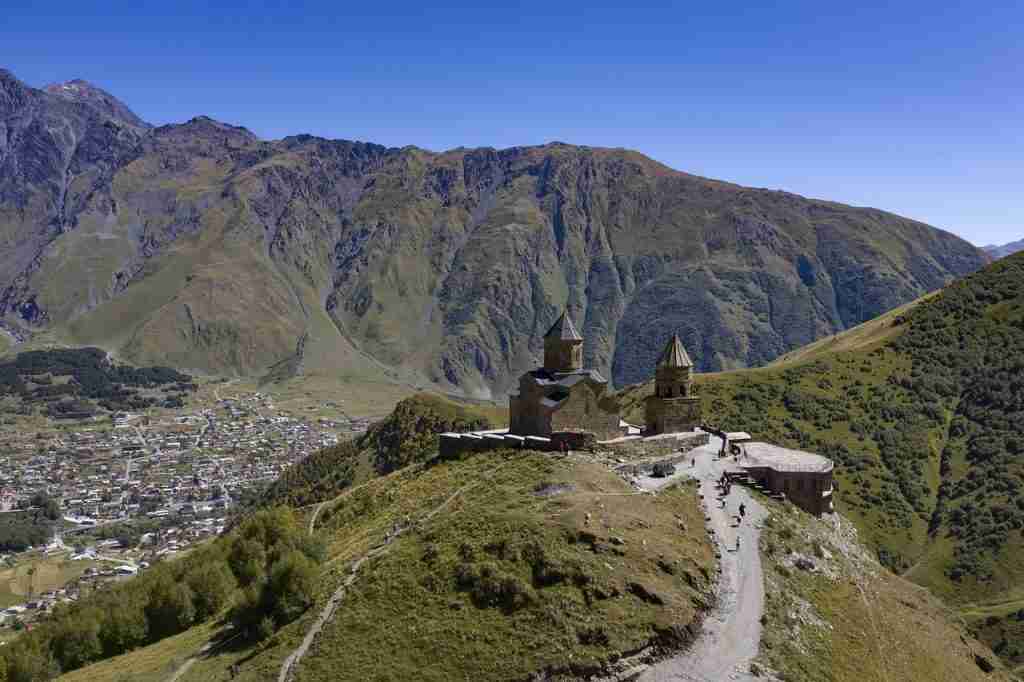
Die Republik Armenien, ein Binnenstaat mit einer reichen Geschichte und Tradition, hat die Ehre, das erste Land zu sein, das im Jahr 301 n. Chr. das Christentum als offizielle Religion annahm. Dieses monumentale Ereignis unter der Führung von Gregor dem Erleuchter und König Tiridates III. machte Armenien zum ersten christliche Nation, ein Erbe, das weiterhin die Die armenische Identität heute. Die Armenische Apostolische Kirche, eine Säule des Glaubens, bleibt für das spirituelle und kulturelle Leben des armenischen Volkes von zentraler Bedeutung. Trotz seiner christlichen Wurzeln hält Armenien den religiösen Pluralismus aufrecht. Seine Verfassung garantiert Religionsfreiheit und schafft so ein harmonisches Umfeld für Menschen aller Glaubensrichtungen.
Die Armenisch-Apostolische Kirche: Eine Säule des Glaubens
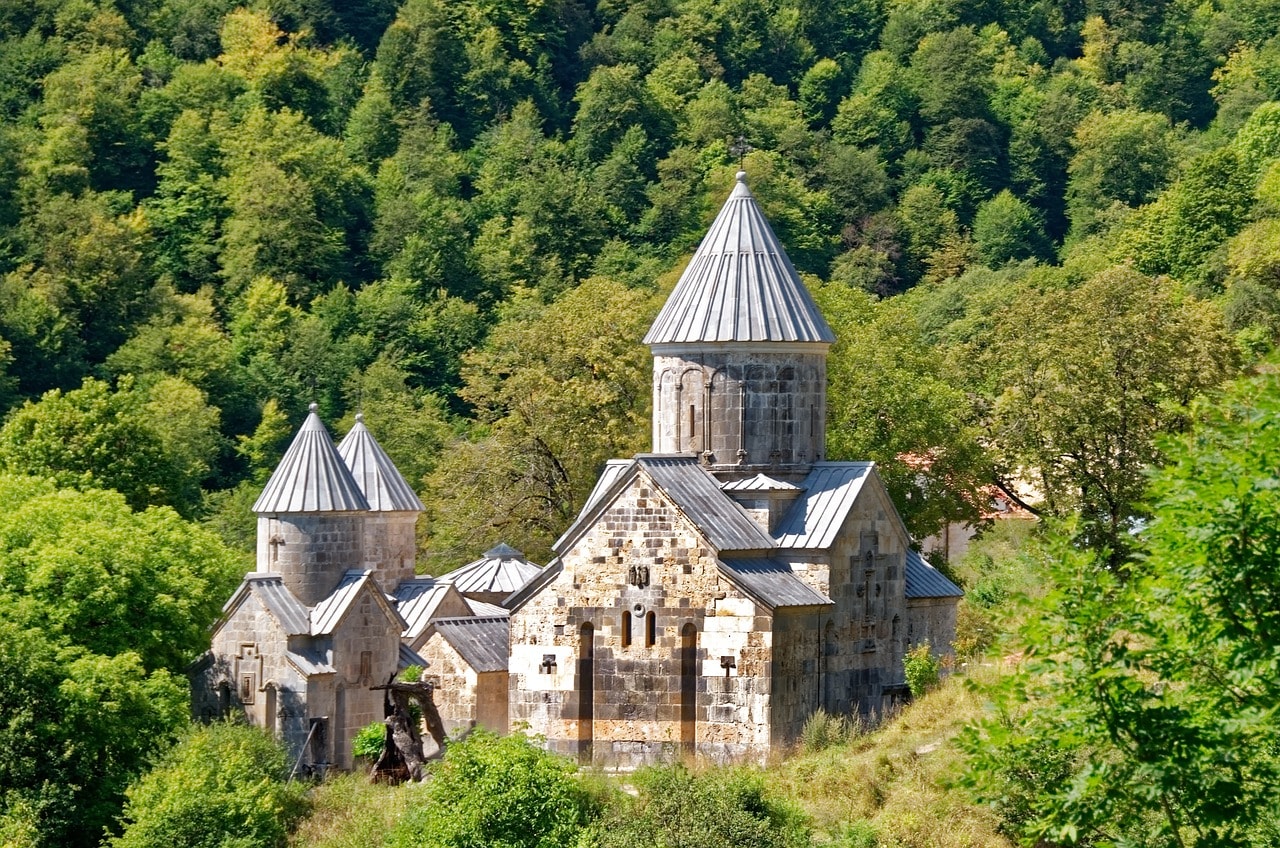
Die Armenisch-Apostolische Kirche ist die Nationalkirche Armeniens und tief mit der armenischen Nationalidentität verwoben. Als Mitglied der orientalisch-orthodoxen Kirchen bekennt sie sich zum Miaphysitismus, einer Lehre, die die eine inkarnierte Natur Jesu Christi bekräftigt.
Die armenische Kirche, die in der frühchristlichen Zeit gegründet wurde, genießt zudem einen einzigartigen Verfassungsstatus. Die armenische Verfassung erkennt sie ausdrücklich als Hüterin des armenischen kulturellen und spirituellen Erbes an und hebt ihren Einfluss auf die armenische Literatur, Bildung und Kunst hervor.
Die göttliche Liturgie der armenischen Kirche ist ein Beweis ihrer reichen Tradition und umfasst aufwendige Rituale und heilige Hymnen. Große religiöse Feierlichkeiten wie Ostern, Weihnachten und Feste zum Gedenken an die Apostel Bartholomäus und Thaddäus, die das Christentum nach Armenien brachten, spiegeln den unerschütterlichen Glauben des armenischen Volkes wider.
Jenseits des apostolischen Glaubens: Religiöser Pluralismus in Armenien
Obwohl die Armenisch-Apostolische Kirche weiterhin die dominierende Kirche ist, ist Armenien die Heimat einer vielfältigen spirituellen Vielfalt. Zu den anderen Glaubensrichtungen zählen die Armenisch-Katholische Kirche, verschiedene protestantische Glaubensrichtungen und die alte jesidische Gemeinschaft, die größte nichtchristliche Gruppe des Landes.
Die Blaue Moschee in Eriwan ist ein Symbol für die religiöse Toleranz Armeniens und die Anerkennung des islamischen Erbes. Trotz des Einflusses der Sowjetunion, die religiöse Praktiken unterdrücken wollte, hat das unabhängige Armenien seinen christlichen Glauben wieder angenommen und gleichzeitig die Inklusivität gefördert.
Pilgerfahrten und heilige Orte für armenische Christen
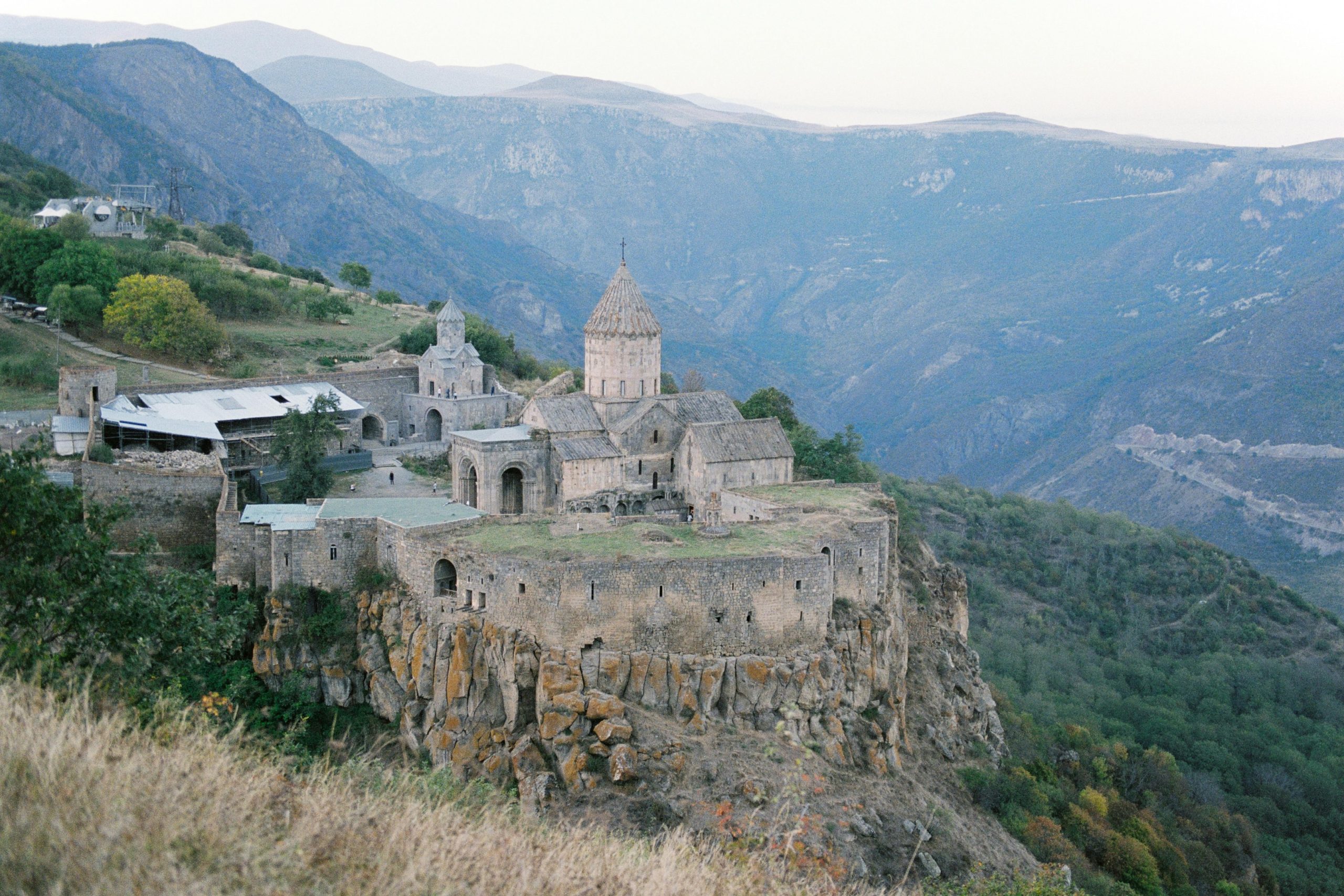
Armenien verfügt über eine Fülle heiliger Stätten, die Pilger und Touristen gleichermaßen anziehen. Die Kathedrale von Etschmiadsin, das spirituelle Zentrum der Armenischen Apostolischen Kirche, wird als die erste im alten Armenien erbaute Kathedrale verehrt. Ebenso das Kloster Geghard, ein UNESCO-Weltkulturerbe, teilweise aus einem Berg gehauen, ist ein Beispiel für das architektonische und spirituelle Erbe der armenischen Kirche.
Weitere bemerkenswerte Stätten sind das Kloster Chor Wirap, in dem Gregor der Erleuchter gefangen gehalten wurde, und das Kloster Tatew, ein Juwel mittelalterlicher armenischer Architektur. Pilgerreisen zu diesen Stätten ermöglichen den Gläubigen eine tiefe Verbindung zu ihren spirituellen Wurzeln und der Geschichte des armenischen Christentums.
Religiöse Feste: Eine Symphonie aus Glauben und Kultur
Religiöse Feste in Armenien verbinden christliche Traditionen, kulturelles Erbe und Gemeinschaftsfeiern nahtlos miteinander. Vardavar, ein Fest, das in vorchristlichen Traditionen verwurzelt ist, aber heute im Kalender der Armenischen Apostolischen Kirche gefeiert wird, beinhaltet das Übergießen anderer mit Wasser, was Reinigung und Erneuerung symbolisiert.

Am Fest der Heiligen Übersetzer (Targmanchats) werden Gelehrte geehrt, die die Bibel ins Armenische übersetzt und so die armenische Sprache und Kultur bewahrt haben. Ein weiteres beliebtes Ereignis ist der Tag der Traubensegnung (Khaghoghorhnek), eine stimmungsvolle Zeremonie, bei der die ersten Früchte der Ernte gesegnet werden und die Verflechtung von Glauben und landwirtschaftlichen Traditionen zur Schau gestellt wird. Diese Feste spiegeln die einzigartige Identität der armenischen Christen wider und gewährleisten die Fortführung ihres reichen kulturellen Erbes.
Besondere Bestimmungen für die armenische Staatsbürgerschaft
Das Land erkennt die integrale Rolle der Religion im armenischen Erbe an und bietet Menschen armenischer Herkunft Möglichkeiten zum Erwerb Staatsbürgerschaft. Zu denjenigen, die die Staatsbürgerschaft beantragen können, gehören armenische Katholiken und armenische Evangelikale, die beide innerhalb der breiteren armenisch-christlichen Gemeinschaft ein ausgeprägtes historisches und kulturelles Erbe haben. Wer einen Taufurkunde vorlegen kann, der seine armenischen Wurzeln belegt, kann die armenische Staatsbürgerschaft beantragen und so die Bindungen zwischen der armenischen Diaspora und ihrer angestammten Heimat stärken.
Diese Bestimmung spiegelt Armeniens Engagement wider, seine christliche nationale Identität zu bewahren und gleichzeitig seine globale Gemeinschaft zu integrieren. Viele Nachkommen von Armeniern aus dem Osmanischen Reich und dem Russischen Reich finden in diesem Prozess eine Möglichkeit, sich wieder mit ihren kulturellen und spirituellen Wurzeln zu verbinden.
Registrierung religiöser Organisationen in Armenien
Wer in Armenien eine religiöse Organisation gründen möchte, benötigt eine Genehmigung des Rates für religiöse Angelegenheiten. Organisationen müssen ihren traditionellen Status nachweisen, der durch kanonische Schriften und historische Kontinuität gestützt wird. Außerdem ist eine Mindestmitgliedschaft von 200 Personen (Minderjährige ausgenommen) erforderlich.
Dieser Rahmen, der sowohl in historischen als auch in rechtlichen Präzedenzfällen verwurzelt ist, stellt sicher, dass registrierte religiöse Gruppen einen bedeutenden Beitrag zum spirituellen und sozialen Gefüge Armeniens leisten. Weitere Hinweise zur Registrierung einer Religionsgemeinschaft finden Sie unter Besuchen Sie unsere Website.
Fazit: Der Glaube als Eckpfeiler der armenischen Nationalidentität
Religion ist in Armenien nicht nur ein Glaubenssystem, sondern der Herzschlag seiner nationalen Identität. Auch die Beziehung der armenischen Kirche zur römisch-katholischen Kirche hat bei der Gestaltung ihrer einzigartigen Identität eine Rolle gespielt. Von der Annahme des Christentums als Staatsreligion bis zur Bewahrung ostorthodoxer und orientalisch-orthodoxer Traditionen prägt das Zusammenspiel von Glauben und Kultur weiterhin die armenisch-christliche Gemeinschaft.
Während Armenien seine Zukunft gestaltet, werden die Armenische Apostolische Kirche und ihre historischen Beiträge, wie das armenische Alphabet und die reichen liturgischen Traditionen, weiterhin eine zentrale Rolle spielen. Armeniens lebendige religiöse Feste, heilige Stätten und sein christliches Erbe sichern den Fortbestand seiner einzigartigen Identität, die sowohl im Land selbst als auch in der weltweiten Diaspora Anklang findet.
Wenn Sie mehr über armenische Einwanderung und Unternehmensdienstleistungen erfahren möchten, besuchen Sie uns bitte unserer Website.

Anzhelika Hakobyan
Rechtsanwalt
Im Überblick
- Armenia is overwhelmingly Christian: about 97.5% of declared believers identify with the Armenian Apostolic Church, with Yazidi, Armenian Catholic, Jewish, Protestant, and Muslim communities making up the remainder.
- The Constitution guarantees freedom of religion (Article 41) while recognizing the Armenian Apostolic Church’s “exceptional mission” in national identity (Article 18).
- Population is approximately 3.097 million (January 2026), with a far larger diaspora of 5–9 million globally.
- The Yazidi community is Armenia’s largest non-Christian minority, numbering over 32,000 people concentrated in Armavir and Aragatsotn provinces.
- Religious organizations seeking official registration must meet a minimum membership threshold, though ethnic minority groups are exempt.
- UNESCO recognizes several Armenian faith-linked traditions, including the pilgrimage to the Saint Thaddeus Monastery and the Kochari dance.
Zuletzt aktualisiert: Juni 2026
Armenian religion is central to the country’s history and nationhood. Understanding the belief systems of Armenia helps explain how faith shapes identity at home and across a vast diaspora, and how today’s legal framework protects pluralism while honoring the Armenian Apostolic Church’s cultural role.
Inhalte
- Religious landscape and demographics
- Armenian Apostolic Church: faith, history, and national role
- Sacred sites and pilgrimage
- Religiöse Feste und Feierlichkeiten
- Church–state relations and education
- Religious minorities in Armenia
- Legal framework for religious organizations
- Citizenship and the diaspora
- Häufig gestellte Fragen
Religious landscape and demographics
Armenia’s population stands at approximately 3.097 million as of January 2026 (Armstat), while the Armenian diaspora is estimated at 5–9 million worldwide, underscoring the global reach of Armenian identity and traditions.
Religiously, Armenia is highly homogeneous: an estimated 97.5% of declared believers identify as Armenian Apostolic Christians according to the 2022 national census, as cited in the U.S. State Department’s 2023 International Religious Freedom report. Several minority communities contribute to the country’s pluralism, including over 32,000 Yazidis, approximately 17,884 Armenian Catholics, a Jewish community of 500–1,000 people, and various Protestant and Muslim congregations.
| Gemeinschaft | Ungefähre Größe | Notizen |
|---|---|---|
| Armenische Apostolische Kirche | 97.5% of declared believers | 2022 census, cited in 2023 IRF report |
| Yazidi community | Über 32,000 | 2022 census; primarily in Armavir and Aragatsotn provinces |
| Armenisch-Katholische Kirche | 17,884 (0.61%) | 2022 census figure; corrects older 14,000 estimate |
| jüdische Gemeinschaft | 500-1,000 | Primarily in Yerevan; one synagogue |
| Protestantische Konfessionen | Small congregations | Evangelical, Pentecostal, and other groups |
| Muslimische Gemeinschaft | ~800–1,000 in Yerevan | Blue Mosque is the only active mosque in Armenia |
Rechtsgrundlage
Freedom of religion is guaranteed by the Constitution (Article 41). The Armenian Apostolic Church’s cultural “exceptional mission” is explicitly recognized in Article 18. Both provisions remain in force under the 2015 Constitution as of June 2026.
If you are exploring long-term stays in Armenia for study, community work, or ministry, see our guides on Visa und Residenz.
Armenian Apostolic Church: faith, history, and national role
The Armenian Apostolic Church is the national church and a central component of Armenian identity. Armenia adopted Christianity as its state religion in 301 AD, making it the first nation to do so. The Constitution explicitly acknowledges the Church’s “exceptional mission” in preserving national culture and values (Article 18), while affirming freedom of religion (Article 41) for all communities.
The Church is headed by the Catholicos of All Armenians, whose seat is at the Mother See of Holy Etchmiadzin near Yerevan. The Church belongs to the Oriental Orthodox family of churches and maintains its own distinct liturgical traditions, calendar, and theological heritage. Its influence extends well beyond Armenia’s borders through dioceses serving the global diaspora.
Sacred sites and pilgrimage
Armenia’s faith life is expressed through centuries-old sacred sites and traditions, several of which hold international recognition.
UNESCO-Welterbestätten
Kathedrale von Etschmiadzin is the spiritual headquarters of the Armenian Apostolic Church and part of the UNESCO World Heritage inscription “Cathedral and Churches of Echmiatsin and the Archaeological Site of Zvartnots.” It is the primary pilgrimage center for Armenians worldwide and the seat of the Catholicos.
Geghard Kloster, inscribed as “Monastery of Geghard and the Upper Azat Valley,” features remarkable rock-cut churches dating to the medieval period. It remains a major pilgrimage and tourist destination.
Wichtige Pilgerziele
Khor Virap is among the most visited pilgrimage shrines in Armenia, associated with Saint Gregory the Illuminator’s imprisonment and the subsequent Christianization of the country. Its location near the Turkish border with views of Mount Ararat adds to its spiritual significance.
Tatev-Kloster is a large medieval monastery complex in southern Armenia, accessible via the Wings of Tatev aerial tramway. It is a flagship site in Armenia’s religious tourism strategy.
UNESCO also inscribed the annual pilgrimage to the Saint Thaddeus Apostle Monastery on the Representative List of the Intangible Cultural Heritage of Humanity. Note that this is a three-day pilgrimage held annually in northwestern Iran, carried out mainly by Armenian communities in Iran. The Kochari dance, performed at religious and community celebrations, is also recognized by UNESCO for its role in social cohesion and identity.
Die Blaue Moschee
The Blue Mosque (Goy Masjid) in central Yerevan is the only active mosque in Armenia. Restored and reopened in 1999, it serves as both a functioning religious mosque for the city’s small Muslim community and a cultural visitor site. The mosque is open daily and stands as a reminder of the historical Muslim presence in the region.
Religiöse Feste und Feierlichkeiten
Armenian religious festivals follow the Armenian Apostolic Church calendar and differ in some dates from Western Christian traditions. Key celebrations for 2026 include:
| Festival | 2026 Datum | Welche Bedeutung hatte der Wiener Kongress? |
|---|---|---|
| Christmas and Theophany | Januar 6 | The AAC celebrates Nativity and Baptism of Christ together; a public holiday |
| Easter (Zatik) | April 5 | Feast of the Glorious Resurrection |
| Vardavar (Transfiguration) | Juli 12 | Official Transfiguration feast with traditional water-splashing; one of the most popular celebrations |
| Assumption and Grape Blessing | August 16 | Grapes and fruits are blessed after Divine Liturgy; widely observed |
| Feast of Holy Translators | Oktober 10 | Honors Saints Sahak and Mesrop, creators of the Armenian alphabet |
Vardawar is particularly distinctive. Rooted in pre-Christian tradition, it is celebrated 14 weeks after Easter with people of all ages splashing water on each other in public spaces. It has become one of Armenia’s most joyful and widely participated celebrations, blending ancient custom with Christian meaning.
Church–state relations and education
The relationship between the Armenian Apostolic Church and the state is constitutionally defined. The 2015 Constitution guarantees freedom of religion and equal legal protections for all denominations (Article 41), while acknowledging the Armenian Apostolic Church’s special cultural role (Article 18). Both provisions remain in force as of mid-2026.
Developments in 2025–2026
The institutional relationship between the government and the Armenian Apostolic Church has come under significant strain in 2025–2026. Reports indicate that the Head of the Penitentiary Service banned AAC clergy from prisons and hired state-approved clergy directly, and that the National Security Service issued directives relating to Church restructuring. These developments have drawn international attention, including concern expressed by the UK All-Party Parliamentary Group on Freedom of Religion or Belief.
While the constitutional text protecting religious freedom remains unchanged, these events highlight the evolving dynamics between church and state in Armenia. A new constitutional referendum is planned for 2026 and is expected to retain recognition of the Armenian Apostolic Church.
Religionsunterricht
During the 2023 school year, Armenia removed the standalone mandatory “History of the Armenian Church” course from the national curriculum, integrating its content into broader Armenian studies. This change was made partly in response to concerns raised by minority religious groups about the mandatory nature of church-specific instruction.
Religious minorities in Armenia
While the Armenian Apostolic Church constitutes the vast majority, several minority communities contribute to Armenia’s evolving religious life.
Yazidi community
The Yazidi community is Armenia’s largest non-Christian minority, with over 32,000 members recorded in the 2022 census. Yazidis are concentrated primarily in Armavir province (approximately 17,665 people, or 43.5% of all Yazidis in Armenia), Aragatsotn province (6,405), and Ararat province (5,940). Their villages cluster around Mount Aragats and the Ararat plain. The Yazidi faith is a distinct monotheistic religion with ancient roots, and the community maintains its own traditions, language (Kurmanji), and social structures.
Armenian Catholics
The Armenian Catholic Church has deep historical roots and maintains communion with the Holy See. The 2022 national census recorded 17,884 Catholics in Armenia, representing 0.61% of the population. This figure updates older estimates of approximately 14,000 that were based on the 2011 census. The community maintains cultural and liturgical traditions in the Armenian rite.
jüdische Gemeinschaft
Armenia’s Jewish community numbers between 500 and 1,000 people, primarily in Yerevan, with a small presence in Vanadzor. The community operates one synagogue in the capital and provides opportunities for community education. The World Jewish Congress (late 2024) estimates approximately 500 members, while U.S. State Department reporting suggests the figure may be as high as 1,000.
Protestantische Konfessionen
Protestant communities, including Evangelical and Pentecostal congregations, are present in Armenia as part of the country’s religious mosaic. They benefit from the same constitutional protections enjoyed by all faiths, though they have historically faced social pressure in some communities.
Muslimische Gemeinschaft
Armenia’s Muslim community is small, with an estimated 800–1,000 people in Yerevan. The Blue Mosque (Goy Masjid), located in central Yerevan, is the only active mosque in the country. Restored and reopened in 1999, it serves as both a place of worship and a cultural site open to visitors.
Legal framework for religious organizations
Armenia’s legal framework for religion rests on two constitutional pillars: Article 41 guarantees freedom of religion for all individuals and communities, and Article 18 acknowledges the Armenian Apostolic Church’s “exceptional mission” in preserving national culture. These provisions coexist with specific legislation governing the registration and operation of religious organizations.
Registrierungsanforderungen
Under Armenian law, religious organizations seeking official registration must meet a minimum membership threshold of 200 members. Registration is required for organizations that wish to own property, employ staff, or operate officially. Ethnic minority religious organizations — including Yazidi, Jewish, and Assyrian communities — are exempt from this threshold. The Venice Commission has noted concerns about the impact of this requirement on smaller, non-traditional religious groups.
Citizenship and the diaspora
For members of the Armenian diaspora considering a legal connection to the Republic, citizenship by descent hinges on proving Armenian ancestry — not religious denomination. Government-recognized church baptismal certificates and other family records can serve as evidence in a descent-based application.
- Confirm eligibility for citizenship by descent and gather proof of Armenian ancestry (government-recognized baptismal or parish records, civil registry certificates). See our guide to proving Armenian ancestry.
- Obtain certified copies and, where required, apostille/legalize and translate documents.
- Submit your application via Armenian diplomatic missions or in Armenia, following the latest procedural instructions. See our Staatsbürgerschaftsübersicht.
If you plan to relocate after citizenship or before it is granted, review pathways for vorübergehender oder dauerhafter Wohnsitz und das Recht Visum für Ihren Aufenthalt.
Fazit
Armenian religion remains a cornerstone of national identity. The Armenian Apostolic Church encompasses the great majority of believers, while the constitutional framework protects pluralism and supports minority communities — from the Yazidi villages of Armavir to the Jewish congregation in Yerevan and the Blue Mosque’s small Muslim community. UNESCO-recognized traditions and a vast diaspora keep the belief systems of Armenia vibrant and global. If you are exploring ties to Armenia through study, service, residence, or citizenship by descent, our team can guide your next steps. Kontakt aufnehmen um zu starten.
Häufig gestellte Fragen
What is the dominant religion in Armenia?
Approximately 97.5% of declared believers in Armenia identify with the Armenian Apostolic Church, according to the 2022 national census as cited in the U.S. State Department’s 2023 International Religious Freedom report.
Does the Constitution protect freedom of religion?
Yes. Article 41 of the Constitution guarantees freedom of religion for all individuals and communities, and Article 18 recognizes the Armenian Apostolic Church’s cultural mission. Both provisions remain in force under the 2015 Constitution.
Who are the Yazidis in Armenia?
The Yazidi community is Armenia’s largest non-Christian minority, with over 32,000 members recorded in the 2022 census. They follow a distinct monotheistic faith and are concentrated primarily in Armavir and Aragatsotn provinces, with villages around Mount Aragats and the Ararat plain.
How large are the Armenian Catholic and Jewish communities?
The 2022 census recorded 17,884 Armenian Catholics (0.61% of the population). The Jewish community numbers between 500 and 1,000 people, primarily in Yerevan, with one active synagogue.
What are the main religious festivals in Armenia?
Key Armenian religious festivals include Christmas and Theophany (January 6), Easter (Zatik), Vardavar or Transfiguration (a summer celebration with traditional water-splashing), the Assumption and Grape Blessing, and the Feast of Holy Translators honoring the creators of the Armenian alphabet.
Can baptismal certificates help with Armenian citizenship by descent?
Yes. Government-recognized church baptismal certificates can be used to prove Armenian ancestry in descent-based citizenship applications. Other family records such as civil registry certificates are also accepted.
